Artwork
Self-portrait
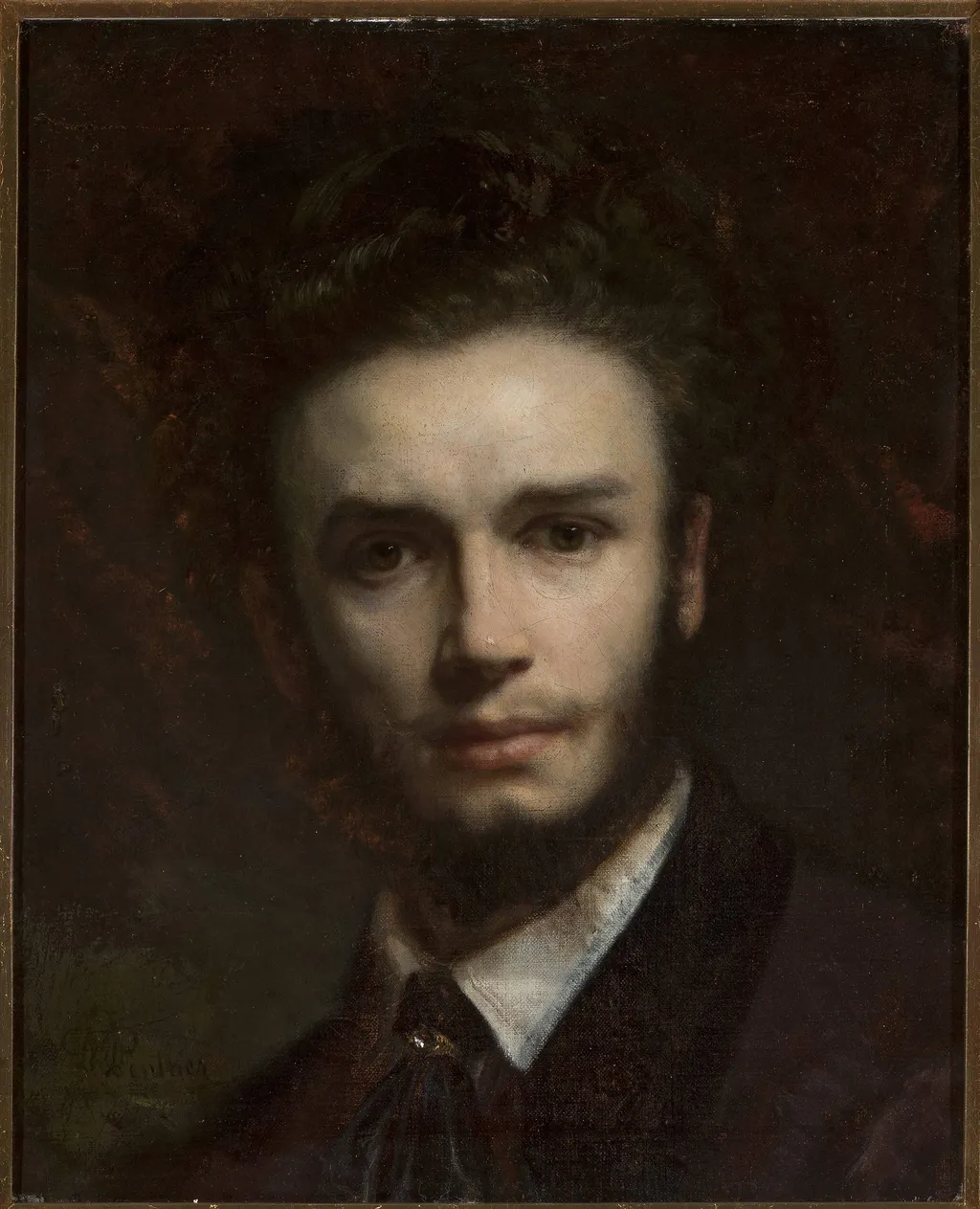
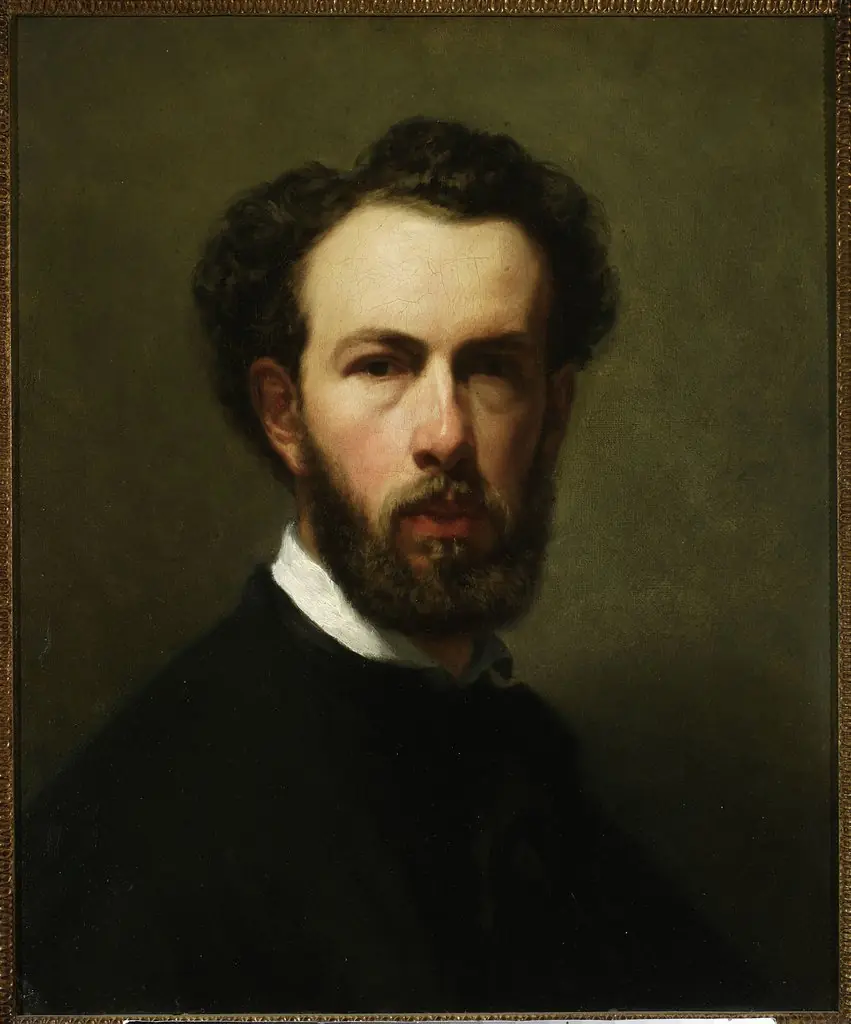
Self-portrait is an oil painting by the Realist artist Daniel Penther. It dates from 1870 and is held in the collection of the National Museum in Warsaw.
About this work
Overview
5 centimetres, this intimate bust-length depiction of the artist is held in the collection of the National Museum in Warsaw.
Self-portrait is an oil painting on canvas created in 1870 by the Polish-Austrian artist Daniel Penther (1837-1887). Measuring 43 by 35.5 centimetres, this intimate bust-length depiction of the artist is held in the collection of the National Museum in Warsaw. The work represents a significant example of mid-19th-century Central European self-portraiture, produced during a period when Penther was establishing himself as a portrait, genre, and history painter with connections to major artistic centres including Vienna, Munich, and Paris.
Subject & Meaning
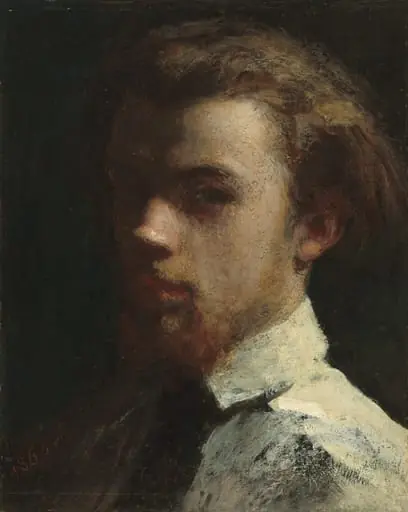
The painting depicts Daniel Penther himself, shown as a young man with dark wavy hair, a full beard, and a moustache. He faces slightly to the right, his gaze directed outward toward the viewer with an air of quiet self-possession. His attire, a dark coat, white collared shirt, and dark cravat fastened with a small pin at the throat, signals respectable bourgeois status and professional identity. The muted, dark brown background contains no discernible details, focusing all attention on the psychological presence of the sitter. The composition centres the figure so that he fills most of the frame, creating an intimate, direct encounter between artist and viewer. The absence of studio attributes, palette, or brushes distinguishes this from the more overtly professional self-portrait tradition, instead emphasising personal character over occupational identity.
Technique & Style
Penther executed the work in oil on canvas, employing a polished finish with particular attention to the modelling of facial features. Light falls from the left, illuminating the left side of his face while the right side recedes into shadow, a conventional but effective means of creating three-dimensional volume. The brushwork appears smooth and blended on the face, with more visible texture in the hair and background, demonstrating technical range within a single canvas. The palette is dominated by deep browns, blacks, and the white of the collar, restrained in range but nuanced in tonal gradation. The surface now shows fine craquelure throughout, consistent with the painting's age and medium. These qualities align with the academic training Penther received and his brief tutelage under Franz von Lenbach, known for his refined portrait technique.
History & Provenance
The painting dates from 1870, a significant juncture in Penther's career. Born in Lemberg (now Lviv, Ukraine) in 1837, he had by this time completed his studies in Vienna and Munich, worked as a private student of Franz von Lenbach, and participated in the Polish artist colony in Munich. In 1867 he had visited Paris on the occasion of the World Fair and returned to his hometown, before relocating to Vienna around 1871-1872. The self-portrait thus emerges from a period of transition, as Penther moved between major European centres and before his 1873 appointment as court painter in Tbilisi. The work entered the collection of the National Museum in Warsaw, where it remains today. Its presence in this major Polish institution reflects both Penther's Polish origins and the museum's commitment to preserving 19th-century Polish art. The painting has since been reproduced in commercial print editions, indicating sustained public interest.
Context
Daniel Penther occupied a distinctive position within 19th-century Central European art as a Polish-Austrian painter whose career traversed multiple national and cultural boundaries. His training encompassed the Academy of Fine Arts in Vienna and the Royal Academy of Arts in Munich, where he moved in circles that included the prominent Polish history painter Jan Matejko and fellow students such as Parys Filippi, Izydor Jabłoński, Marceli Maszkowski, and Karol Młodnicki. His acquaintance with Artur Grottger, one of Poland's most significant Romantic painters, places him within a network of major Polish artistic figures. The self-portrait tradition in which this work participates was particularly strong in the 19th century, as artists increasingly used self-depiction as a means of asserting professional identity and psychological interiority. Penther's restrained, formally composed image contrasts with more dramatic or introspective examples of the genre, perhaps reflecting his academic formation and the demands of portrait commissions upon which his livelihood depended. From 1881 until his death in 1887, he served as curator at the gallery of the Vienna Academy of Fine Arts, where he restored paintings including a work by Antonio da Correggio and copied old masters, activities that reinforced his conservative, technically accomplished approach.
Legacy
The Self-portrait remains Daniel Penther's most widely circulated image, serving as the visual signature of an artist whose original works are now scattered across various collections and whose reputation has been partially eclipsed by contemporaries such as Matejko. Its reproduction as a museum art print by commercial vendors indicates its function as an accessible representative of 19th-century Polish portraiture for contemporary audiences. The painting's preservation in the National Museum in Warsaw ensures its continued availability for scholarly examination and public engagement. While Penther's work as a curator and restorer at the Vienna Academy influenced the preservation of other artists' legacies, his own paintings, including this self-portrait, await fuller critical reassessment within the context of Polish art under partition, the diasporic experience of Polish artists in Central European centres, and the broader history of academic portraiture in the later 19th century.
Own this work as a print
Artist & collection

- Portrait de Claude Monet
 Portrait of S.S. Botkin
 Henri Fantin-Latour (1836–1904)
 Retrat del moblista Francesc Vidal i Jevellí
 Self-Portrait
 Portrait of Włodzimierz de Rosenwerth Rużycki
 Self-portrait
 Portrait of Józef Unierzyski
 Portrait of the Composer Samuel David
 Portrait of George Henschel
 Self-Portrait
 Portrait of the Painter Ramon Padró