Artwork
Ce qu'on voit a peu près tous les jours
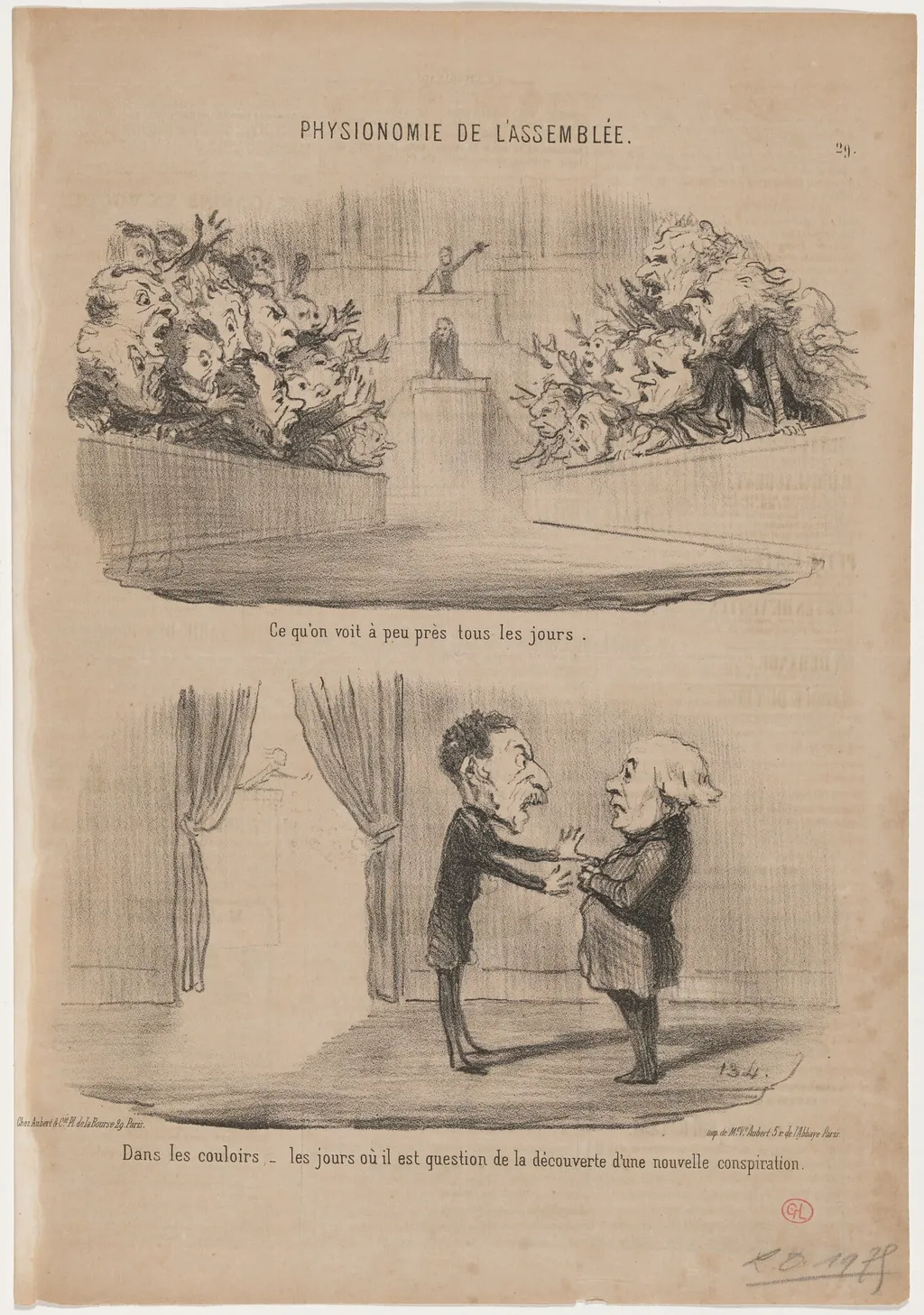
Ce qu'on voit a peu près tous les jours is an ink print by the Impressionist artist Honoré Daumier. It dates from 1850 and is held in the collection of the National Gallery of Art.
About this work
This lithograph shows a crowded hall where people listen to a speaker at a podium.
This lithograph shows a crowded hall where people listen to a speaker at a podium. Behind a curtain, two men whisper. One holds a paper, maybe a secret note.
Daumier made this in 1850, when France was tense after a revolution. Lithography let him print sharp, quick images for newspapers. The scene feels real because of how he carved the shadows.
See how bold the lines are? That’s lithography. Try Daumier, Honoré.
Overview
Honoré Daumier’s 1850 lithograph, titled Ce qu’on voit à peu près tous les jours, captures a bustling public hall. A speaker occupies a raised podium, addressing an attentive crowd, while two men concealed behind a curtain exchange a whispered conversation, one clutching a sheet of paper. The composition juxtaposes the overt performance of political rhetoric with a covert, private exchange, reflecting the layered nature of public discourse.
Subject & Meaning
The work portrays a typical political gathering of mid‑nineteenth‑century France, a period marked by frequent upheavals and heated debate. By placing a discreet dialogue behind the curtain, Daumier hints at the undercurrents of intrigue, rumor, and dissent that accompany public oratory, suggesting that what is heard on the podium is only part of the broader, often hidden, political conversation.
Technique & Style
Executed in lithography, the print showcases Daumier’s skill in rendering strong, decisive lines and nuanced chiaroscuro. The medium allowed him to produce crisp, high‑contrast images quickly, a quality suited to the fast‑moving world of newspaper illustration. His handling of shadow and texture gives the scene a palpable immediacy, while the bold outlines emphasize the crowded, energetic atmosphere of the assembly.
History & Provenance
Created in 1850, the lithograph emerged during a tense post‑revolutionary era in France, when public meetings were both a platform for expression and a source of social anxiety. Daumier, known for his satirical prints, used lithography to disseminate his observations widely. The work has since been held in several European collections, reflecting its value as a documentary record of contemporary political life.
Context
The image belongs to a broader tradition of French political caricature that flourished in the mid‑1800s, a time when the press expanded and visual satire became a potent tool for commentary. Daumier’s focus on ordinary citizens and the mechanics of public debate aligns with his contemporaries’ interest in exposing the contradictions of a society navigating rapid change.
Own this work as a print
Artist & collection
Artist
Honoré-Victorin Daumier (French: ; 26 February 1808 – 10 or 11 February 1879) was a French painter, sculptor, and printmaker, whose many works offer commentary on the social and political life in France, from the…









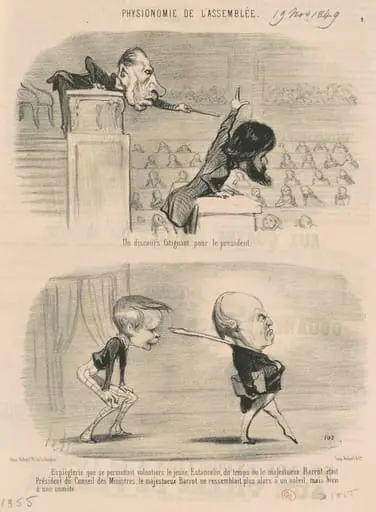
- Un discours fatiguant pour le président
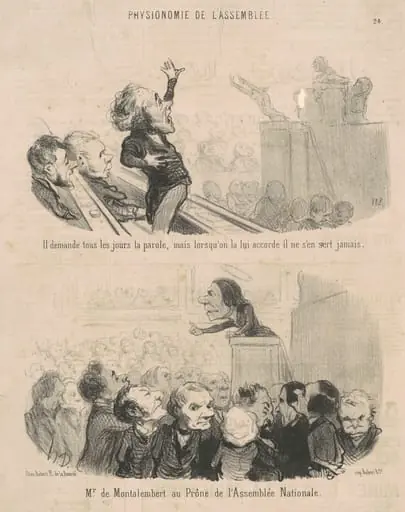 Il demande tous les jours la parole ...
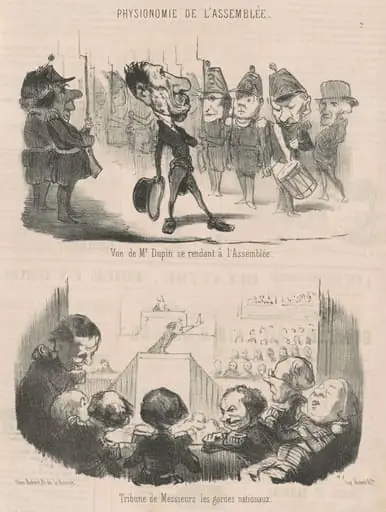 Vue de M. Dupin se rendant a l'assemblée
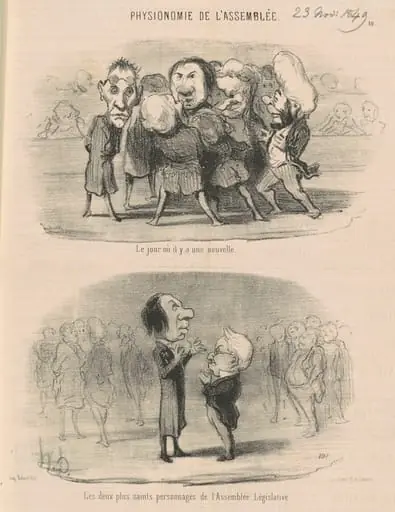 Le jour ou il y a une nouvelle
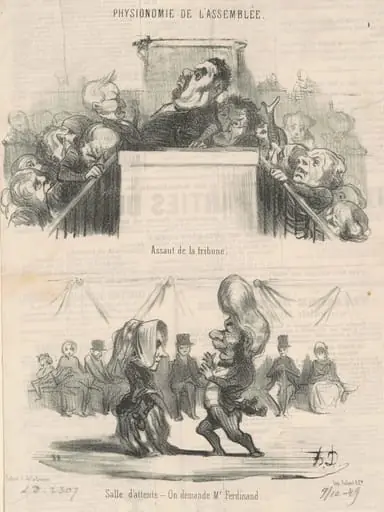 Assaut de la tribune
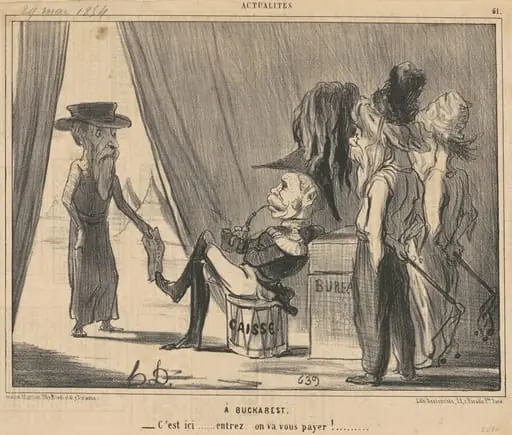 A Bucharest
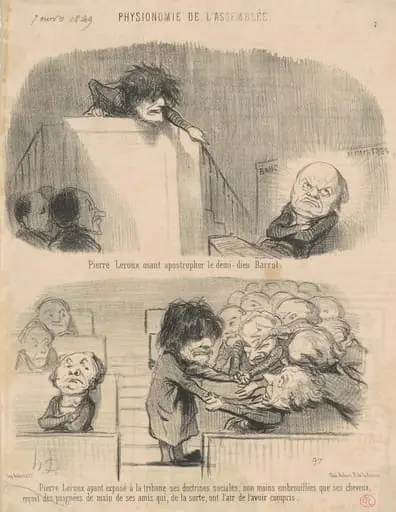 Pierre Leroux Osant apostrophe ...
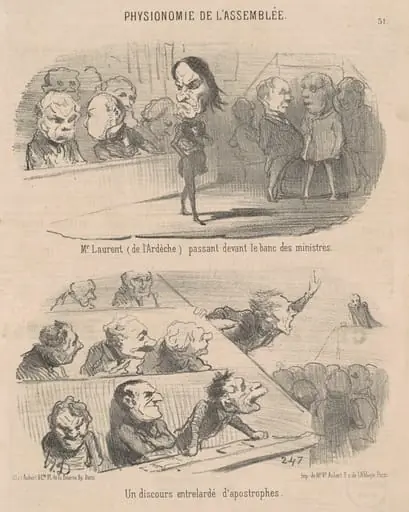 M. Laurent (de l'ardèche) Passant ...
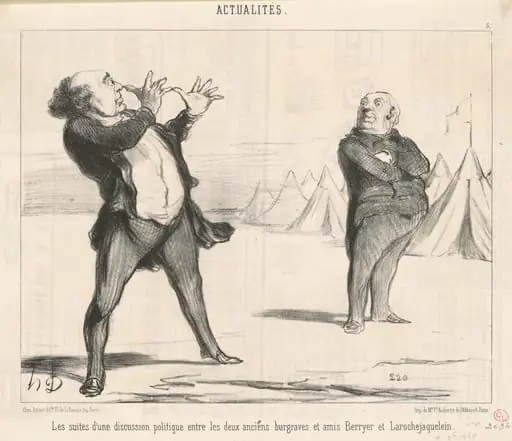 Les suites d'une discussion politique ...
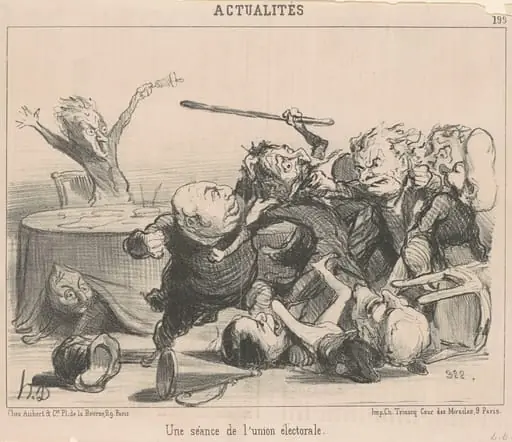 Une séance de l'union électorale
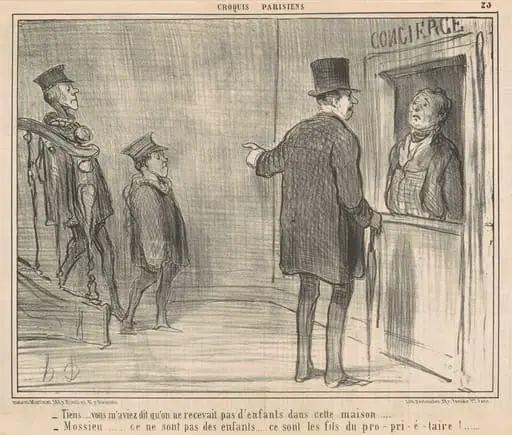 Tiens ... vous m'aviez dit ...