Artwork
The Laundress
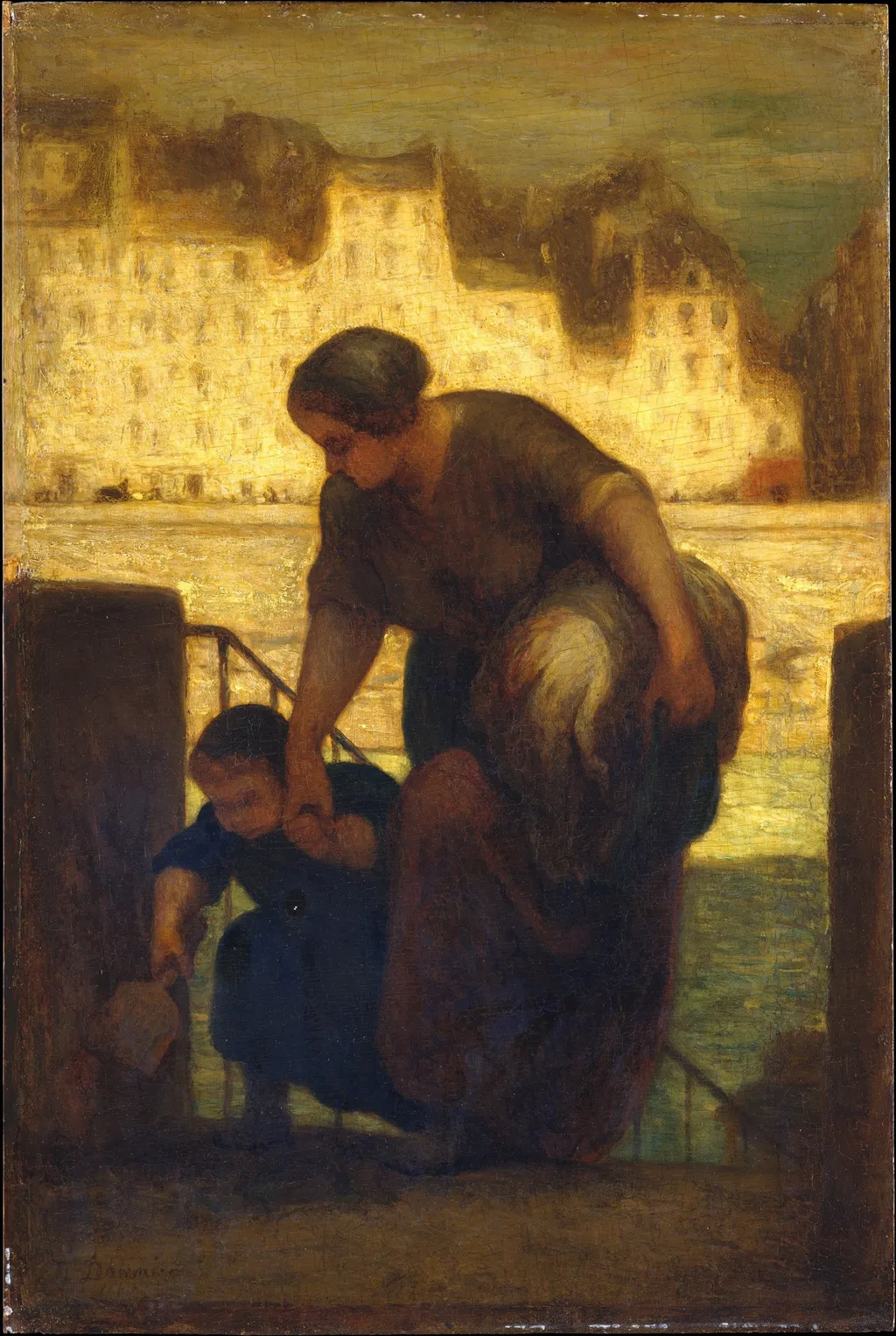
The Laundress is an oil painting by the Realist artist Honoré Daumier. It dates from 1863 and is held in the collection of the Metropolitan Museum of Art.
About this work
Subject & Meaning
Thus the work functions as a visual critique of class and gender roles, aligning with Daumier’s broader interest in the lives of ordinary people.
The Laundress portrays a working‑class woman bent over a tub, accompanied by a small child, illustrating the routine of domestic labor in mid‑nineteenth‑century France. By concentrating on this everyday activity, Daumier elevates the laundress from a background figure to a central subject, using his posture and the domestic setting to comment on social conditions and the physical demands placed on women of the era. The presence of the child adds a layer of domestic intimacy, suggesting both continuity and vulnerability within the household.
Thus the work functions as a visual critique of class and gender roles, aligning with Daumier’s broader interest in the lives of ordinary people.
Technique & Style
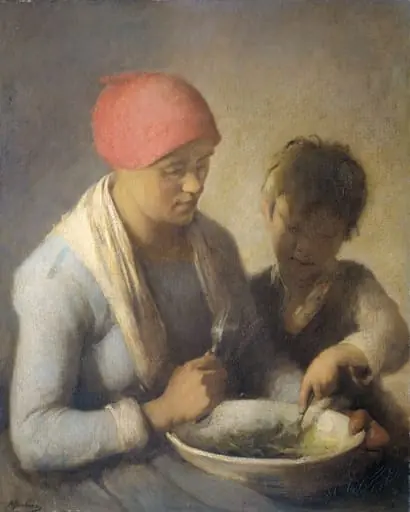
The Laundress is an oil painting executed on a wooden panel in 1863. According to the recorded medium, the work employs oil paint as its primary material, applied to a panel support typical of mid‑nineteenth‑century easel works. The composition depicts a washerwoman with a child, rendered in a realist style characteristic of Daumier’s social commentary.
The painting measures 48.9 cm in height and 33 cm in width, confirming its modest scale. As an oil work on panel, the surface exhibits the luminous color modulation and fine brush handling associated with Daumier’s mature period, while the support’s rigidity contributes to the work’s durability.
History & Provenance
Created by Honoré Daumier in 1863, The Laundress is an oil painting executed on a panel support. The work depicts a washerwoman accompanied by a child and measures approximately 48.9 by 33 centimeters. Current records indicate the painting is held within the collection of the Metropolitan Museum of Art in New York, where it is cataloged under the accession number 47.122.
While the specific commission details and the full chain of ownership prior to its arrival at the museum are not detailed in the available records, the work is firmly dated to the year 1863. The piece remains a significant example of Daumier's depiction of working-class figures during the mid-nineteenth century.
The Laundress is held in the collection of the Metropolitan Museum of Art in New York. The work is identified within the museum's records by the accession number 47.122. Created in 1863, this oil painting on panel depicts a washerwoman and child.
While the provided documentation confirms its current institutional location and specific inventory designation, no details regarding past exhibitions or previous ownership history are included in the available sources.
Context
The Laundress (1863) is an oil on panel painting by Honoré Daumier, a French artist noted for satirical caricatures and genre scenes that document everyday labor. The work portrays a washerwoman with a child, reflecting Daumier’s focus on the lives of working‑class women in mid‑nineteenth‑century France. It belongs to the Metropolitan Museum of Art’s collection, highlighting its relevance within the museum’s French realist holdings. The painting exemplifies Daumier’s recurring interest in social conditions of the era.
Overview
Honoré Daumier's oil painting, The Laundress, created in 1863, captures a scene of daily life centered on a washerwoman. This work, executed in oil paint, is a notable example of Daumier's focus on ordinary individuals. It is currently housed within the collection of The Metropolitan Museum of Art, representing a significant piece from the artist's oeuvre.
Own this work as a print
Artist & collection
Artist
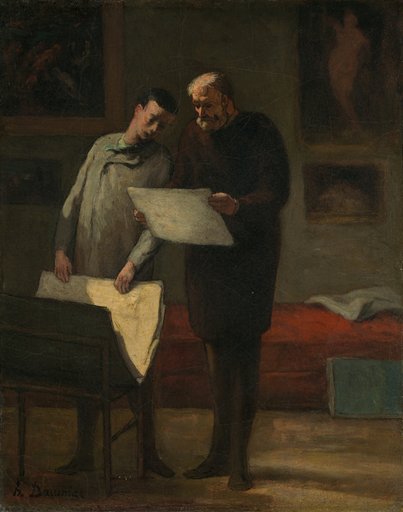
Honoré-Victorin Daumier (French: ; 26 February 1808 – 10 or 11 February 1879) was a French painter, sculptor, and printmaker, whose many works offer commentary on the social and political life in France, from the…