Artwork
At the Waterfall
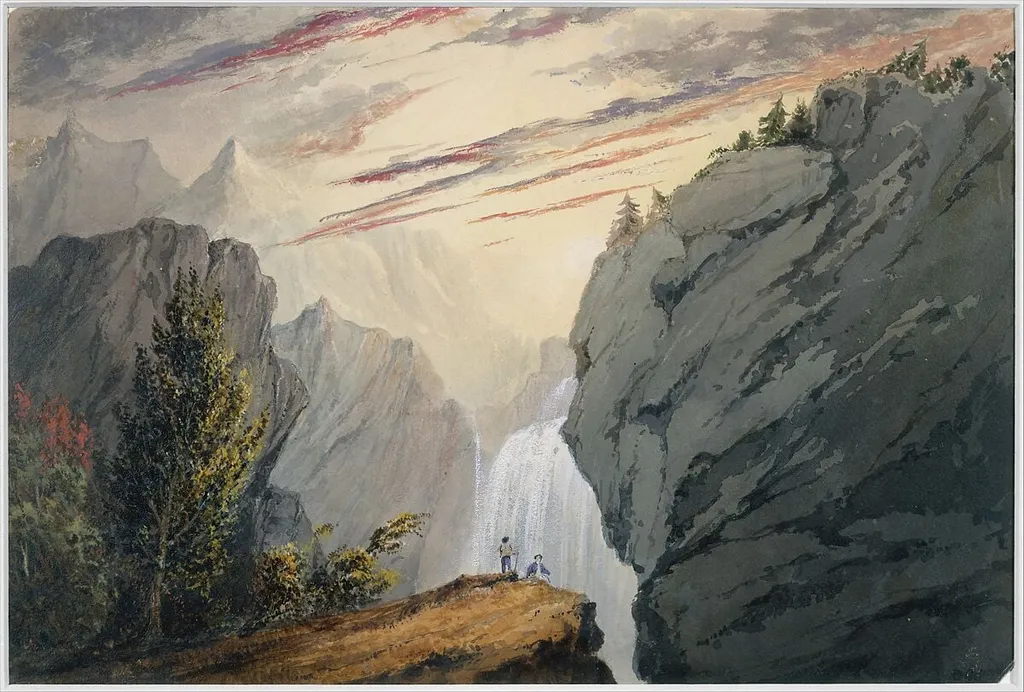
At the Waterfall is a watercolor work on paper by the American Folk Art artist David Claypoole Johnston. It dates from 1850 and is held in the collection of the Metropolitan Museum of Art.
About this work
Technique & Style
Executed in 1850, this landscape work utilizes watercolor enhanced with gum arabic and gouache. The artist applied these pigments to a support of off-white wove paper. The composition formally centers on the depiction of a tree, characteristic of the genre. The sheet measures 21.9 cm in height and 32.4 cm in width.
History & Provenance
The work is classified under The American Wing, consistent with its status as an American landscape watercolor by David Claypoole Johnston, dated 1850.
David Claypoole Johnston created the watercolor At the Waterfall in 1850. The work was executed using watercolor, gum arabic, and gouache on off-white wove paper. It is currently held in the collection of the Metropolitan Museum of Art, where it is classified under the American Wing. The piece depicts a landscape featuring a tree.
At the Waterfall is held in the collection of the Metropolitan Museum of Art. The work is classified under The American Wing, consistent with its status as an American landscape watercolor by David Claypoole Johnston, dated 1850.
No accession number, acquisition details, or exhibition history are documented in the available sources.
Overview
David Claypoole Johnston’s watercolor titled At the Waterfall dates from around 1850. Executed on off‑white wove paper, the work combines watercolor, gum arabic and gouache. It presents a narrow cascade framed by moss‑covered rocks and surrounding trees, offering a quiet, intimate view of a natural setting rather than the expansive vistas favored by many of his contemporaries.
Subject & Meaning
The composition centers on a slender waterfall that descends in translucent ribbons, catching the light as if glass‑like. Flanking the water are rugged stones and a stand of tall trees, their foliage rendered with delicate brushwork that suggests a gentle rustle. The absence of human figures directs attention to the sensory experience of sight and sound in a secluded landscape.
Context
At a time when grand mountain panoramas and historical subjects dominated the art market, Johnston’s focus on a modest, unpopulated waterfall offers a counter‑narrative. The painting aligns with a broader mid‑century interest in documenting the nation’s varied natural environments, emphasizing observation over dramatization.
Artist & collection


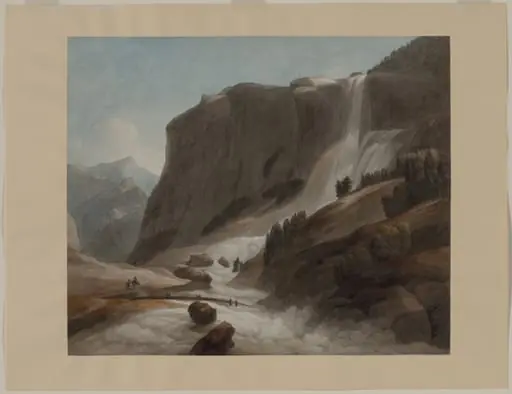 Waterfall between Chiavenna and Mount Splügen
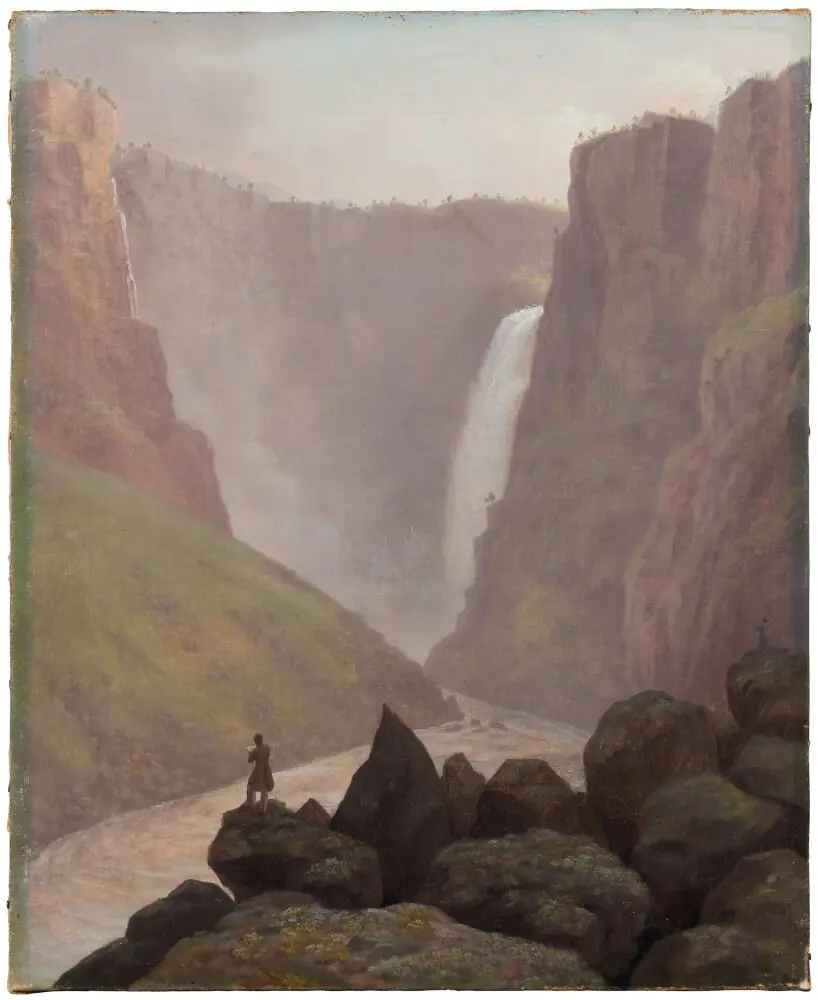 The Voringsfoss Waterfall, Norway
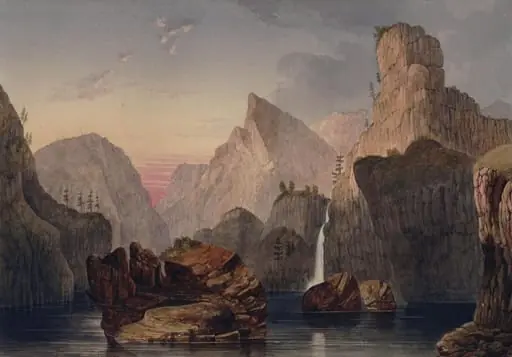 The Black Irkout, Oriental Siberia
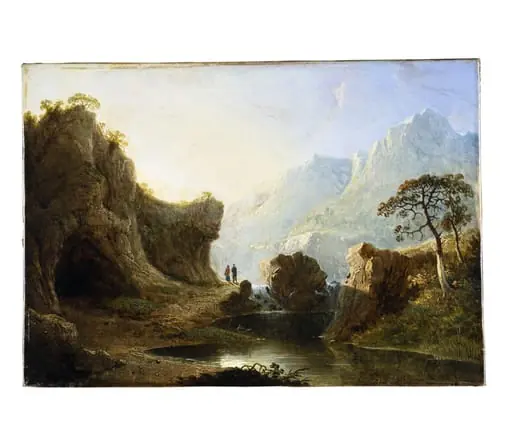 Mountain Landscape with Rocks
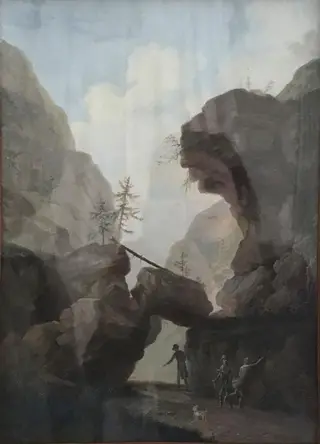 Parti af Planische Grund ved Dresden. klipper højne sig til begge sider, en fjeldblok væltet ned over kløften, forbinde tvende sider. Netop derunder er atter en kløft, belagt m. brædder. Staffage tre personer og en hund.
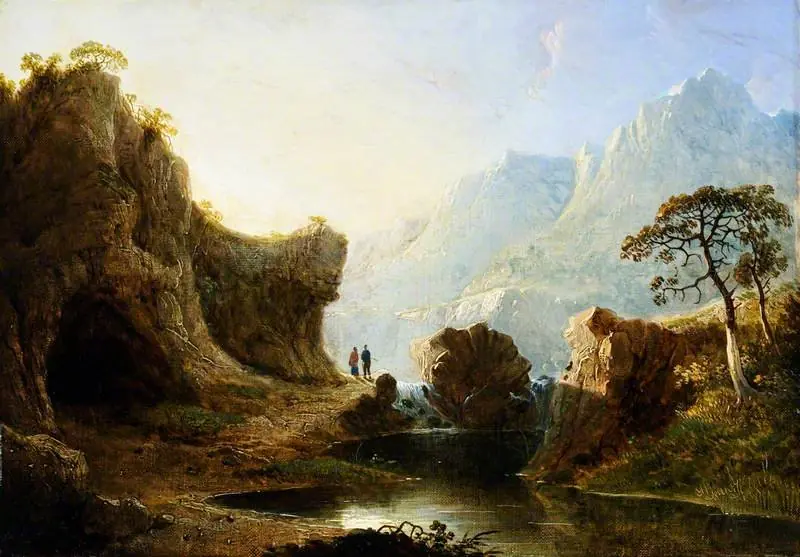 Mountain Landscape with Rocks
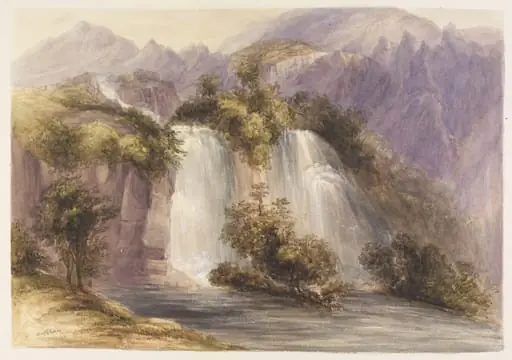 The Beit el-ma Falls, near Antioch
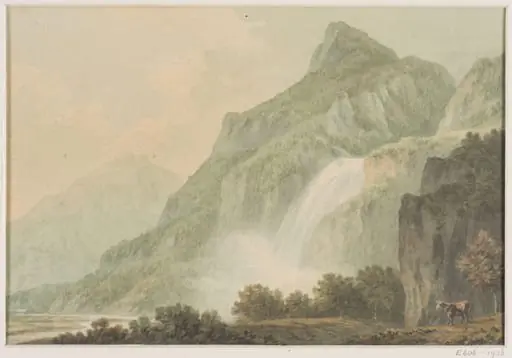 Landscape with waterfall
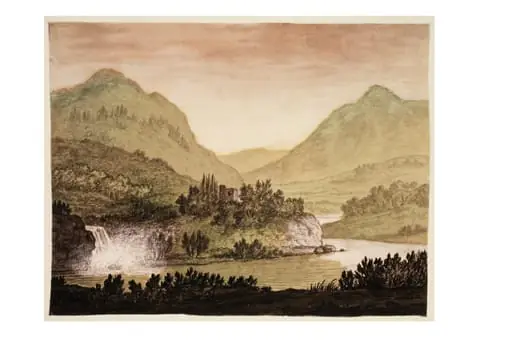 Mountainous Landscape with a Castle and Waterfall
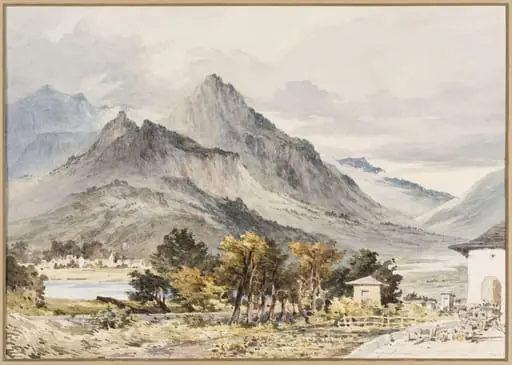 View of Naters from Brieg Switzerland