Artwork
The Rest on the Flight into Egypt
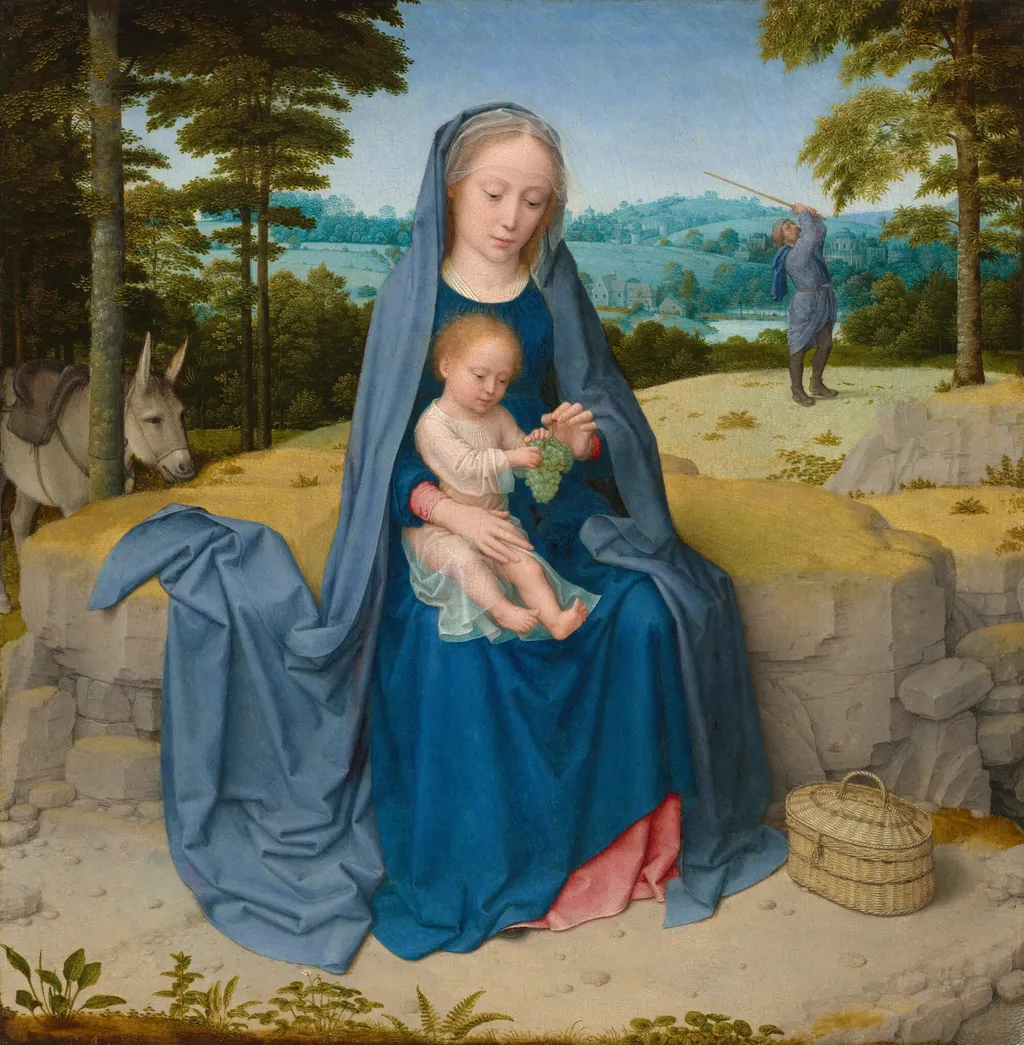
The Rest on the Flight into Egypt is an oil painting by the Northern Renaissance artist Gerard David. It dates from 1510 and is held in the collection of the Metropolitan Museum of Art.
About this work
Subject & Meaning
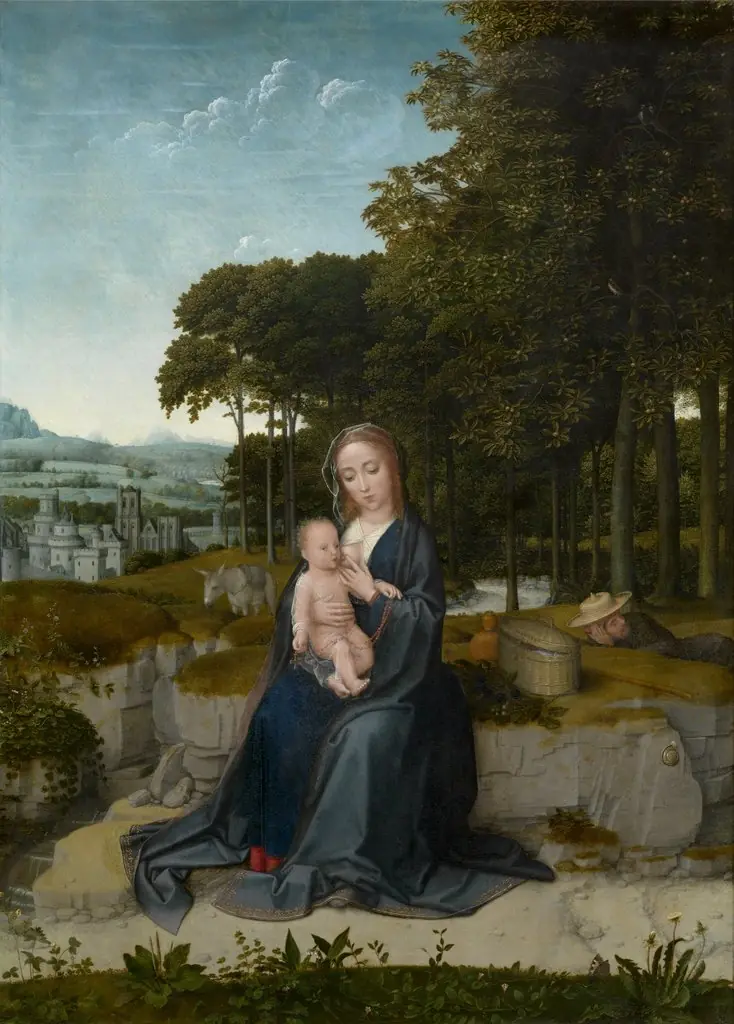
Joseph is shown shaking a chestnut tree to dislodge nuts, a detail absent in David’s near-identical Madrid, New York, and Antwerp variants.
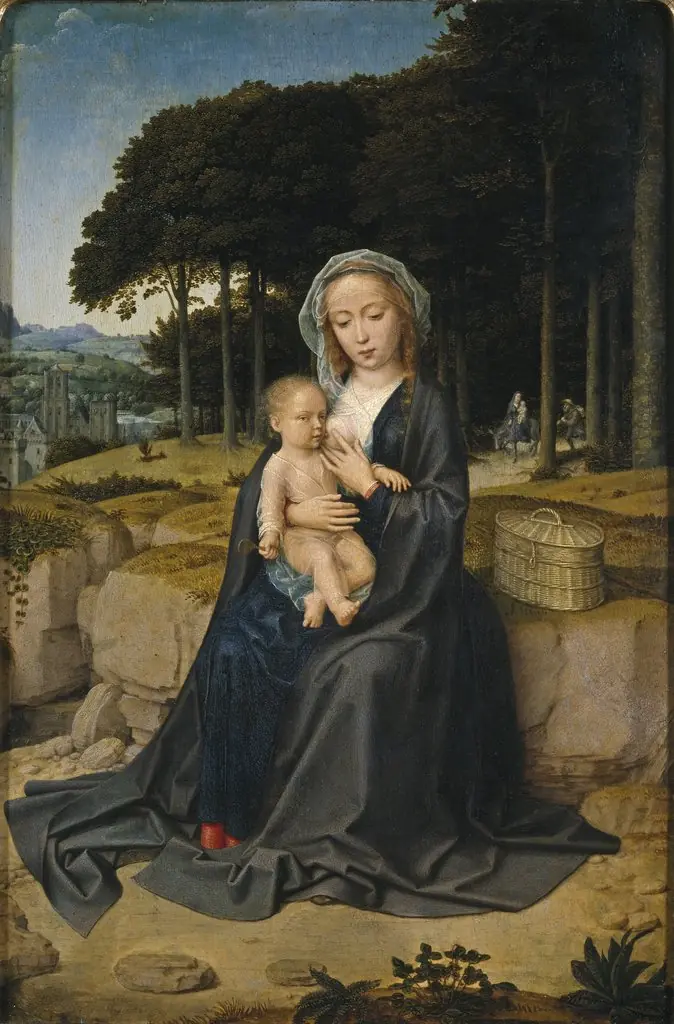
Gerard David’s The Rest on the Flight into Egypt (1510) depicts the Holy Family, Mary, the Christ Child, and Joseph, during their journey to Egypt, a narrative drawn from the Gospel of Matthew and expanded by apocryphal traditions. Unlike David’s other versions of the theme, this composition centers on Mary offering the Christ Child a bunch of grapes, a Eucharistic symbol representing Christ’s future sacrifice and the wine of the Last Supper. Joseph is shown shaking a chestnut tree to dislodge nuts, a detail absent in David’s near-identical Madrid, New York, and Antwerp variants.
The forest landscape, rendered in broad, bluish tones, contrasts with the more meticulously detailed backgrounds of his other works, emphasizing the intimate, devotional moment over narrative action.
Technique & Style
Gerard David’s The Rest on the Flight into Egypt (1510) is executed in oil on a wooden panel, a characteristic medium and support for Early Netherlandish painting [1, 2]. The handling demonstrates refined layering typical of the period, with meticulous attention to detail in the foreground figures, particularly the Virgin’s drapery and the Christ Child’s form. The bluish landscape, however, is rendered with broader, more summary brushwork compared to the finely articulated backgrounds in David’s other versions of the theme [3, 4].
Stylistically, the composition diverges from his near-identical variants by emphasizing symbolic elements, such as the bunch of grapes (Eucharistic reference) and Joseph shaking a chestnut tree, while maintaining the serene, hieratic arrangement of figures central to his religious works [3, 4].
History & Provenance
Created around 1510 by Gerard David, this oil-on-panel painting was likely produced for the open market rather than a specific commission, as the artist created multiple versions of the theme with varying compositions. The work's documented history begins with its acquisition circa 1845 by the Reverend Montague Taylor of London. It was sold at Christie's in May 1897 before passing through the London dealer P. & D. Colnaghi and Co. to Rodolphe Kann in Paris in March 1898.
Following Kann's death, the Duveen Brothers acquired the piece from his estate in 1907. J. Pierpont Morgan, Sr. purchased the painting circa 1908, and it subsequently moved to M. Knoedler & Co. in New York. The A.W. Mellon Educational and Charitable Trust bought the work in December 1935, finally gifting it to the National Gallery of Art in 1937.
Gerard David’s The Rest on the Flight into Egypt (1510) is held by the National Gallery of Art in Washington, D.C., where it forms part of the Andrew W. Mellon collection. The painting carries the accession number 1937.1.52, reflecting its acquisition in 1937 as a gift from The A.W. Mellon Educational and Charitable Trust. Prior to its permanent installation at the National Gallery, the work was exhibited in key contexts, including its inclusion in scholarly surveys of Early Netherlandish painting, such as the 1986 exhibition documented by John Oliver Hand and Martha Wolff.
Context
Gerard David’s The Rest on the Flight into Egypt (c. 1510) belongs to a series of works on this theme executed by the artist in the final decade of his career, reflecting the sustained interest in devotional narratives within Early Netherlandish painting. Unlike his other versions, such as those in New York, Madrid, and Antwerp, this Washington panel diverges compositionally by centering the Virgin breastfeeding the Christ Child with a cluster of grapes, a Eucharistic symbol, while Joseph actively gathers chestnuts, a motif absent from the other iterations. Art-historical discussion situates the work within David’s late-career practice, which often emphasized intimate, domestic piety and expansive, atmospheric landscapes.
The painting’s provenance underscores its later canonical status: after passing through notable dealers such as Duveen Brothers and Knoedler, it entered the A.W. Mellon collection before its 1937 gift to the National Gallery of Art, cementing its place in American institutional holdings.
Overview
Gerard David's painting, The Rest on the Flight into Egypt, executed around 1510, is an oil on panel work. It depicts a moment of respite during the Holy Family's journey. This piece is currently housed in the collection of the National Gallery of Art in Washington, D.C., representing a characteristic example of early 16th-century Flemish painting.
Own this work as a print
Artist & collection
Artist
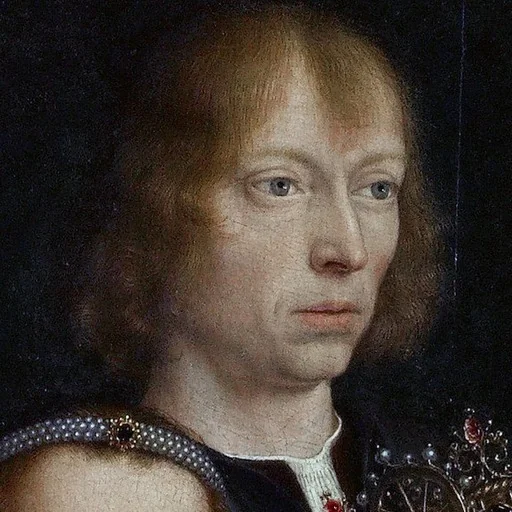
Gerard David (c. 1460 – 13 August 1523) was an Early Netherlandish painter and manuscript illuminator known for his brilliant use of color. Only a bare outline of his life survives, although some facts are known. He may…

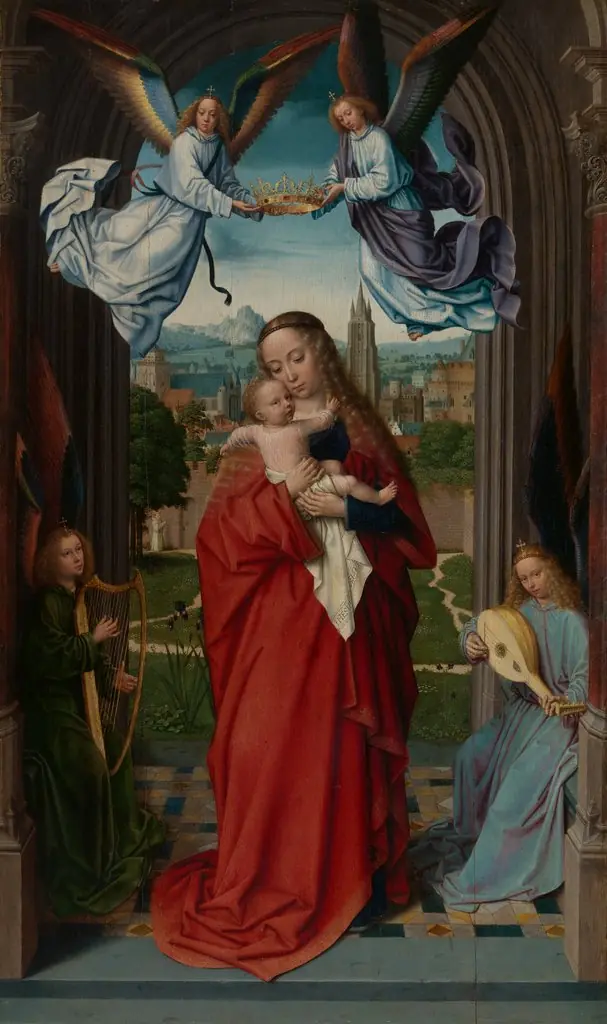 Virgin and Child with Four Angels
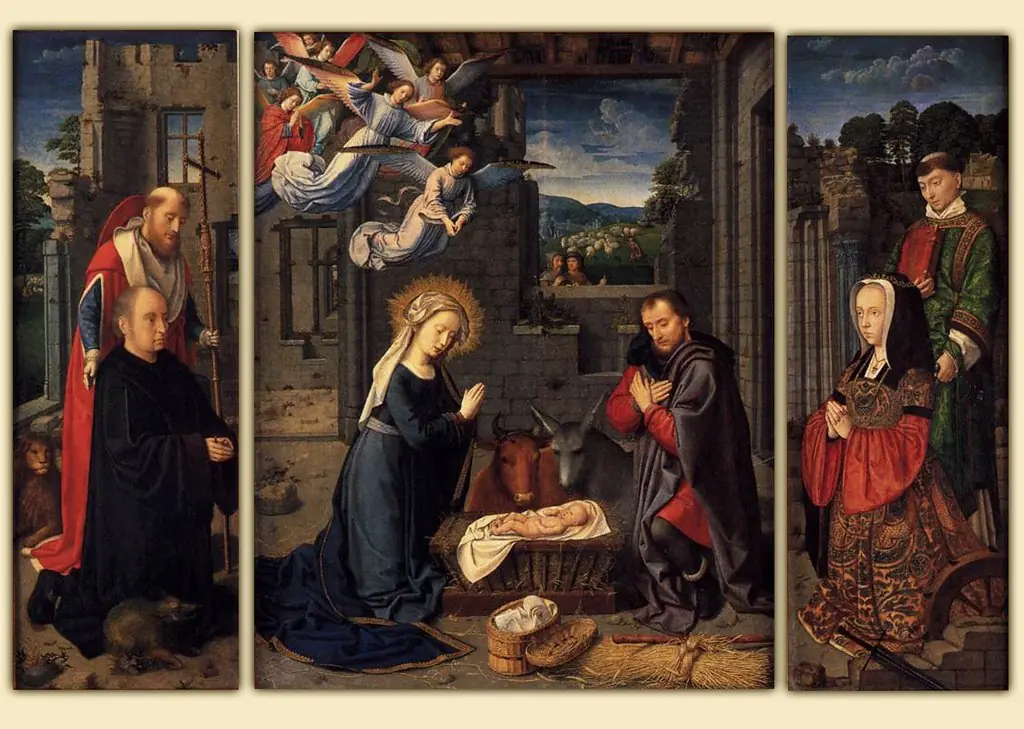 The Nativity with Donors and Saints Jerome and Leonard
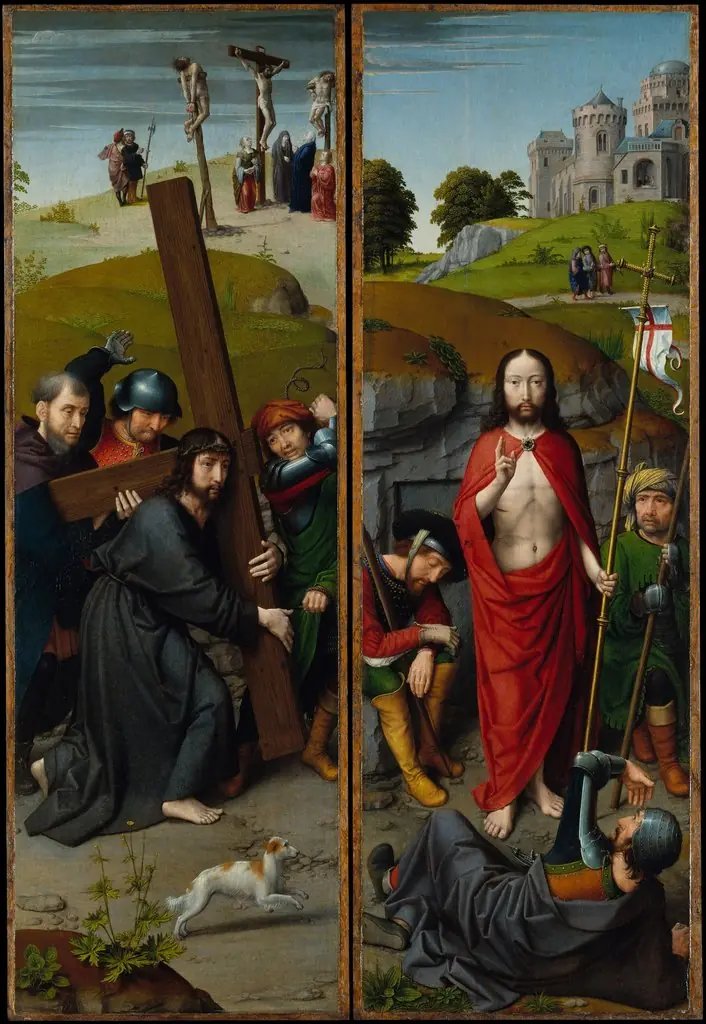 Christ Carrying the Cross, with the Crucifixion; The Resurrection, with the Pilgrims of Emmaus
 Christ Carrying the Cross, with the Crucifixion; The Resurrection, with the Pilgrims of Emmaus
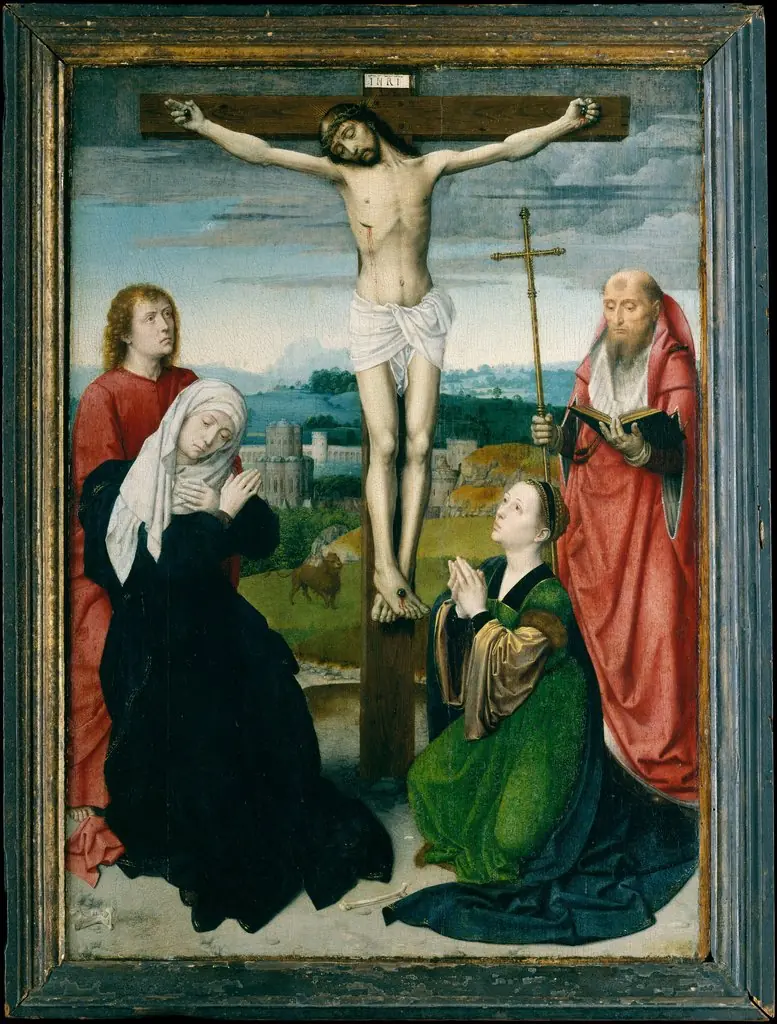 The Crucifixion
![The Saint Anne Altarpiece: Saint Anne with the Virgin and Child [middle panel], by Gerard David](https://artifactworldgallery.com/img/gerard-david--the-saint-anne-altarpiece-saint-anne-with-the-virgin-and-chi--781e919f9012a004-w320.webp) The Saint Anne Altarpiece: Saint Anne with the Virgin and Child [middle panel]
The Saint Anne Altarpiece: Saint Anne with the Virgin and Child [middle panel]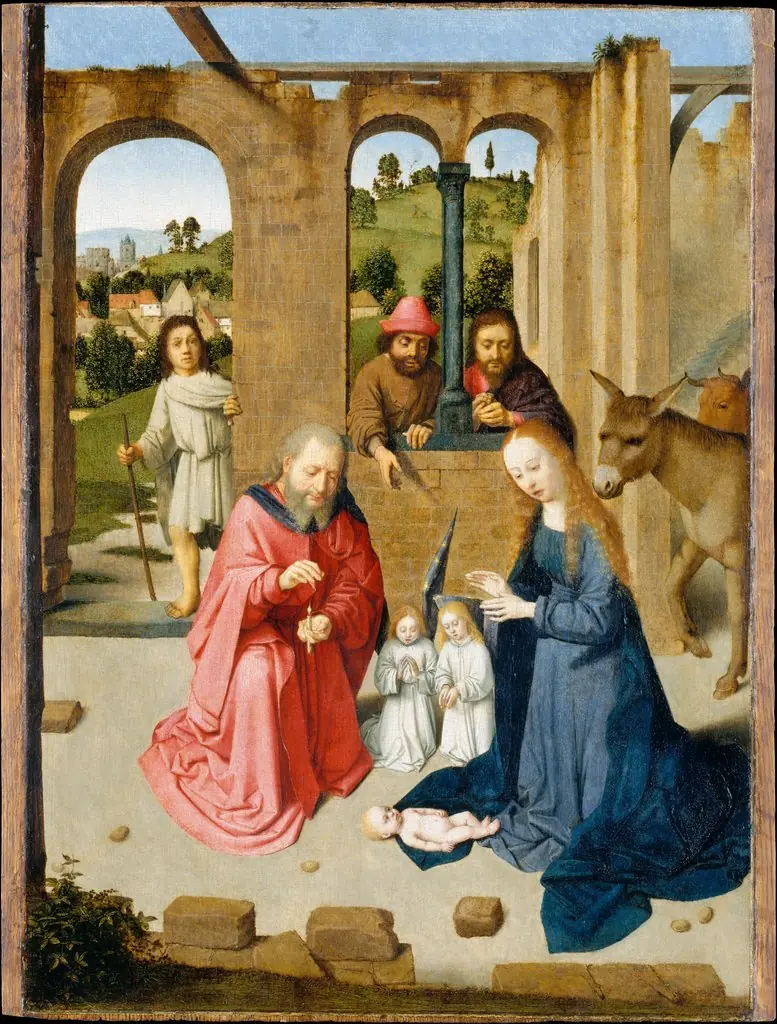 The Nativity
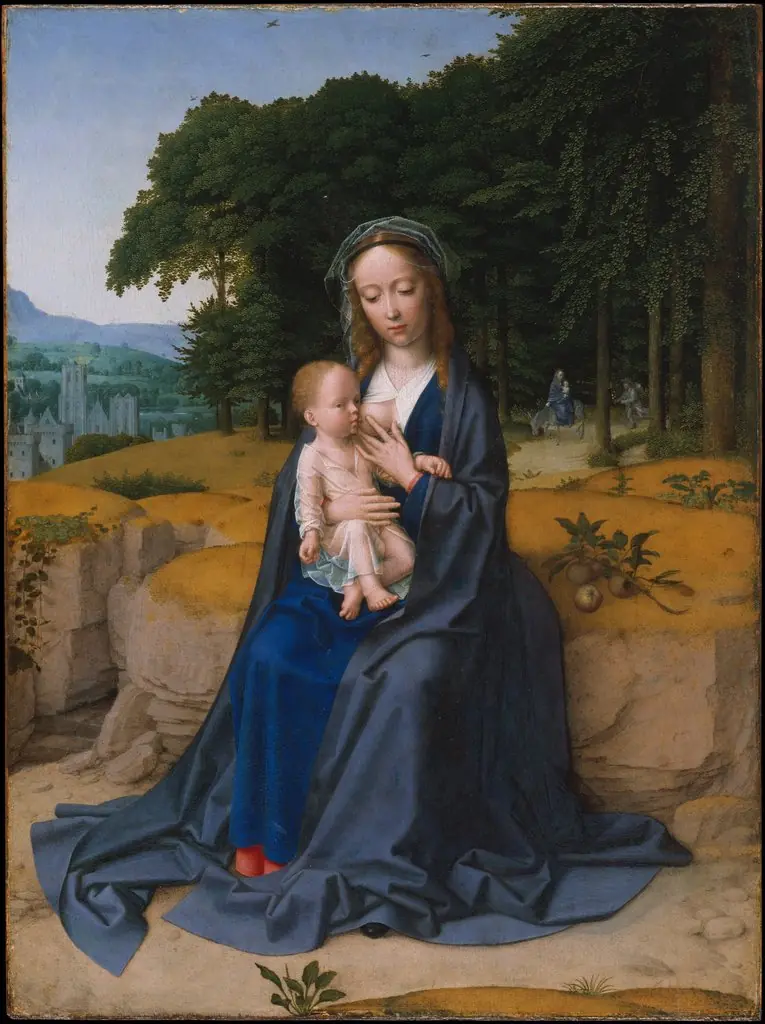 Rest on the Flight into Egypt
- The Rest on the Flight into Egypt
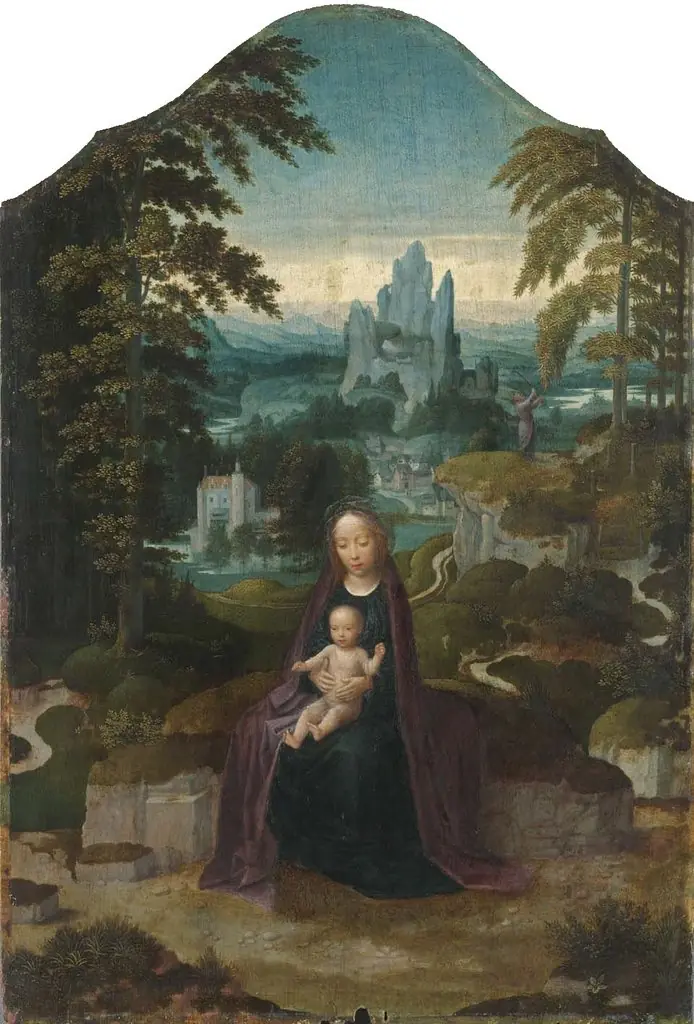 The Rest on The Flight into Egypt
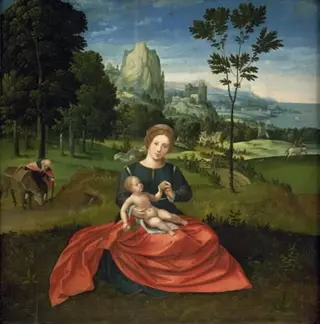 The Rest on the Flight into Egypt
 Rest on the Flight into Egypt
 Rest on the Flight into Egypt
 Rest on the flight into Egypt
 Virgin and Child
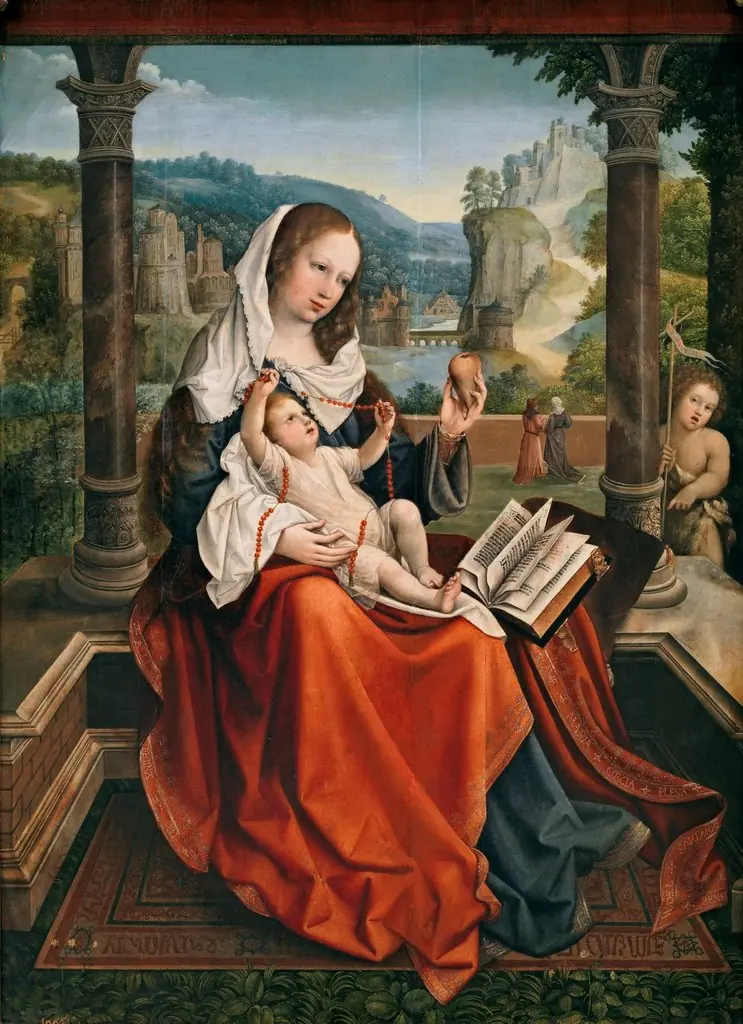 The Virgin and Child with the Infant Saint John the Baptist
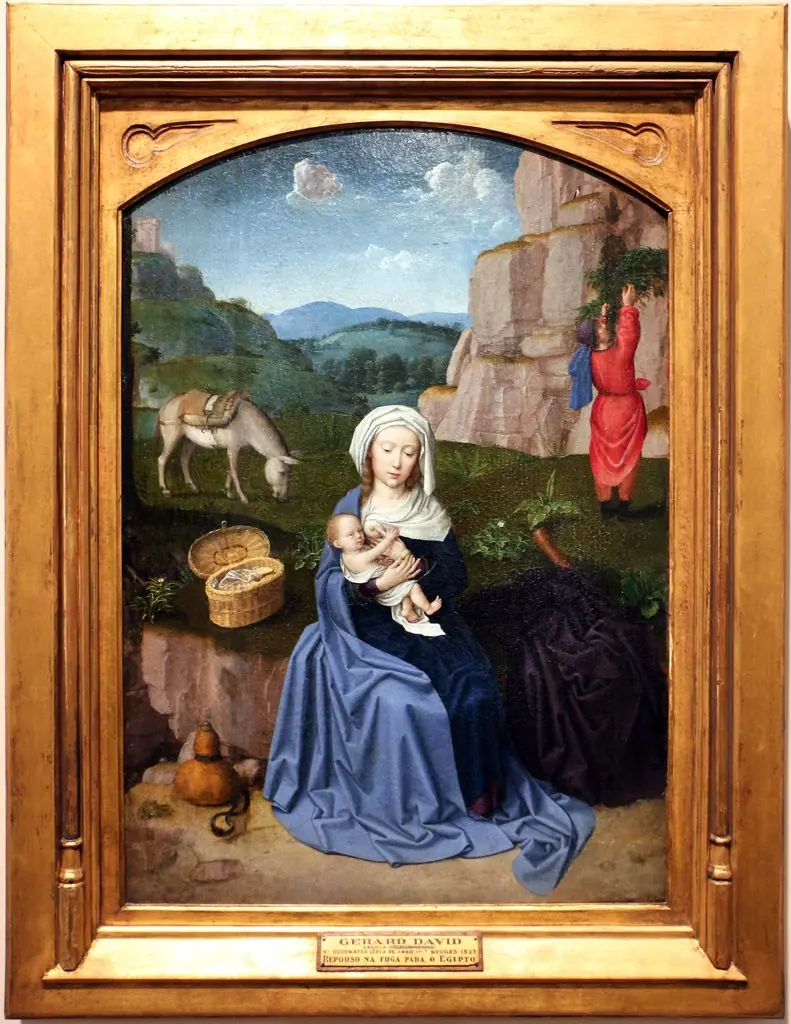 Rest on the Flight into Egypt
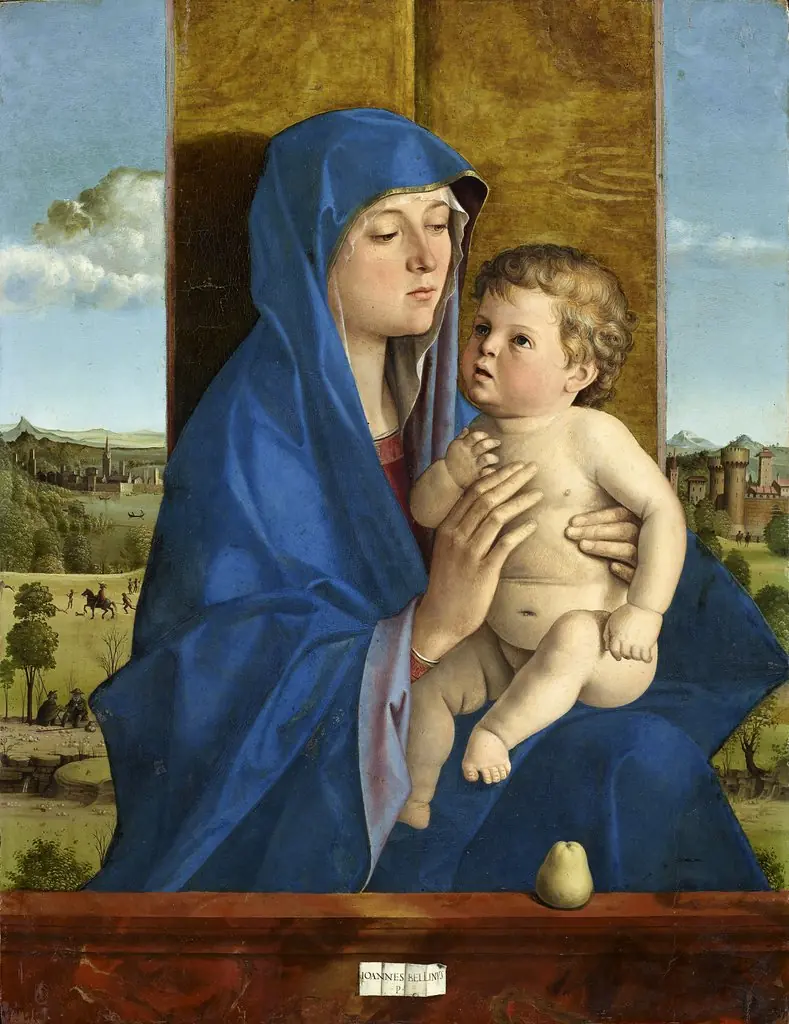 Alzano Madonna
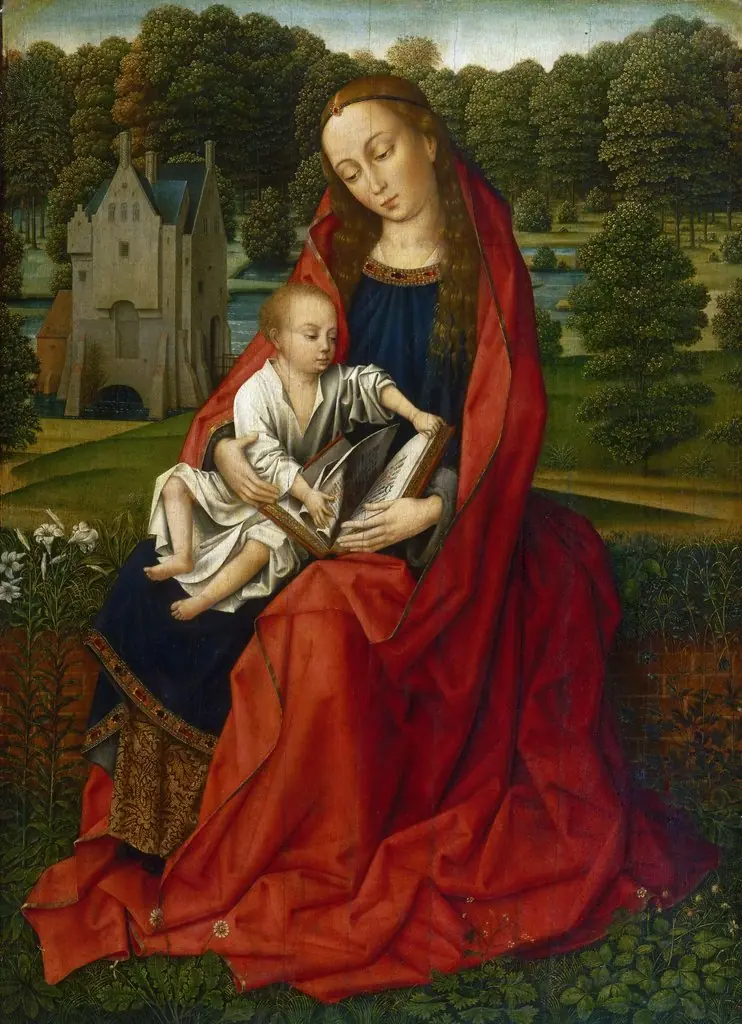 Virgin and Child in a Landscape