Artwork
Virgin and Child with Four Angels
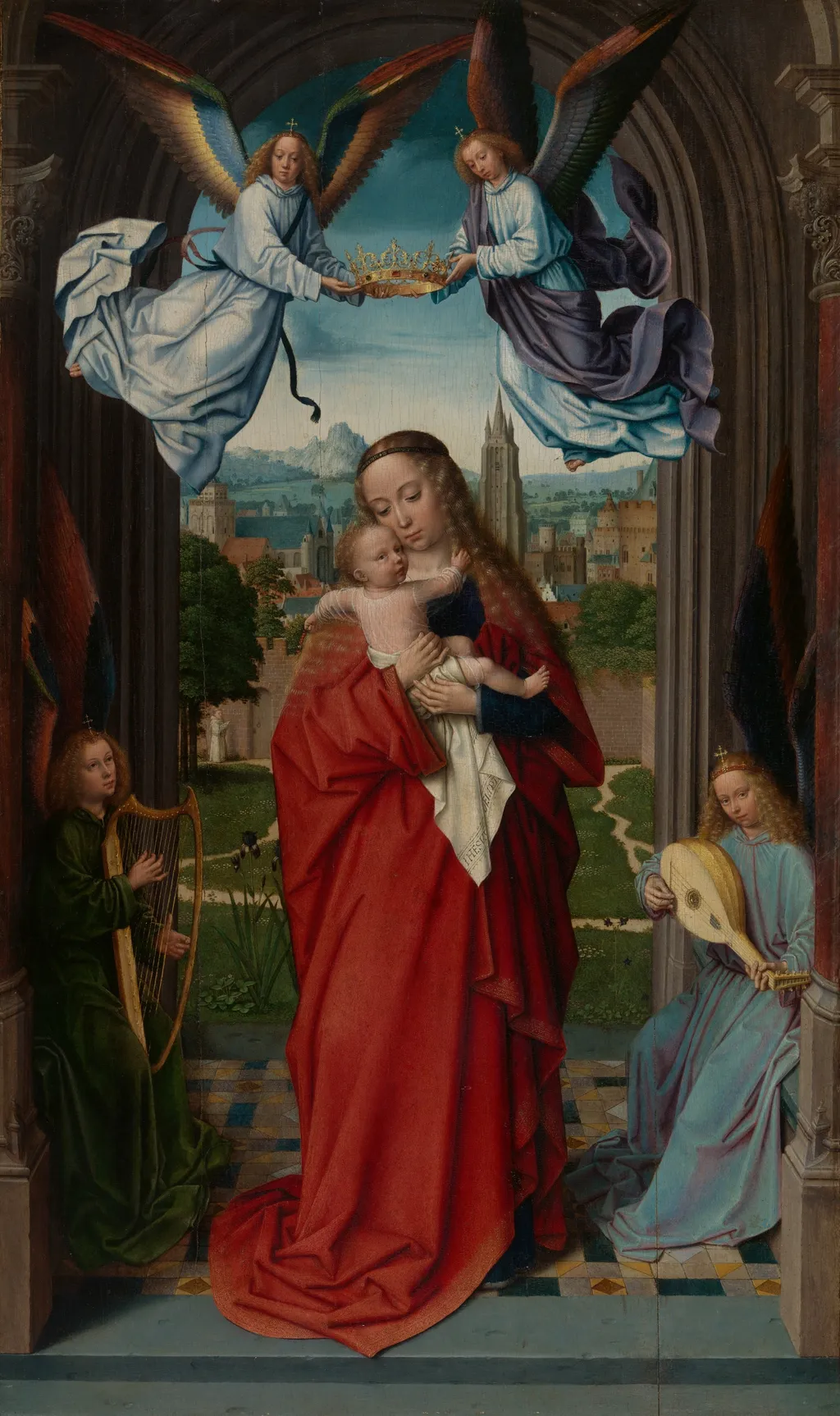
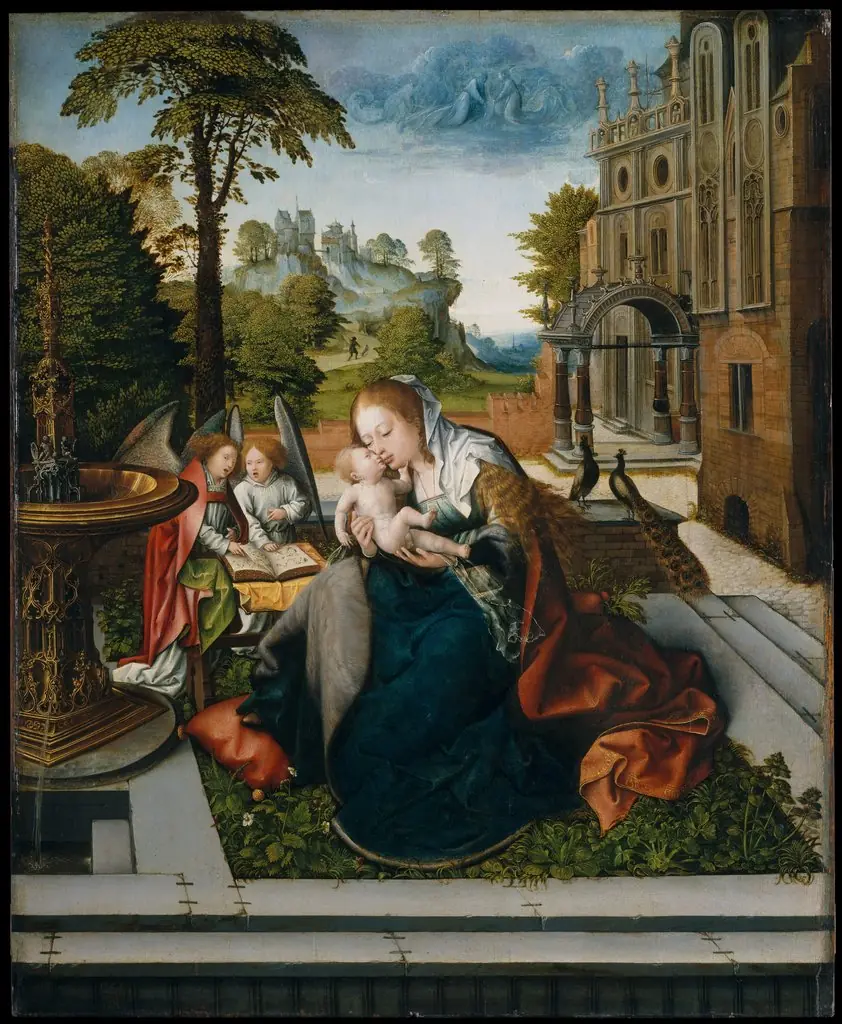
Virgin and Child with Four Angels is an oil painting by the Northern Renaissance artist Gerard David. It dates from 1510 and is held in the collection of the Metropolitan Museum of Art.
About this work
Two angels lower a golden crown onto Mary's head while another pair plays harp and lute in a walled garden outside Bruges. Gerard David composed the panel around 1510, borrowing the Virgin and Child from Jan van Eyck but setting them among Italianate columns and the skyline of his adopted city. A Carthusian monk reads beneath a tree behind them.
Subject & Meaning
The painting depicts the Virgin Mary crowned Queen of Heaven by two angels, while two others play a harp and lute.
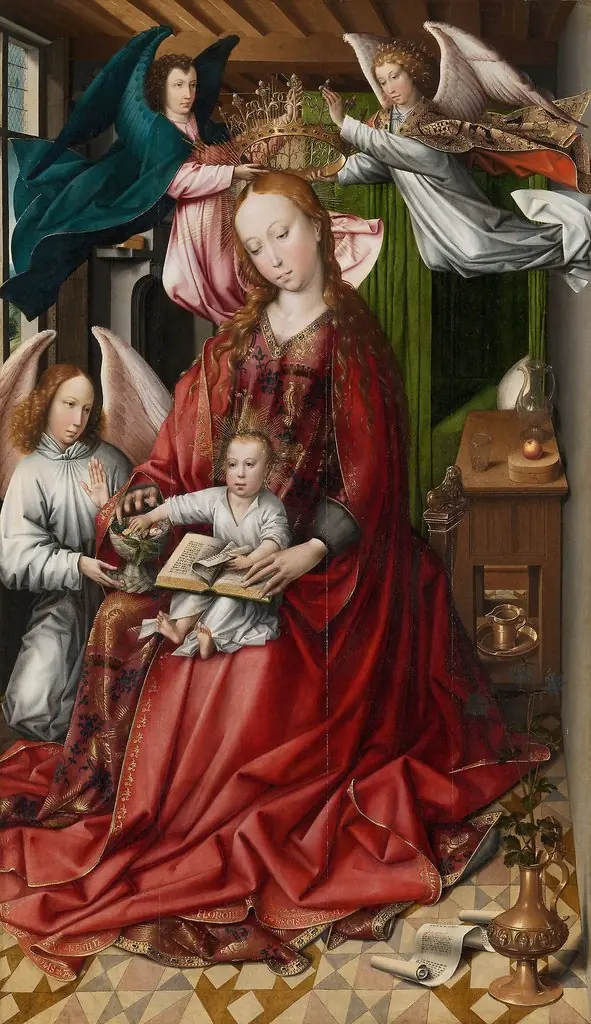
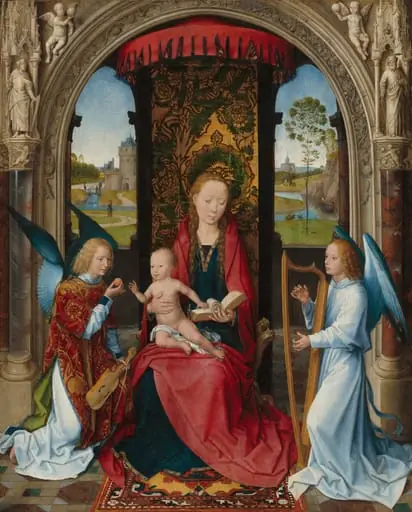
The painting depicts the Virgin Mary crowned Queen of Heaven by two angels, while two others play a harp and lute. The scene unfolds in a walled garden (hortus conclusus), symbolizing Mary's purity and virginity, with a panoramic view of Bruges showing the Church of Our Lady and Sint-Jakobs church. The inscription 'IHESVS REDEMPTOR' on the columns identifies Christ as Redeemer.
Commissioned for private devotion, the work was a venerated icon. Stylistically, it humanizes the Virgin and Child, portraying them as an affectionate mother and son rather than remote deities, a Renaissance transformation noted in art historical analysis.
Technique & Style
Painted in oil on a wood panel, the work measures 63.2 × 39.1 cm. David employed a narrow, fine brush to achieve the exceptionally detailed and vivacious handling visible in the miniature gold stitches lining the Virgin's red gown and the fine strands of her blonde hair. The composition is highly symmetrical: the central Virgin and Child are flanked by two pairs of angels, and the landscape and architecture are balanced on either side. Figures are stylized and elongated, with Mary significantly larger than the angels, lending an ethereal, unnatural presence.
All eyes avert the viewer except the Christ Child's. The painting bears an inscription reading "IHESVS [RE]DEMPT[OR]" on the columns, reinforcing its devotional function. The fine detail and lush color are characteristic of David's late Flemish style.
History & Provenance
Painted circa 1510 by Gerard David, Virgin and Child with Four Angels likely served as the center panel of a triptych or small winged altarpiece that was later disassembled. The presence of a Carthusian monk in the garden suggests a commission from a member of the Genadedal monastery in Sint-Kruis near Bruges. David inscribed "IHESVS [RE]DEMPT[OR]" ("Jesus Redeemer") on the columns.
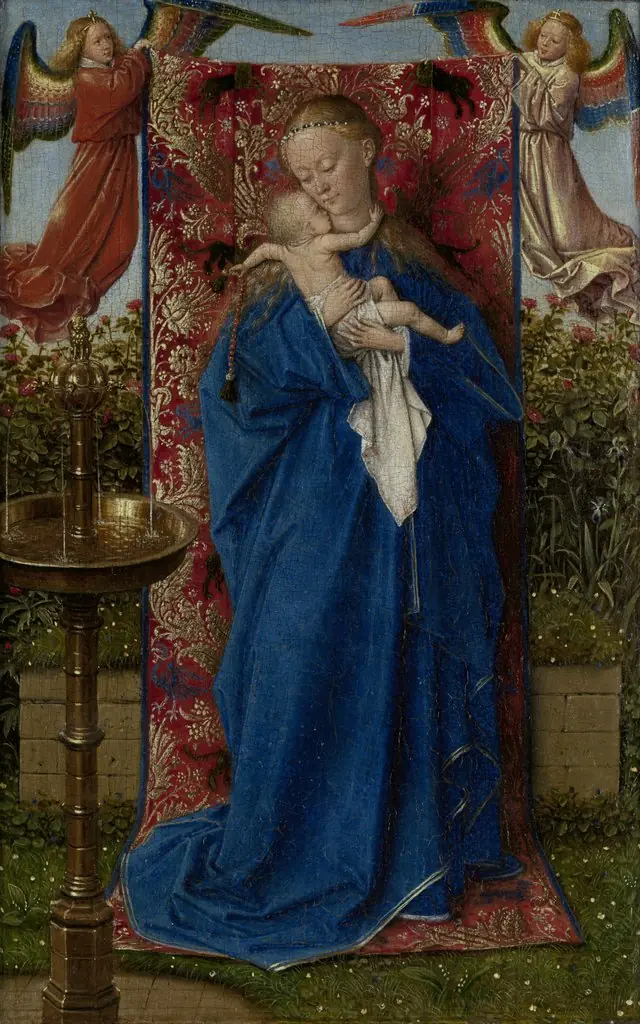
The painting is heavily based on Jan van Eyck's Virgin and Child at a Fountain, a common practice for devotional panels at the time. The work entered the Metropolitan Museum of Art, New York, in 1977 via donation from a private collection.
Context
The painting, executed around 1510 by Gerard David, a leading figure of the Bruges school within Early Netherlandish painting, exemplifies the late period of Flemish art. Art historian Maryan Ainsworth describes it as a devotional object for venerating an esteemed icon, noting the Byzantine influence that filtered through Jan van Eyck's earlier work. The composition is heavily indebted to van Eyck's Virgin and Child at a Fountain, yet David humanizes the Virgin and Child, presenting them as an affectionate mother and son rather than remote deities, a shift that aligns with early Renaissance tendencies.
The inclusion of a recognizable view of Bruges and the Carthusian monk situates the work in its local devotional context. Scholars regard the panel as a refined example of private devotional imagery, reflecting both technical virtuosity and the evolving religious iconography of the period.
Overview
Gerard David's "Virgin and Child with Four Angels" is a small oil-on-panel painting, likely completed between 1510 and 1515. This devotional work portrays the Virgin Mary holding the infant Jesus, while four angels attend to them in a serene garden setting. The painting exemplifies the detailed execution and rich color palette characteristic of David's late career and the broader tradition of Early Netherlandish art.
Own this work as a print
Artist & collection
Artist
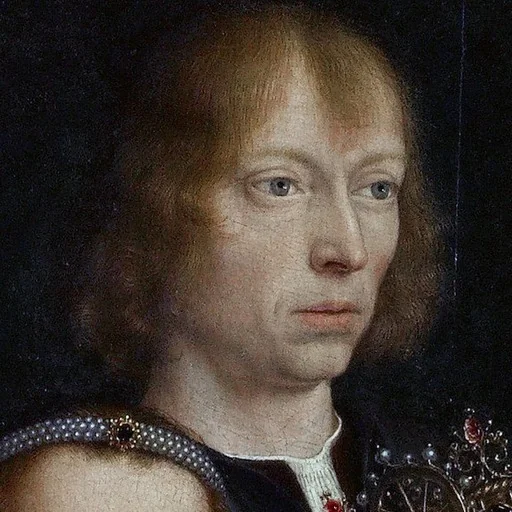
Gerard David (c. 1460 – 13 August 1523) was an Early Netherlandish painter and manuscript illuminator known for his brilliant use of color. Only a bare outline of his life survives, although some facts are known. He may…

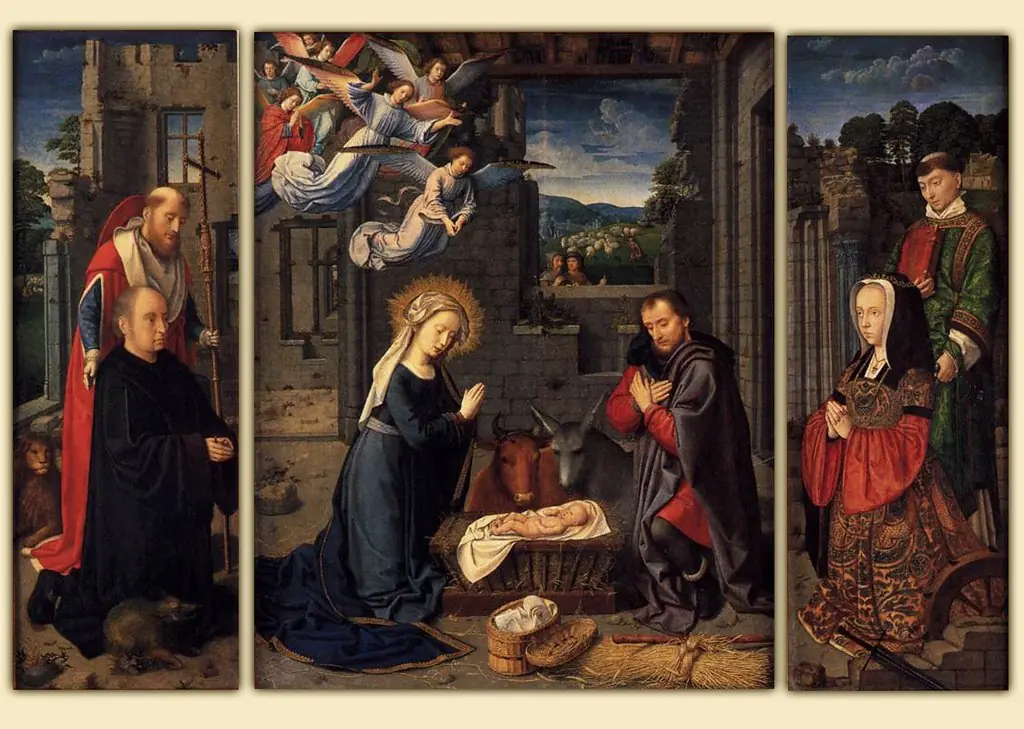 The Nativity with Donors and Saints Jerome and Leonard
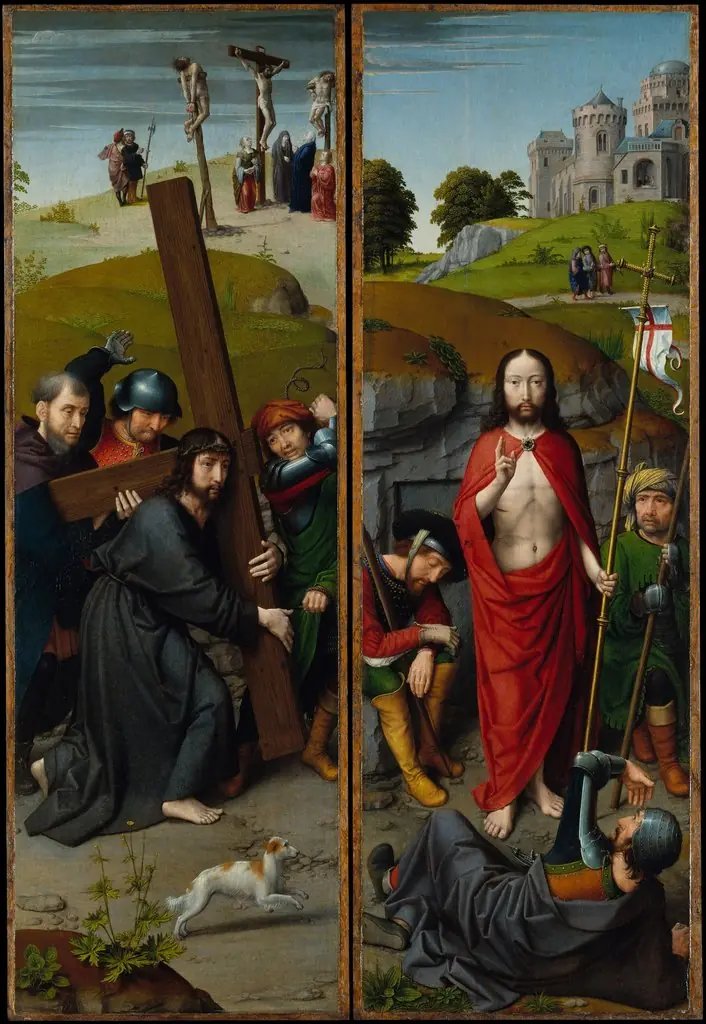 Christ Carrying the Cross, with the Crucifixion; The Resurrection, with the Pilgrims of Emmaus
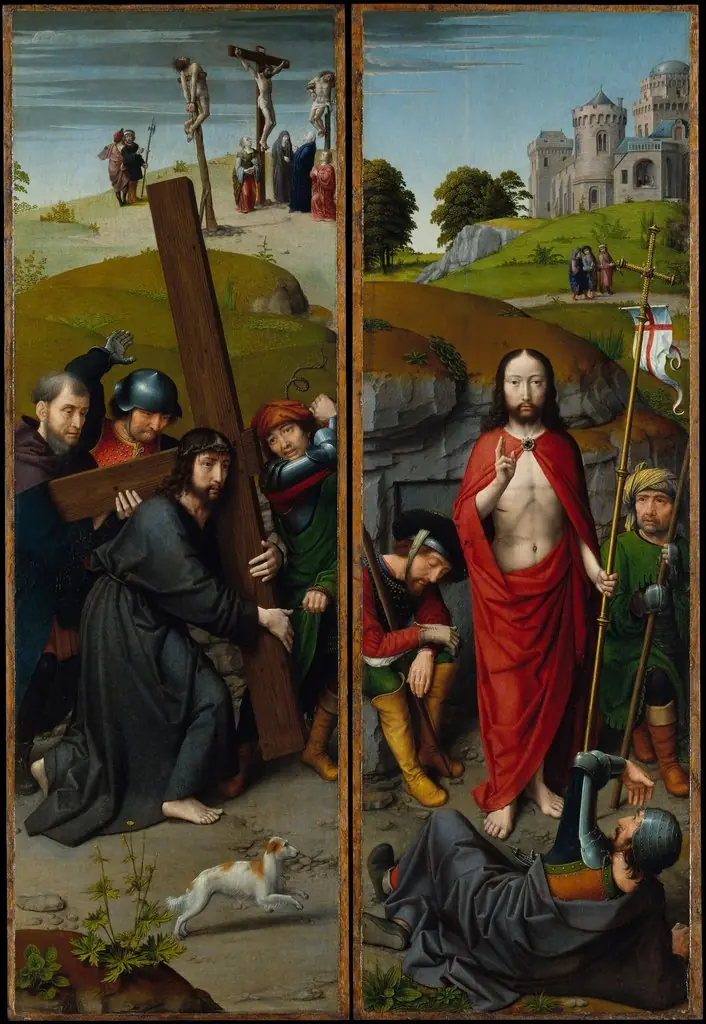 Christ Carrying the Cross, with the Crucifixion; The Resurrection, with the Pilgrims of Emmaus
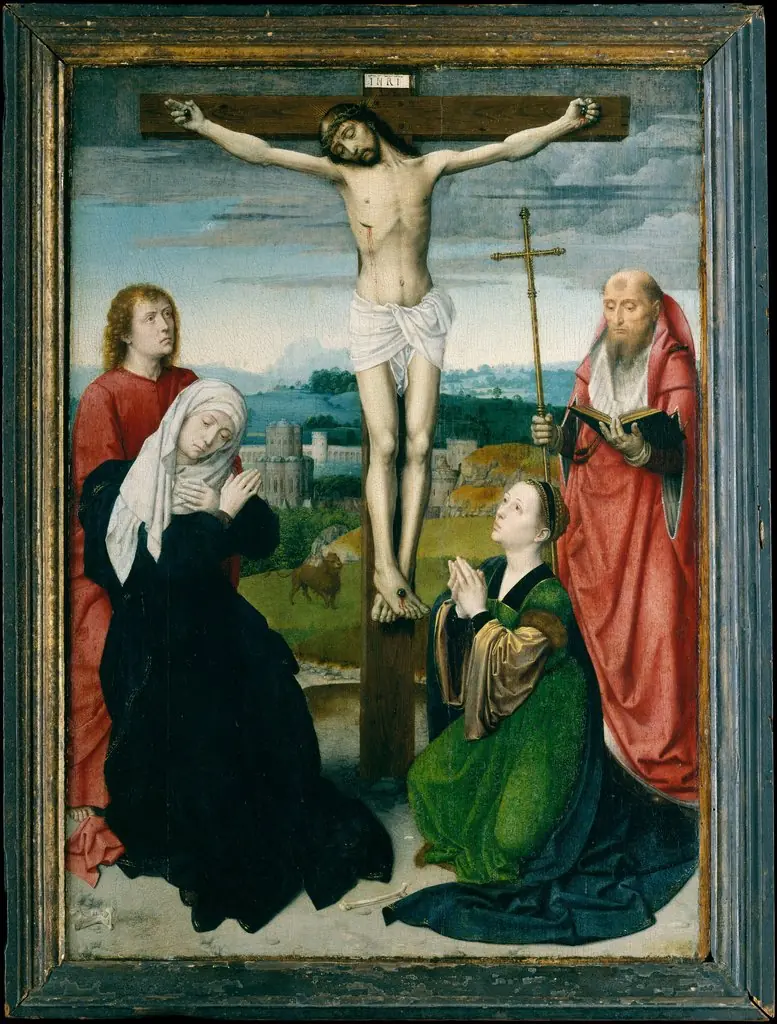 The Crucifixion
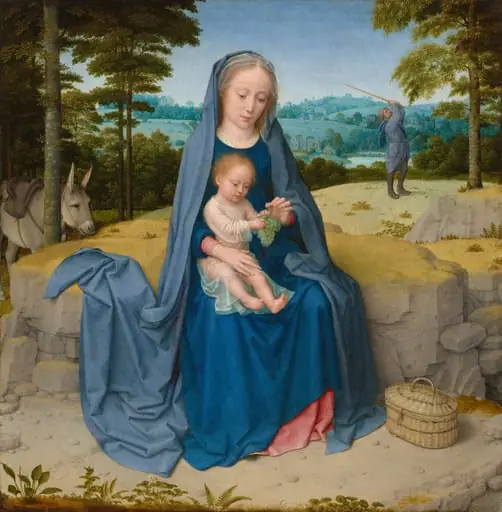 The Rest on the Flight into Egypt
![The Saint Anne Altarpiece: Saint Anne with the Virgin and Child [middle panel], by Gerard David](https://artifactworldgallery.com/img/gerard-david--the-saint-anne-altarpiece-saint-anne-with-the-virgin-and-chi--781e919f9012a004-w320.webp) The Saint Anne Altarpiece: Saint Anne with the Virgin and Child [middle panel]
The Saint Anne Altarpiece: Saint Anne with the Virgin and Child [middle panel]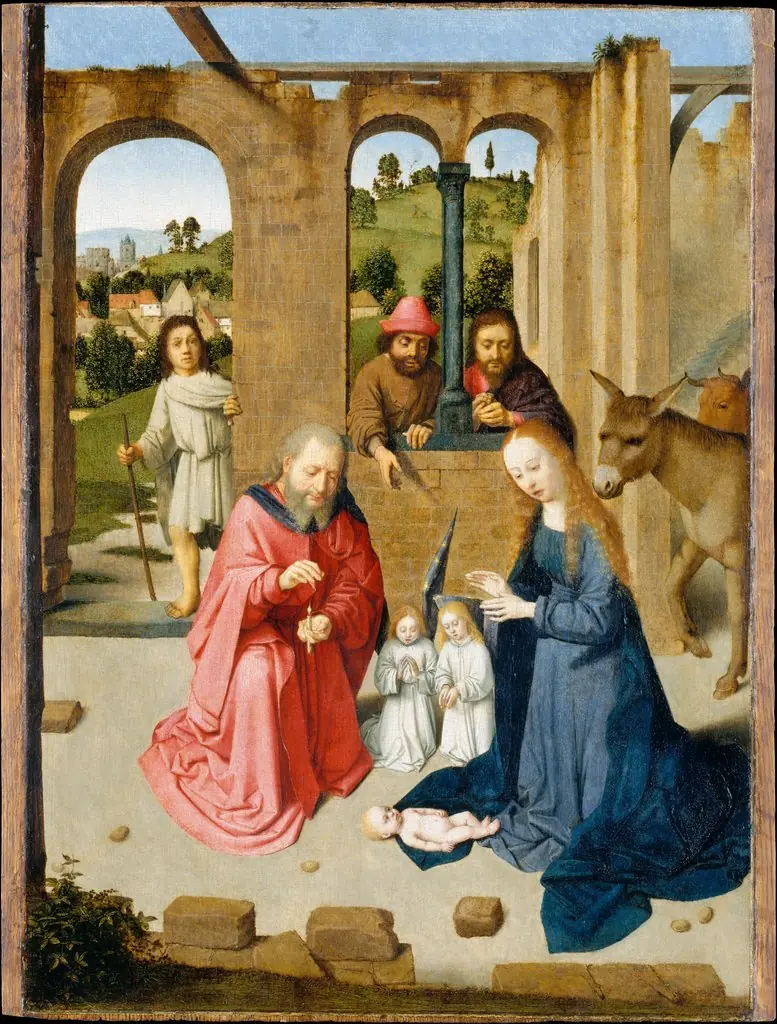 The Nativity
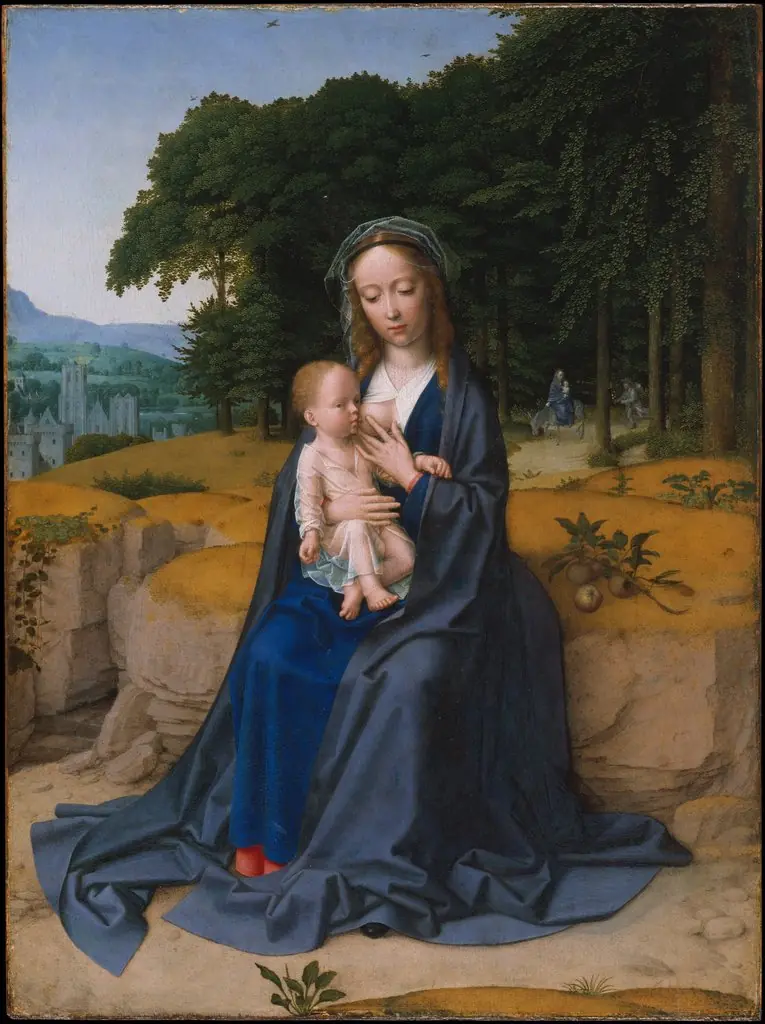 Rest on the Flight into Egypt