Artwork
Corn Husking
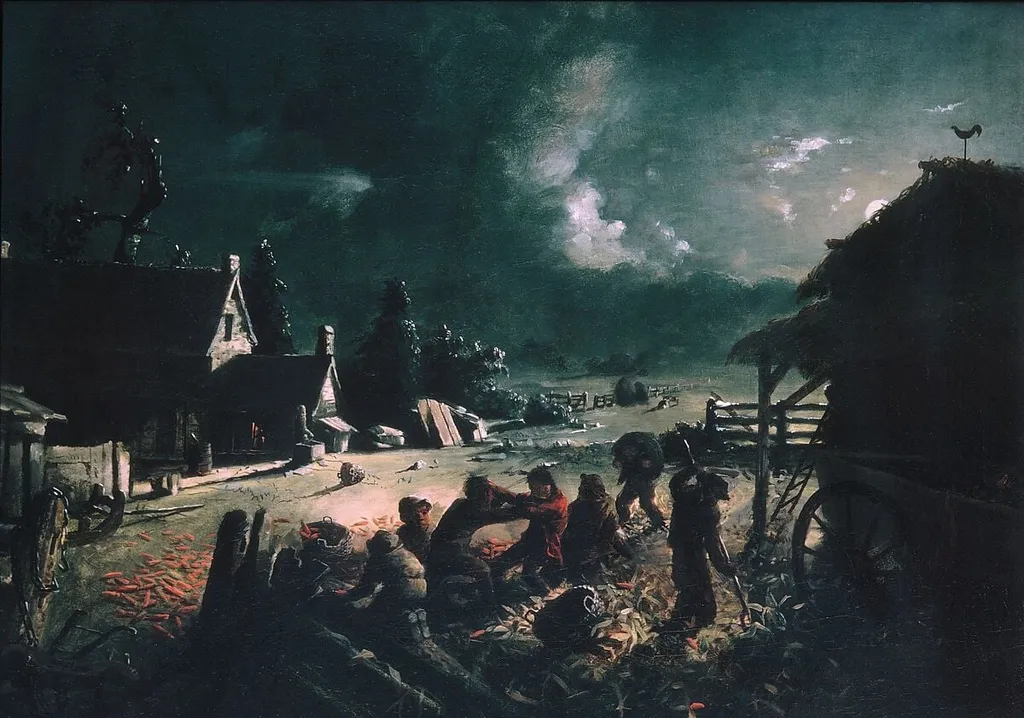
Corn Husking is an oil painting by the American Folk Art artist David Gilmour Blythe. It dates from 1864 and is held in the collection of the Metropolitan Museum of Art.
About this work
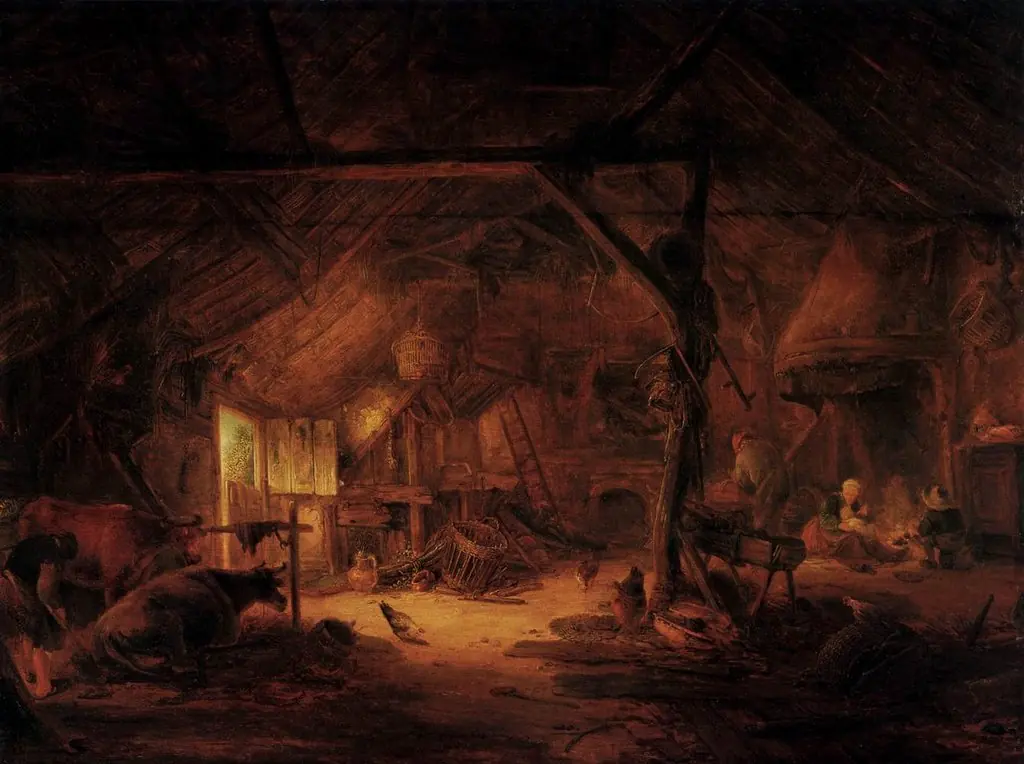
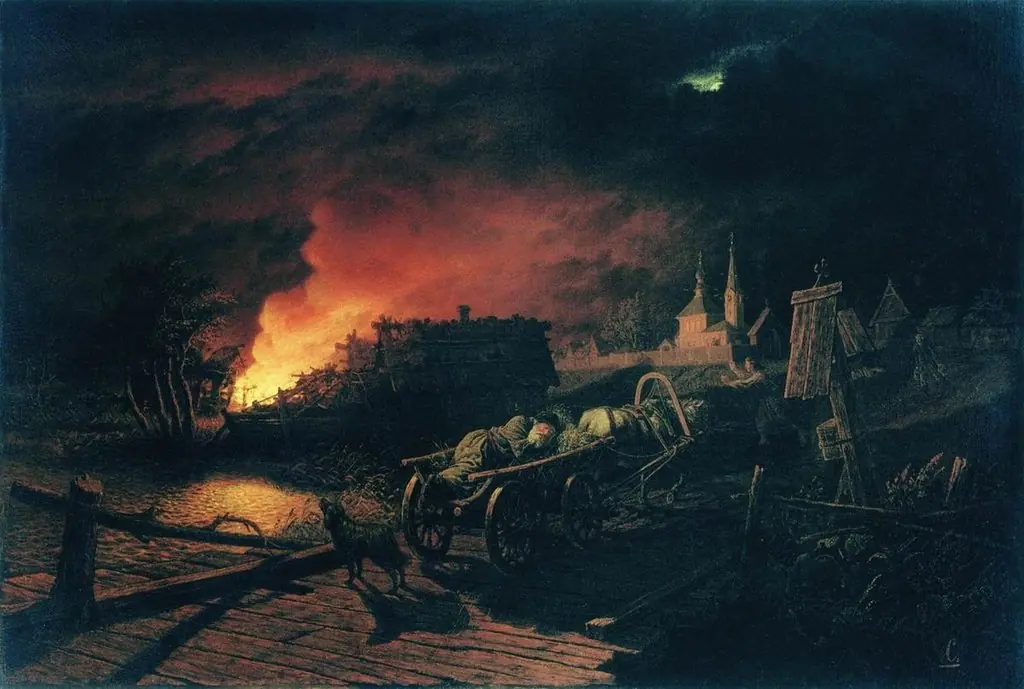
Two men husk corn by lantern light in a dim barn. It is night, but their work glows under the oil lamps, and the scene stays quiet, just two figures and heaped corn. Blythe painted it in 1864, as the Civil War ended and farms like this covered the country. His rough, almost cartoonish handling makes it stand out.
Subject & Meaning
The imagery of a solitary figure engaged in the manual processing of corn serves as a representation of American farm life during the Civil War era.
David Gilmour Blythe's 1863 oil painting, Corn Husking, depicts a nocturnal genre scene centered on the agricultural labor of husking maize. The composition features a man working on a farm in front of a house, illuminated against the night setting. While the work presents a straightforward documentation of rural life, the specific choice to portray this activity at night imbues the scene with a distinct atmosphere.
The imagery of a solitary figure engaged in the manual processing of corn serves as a representation of American farm life during the Civil War era. The visual elements, the house, the farm, the maize, and the darkness, combine to create a narrative focused on the physical realities of agricultural work, capturing a moment of daily existence within a specific historical and environmental context.
Technique & Style
The painting Corn Husking (1863) is executed in oil on canvas, a support typical of mid‑nineteenth‑century American genre works. Measuring 61 cm by 85.1 cm, the canvas accommodates a nocturnal interior in which a solitary man is shown husking maize by lamplight. Blythe’s technique employs fine brushwork to render the texture of the husk and the subtle gradations of shadow, creating a naturalistic scene that emphasizes the quiet labor of rural life.
The composition is organized around the figure and the surrounding farm elements, reflecting the genre‑scene tradition of detailed, narrative-driven depictions of everyday activities.
History & Provenance
David Gilmour Blythe created the oil painting Corn Husking in 1863. The work, which depicts a nocturnal farm scene involving maize processing, has been part of the collection at the Metropolitan Museum of Art. While the specific circumstances regarding its original commission or the details of its ownership chain prior to entering the museum are not detailed in the available records, the piece is firmly dated to the artist's active period during the early 1860s. It is currently classified within the American Wing of the institution.
Context
David Gilmour Blythe’s 1863 oil on canvas, Corn Husking, exemplifies mid‑nineteenth‑century American genre painting. The work, classified as a genre scene and listed in The American Wing, portrays a nocturnal rural setting with a man engaged in husking maize, a motif documented in both the painting’s descriptive catalog and its Metropolitan Museum of Art entry. Its formal qualities, oil paint on canvas, dimensions of roughly 61 × 85 cm, and subject matter reflect contemporary interests in agrarian labor and domestic economy.
As part of the museum’s collection, the piece situates Blythe within the broader trajectory of American realism, offering insight into artistic representations of rural life during the post‑Civil War era.
Overview
Corn Husking, painted by David Gilmour Blythe in 1864, depicts two men engaged in the laborious task of removing corn husks within a dimly lit barn. Illuminated by the warm, localized glow of oil lamps, the figures are set against a dark, shadowed background, emphasizing the isolation and quiet intensity of their nocturnal work. Piles of harvested corn surround them, grounding the scene in the agricultural reality of the American Midwest.
Blythe, known for his satirical and often gritty genre scenes, created this work during the final year of the Civil War, a period when the nation's focus was shifting toward reconstruction and the stabilization of rural life. The painting reflects Blythe's characteristic interest in the unvarnished details of everyday existence, capturing a moment of mundane industry rather than idealized pastoralism. His composition relies on strong chiaroscuro to draw the viewer's eye to the hands and faces of the workers, highlighting the physical effort involved.
This piece stands as a significant example of Blythe's mid-career output, demonstrating his ability to find narrative depth in ordinary labor while documenting the social fabric of America during a time of profound transition.
Artist & collection
Artist
David Gilmour Blythe (May 9, 1815 – May 15, 1865) was a self-taught American artist best known for paintings which satirically portrayed political and social situations.