Artwork
The Bivouac
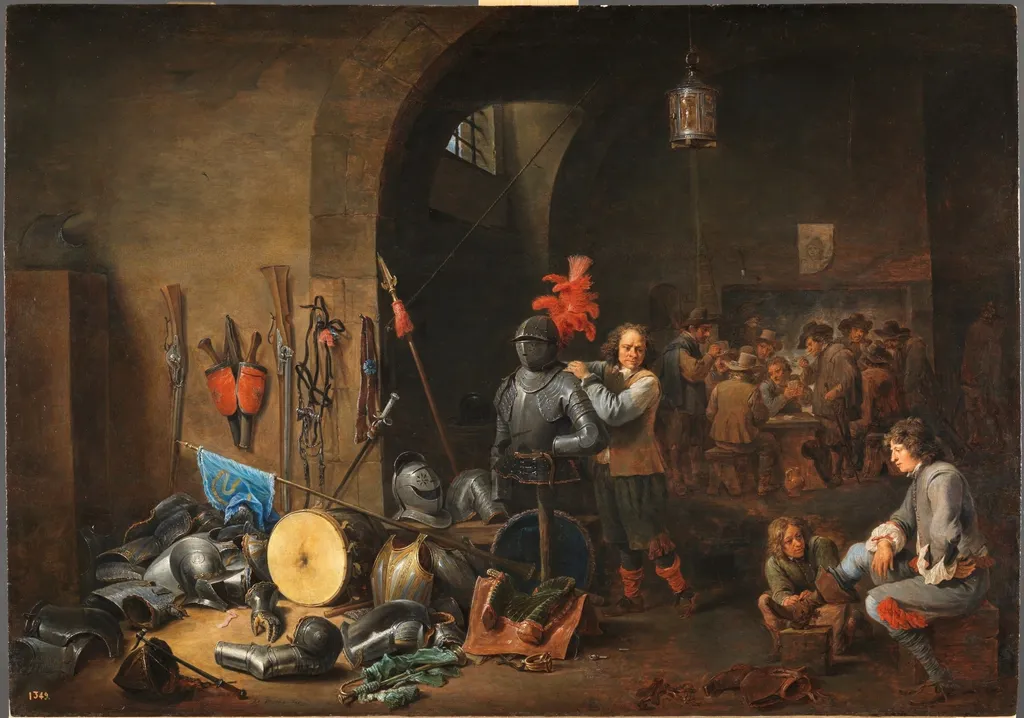
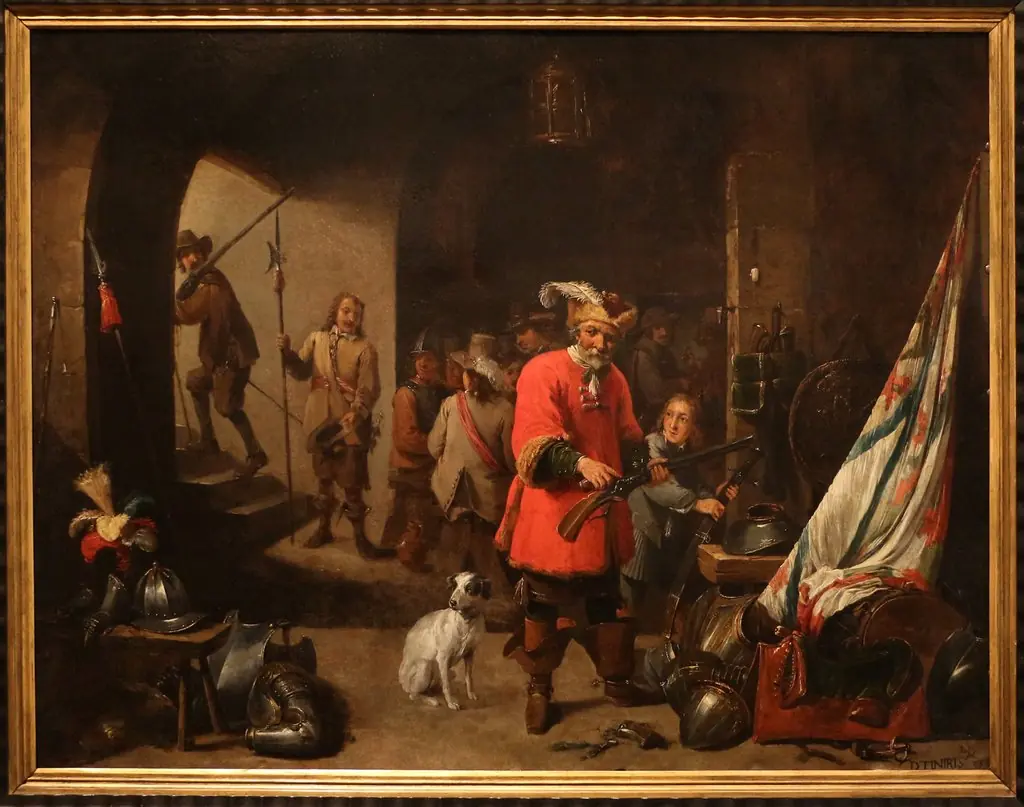
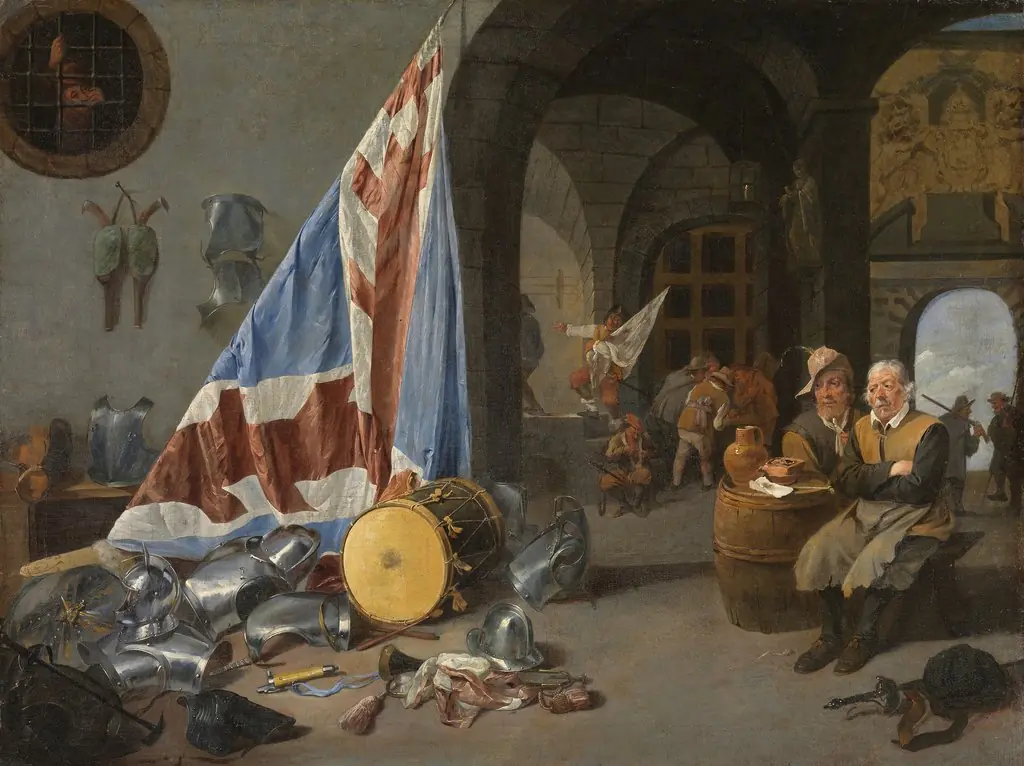
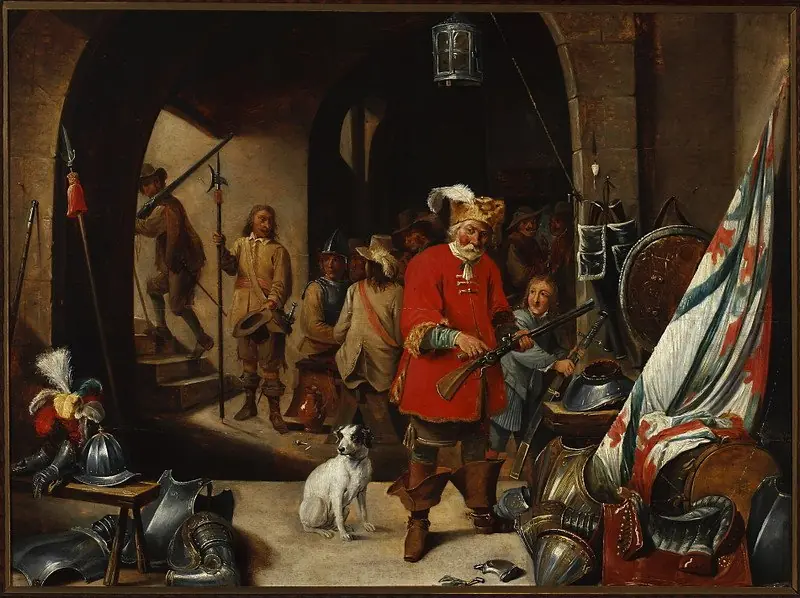
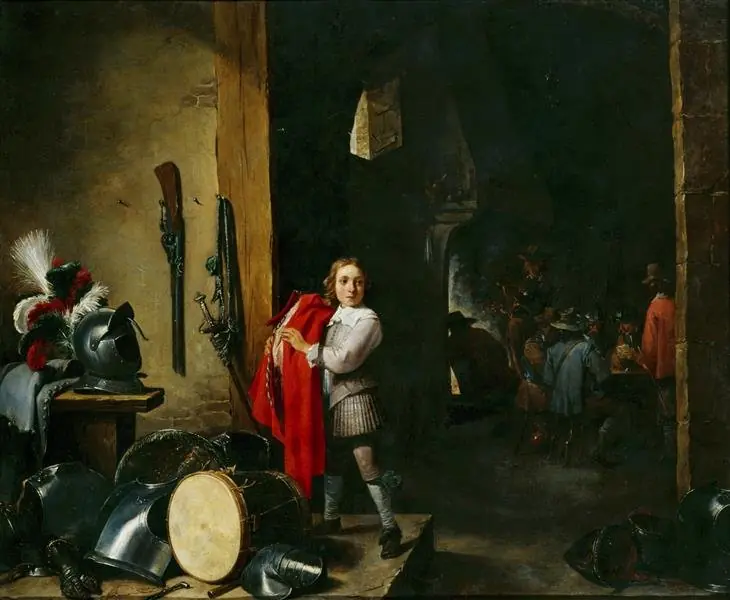
The Bivouac is an oil painting by the Flemish Baroque painting artist David Teniers the Younger. It dates from 1640 and is held in the collection of the Museo del Prado.
About this work
Subject & Meaning
The work is part of the Museo del Prado collection, where it is displayed as an emblematic scene rather than a narrative episode.
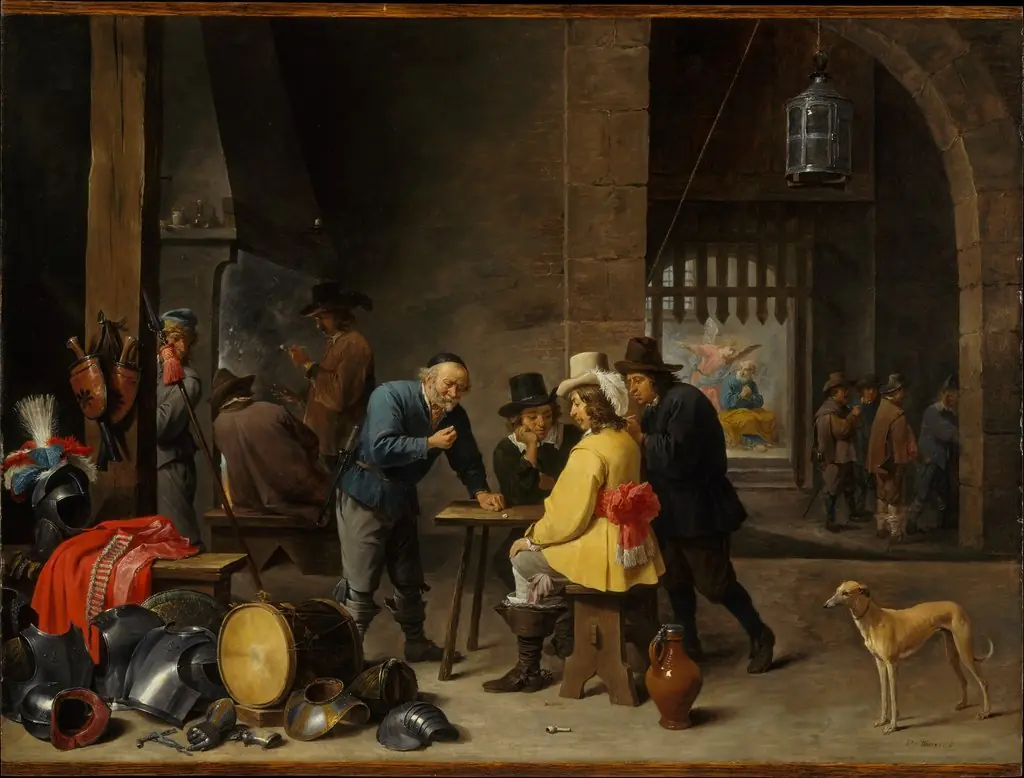
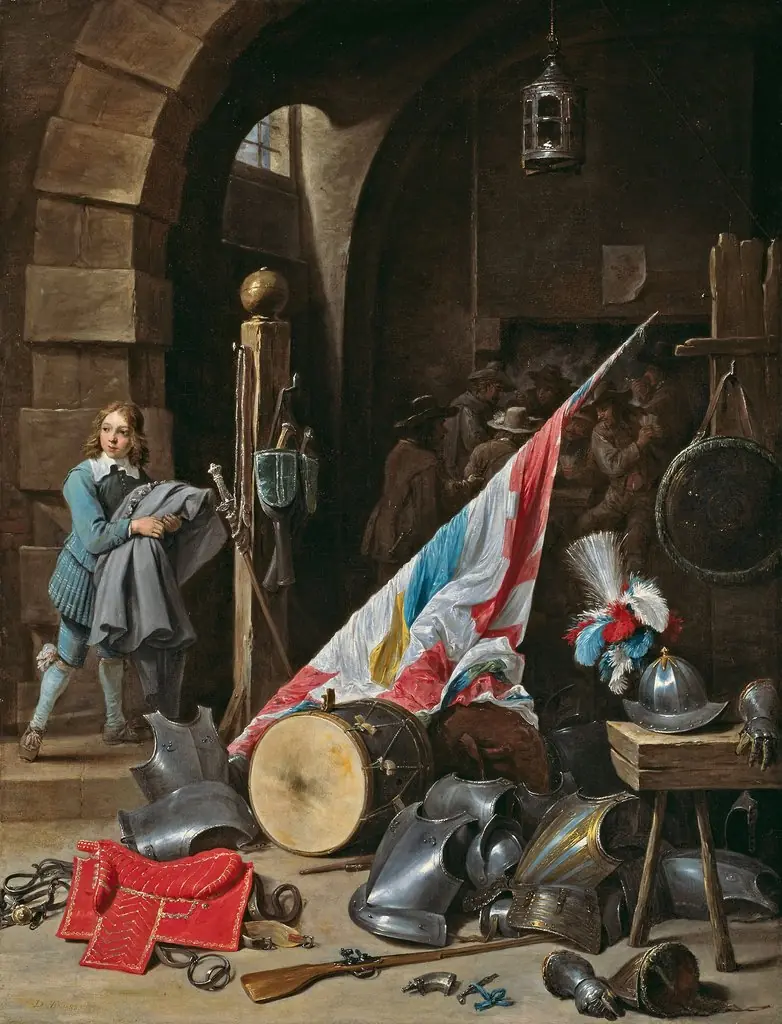
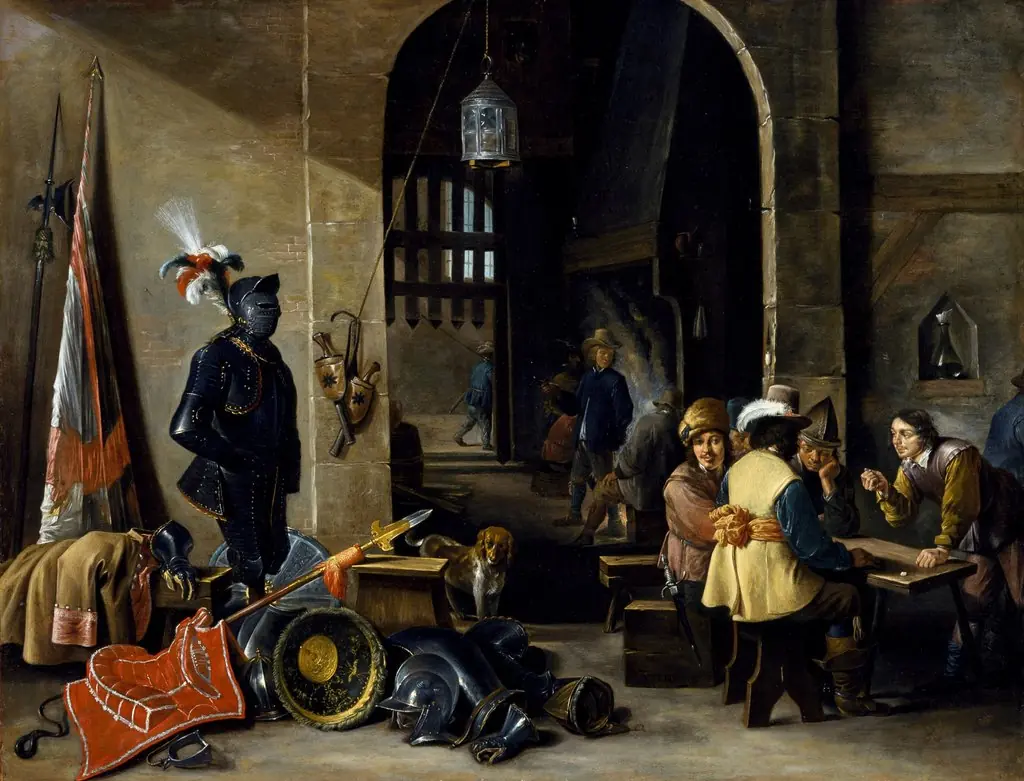
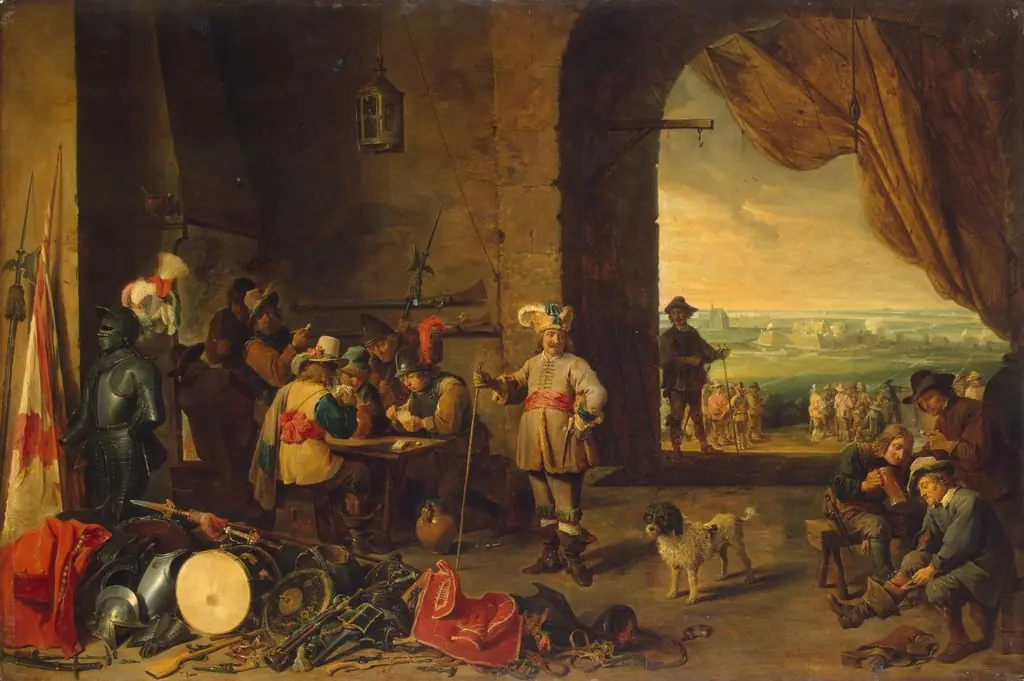
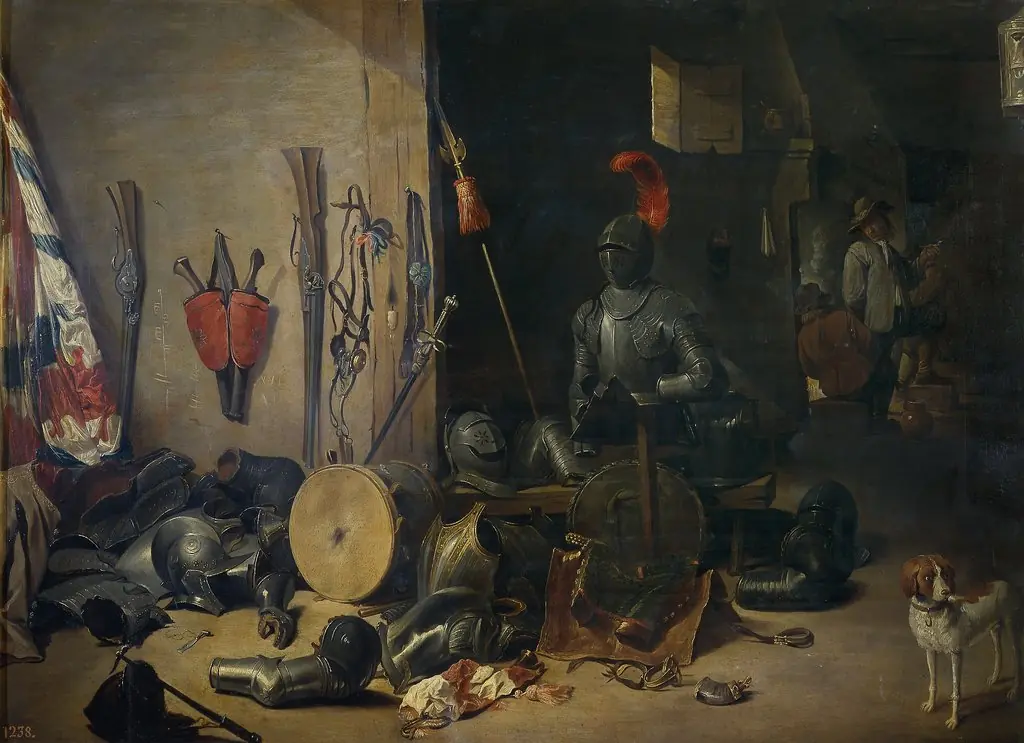
The painting shows a soldier in body armor holding a firearm and sword, accompanied by a natural trumpet and a playing card, symbolic elements that evoke martial themes and fleeting fortune. These objects suggest a contemplation of war, preparedness, and the transitory nature of life, reflecting the moralizing and emblematic interests of 17th‑century Flemish art. The work is part of the Museo del Prado collection, where it is displayed as an emblematic scene rather than a narrative episode.
Technique & Style
The Bivouac is executed in oil paint on panel, a support characteristic of Flemish cabinet paintings from the mid-seventeenth century. The horizontal composition measures 63 cm in height by 89 cm in width, a format suited to a detailed genre scene. The painting is classified as a painting held in the collection of the Museo del Prado.
Stylistically, the work reflects Teniers the Younger's refined handling of small-scale figures and military paraphernalia, with depicted elements including body armor, a firearm, a sword, a natural trumpet, and playing cards. The precise rendering of these objects suggests careful, miniaturist brushwork typical of his bivouac scenes.
History & Provenance
David Teniers the Younger created the oil painting The Bivouac on a panel support. While one record assigns the work to the year 1640, other data indicates an inception range beginning in 1640 and extending to 1650. The artwork depicts military paraphernalia, including body armor, firearms, swords, a natural trumpet, and playing cards.
The painting is currently held in the collection of the Museo del Prado in Madrid, where it remains located. No specific details regarding the original commission or intermediate ownership history prior to its arrival at the museum are provided in the available records.
The painting The Bivouac by David Teniers the Younger is held in the collection of the Museo del Prado. Executed in oil on panel, the work measures 63 cm in height and 89 cm in width. While internal records date the piece to 1640, collection data indicates an inception range beginning in that year and extending to 1650.
The available sources confirm the artwork's location and physical attributes but do not provide specific inventory accession numbers or a record of its exhibition history.
Context
The Bivouac is an oil painting on panel created by David Teniers the Younger in 1640, depicting a soldier in body armor with a firearm and sword beside a natural trumpet and playing card. The work measures 63 cm in height and 89 cm in width and is housed in the Museo del Prado collection. It is recognized as an important example of genre painting from the mid-17th century, reflecting Teniers' interest in everyday scenes and military subjects within his broader oeuvre of peasant life and tavern interiors.
Overview
David Teniers the Younger’s oil on canvas, dated 1640, portrays a modest interior scene populated by several figures in period dress. The composition centers on a table strewn with a sword, pieces of armor and a firearm, while a man on a bench plays a natural trumpet. The work is part of the Museo del Prado’s collection.
Own this work as a print
Artist & collection
Artist
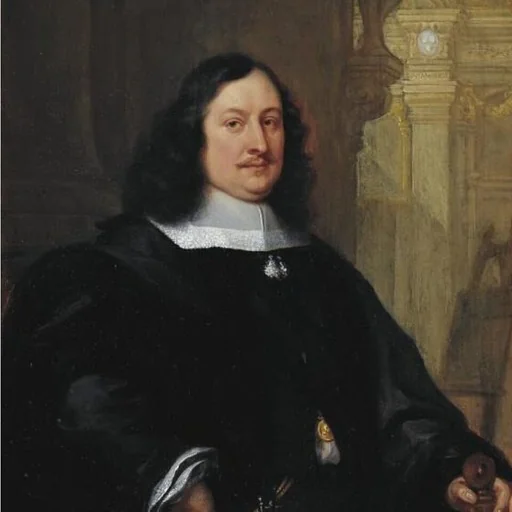
David Teniers the Younger or David Teniers II was a Flemish Baroque painter, printmaker, and artist.