Artwork
Guardroom
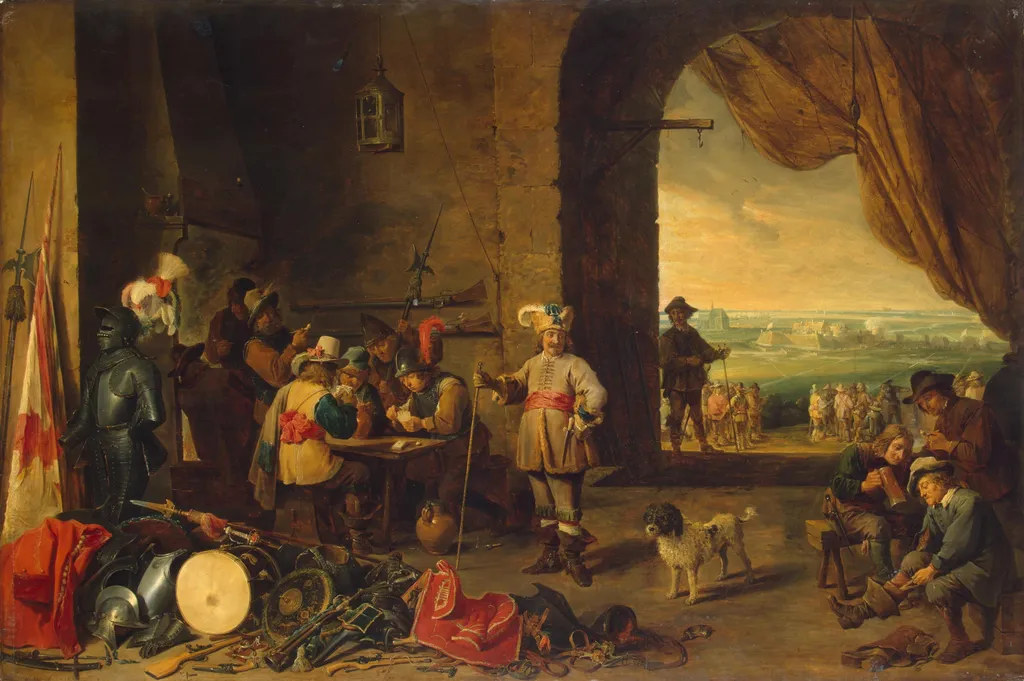
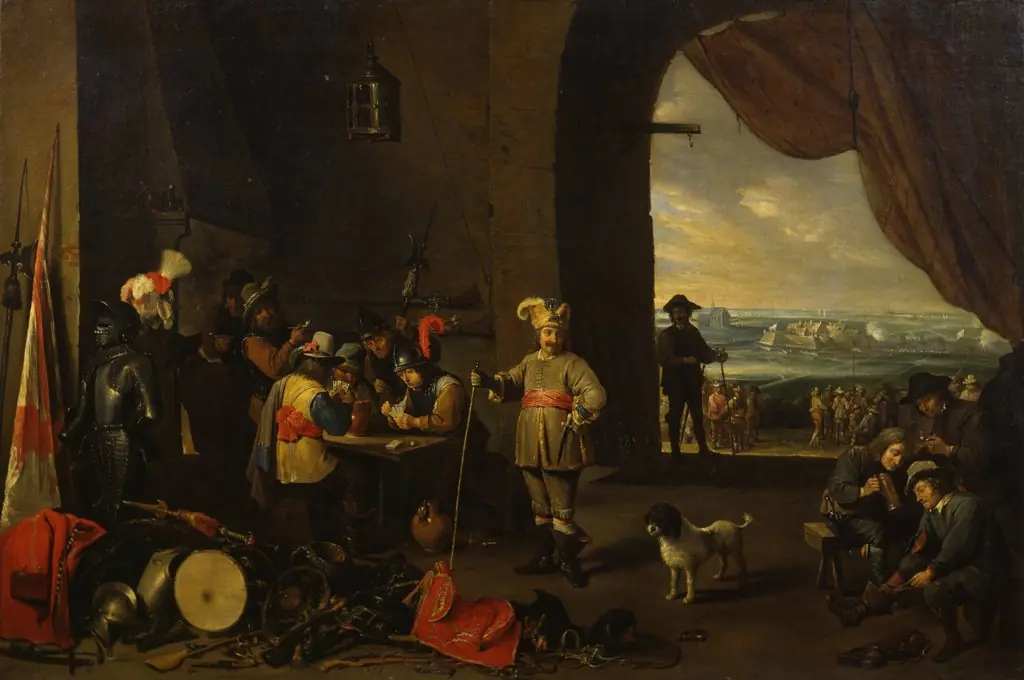
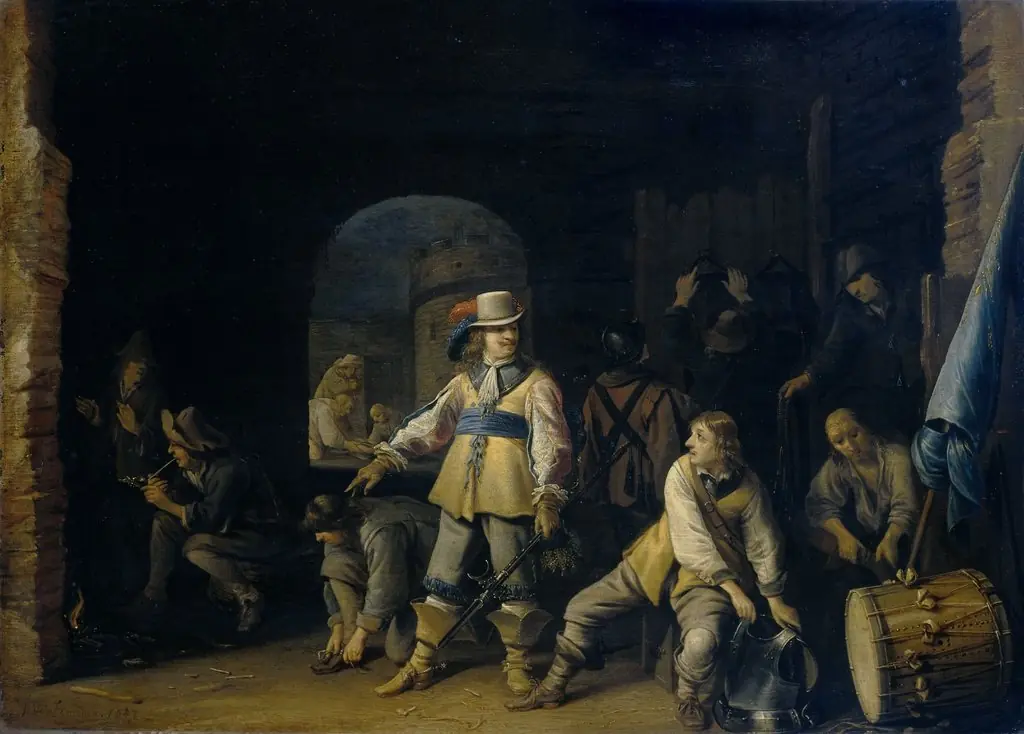
Guardroom is an oil painting by the Flemish Baroque painting artist David Teniers the Younger. It dates from 1642 and is held in the collection of the Hermitage Museum.
About this work
Overview
Guardroom is a 1642 oil-on-panel painting by the Flemish artist David Teniers the Younger, now held in the Hermitage Museum in St.
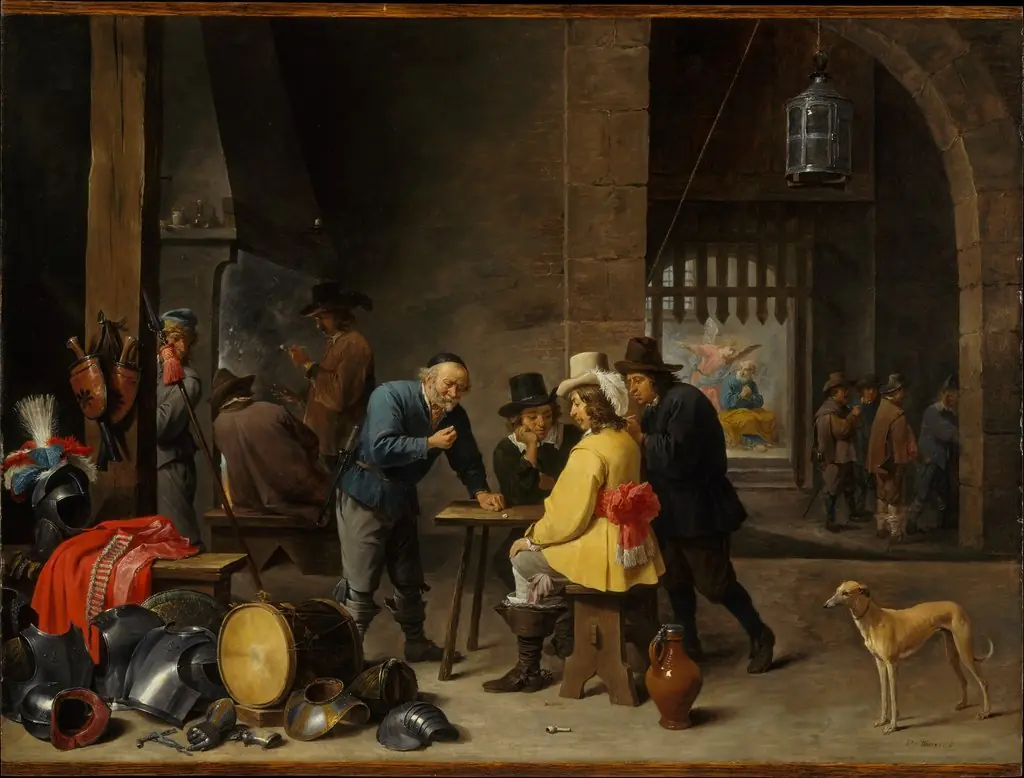
Guardroom is a 1642 oil-on-panel painting by the Flemish artist David Teniers the Younger, now held in the Hermitage Museum in St. Petersburg. Measuring 69 by 103 centimeters, the work is signed and dated "David Teniers F. 1642" at the bottom left. It belongs to the guardroom or corps de garde genre that Teniers and his Flemish contemporaries. frequently explored, combining meticulous still-life elements with genre painting and landscape. The painting matters as a prime example of Teniers's ability to merge detailed military equipment with narrative human activity, and its eventful provenance, including looting by Napoleonic forces and acquisition by the Russian imperial collection, adds to its historical significance.
Subject & Meaning
The painting depicts a guardroom interior that opens onto a distant landscape through a bright arched portal at the right. In the shadowed stone chamber, scattered military equipment dominates the foreground: a drum, helmets, breastplates, muskets, a red sash, and a suit of armor standing upright beside a red-and-white flag. At center, several men gather around a wooden table playing cards, while one standing figure in a plumed hat, white coat, and red sash holds a staff and looks outward. To the right, two seated figures attend to footwear and a flask, and a small dog stands near the center. Through the archway, more uniformed figures gather in the middle distance, with marching figures visible beyond. The combination of still-life military objects, genre scene of soldiers at leisure, and distant military activity creates a multi-layered image of military life. The painting has been connected to the political moment of 1642, when Francisco de Melo, new ruler of the Spanish Netherlands, twice defeated a French army, briefly holding back their advance on Antwerp. This context may inform the work's martial theme, though the scene itself shows soldiers at rest rather than in combat.
Technique & Style
The painting is executed in oil on panel, a support typical of Flemish practice. The composition is divided between the shadowed stone chamber at left and the bright arched portal at right, through which light streams to illuminate the landscape beyond while casting deep shadows in the interior. The palette is dominated by browns, ochres, and muted greens, with touches of red in sashes and fabric providing visual accents. Teniers's brushwork shows careful attention to textural variation: precise detail in the rendering of metal, fabric, and fur, with smoother handling in the sky and distant terrain. This technical range demonstrates his mastery across the genres the painting encompasses. The lantern hanging from the ceiling, weapons and jug on a shelf, and the brown curtains drawn back from the archway all contribute to the spatial depth and atmospheric quality of the scene. The work anticipates Teniers's 1643 painting The Oude Voetboog Guild in the Grote Markt in its combination of interior and exterior space and its attention to military costume and equipment.
History & Provenance
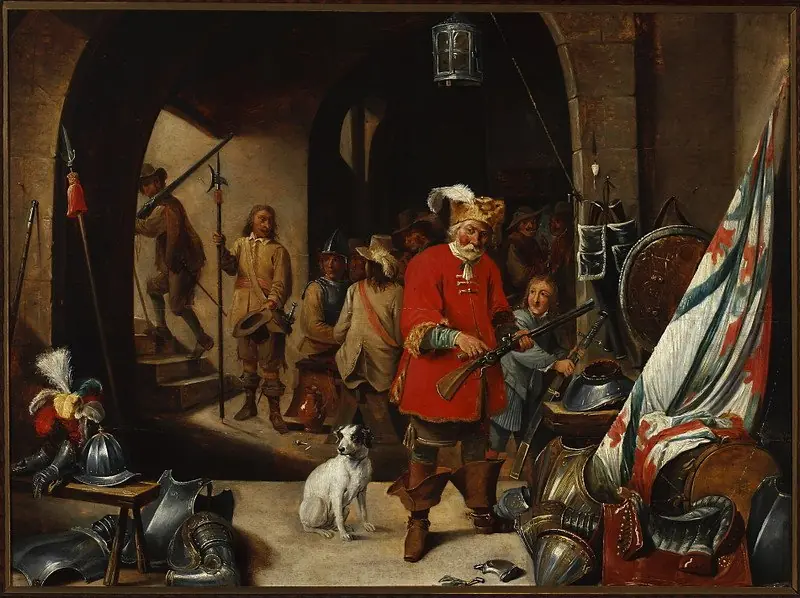
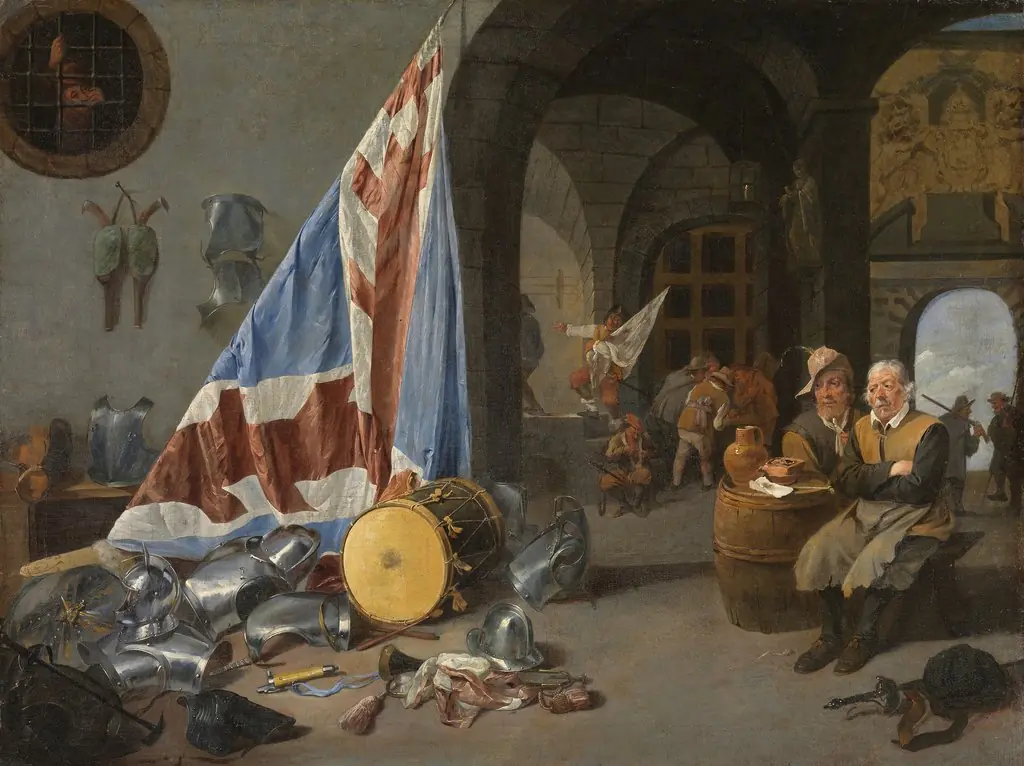
The painting's provenance is unknown until 16 April 1738, when it was auctioned from the collection of Baron Schönborn. It subsequently entered the collection of the Landgrave of Hesse-Kassel. In 1806 it was looted by Napoleon's troops and assigned to Josephine Beauharnais, who kept it at the Château de Malmaison. It was then sold to Alexander I of Russia with thirty-seven other works from Malmaison in 1814, entering what would become the Hermitage Museum collection. The painting was exhibited in 1960 in Leningrad at a David Teniers exhibition marking the 350th anniversary of his birth. Several unsigned but probably autograph variants also survive, including versions at the Catherine Palace near St. Petersburg and the Walters Art Museum in Baltimore. An early copy by an unknown artist after the Hermitage work is now in the National Museum of Sweden.
Context
David Teniers the Younger was a leading Flemish painter of the seventeenth century who, like other Flemish artists of his generation, frequently depicted guardroom scenes, a theme highly popular among contemporary collectors. His precise depiction of weapons and military equipment has made his paintings valuable historical documents. Beyond his work as a painter, Teniers served as court painter and curator of the collection of Archduke Leopold Wilhelm, governor of the Spanish Netherlands. The guardroom theme allowed him to demonstrate his versatility across still life, genre, and landscape painting while appealing to the collecting interests of his era. The 1960 Leningrad exhibition for the 350th anniversary of his birth, which included this work, marked his continued scholarly importance. Critical literature on the painting includes Adolf Rosenberg's 1901 monograph and N. F. Smolskaïa's 1961 study of Teniers in Hermitage collections.
Legacy
The painting's legacy is shaped by both its artistic influence and its remarkable provenance. As one of Teniers's most significant guardroom scenes, it established a compositional formula that the artist himself repeated in variants, including those now at the Catherine Palace and the Walters Art Museum. These autograph repetitions suggest the composition's importance within Teniers's own practice and its appeal to patrons. The work's passage through major European collections, from the Landgraves of Hesse-Kassel to Josephine de Beauharnais and finally to the Russian imperial collection, exemplifies the dispersal of Flemish art during the Napoleonic era and the formation of the Hermitage's holdings. The early copy in the National Museum of Sweden further attests to the composition's recognition and circulation. Today, the painting remains a key work for understanding the guardroom genre in Flemish art, the intersection of still life and genre painting in the seventeenth century, and Teniers's particular skill in rendering the material culture of military life.
Own this work as a print
Artist & collection
Artist
David Teniers the Younger or David Teniers II was a Flemish Baroque painter, printmaker, and artist.