Artwork
Toilet of Venus
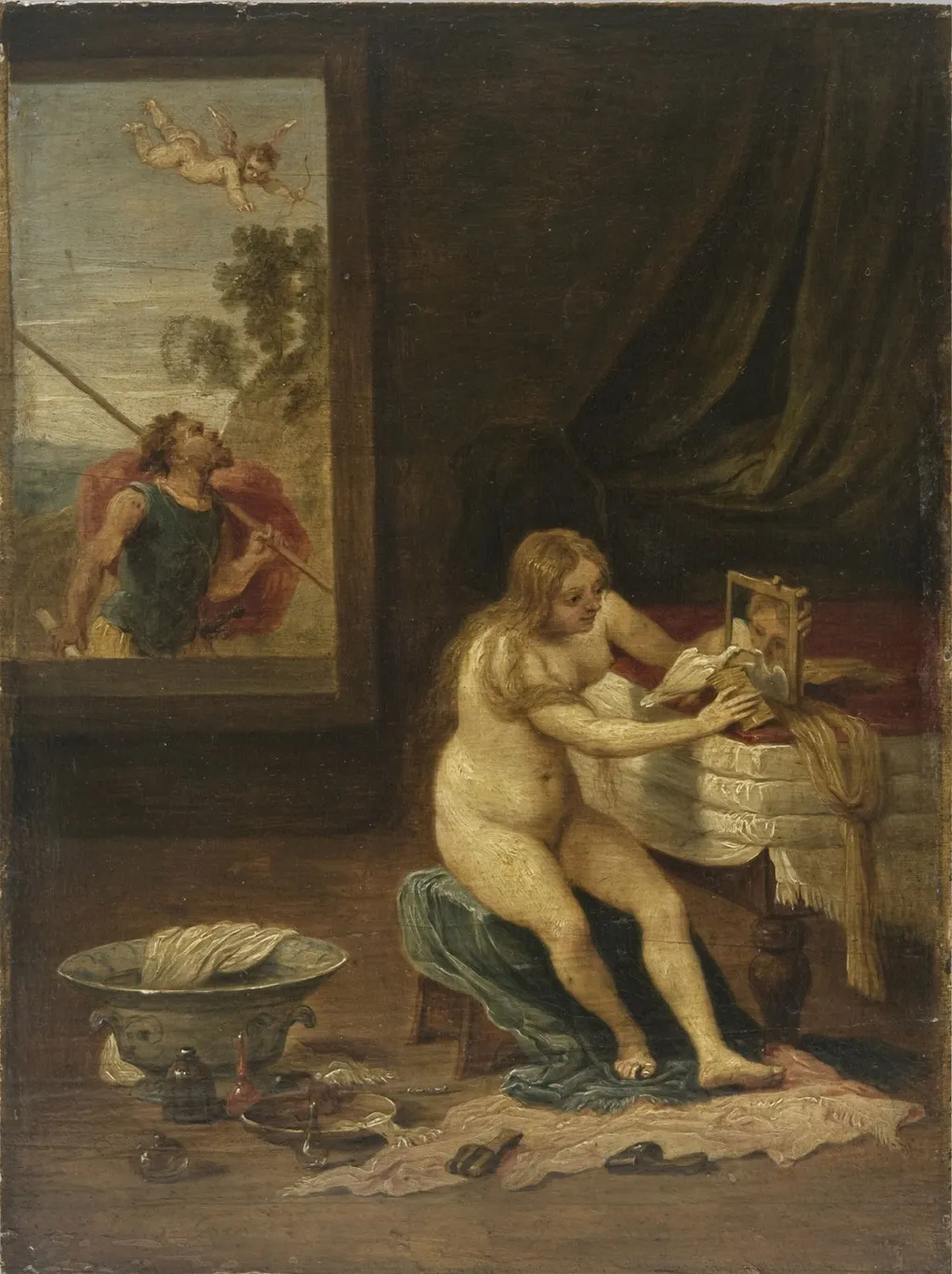
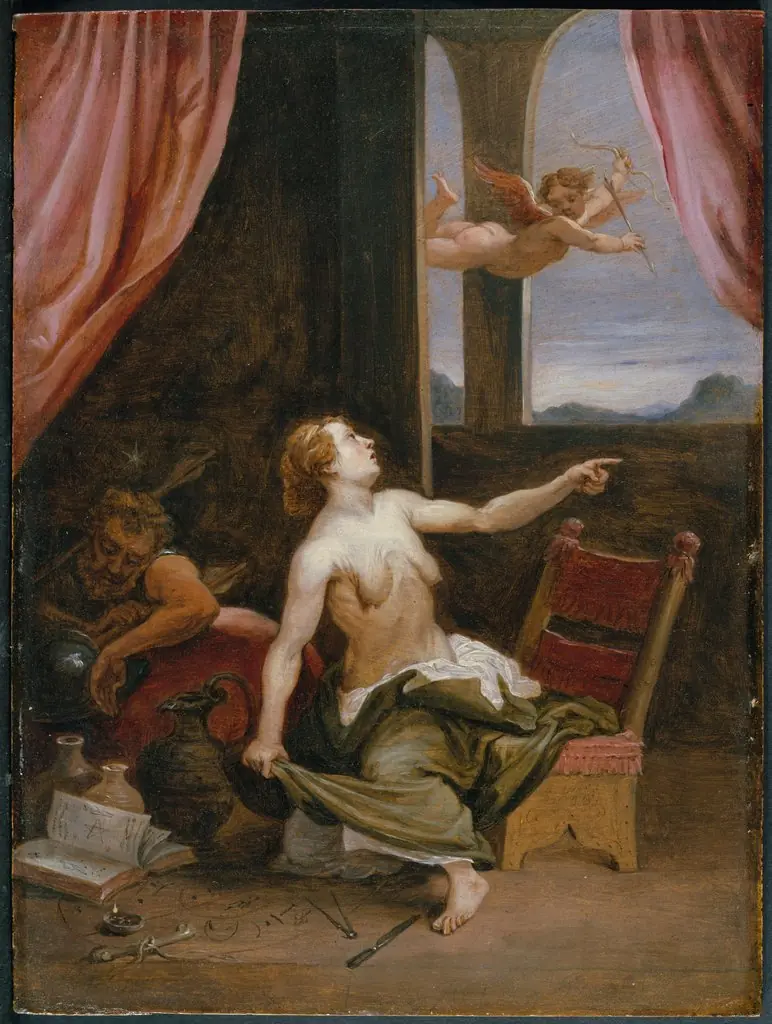
Toilet of Venus is an oil painting by the Flemish Baroque painting artist David Teniers the Younger. It dates from 1655 and is held in the collection of the Philadelphia Museum of Art.
About this work
Overview
Toilet of Venus is a mythological painting by the Flemish artist David Teniers the Younger, created circa 1655 to 1656.
Toilet of Venus is a mythological painting by the Flemish artist David Teniers the Younger, created circa 1655 to 1656. Executed in oil paint on a small panel measuring 22.5 by 17.1 centimeters, the work functions as an oil sketch rather than an independent cabinet picture. It is currently held in the Philadelphia Museum of Art. The painting holds particular art historical significance as a surviving record of a lost composition by the Italian master Andrea Schiavone, which Teniers copied as part of his duties documenting the Habsburg art collections.
Subject & Meaning
The scene depicts the goddess Venus in a dim interior, seated on a draped stool as she attends to her toilette. She holds a small mirror in her left hand while her right hand touches its frame. She looks over her shoulder toward a window on the left, where a bearded man wearing a red cloak and holding a staff gazes upward. Above this male figure, a winged putto carrying a bow flies in a pale sky with trees. The foreground features a metal basin with cloth, glass bottles, a shell dish, and scattered slippers, all traditional attributes of Venus and the theme of bathing and beauty.
Technique & Style
Teniers employed oil paint on a wooden panel to create this miniature work. The palette relies on browns, muted greens, and creamy flesh tones. Light enters from the left, illuminating the figure of Venus and the window scene, while the right side of the composition recedes into shadow. Teniers applied visible, textured brushwork, utilizing a smoother finish for the skin of the goddess and looser, more expressive handling for the fabrics and background elements. The dark green curtains sweeping across the upper right enhance the spatial depth and contrast of the dim interior.
History & Provenance
The painting was created between approximately 1655 and 1656. Teniers originally attributed the composition to Palma il Giovane in an inscription along the bottom of the panel, though this inscription has since been painted over. Scholars later determined that the original, now-lost composition was actually by Andrea Schiavone. The work passed through prominent hands before entering the museum, having been owned by George Spencer-Churchill, the 8th Duke of Marlborough, and John Spencer-Churchill, the 7th Duke of Marlborough. It subsequently entered the collection of John G. Johnson, eventually becoming part of the Philadelphia Museum of Art.
Context
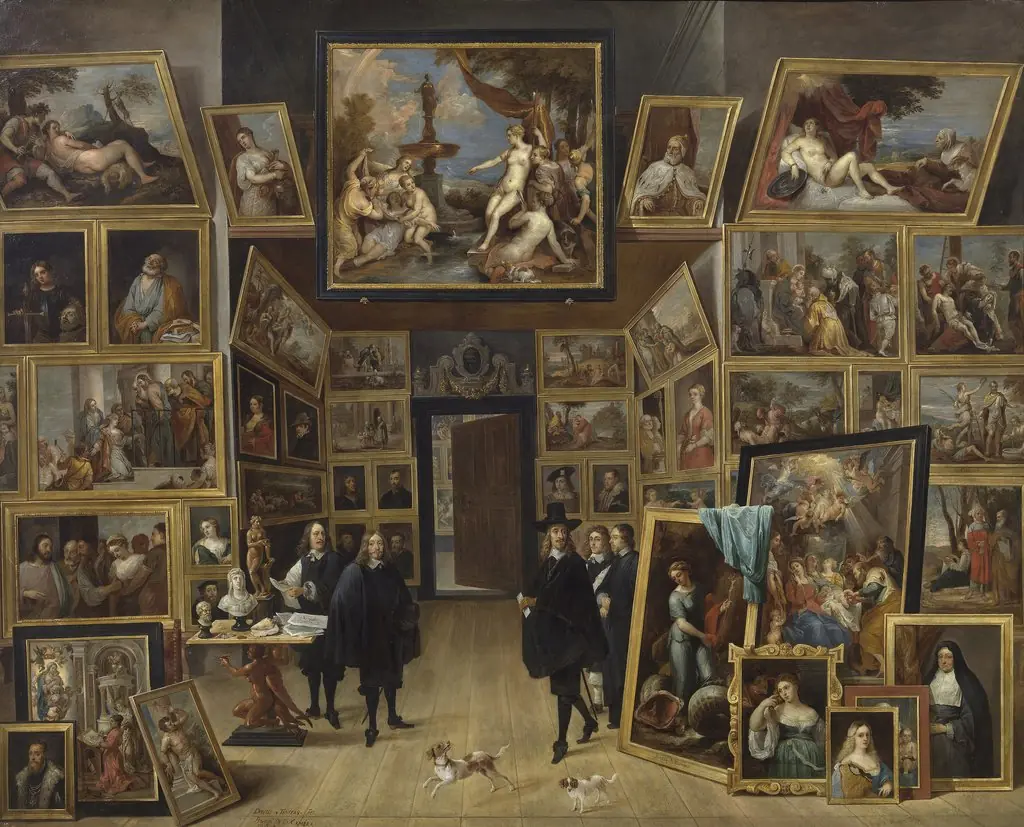
David Teniers the Younger served as court painter and keeper of the art collections to Archduke Leopold William of Austria, moving to Brussels around 1651 to assume the position. In this capacity, Teniers produced numerous small-scale copies of paintings in the archduke's collection, particularly works by Italian masters. The Toilet of Venus is one such copy, and the original Schiavone composition appears in several gallery scenes Teniers painted of the archduke's collection. The printmaker Theodor van Kessel, who settled in Antwerp after 1652, translated this specific oil sketch into an etching. Van Kessel produced twenty-seven plates for the Theatrum Pictorium, the published pictorial inventory of the archduke's collection engraved in 1660.
Artist & collection
Artist
David Teniers the Younger or David Teniers II was a Flemish Baroque painter, printmaker, and artist.