Artwork
Perth Bridge
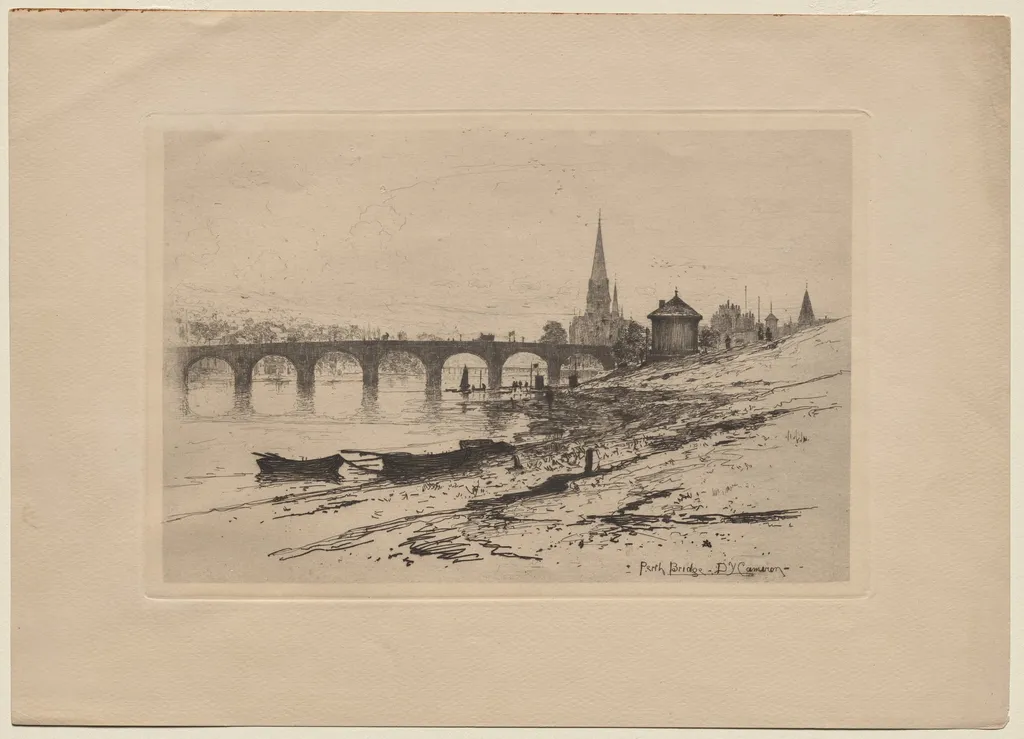
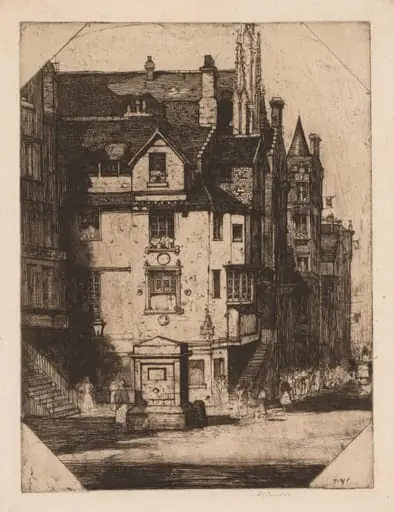
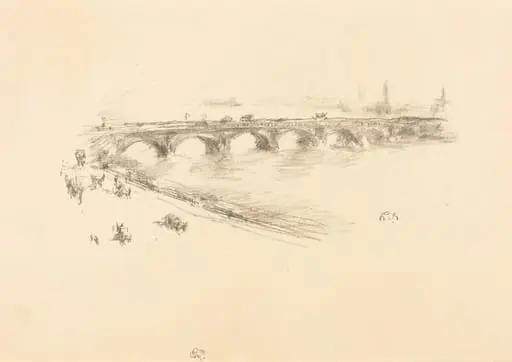
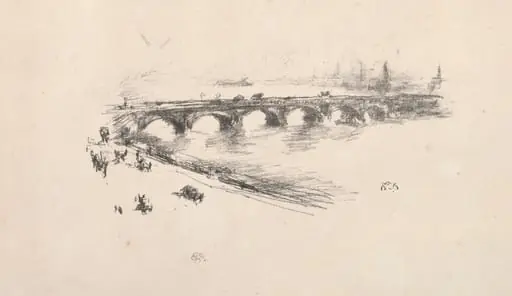
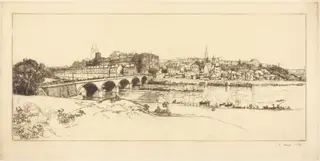
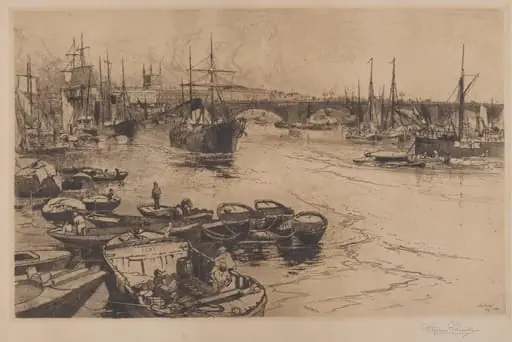
Perth Bridge is a print by the Impressionist artist David Young Cameron. It dates from 1889 and is held in the collection of the Cleveland Museum of Art.
- Accession no.
- 1998.333
- Credit line
- Bequest of Gordon K. Mott
About this work
Overview
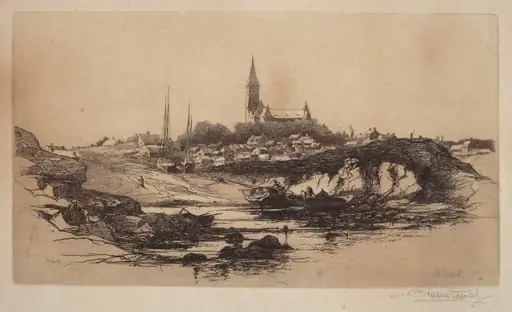
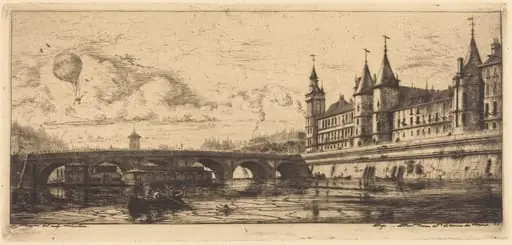
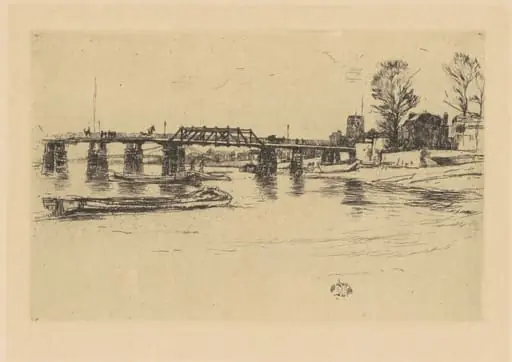
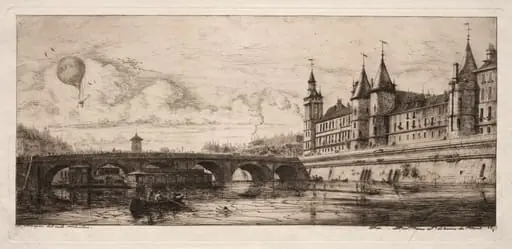
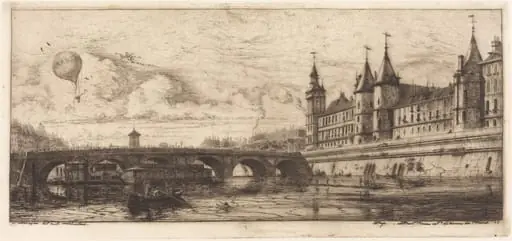
David Young Cameron, a Scottish artist active in the late 19th century, produced the etching Perth Bridge in 1889. Executed in the style of the Etching Revival, the work captures a quiet riverside view of the bridge in the Scottish city of Perth, emphasizing architectural form and atmospheric calm.
Subject & Meaning
The image centers on the stone arches of Perth Bridge spanning a placid river, their reflections mirrored in the water. A modest church steeple rises behind surrounding buildings, anchoring the composition and suggesting the bridge’s role as a civic landmark within a tranquil urban setting.
Technique & Style
Cameron employs fine line work and delicate cross‑hatching to render texture and depth, while subtle variations in tone create a nuanced play of light and shadow across the arches and water. The piece balances realist attention to architectural detail with an impressionistic softness in its atmospheric effects.
History & Provenance
Created during the peak of Cameron’s involvement with the Etching Revival, Perth Bridge entered the collection of the Cleveland Museum of Art, where it remains on view. The work reflects the artist’s broader interest in documenting British urban scenery through printmaking.
Context
At the time of its production, Scottish towns were undergoing modernization, and bridges like Perth’s symbolized both engineering progress and communal identity. Cameron’s choice of subject aligns with contemporary interests in documenting the built environment as a record of cultural and technological change.
Own this work as a print
Artist & collection
Artist
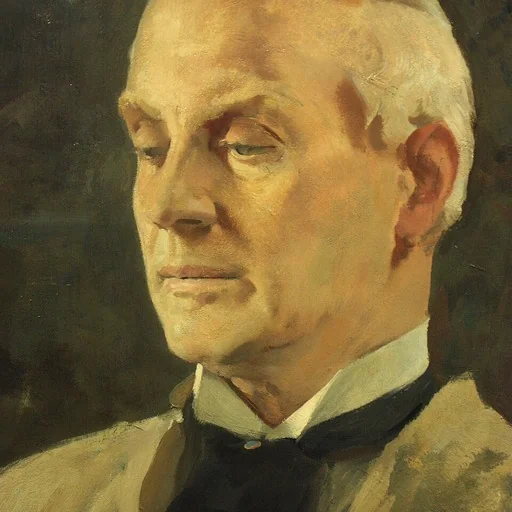
Sir David Young Cameron (28 June 1865 – 16 September 1945) was a Scottish painter and, with greater success, etcher, mostly of townscapes and landscapes in both cases. He was a leading figure in the final decades of the Etching Revival.