Artwork
The Presentation in the Temple
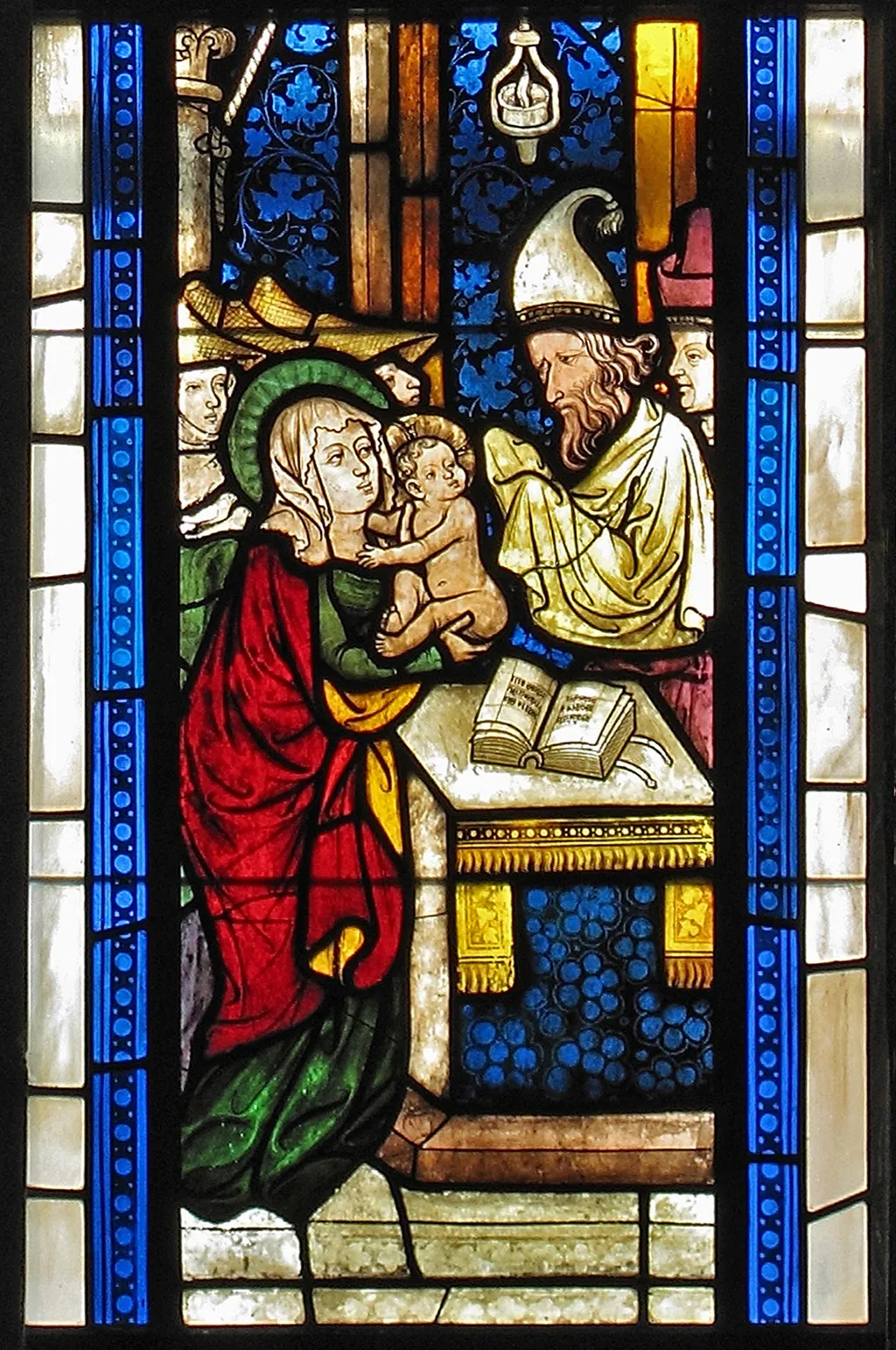
The Presentation in the Temple is an unspecified painting. It dates from 1396 and is held in the collection of the Metropolitan Museum of Art. This stained-glass panel illustrates a significant religious narrative, likely depicting the Presentation of Jesus in the Temple.
About this work
History & Provenance
It was created as a devotional image, likely intended for private contemplation, and reflects the artistic conventions of late medieval Italian painting.
The Presentation in the Temple is a 14th‑century panel painting dated to 1390, depicting the biblical scene of the Presentation of Jesus at the Temple. The work is anonymous and classified as religious art; its dimensions are 74.3 cm by 33 cm. It was created as a devotional image, likely intended for private contemplation, and reflects the artistic conventions of late medieval Italian painting. The painting entered the collection of the Metropolitan Museum of Art, where it remains on public view. Its provenance is traced to the museum’s holdings, with no earlier documented owners identified.
The anonymous painting titled The Presentation in the Temple, dated to 1390, is currently held in the collection of the Metropolitan Museum of Art. The work, which depicts the Presentation of Jesus at the Temple along with the Madonna and Child, measures 74.3 cm in height and 33 cm in width. While the sources confirm its location within the museum, they do not provide a specific inventory or accession number for the piece.
Furthermore, the available documentation does not record any specific exhibition history for this work, leaving its public display record unlisted in the provided materials.
Overview
This stained-glass panel illustrates a significant religious narrative, likely depicting the Presentation of Jesus in the Temple. It features three central figures arranged within a simplified interior space. The artwork employs a direct visual language, characterized by distinct forms and a restrained color palette, typical of its medium.
As an example of devotional art, the piece aims to convey a specific biblical event through its visual composition.
Subject & Meaning
The composition centers on a woman, presumably the Virgin Mary, cradling the infant Jesus. Beside them, an older male figure, often identified as Simeon, holds an open book, signifying his role in the scriptural account. This scene recounts the moment Jesus was brought to the Temple in Jerusalem, where Simeon recognized him as the Messiah, as described in the Gospel of Luke. The book emphasizes the prophetic and theological significance of the event.
Technique & Style
The panel exemplifies the characteristics of stained glass, utilizing vibrant, unmodulated colors to define forms. Figures are rendered without shading, resulting in a flat, graphic quality that emphasizes strong outlines and distinct color fields. A blue-paned window and a hanging lantern provide minimal background details, contributing to the scene's overall clarity and directness. This approach prioritizes narrative legibility and symbolic color over naturalistic representation.
Context
The Presentation in the Temple is a frequently depicted subject in Christian art, appearing across various media throughout history. Stained glass, as seen in this work, was a fundamental medium for conveying sacred narratives within religious structures. Its ability to transform light into vibrant imagery enhanced the spiritual ambiance of ecclesiastical spaces, making biblical stories accessible and visually impactful for congregants.
Artist & collection

- Madonna of Mercy
 Presentation of Christ in the temple
 Adoration of the Magi from Seven Scenes from the Life of Christ
 Panel with the Annunciation
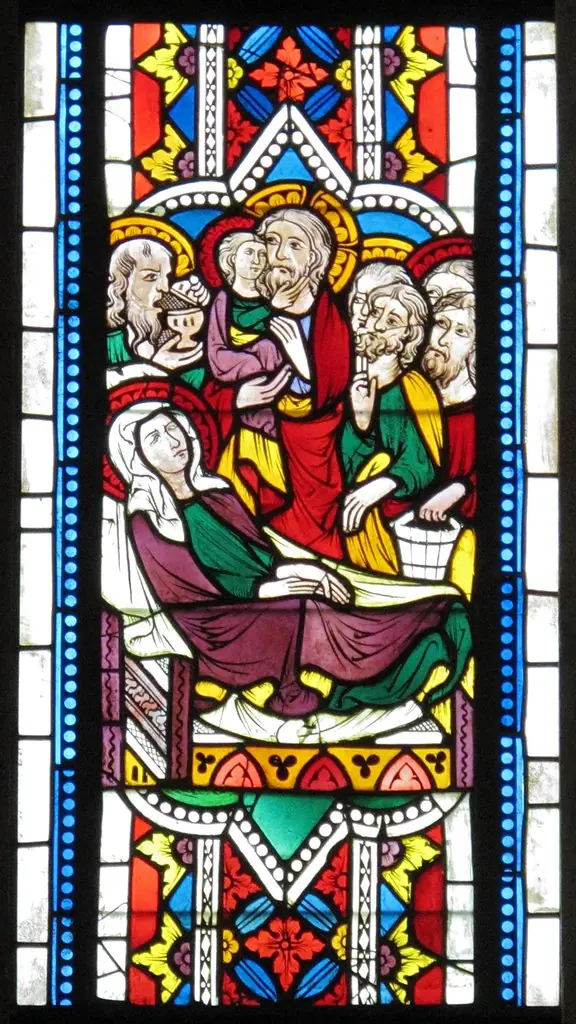 Dormition of the Virgin
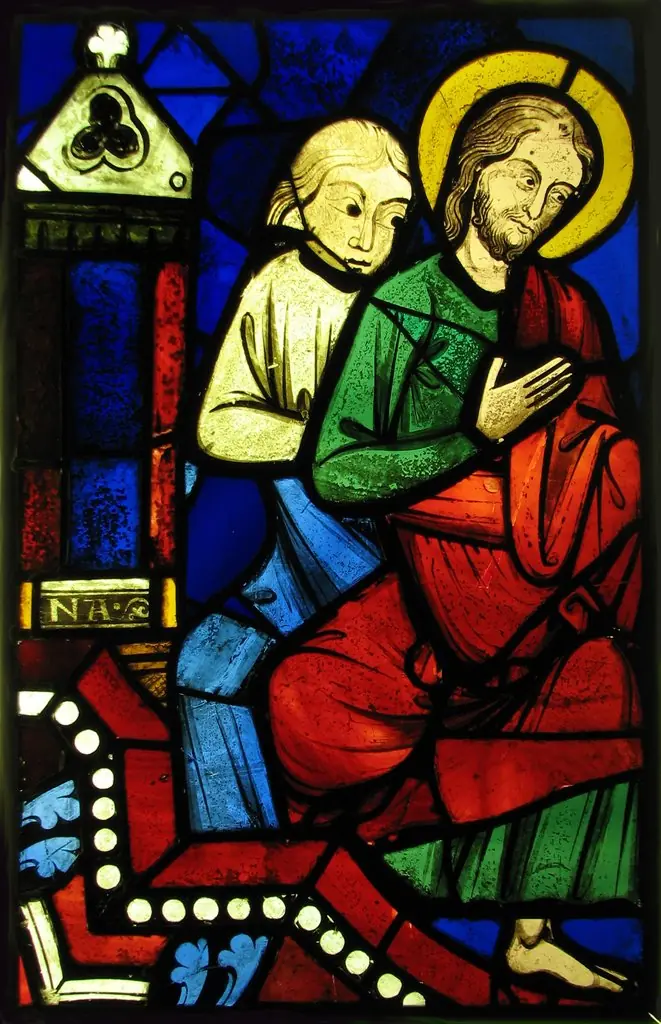 Two Seated Apostles from a Pentecost Scene
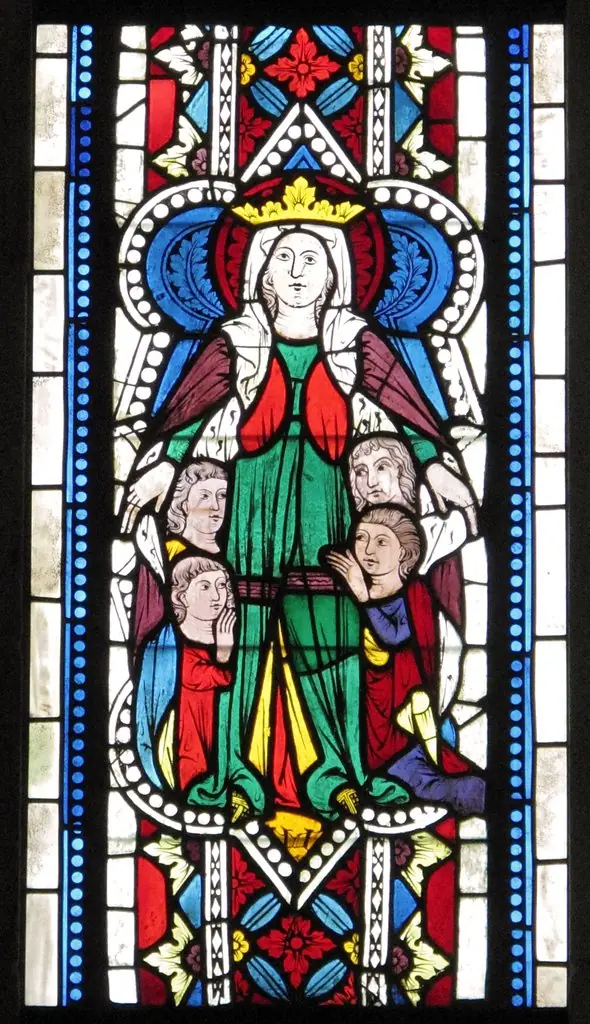 Madonna of Mercy
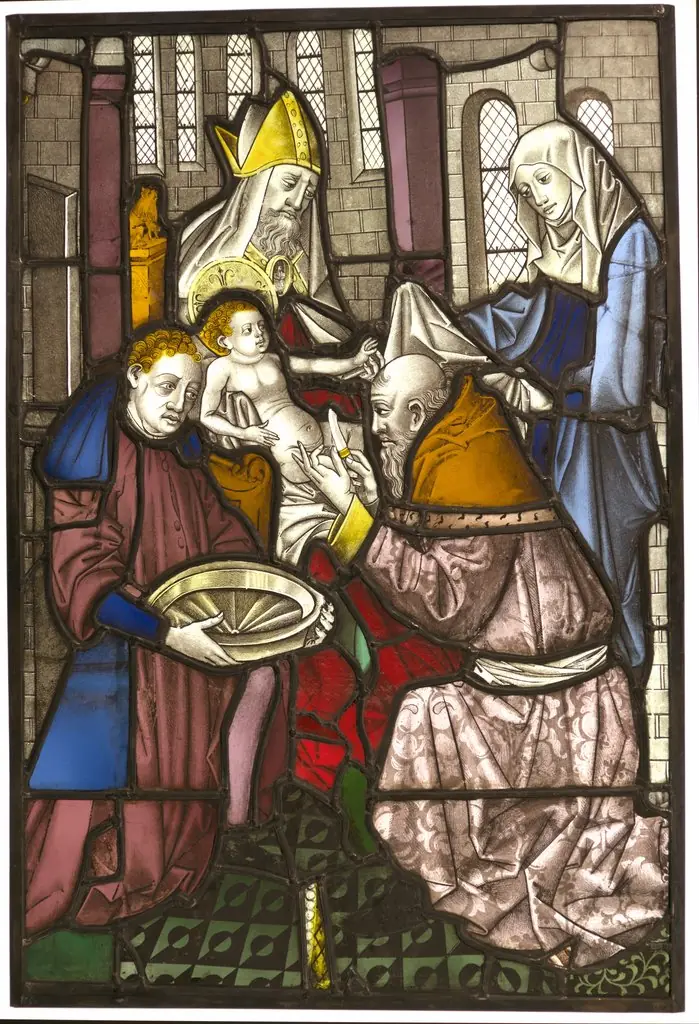 The Circumcision
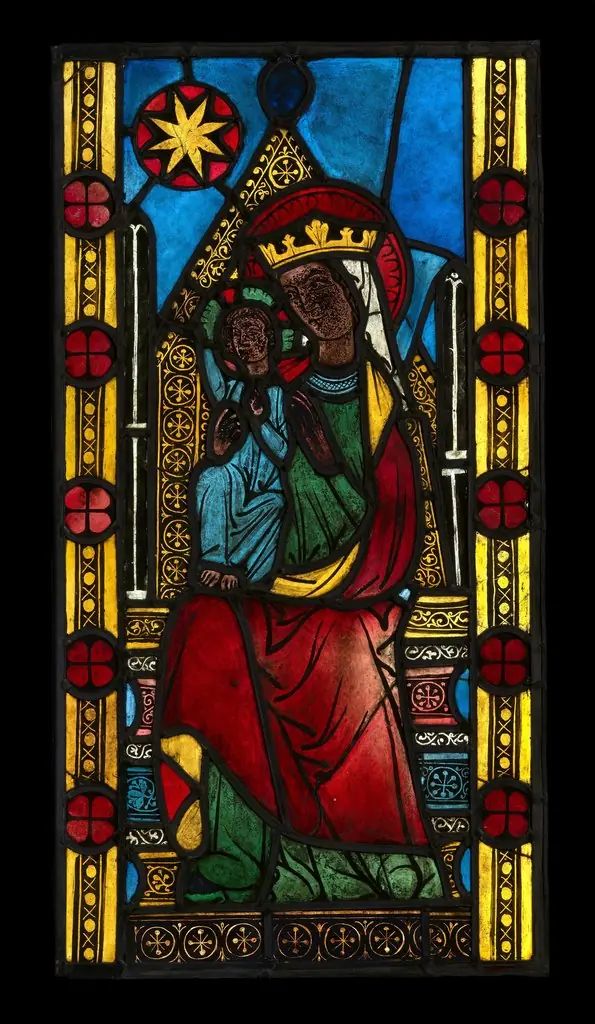 The Adoration of the Magi
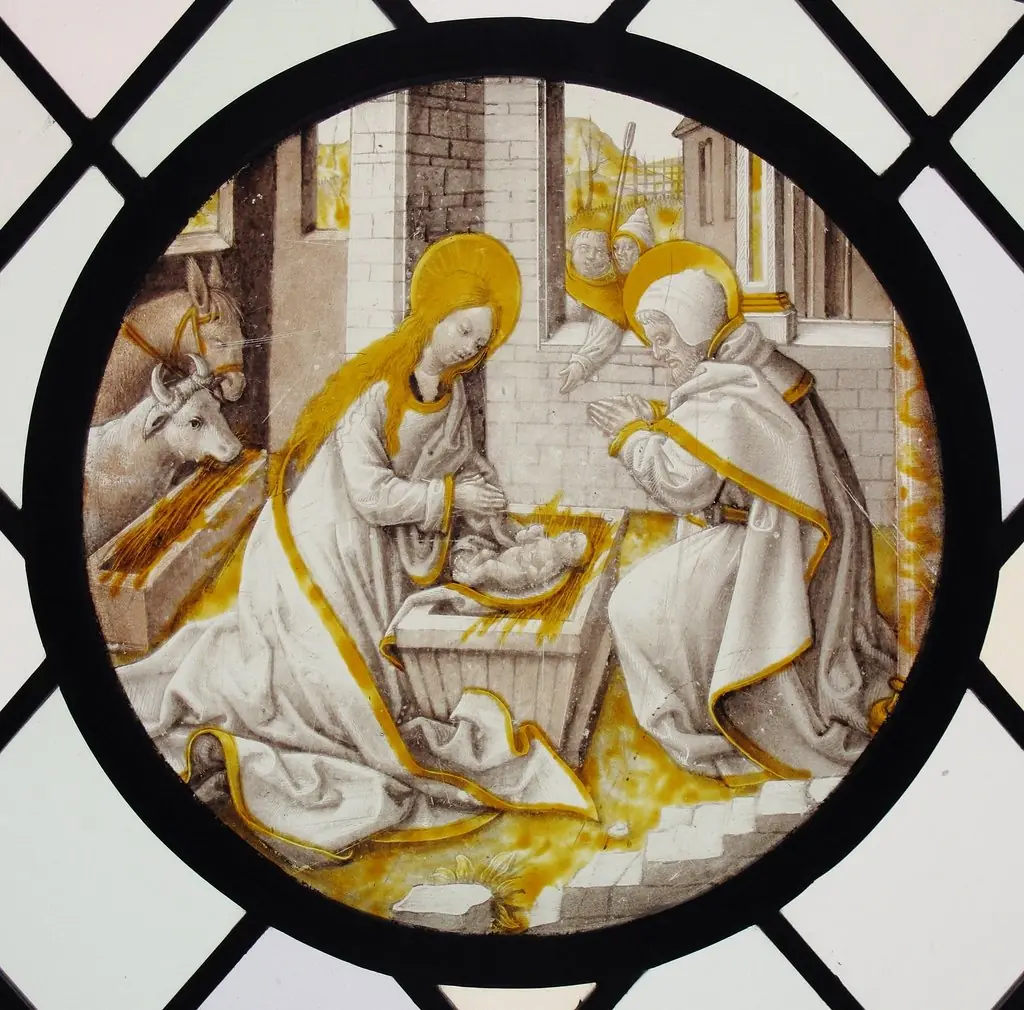 Roundel with the Nativity
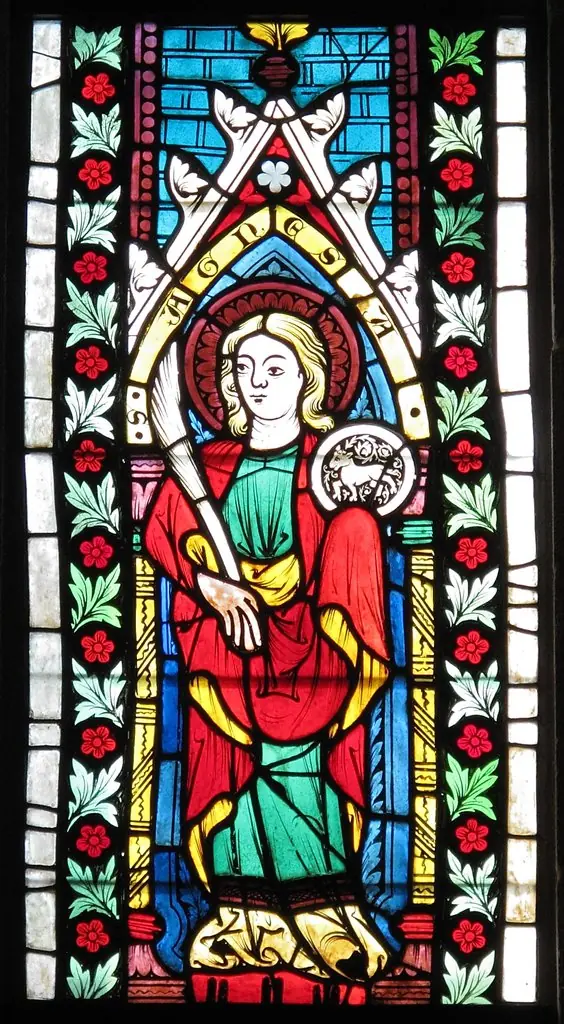 Saint Agnes
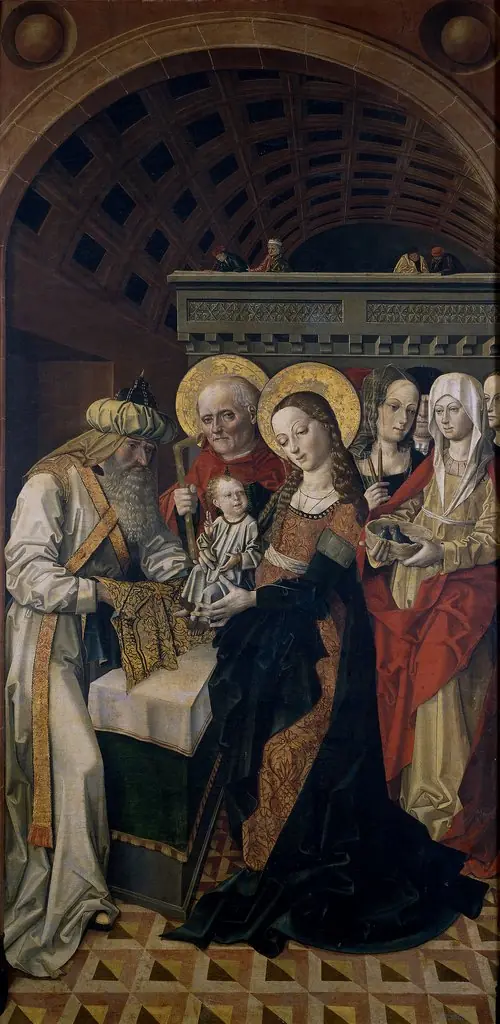 The Presentation of Jesus in the Temple
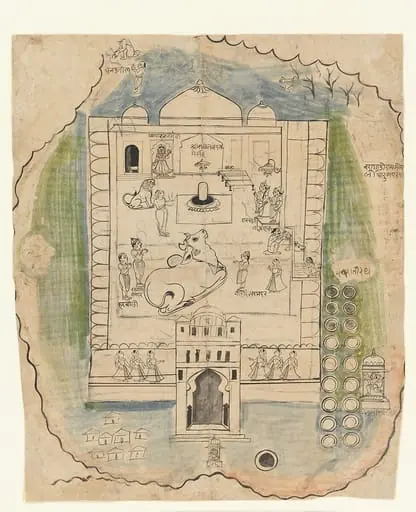 Untitled
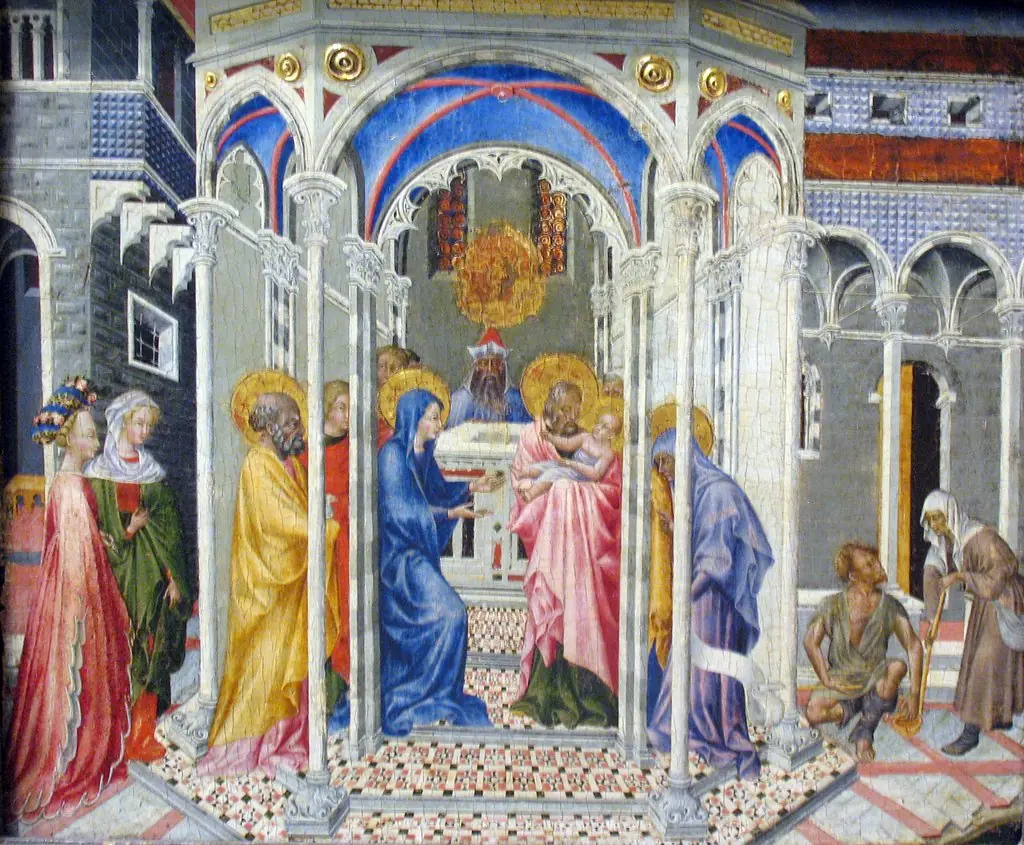 The Presentation of Christ in the Temple
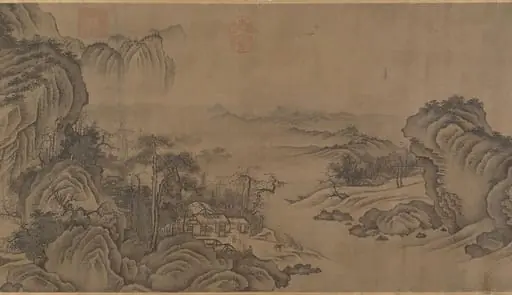 元/明 佚名 舊傳 燕文貴 秋山蕭寺圖 軸|Buddhist Temples amid Autumn Mountains
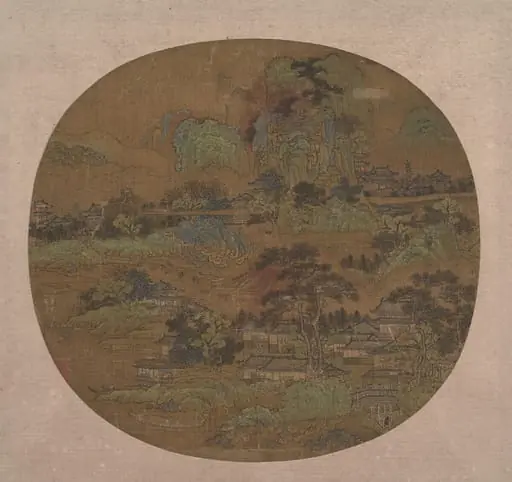 明 佚名 樓閣江帆圖 團扇|Village and Temples in Jiangnan
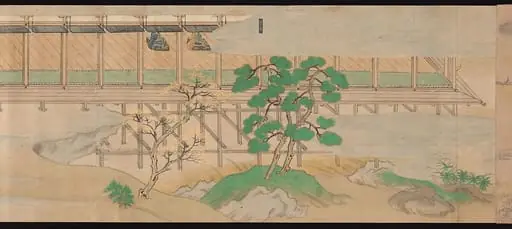 神於寺縁起絵巻断簡|Scene from The Illustrated Legends of Jin’ōji Temple (Jin’ōji engi emaki)
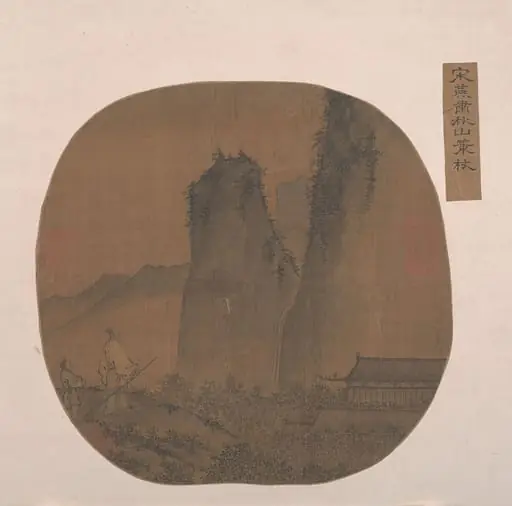 Untitled
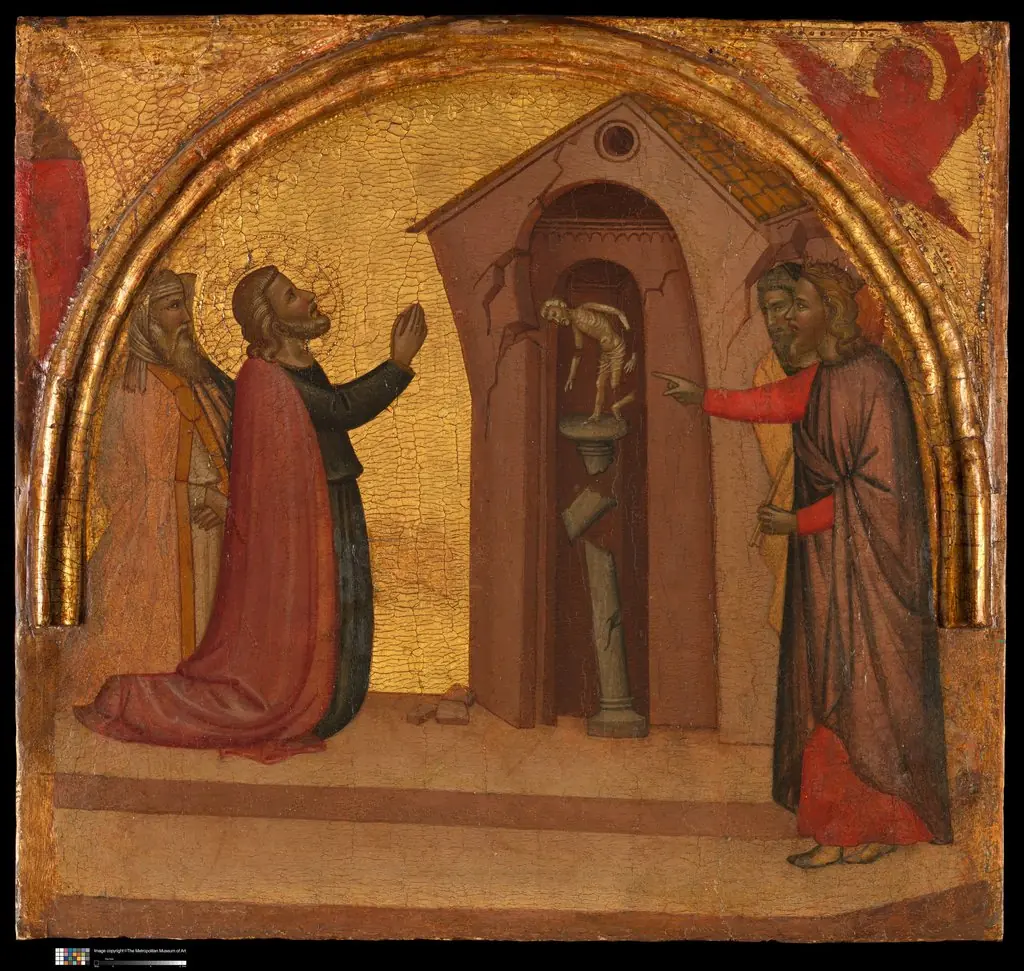 Saint John the Evangelist Causes a Pagan Temple to Collapse
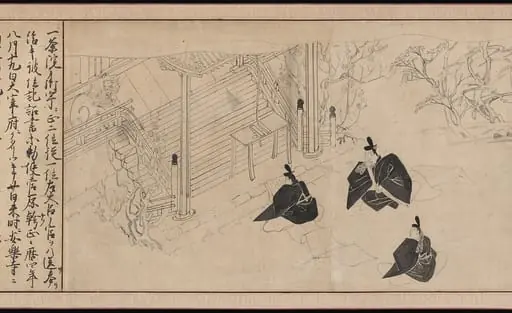 太宰府安楽寺 北野天神縁起絵巻 断簡 (Dazaifu Anrakuji, Kitano Tenjin engi emaki dankan)|Courtiers Visit Sugawara no Michizane’s Mortuary Temple, from Illustrated Legends of the Kitano Tenjin Shrine