Artwork
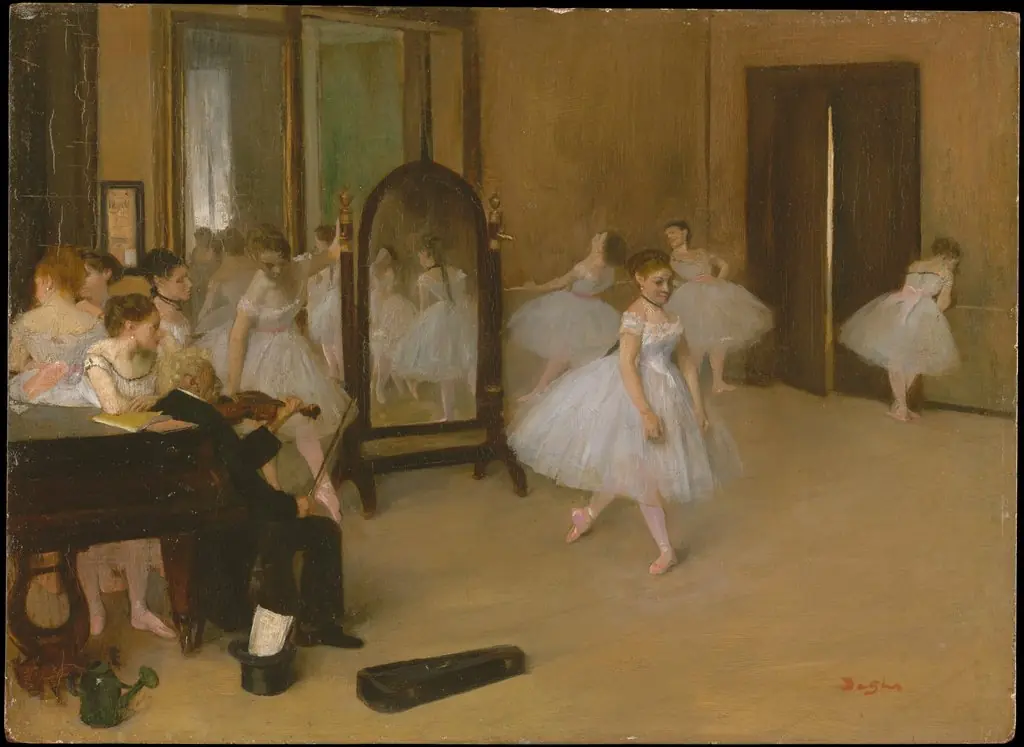
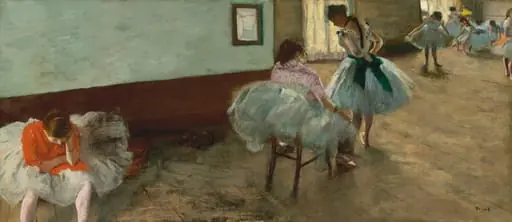
The Dance Class
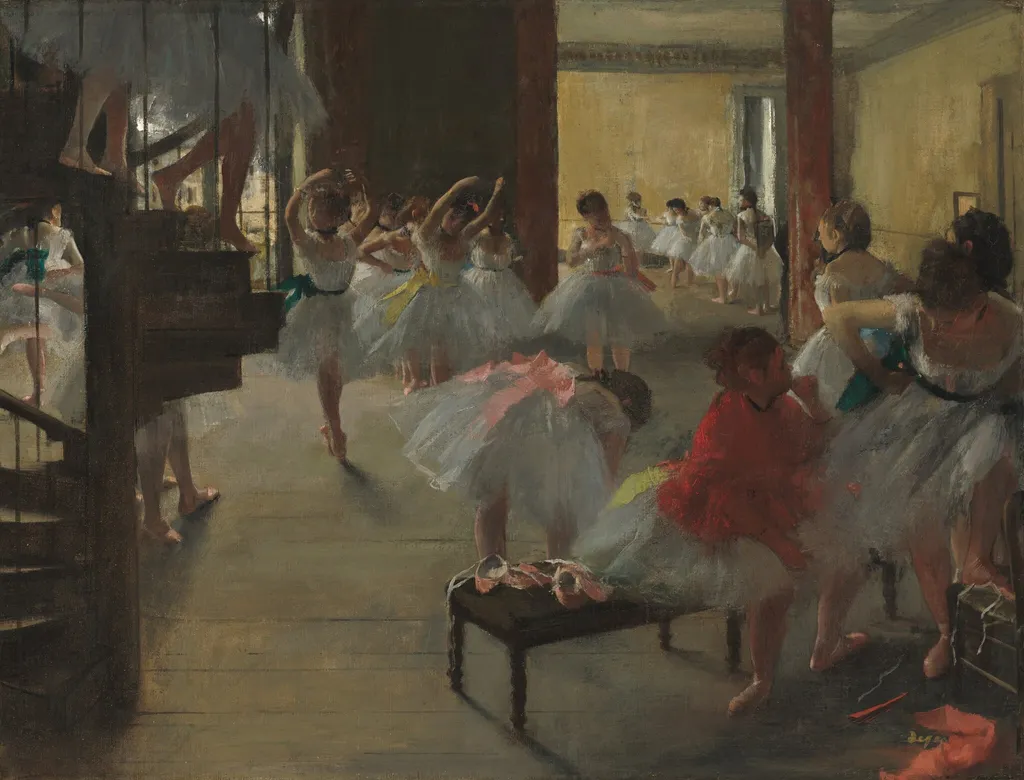
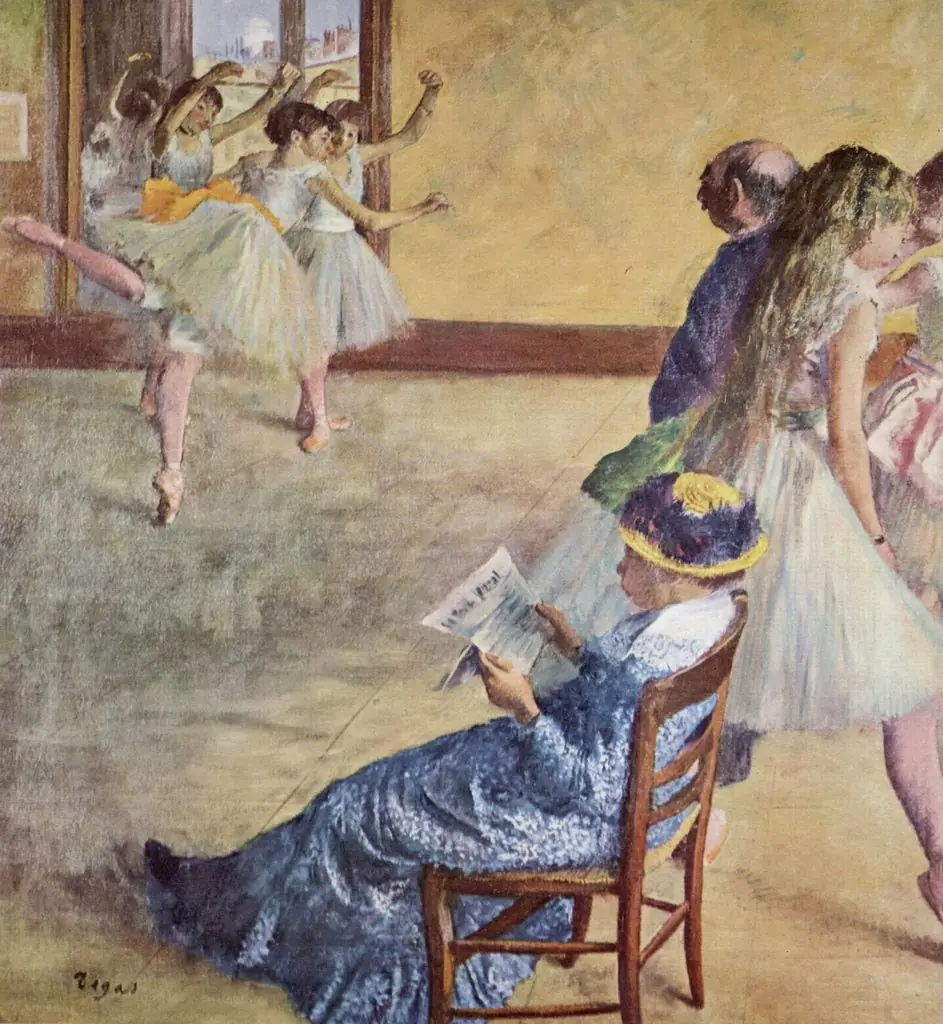
The Dance Class is an oil painting by the Impressionist artist Edgar Degas. It dates from 1873 and is held in the collection of the National Gallery of Art.
- Inscription
- Inscribed:lower right: Degas
About this work
Technique & Style
Edgar Degas executed The Dance Class in 1873 using oil paint applied to a canvas support. The work measures 47.63 cm in height and 62.23 cm in width. Classified as a genre scene, the painting reflects the artist's engagement with contemporary subjects through traditional oil techniques on a rectangular canvas format.
History & Provenance
Following Hill's estate sale at Christie's in London on 25 May 1889, where it was catalogued as number 28, the painting was acquired by Michel Manzi in Paris.
Edgar Degas created the oil painting The Dance Class in 1873. The work was purchased in London in 1876 by Henry Hill of Brighton, who kept it until his death. Following Hill's estate sale at Christie's in London on 25 May 1889, where it was catalogued as number 28, the painting was acquired by Michel Manzi in Paris.
It subsequently entered the collection of Eugene Glaenzer in New York before being sold to William Andrews Clark in 1903. Clark bequeathed the piece to the Corcoran Gallery of Art in Washington in 1926, where it remained until the National Gallery of Art acquired it in 2014 under accession number 2014.79.710.
Overview
Edgar Degas’s oil painting titled The Dance Class depicts a modestly illuminated rehearsal space where a group of young ballet students are absorbed in preparation and practice. The composition gathers several figures in varied poses, some fastening shoes, others balancing on tiptoe, conveying a bustling yet focused atmosphere within the studio.
Subject & Meaning
The work presents a candid glimpse into the daily routine of ballet training, emphasizing the discipline and concentration required of the dancers. By portraying ordinary moments rather than staged performances, Degas highlights the labor behind the art form, suggesting a respect for the dedication inherent in the pursuit of grace.
Context
Created during Degas’s later period of interest in ballet, the piece reflects his ongoing fascination with the world of the Paris Opéra. It aligns with his broader series of works that document rehearsal spaces, offering a contrast to the polished spectacle of the stage and underscoring his focus on behind‑the‑scenes reality.
Legacy
The Dance Class contributes to Degas’s reputation as a chronicler of contemporary urban culture, influencing subsequent artists who explored everyday subjects with a similar blend of realism and compositional dynamism. The painting remains a reference point for studies of 19th‑century performance practices and the visual language of light and shadow in interior scenes.
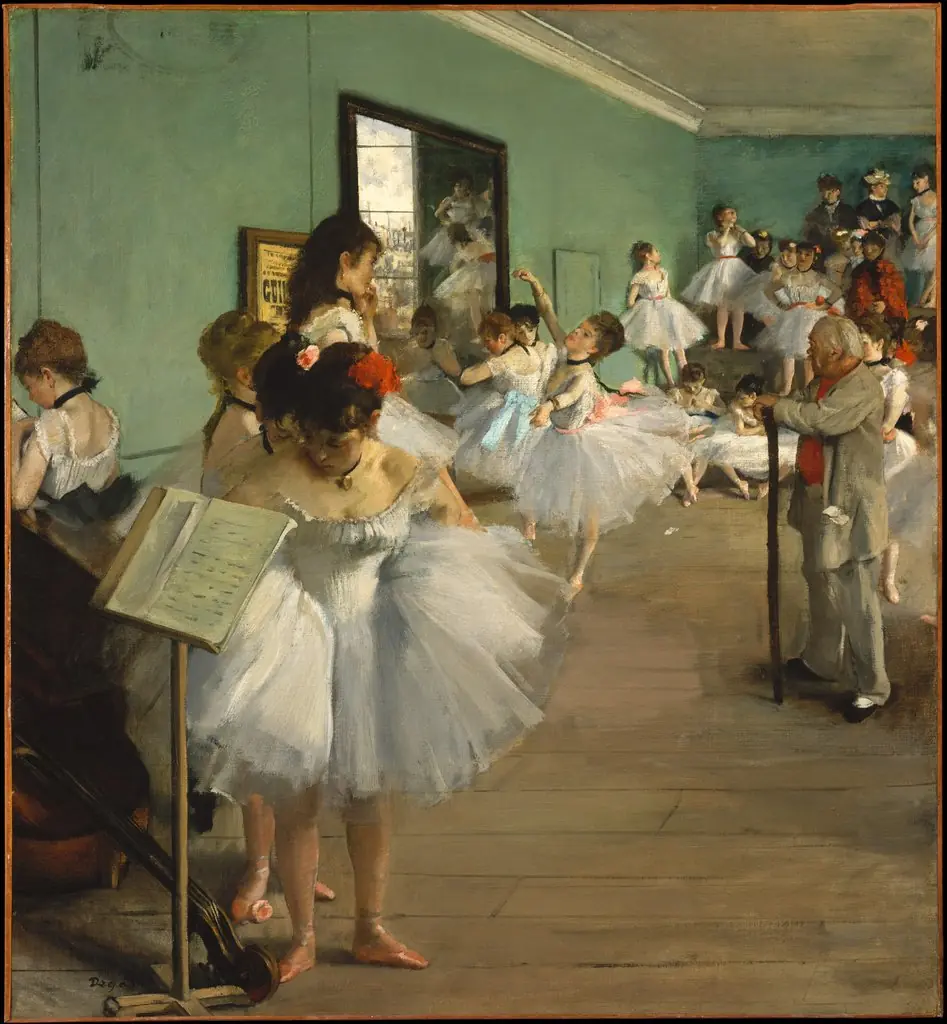
Own this work as a print
Artist & collection

Artist
Born Hilaire-Germain-Edgar De Gas on 19 July 1834 in Paris, Edgar Degas came from an affluent banking family with aristocratic roots and spent his childhood among the cultivated circles of the French capital.