Artwork
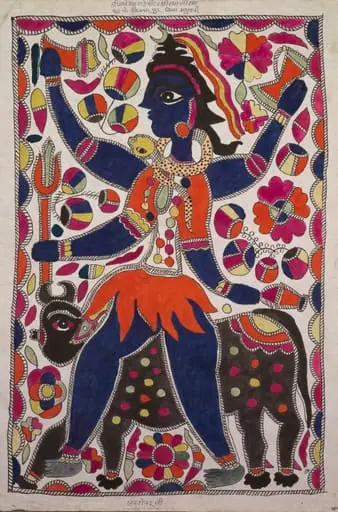
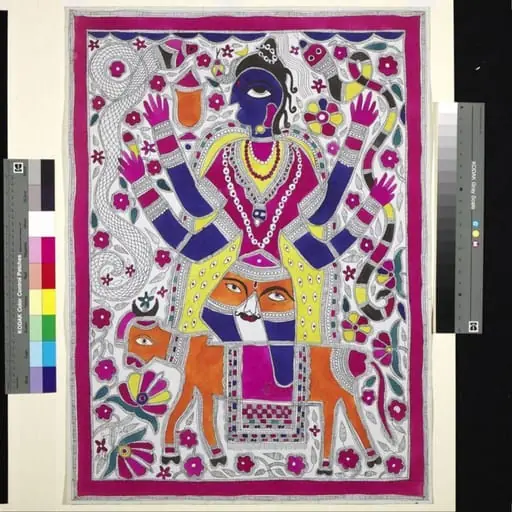
Shiva on Nandi
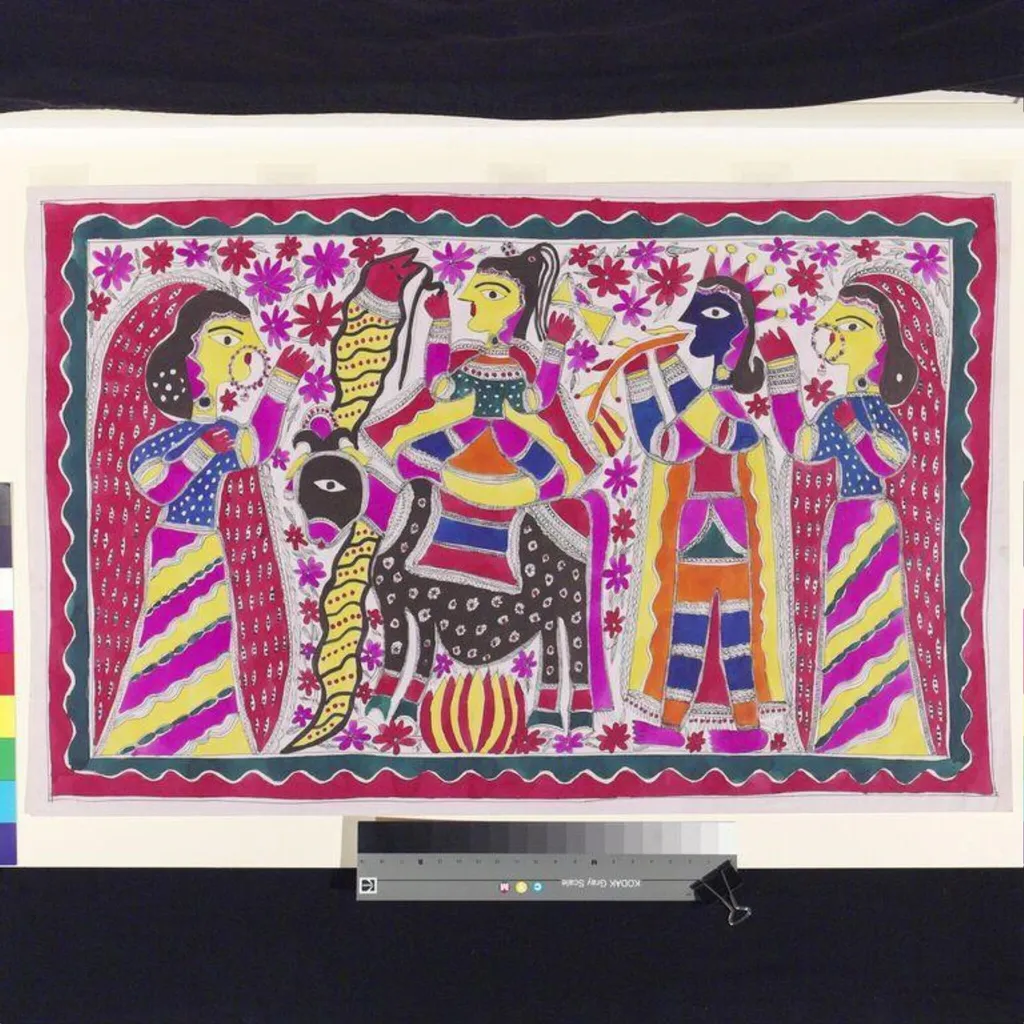
Shiva on Nandi is a paint painting by the Contemporary Abstract artist Bhagavati Devi. It dates from 1973 and is held in the collection of the Victoria and Albert Museum. This 1973 painting, created by Devi and Bhagavati in the Madhubani style, is executed in ink and pigment on paper.
About this work
Overview
It originates from the Mithila region of northern Bihar, where the tradition was historically practiced by women of Brahmin and Kayasth communities.
This 1973 painting, created by Devi and Bhagavati in the Madhubani style, is executed in ink and pigment on paper. It originates from the Mithila region of northern Bihar, where the tradition was historically practiced by women of Brahmin and Kayasth communities. The work reflects a shift from wall murals to paper-based art that began in the 1960s, preserving regional iconography while adapting to new mediums and markets.
Subject & Meaning
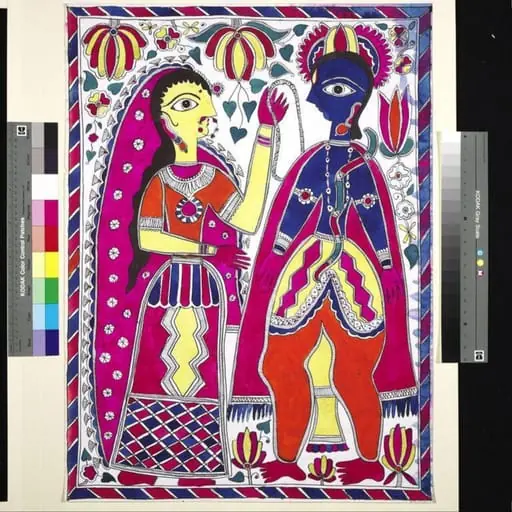
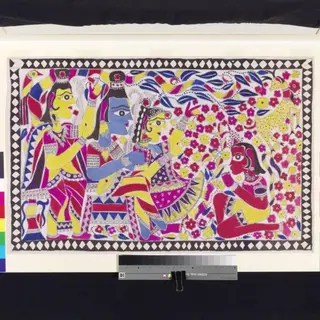
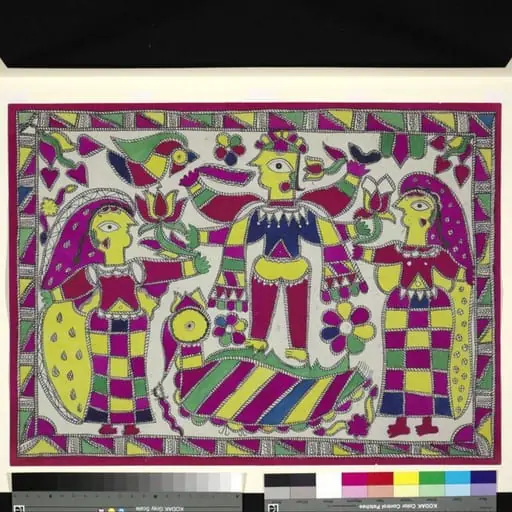
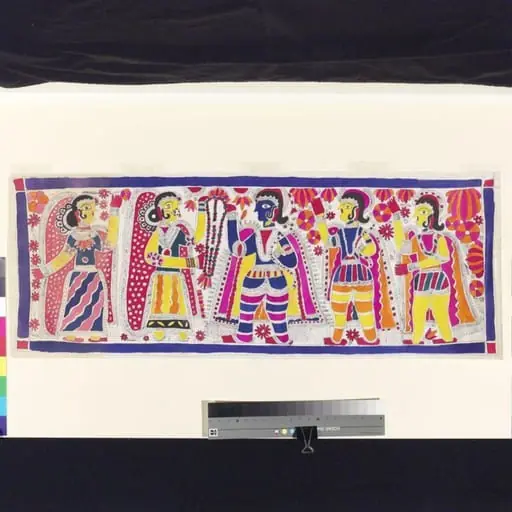
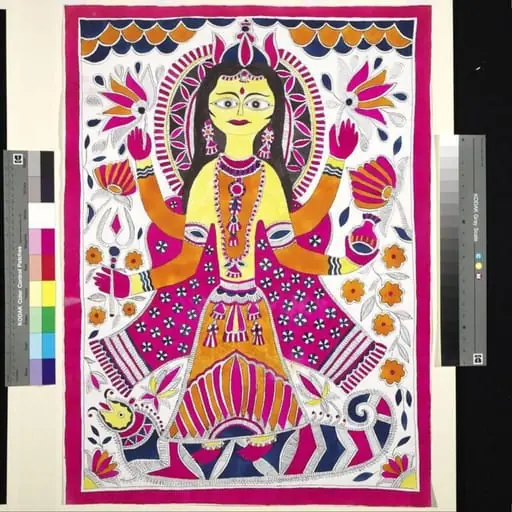
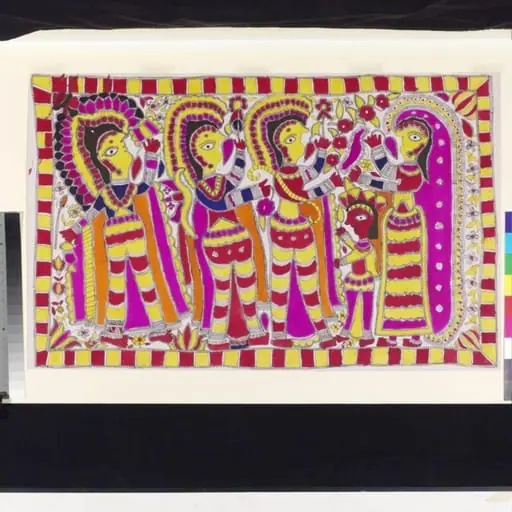
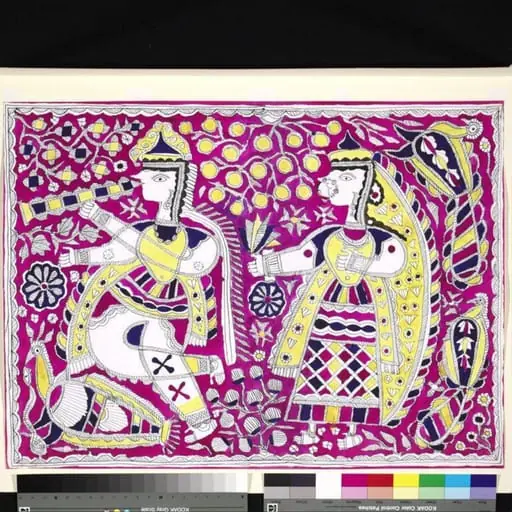
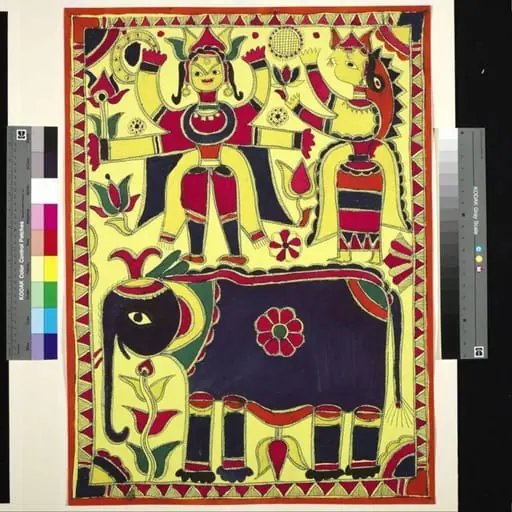
The central figure, identified by blue skin, represents Shiva, seated on his bull Nandi. A serpent coils before him, symbolizing cosmic power and renewal. Flanking him are figures interpreted as Parvati, Krishna, and Radha, suggesting a convergence of divine narratives.
The composition unites themes of devotion, duality, and cosmic order, common in Madhubani depictions of Hindu deities within domestic and ritual contexts.
Technique & Style
The painting employs flat, unmodulated colors and bold, continuous outlines, characteristic of Madhubani’s folk aesthetic. Patterns of dots, stripes, and swirling floral motifs frame the figures, creating rhythmic visual energy. The absence of perspective and the stylized forms produce a two-dimensional, decorative effect. These techniques, passed through generations, emphasize symbolic clarity over naturalism.
History & Provenance
Madhubani painting emerged from ritual wall decorations in Mithila homes, traditionally created by women during festivals and ceremonies. After the 1934 Bihar earthquake prompted external documentation, the art form gained attention. By the 1960s, it transitioned to paper for commercial sale, enabling wider circulation while maintaining its cultural roots. This 1973 work is part of that early phase of artistic adaptation.
Context
The painting reflects the enduring role of Hindu mythology in rural North Indian life, where divine figures were rendered not as distant icons but as intimate presences in daily ritual space. The inclusion of Krishna and Radha alongside Shiva suggests a syncretic devotional landscape, where multiple deities coexist in household worship. The vibrant, dense patterning echoes the ornamental traditions of Mithila’s textile and architectural arts.
Legacy
This work contributes to the documented evolution of Madhubani from a localized, gendered practice into a recognized Indian folk art form. Its preservation on paper helped sustain the tradition beyond its original domestic context, influencing later generations of artists and collectors. While commercialized, the painting retains the symbolic language and communal memory embedded in its making.
Artist & collection
Artist
This artist painted religious scenes on paper, often showing Hindu deities and their mounts.