Artwork
Cubist Landscape
About this work
Overview
Subject & Meaning
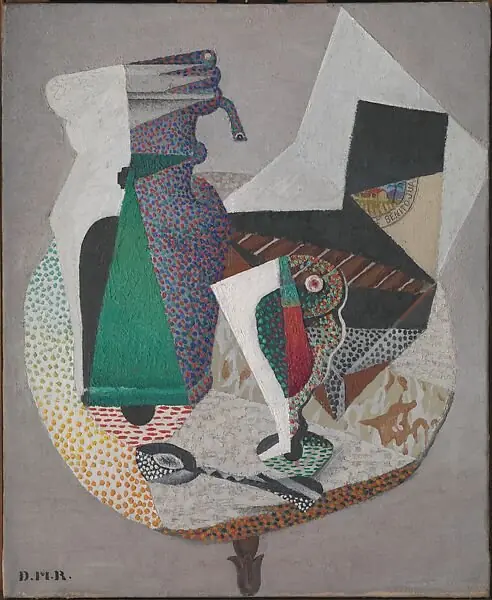
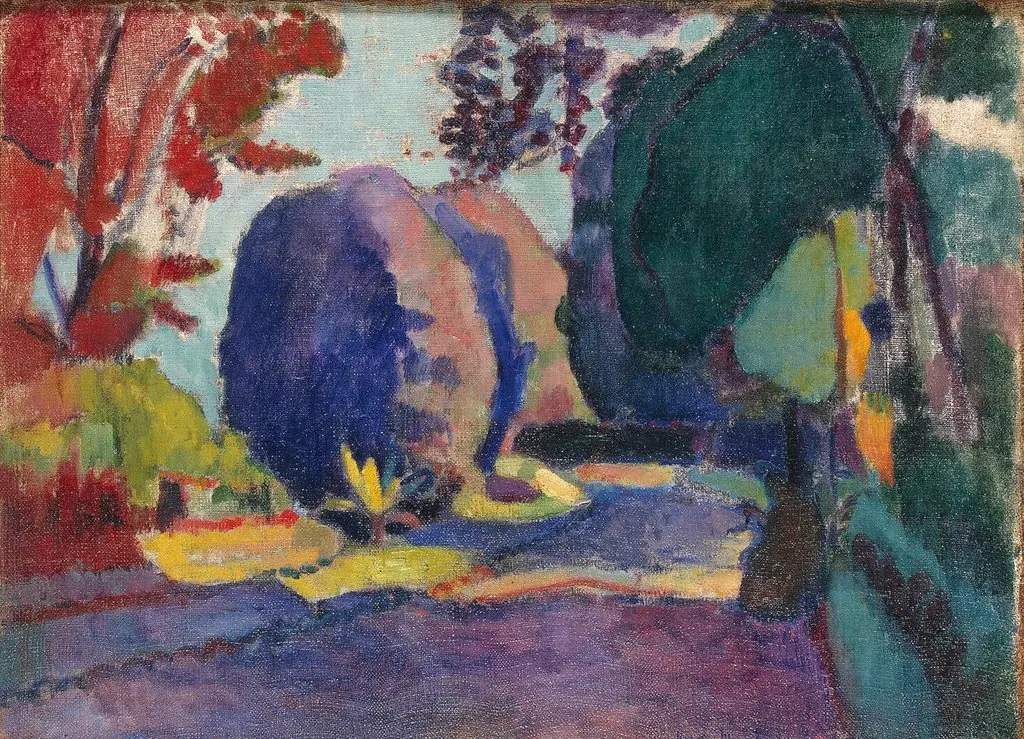
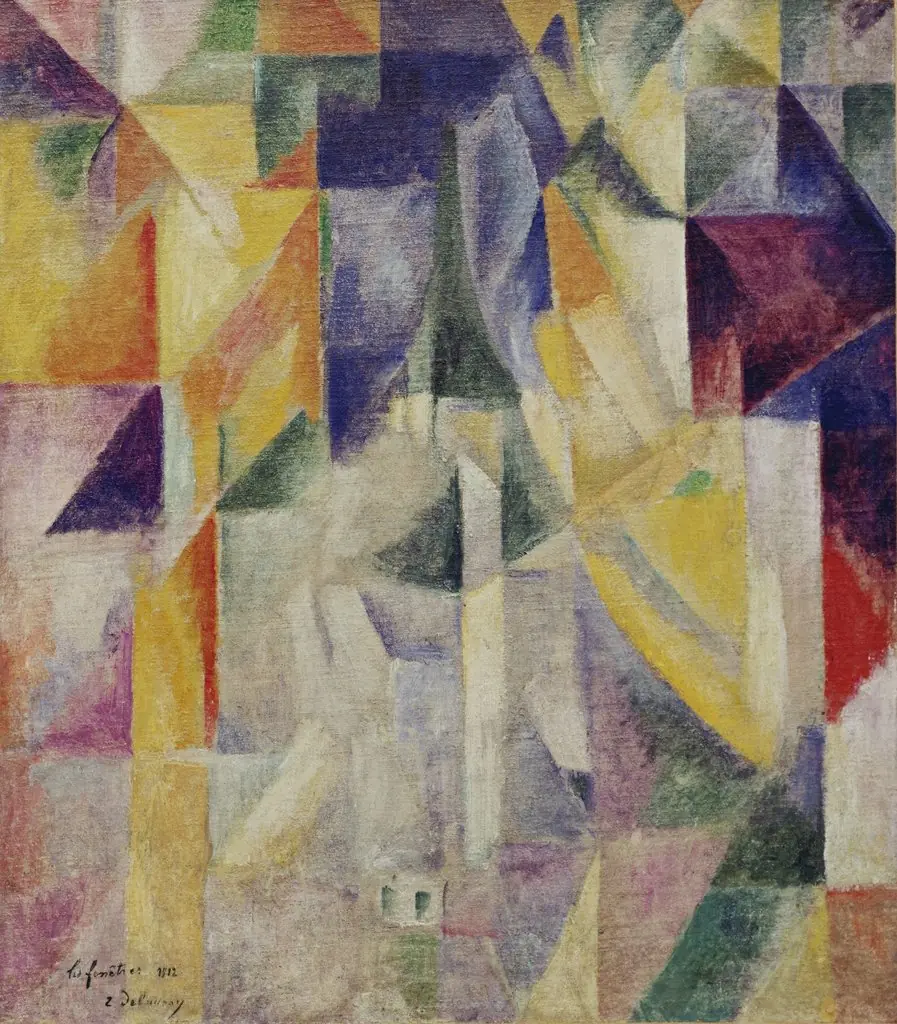
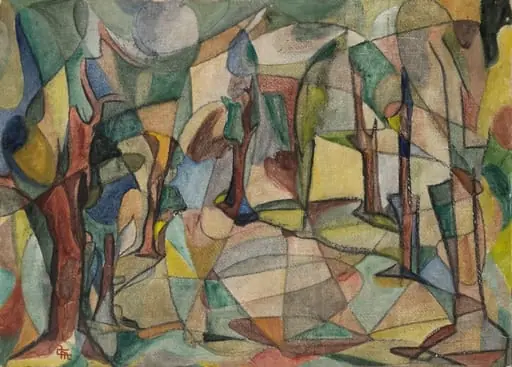
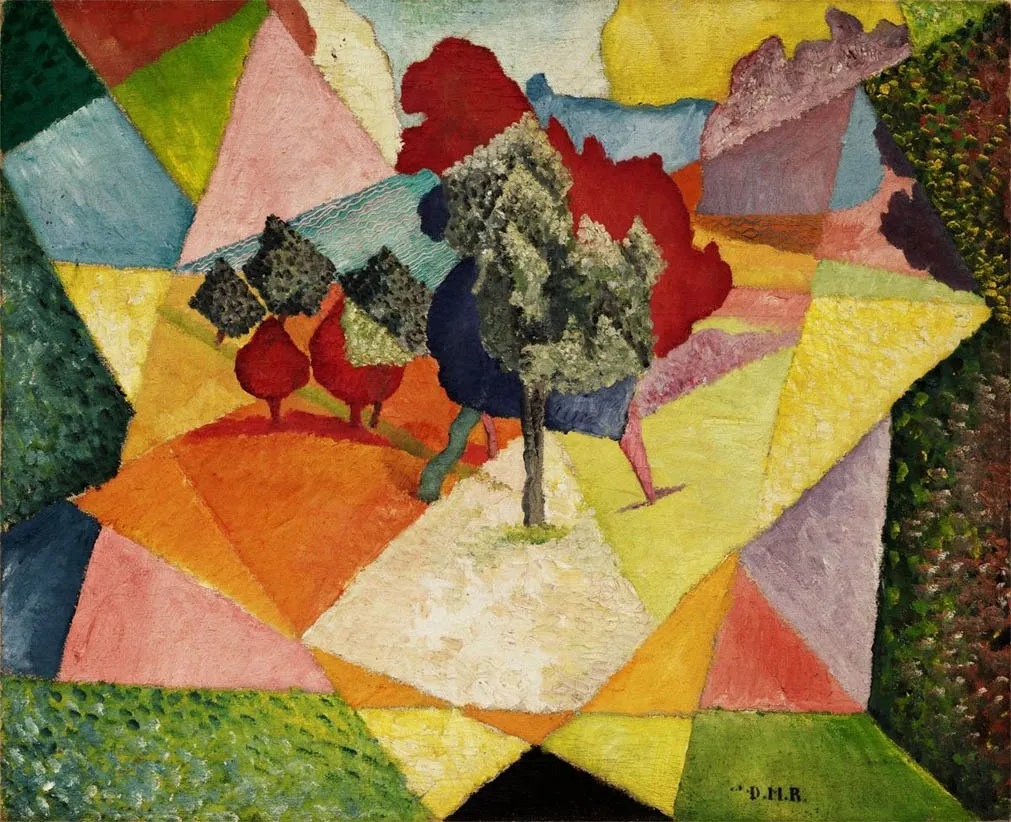
The composition depicts a rural setting: a solitary tree dominates the foreground, a winding path threads through rolling hills, and a clear sky stretches overhead. The arrangement of forms suggests a balance between natural observation and abstracted structure, inviting viewers to contemplate the interplay of environment and design.
Technique & Style
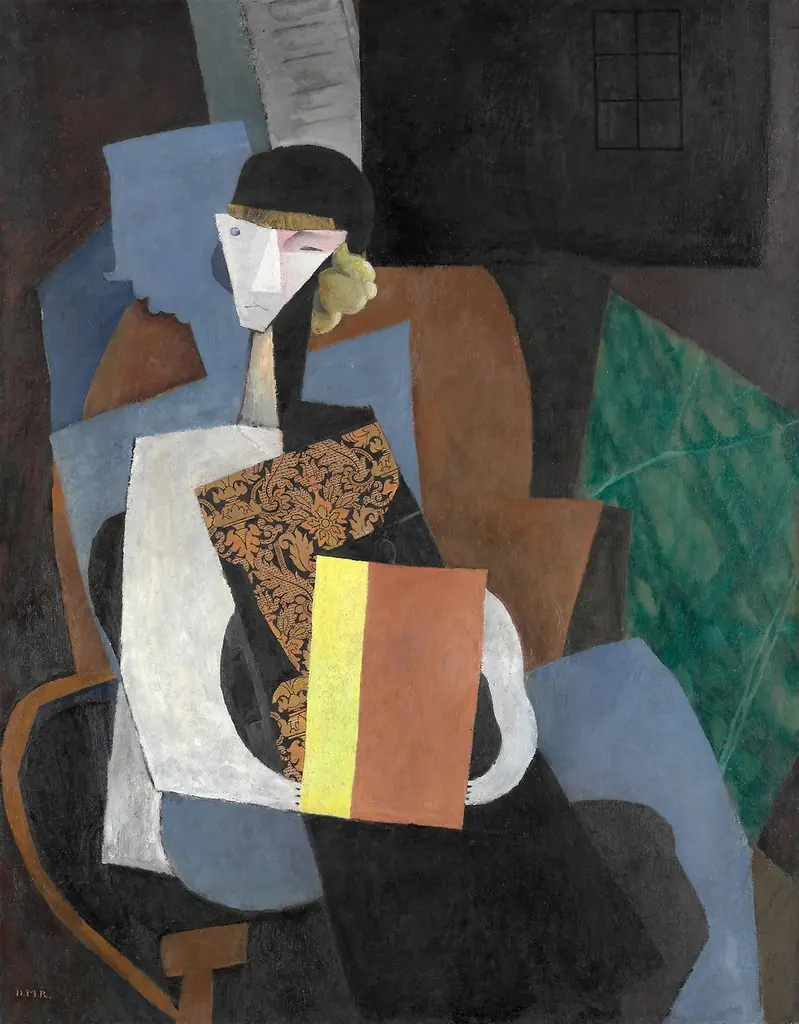
Rivera applies visible brushwork that creates a tactile surface, while employing bold, saturated hues of green, yellow, red, and blue. Geometric simplification of trees, hills, and the sky, combined with intersecting planes, reflects the influence of Cubist principles on his early landscape practice.
History & Provenance
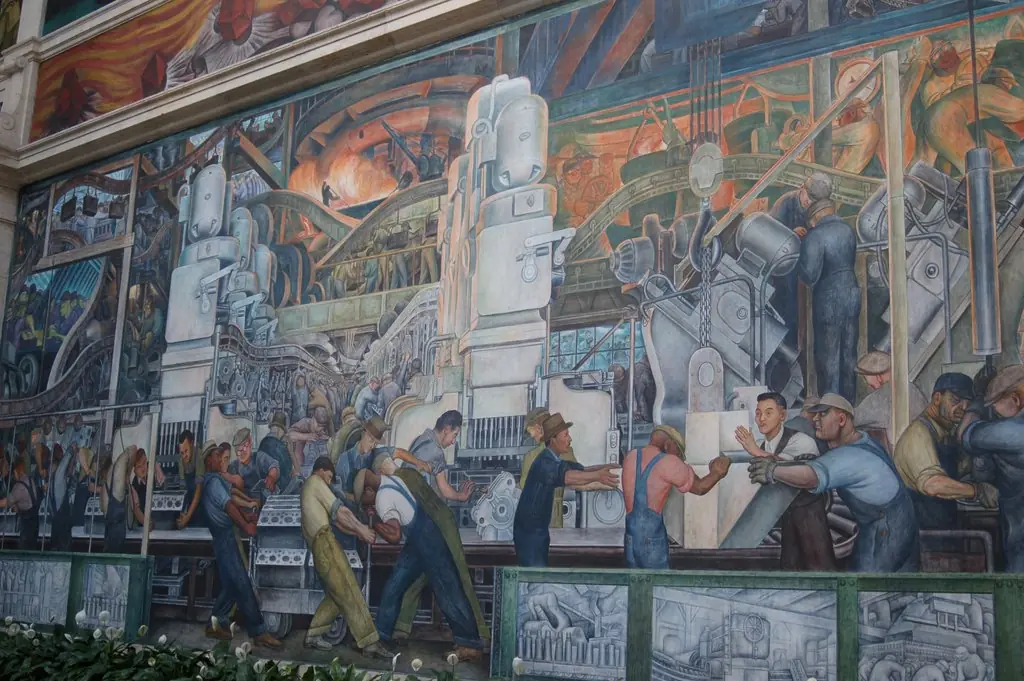
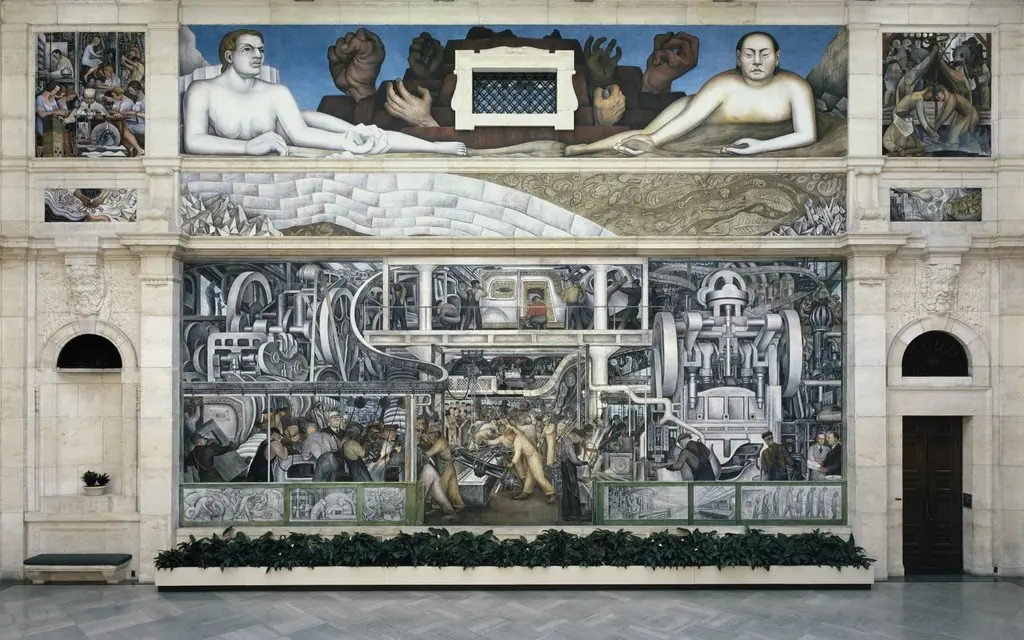
Painted shortly after Rivera’s exposure to European avant‑garde movements, the piece entered the Museum of Modern Art’s holdings during the mid‑20th century, where it has remained on view as an example of his formative period before his later mural work.
Context
Created at a time when Cubism was reshaping artistic conventions, the painting illustrates how Rivera integrated the movement’s analytical approach with his own interest in Mexican scenery, bridging European modernism and his native visual culture.
Artist & collection

Artist
Diego María de la Concepción Juan Nepomuceno Estanislao de la Rivera y Barrientos Acosta y Rodríguez was a Mexican painter. His large frescoes helped establish the mural movement in Mexican and international art.