Artwork
Portrait of a Man
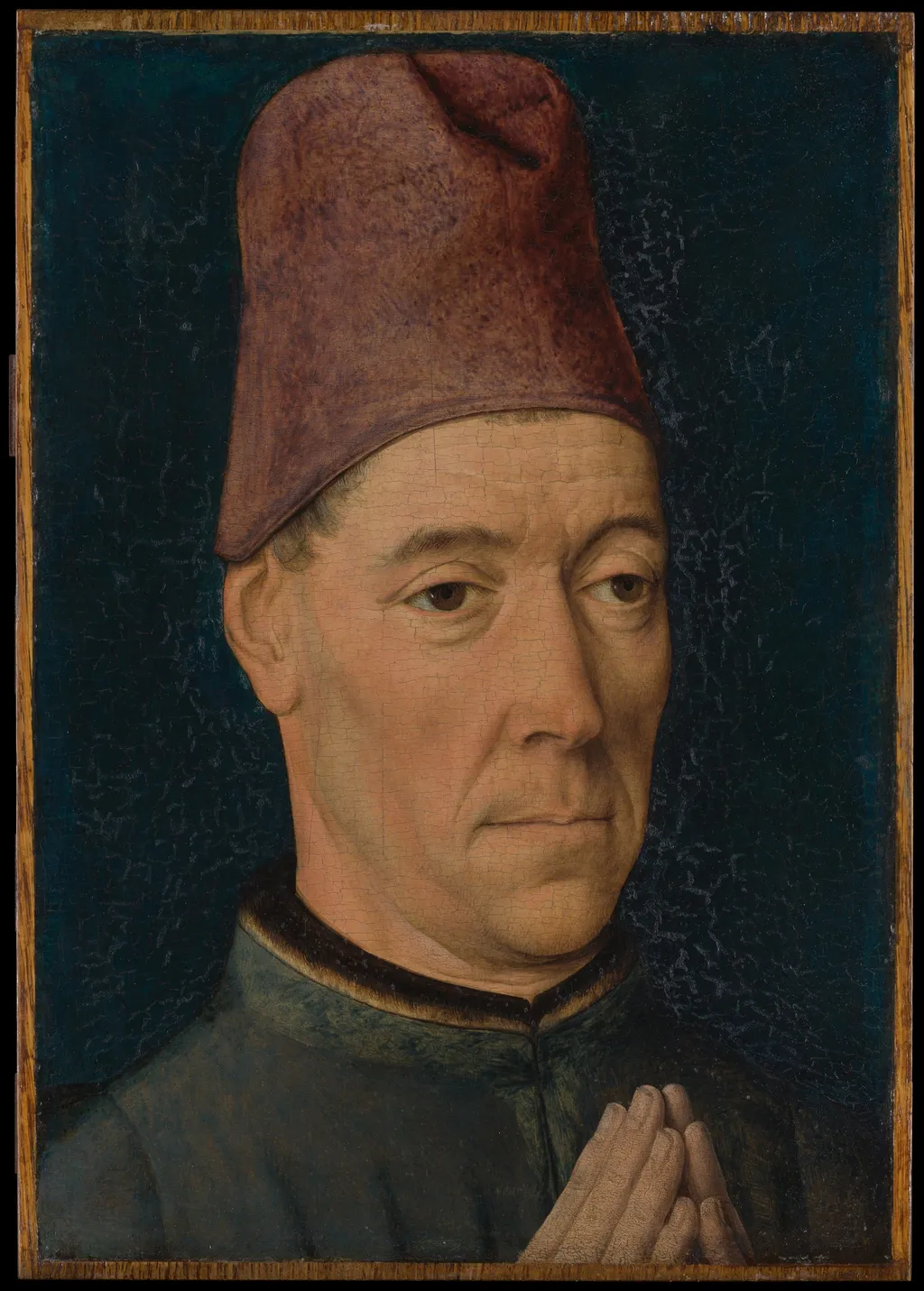
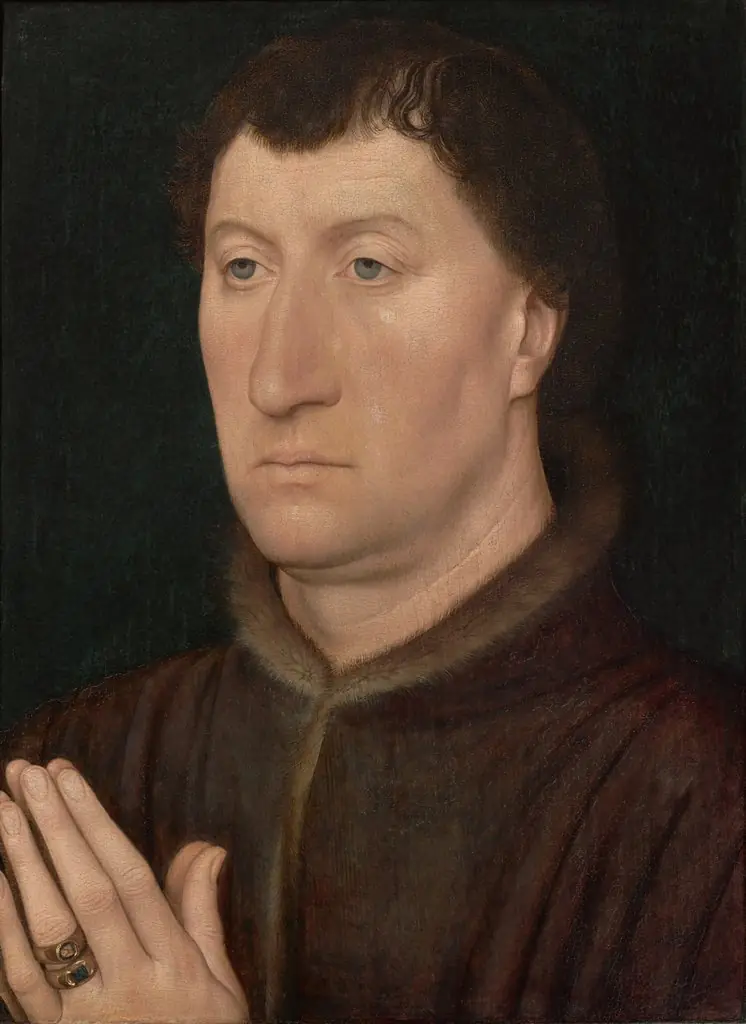
Portrait of a Man is an oil painting by the Northern Renaissance artist Dieric Bouts. It dates from 1470 and is held in the collection of the Metropolitan Museum of Art.
About this work
Technique & Style
6 cm in width, reflecting the modest scale common to devotional and private portraits of the period.
The work is executed in oil on a wooden panel, a technique typical of Early Netherlandish painting, as indicated by its material description and classification as a portrait. The surface measures 29.5 cm in height by 20.6 cm in width, reflecting the modest scale common to devotional and private portraits of the period. The handling of light and meticulous detail align with the stylistic conventions of the Early Netherlandish school, emphasizing naturalistic rendering and rich coloration in oil paint.
History & Provenance
Portrait of a Man was created by Dieric Bouts in 1470, executed in oil paint on panel. The work later entered the collection of Albert von Oppenheim, and subsequently that of Benjamin Altman, before being held by the Metropolitan Museum of Art, its current location. The painting was included in the Exposition des primitifs flamands à Bruges, an exhibition devoted to Early Netherlandish painting that brought together major works of the period. No information is available on the original commission or the circumstances of its creation.
Context
Dieric Bouts's Portrait of a Man, dated 1470, occupies a place within Early Netherlandish painting, a movement in which Bouts was a leading figure working in Leuven during the mid-to-late fifteenth century. The small-scale oil-on-panel portrait reflects the conventions of Northern European portraiture of the period, depicting an unidentified sitter in a tightly cropped format. The painting's documented exhibition history includes the Exposition des primitifs flamands à Bruges, situating the work within the canon of Flemish primitive painting recognized by major scholarly surveys.
Its provenance traces through the collections of Albert von Oppenheim and the collector Benjamin Altman before entering the Metropolitan Museum of Art, a holding that affirms the painting's status as a significant example of Bouts's portrait practice and of Early Netherlandish art more broadly.
Overview
Dieric Bouts, an Early Netherlandish painter active in Leuven, created this Portrait of a Man around 1470. Executed in oil on panel, the work exemplifies the Northern Renaissance tradition of individual portrayal. It is currently housed at The Metropolitan Museum of Art.
The subject, depicted with a serious gaze and clasped hands, is set against a dark background, drawing focus to his features and attire.
Subject & Meaning
The painting presents a man in a dark green tunic and brown hat, his hands clasped before him. He engages the viewer directly with a serious, contemplative expression. The artist's choice of a dark, unadorned background emphasizes the sitter's presence, highlighting his face and hands.
This direct gaze and solemn demeanor were characteristic of portraiture in the Northern Renaissance, aiming to capture the individual's inner state.
Own this work as a print
Artist & collection
Artist
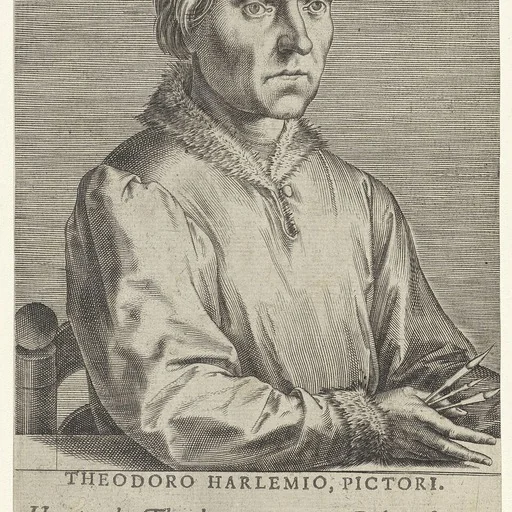
Dieric Bouts (born c. 1415 – 6 May 1475) was an Early Netherlandish painter. Bouts may have studied under Rogier van der Weyden, and his work was influenced by van der Weyden and Jan van Eyck. He worked in Leuven from…

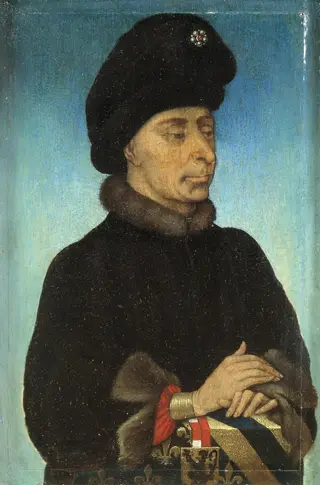
- John the Fearless, Duke of Burgundy
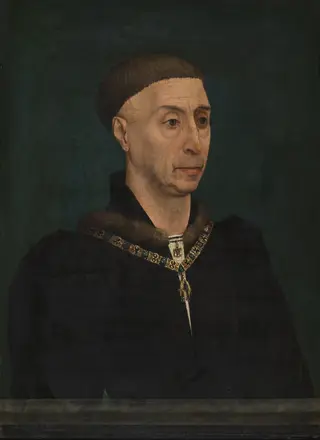 Philip the Good
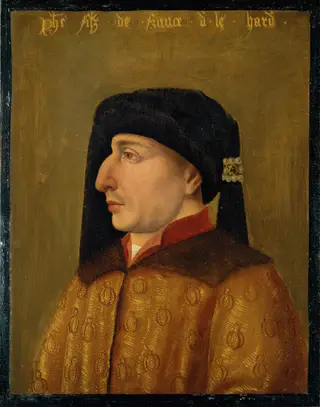 Herzog Philipp der Kühne (1342-1404) von Burgund im Profil
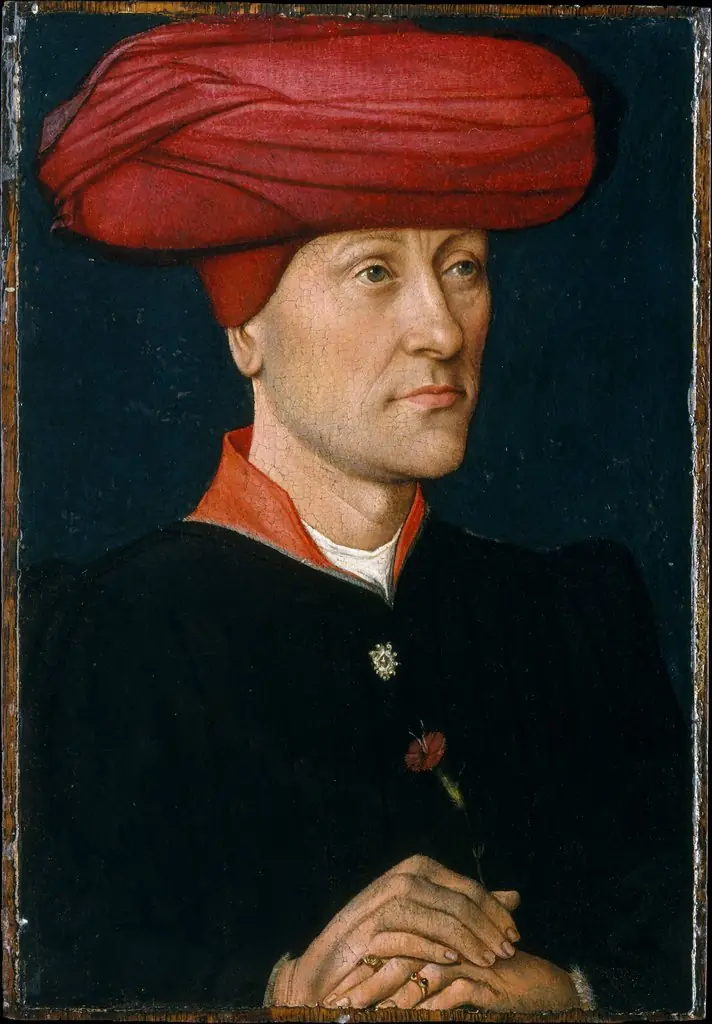 Portrait of a Man in a Turban
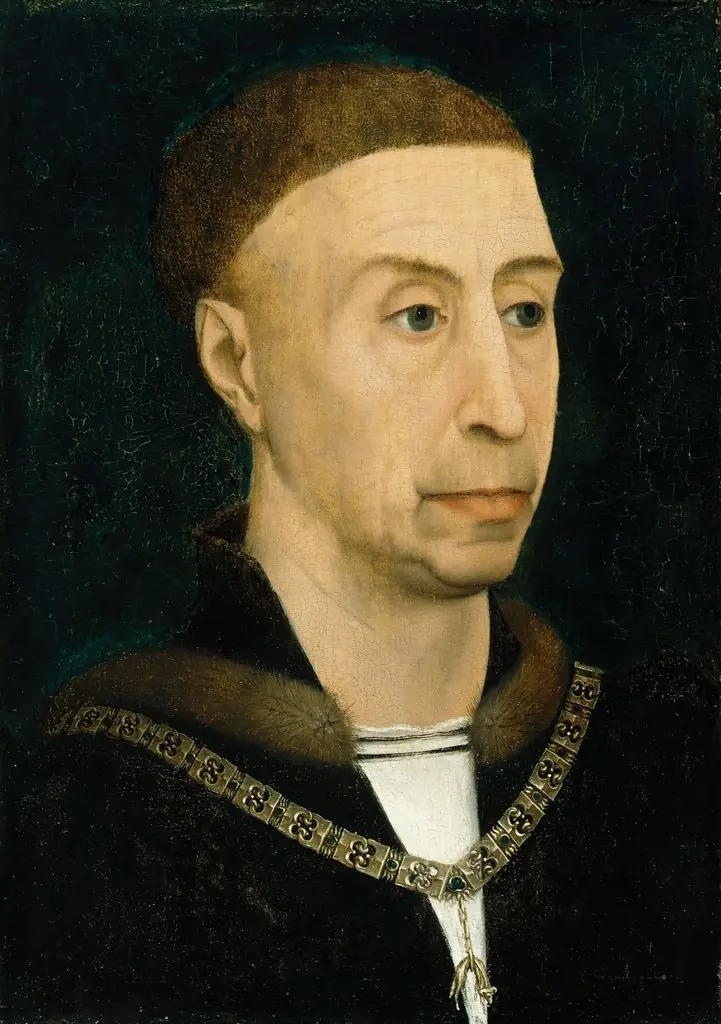 Portrait of Philip the Good, Duke of Burgundy
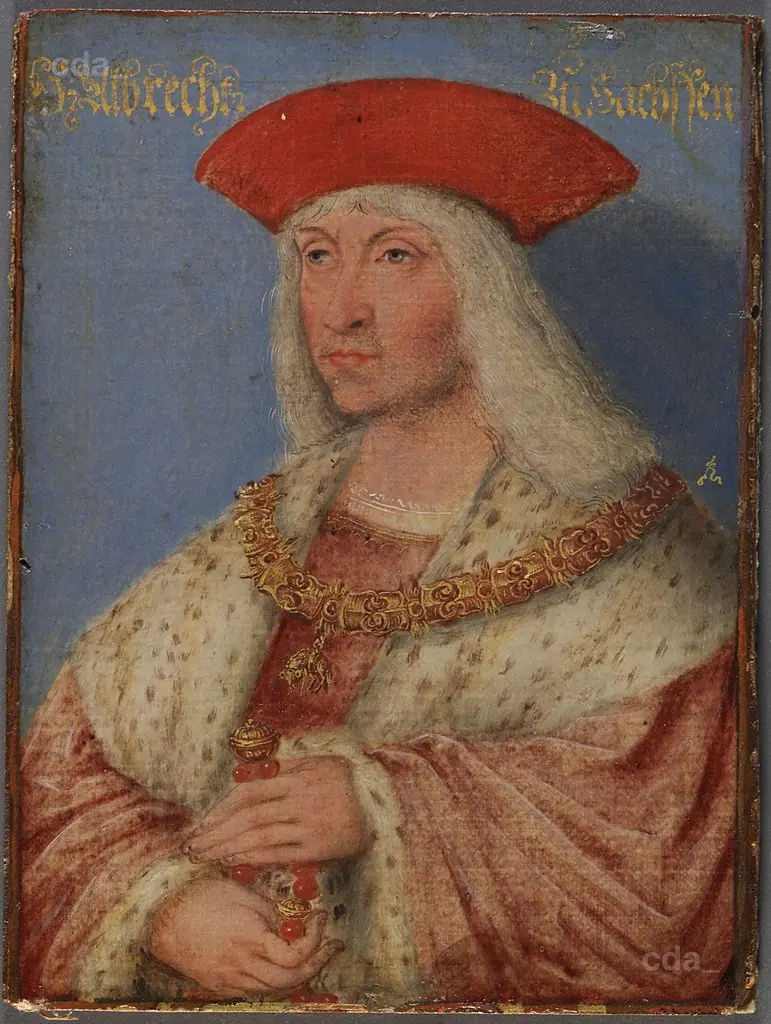 Albrecht the Bold, son of Friedrich II., died 1500
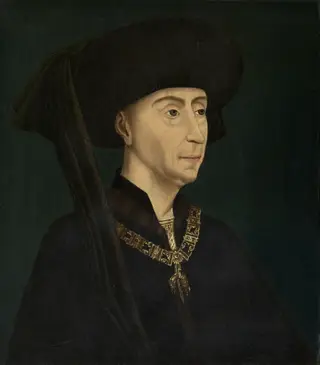 Philip the Good
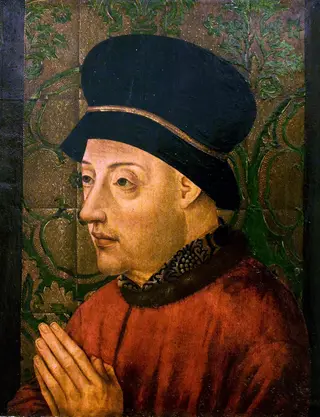 Portrait of King John I of Portugal
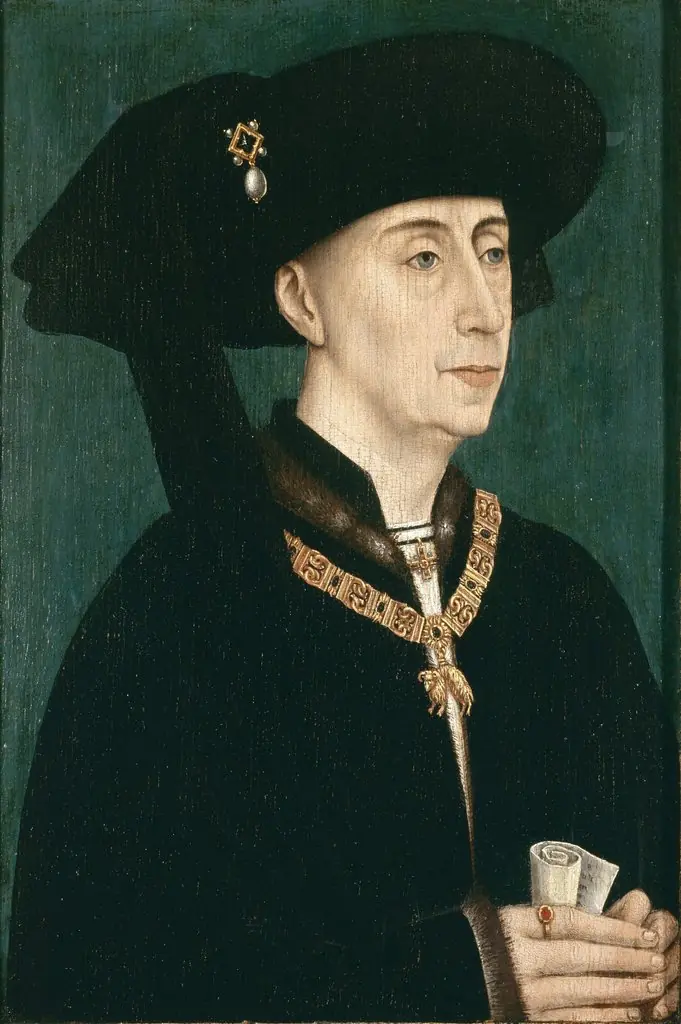 Portrait of Philip the Good
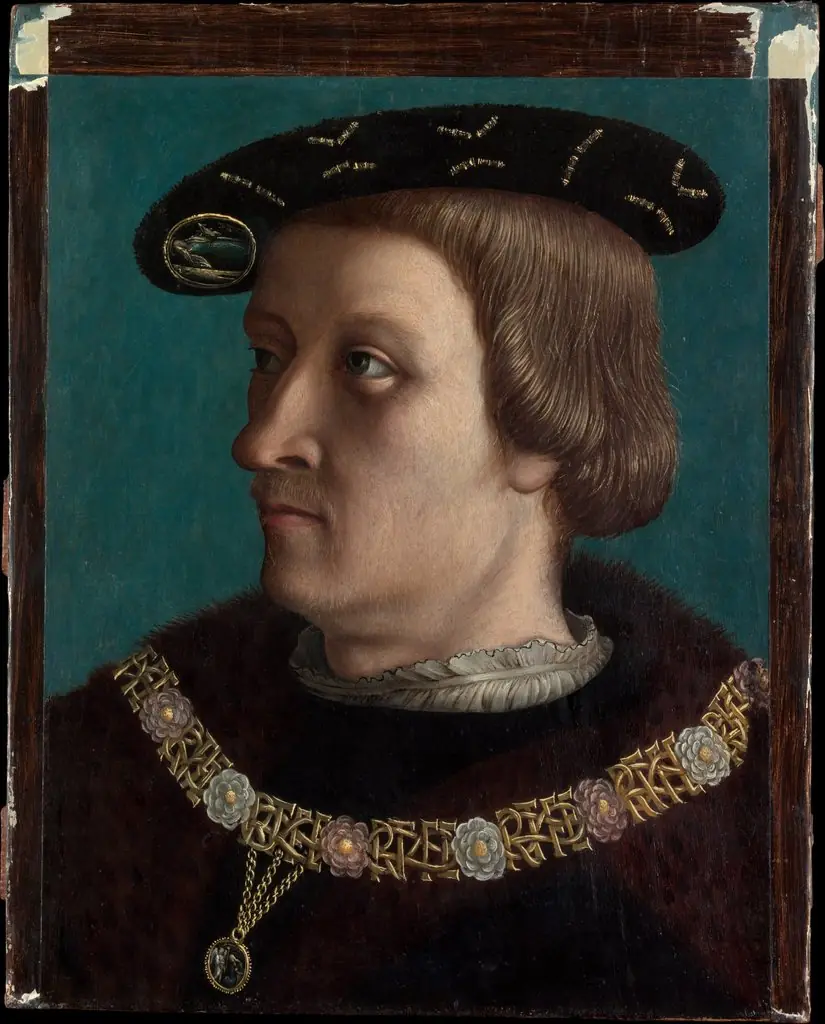 Portrait of a Man Wearing the Order of the Annunziata of Savoy
 The Canon Gilles Joye
 Portrait of the Dauphin Francis, Son of Francis I