Artwork
Christ in the house of the Pharisee Simon
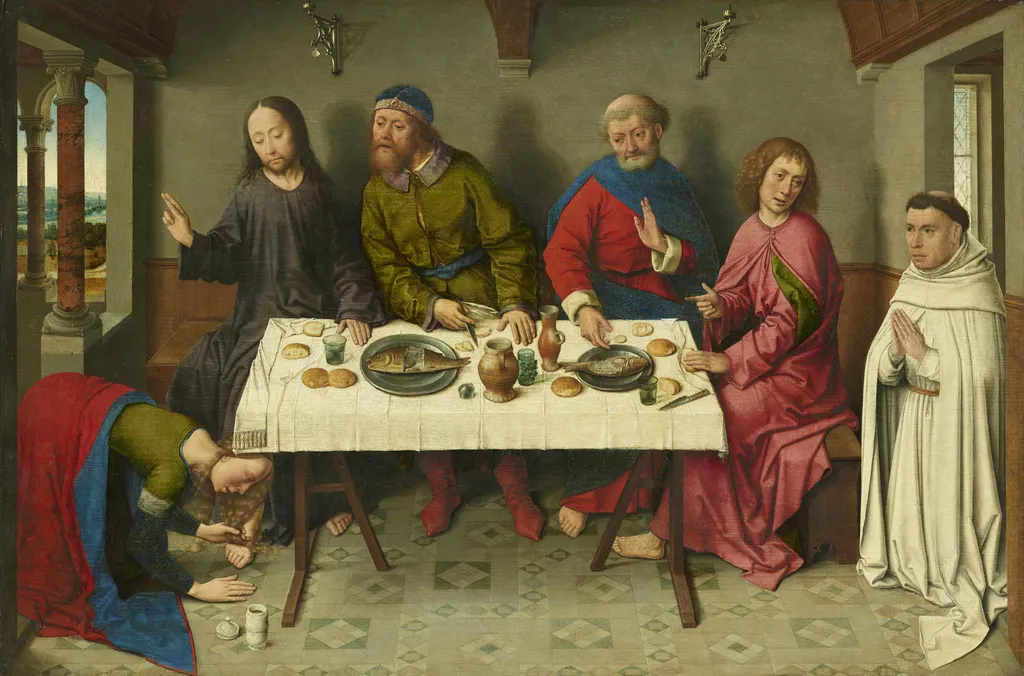
Christ in the house of the Pharisee Simon is an oil painting by the Northern Renaissance artist Dieric Bouts. It dates from 1460 and is held in the collection of the Gemäldegalerie Berlin.
About this work
Jesus stands at the left in a dark robe, right hand raised, as four robed men sit at a table set with bread, plates, and cups. A woman kneels on the tiled floor washing his feet, and a window opens onto the outdoors. Dieric Bouts painted this quiet scene in 1460 in the Northern Renaissance style.
Subject & Meaning
Beneath the table, a richly dressed woman anoints Christ's feet with balsam, having first washed them with her tears and dried them with her hair.
The painting depicts the biblical episode of the meal at the house of Simon the Pharisee, a scene recounted in the four Gospels and also recorded in Jacobus de Voragine's Legenda Aurea. Simon sits centrally behind the table as host, flanked by Christ on one side and the apostles Peter and John on the other. Beneath the table, a richly dressed woman anoints Christ's feet with balsam, having first washed them with her tears and dried them with her hair.
Although the Gospels leave the woman anonymous, only John names her Mary, medieval tradition identifies her with Mary Magdalene. The apostles regard the woman with disapproval for the perceived waste of costly balsem, a reaction Christ will rebuke. The table is laid with bread, fish, and wine, evoking associations with the Last Supper and the Supper at Emmaus.
In the original panel, a kneeling Dominican donor is included in a corner, while the apostle John, depicted as a youth, turns toward him in a gesture of blessing.
Technique & Style
Executed circa 1440 or possibly 1460, this Early Netherlandish work is an oil painting on an oak panel measuring 40.5 by 61 centimeters. The composition features figures situated within a confined interior space characterized by a vaulted ceiling and a window offering an exterior view. Stylistically, the piece reflects the late Gothic tradition, with a specific focus on rendering the 'true face' of Jesus based on the apocryphal Letter of Lentulus.
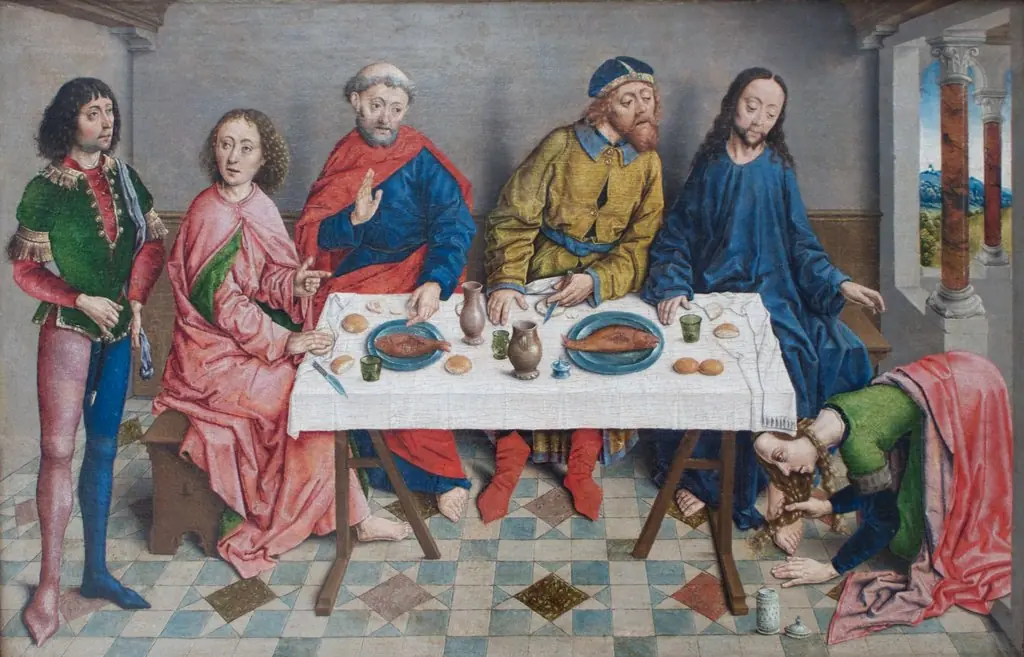
The arrangement of bread, fish, and wine on the table visually alludes to the Last Supper and the Road to Emmaus. While generally attributed to Dieric Bouts, some scholarship has suggested the hand of his son, Dieric the Younger, citing similarities to works by Aelbert van Ouwater. The original includes a kneeling Dominican donor in the corner, a figure replaced by a standing youth in a later mirrored copy attributed to Albrecht Bouts.
History & Provenance
Christ in the House of the Pharisee Simon is an oil-on-oak panel attributed to Dieric Bouts and dated to around 1440, making it an early work in his oeuvre, with some sources extending the inception range to 1460–1462. The painting was produced in Leuven and measures 40.5 by 61 cm. A kneeling Dominican donor figure in the right corner of the composition has not been further identified. The work was once owned by the collector Adolph Thiem before entering the Gemäldegalerie in Berlin, where it remains part of the collection of the Staatliche Museen zu Berlin.
It was exhibited at the Exposition des primitifs flamands à Bruges. A copy of identical dimensions but in mirror image, attributed to Bouts's son Albrecht Bouts, is held by the Oldmasters Museum in Brussels.
The painting is held in the collection of the Gemäldegalerie in Berlin, part of the Staatliche Museen zu Berlin. While some sources date the work to approximately 1460, others place its creation in the 1440s, identifying it as an early work by Dieric Bouts. The piece was previously owned by Adolph Thiem before entering the Berlin museum's holdings.
Its exhibition history includes a notable appearance at the Exposition des primitifs flamands in Bruges. A separate copy attributed to Bouts' son, Albrecht, resides in the Oldmasters Museum in Brussels, having been acquired by the Belgian state in 1873 from the Arenberg family collection, but the primary version discussed remains in Berlin.
Context
The painting is situated within the Early Netherlandish movement and is generally dated to the 1440s, placing it among the early works of Dieric Bouts, produced in Leuven. Its stylistic links to Aelbert van Ouwater have been used to support this early dating. Most art historians attribute the panel to Dieric Bouts himself, though Wolfgang Schöne has argued for an attribution to his son Dieric Bouts the Younger.
A mirror-image copy, attributed to Bouts's son Albrecht Bouts and dated to his apprenticeship, is held by the Oldmasters Museum in Brussels; Max Jakob Friedländer considered it an early work by the younger Bouts, while Georges Hulin de Loo identified its elegantly dressed youth as a possible self-portrait. Bouts's depiction of Christ's face drew on the description preserved in the forged Letter of Lentulus, a source also used for his Salvator Mundi. The subject was later revisited by Peter Paul Rubens, who, in collaboration with Anton van Dyck and Jacob Jordaens, painted a homonymous work.
Legacy
The legacy of Dieric Bouts' Christ in the House of the Pharisee Simon is marked by the existence of a significant contemporary copy and its influence on later Baroque interpretations. A mirror-image replica, attributed to Bouts' son Albrecht Bouts, was produced during the artist's lifetime or shortly thereafter, differing in details such as the replacement of the kneeling donor with an elegantly dressed youth, possibly a self-portrait. This copy, now held in the Old Masters Museum in Brussels, demonstrates the work's immediate appeal and the workshop's role in disseminating the composition.
Furthermore, the subject matter inspired a later homonymous painting created through a collaboration between Peter Paul Rubens, Anton van Dyck, and Jacob Jordaens, indicating the enduring resonance of the biblical narrative as framed by Bouts in Early Netherlandish art. The work's attribution history, debated between Dieric and his son Dirk the Younger, also reflects its complex reception among art historians.
Overview
Dieric Bouts, an Early Netherlandish painter, created Christ in the House of the Pharisee Simon around 1460. This tempera painting exemplifies the Northern Renaissance style, depicting a significant biblical event: the Anointing of Jesus. The composition brings together Christ, John the Apostle, and Mary Magdalene within a domestic setting, showcasing Bouts' characteristic approach to narrative and detail.
Own this work as a print
Artist & collection
Artist
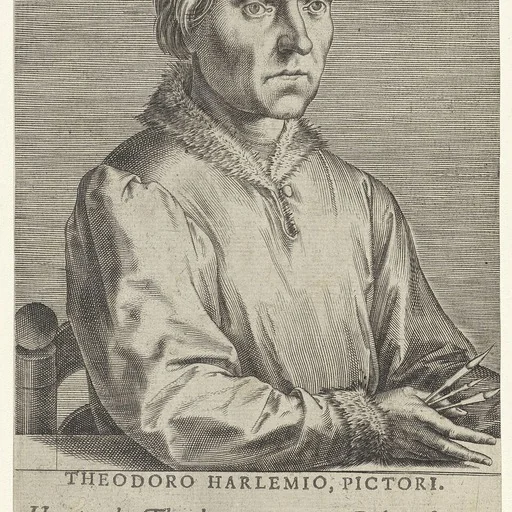
Dieric Bouts (born c. 1415 – 6 May 1475) was an Early Netherlandish painter. Bouts may have studied under Rogier van der Weyden, and his work was influenced by van der Weyden and Jan van Eyck. He worked in Leuven from…

- Jesus at Simon's by Aelbrecht Bouts
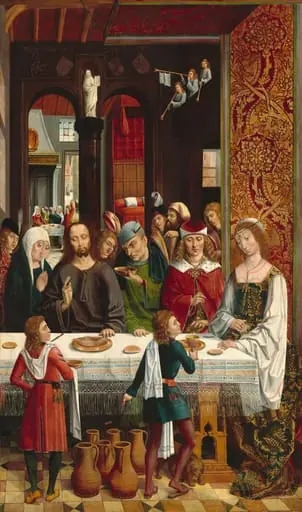 The Marriage at Cana
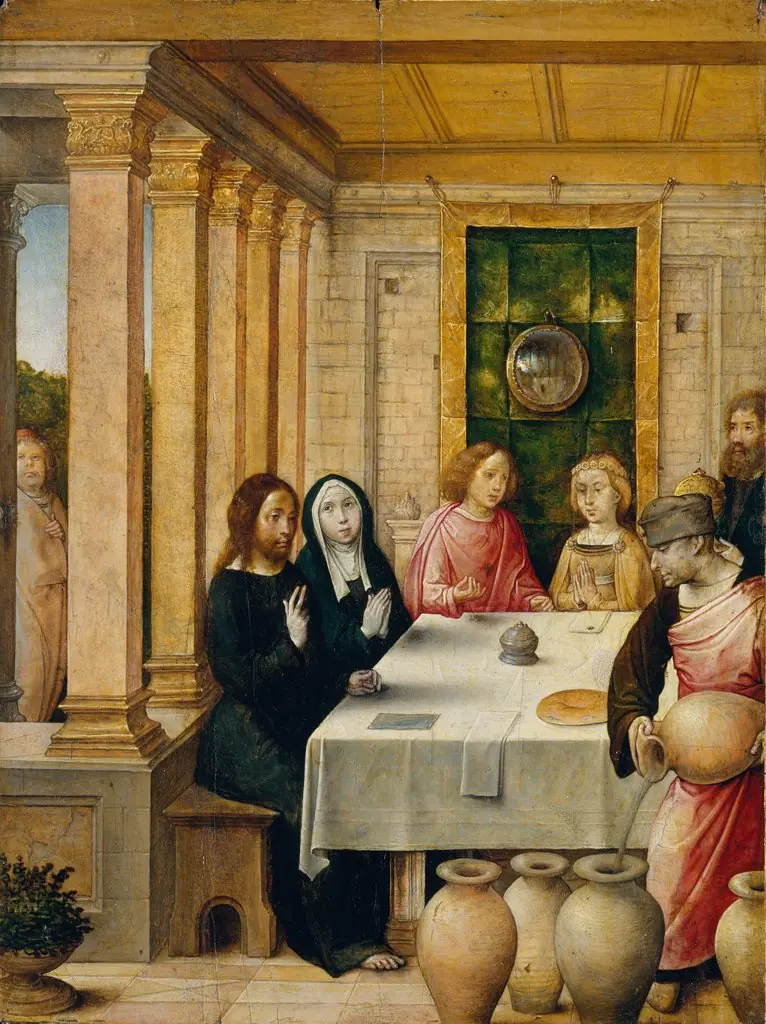 The Marriage Feast at Cana
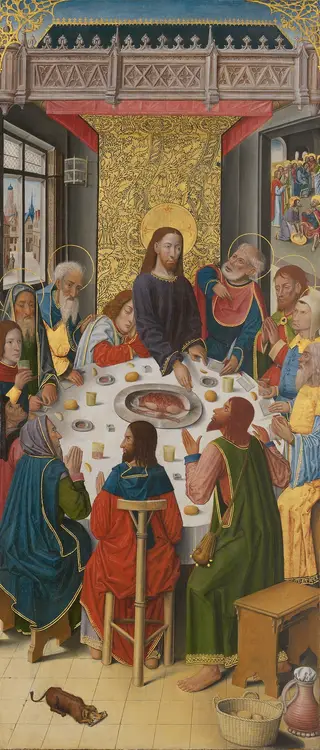 Panels from the High Altar of the Charterhouse of Saint-Honoré, Thuison-les-Abbeville: The Last Supper
 Het Laatste Avondmaal met de stichter
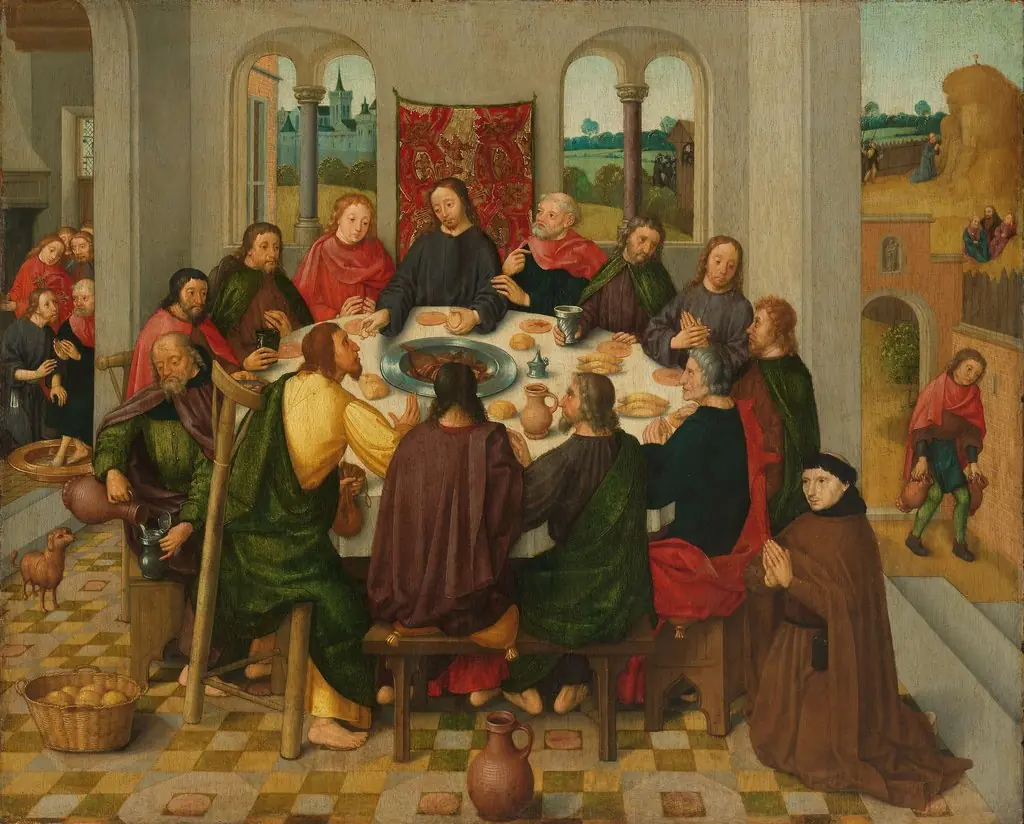 The last supper
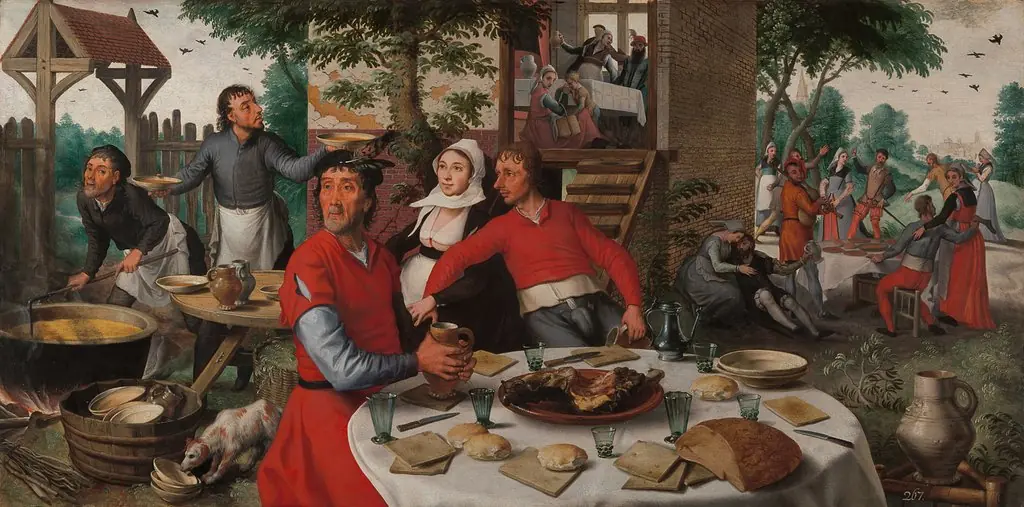 A Peasant's feast
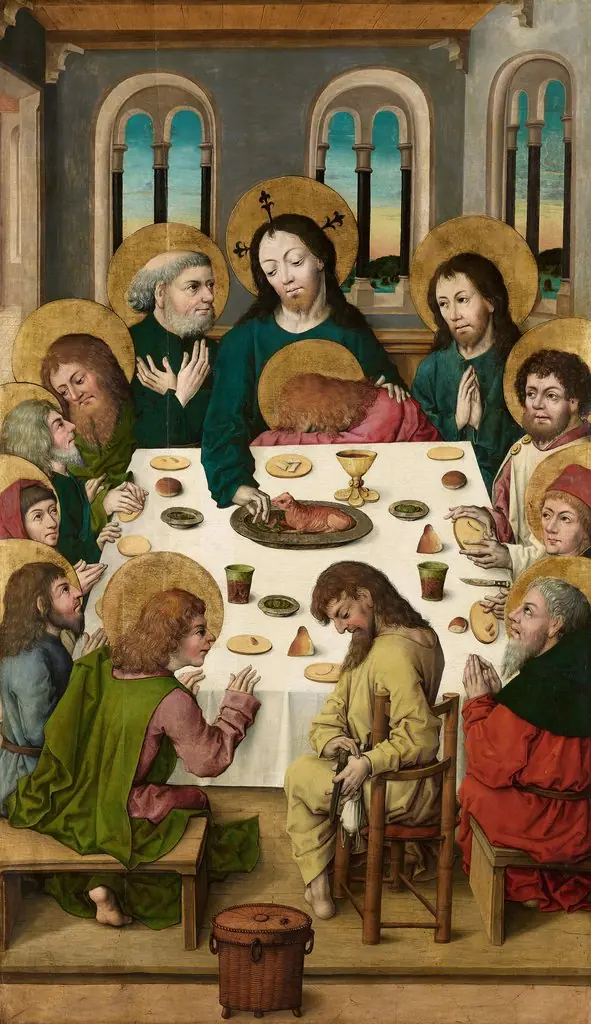 The Last Supper
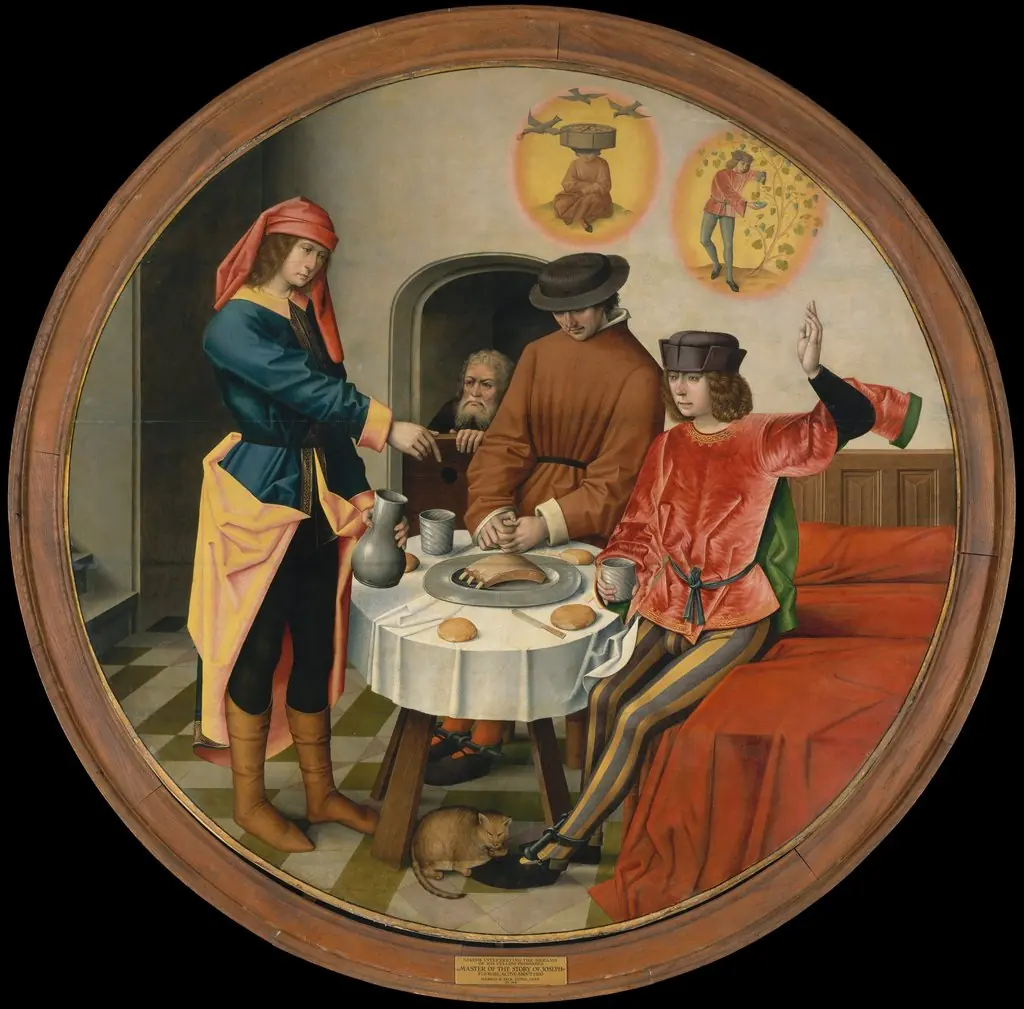 Joseph Interpreting the Dreams of His Fellow Prisoners
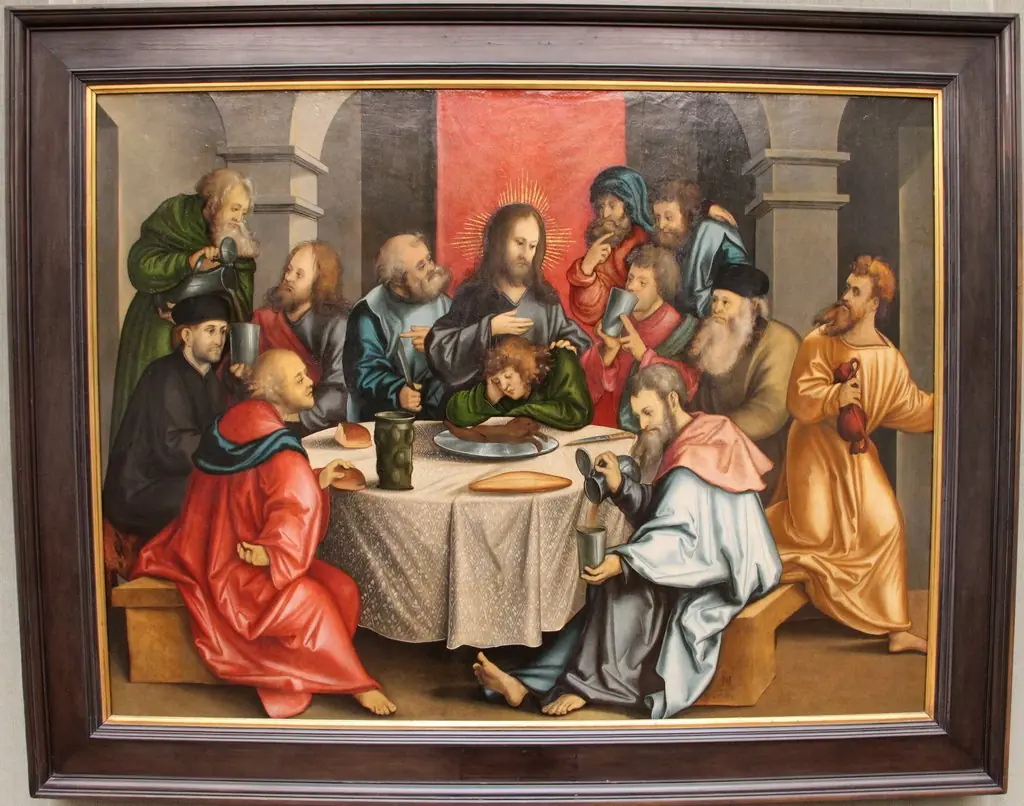 Das Abendmahl
 Jacob-Stephen (?): the Last Supper
 Christ Washing the Feet of the Apostles and Last Supper