Artwork
Portrait of an Actor
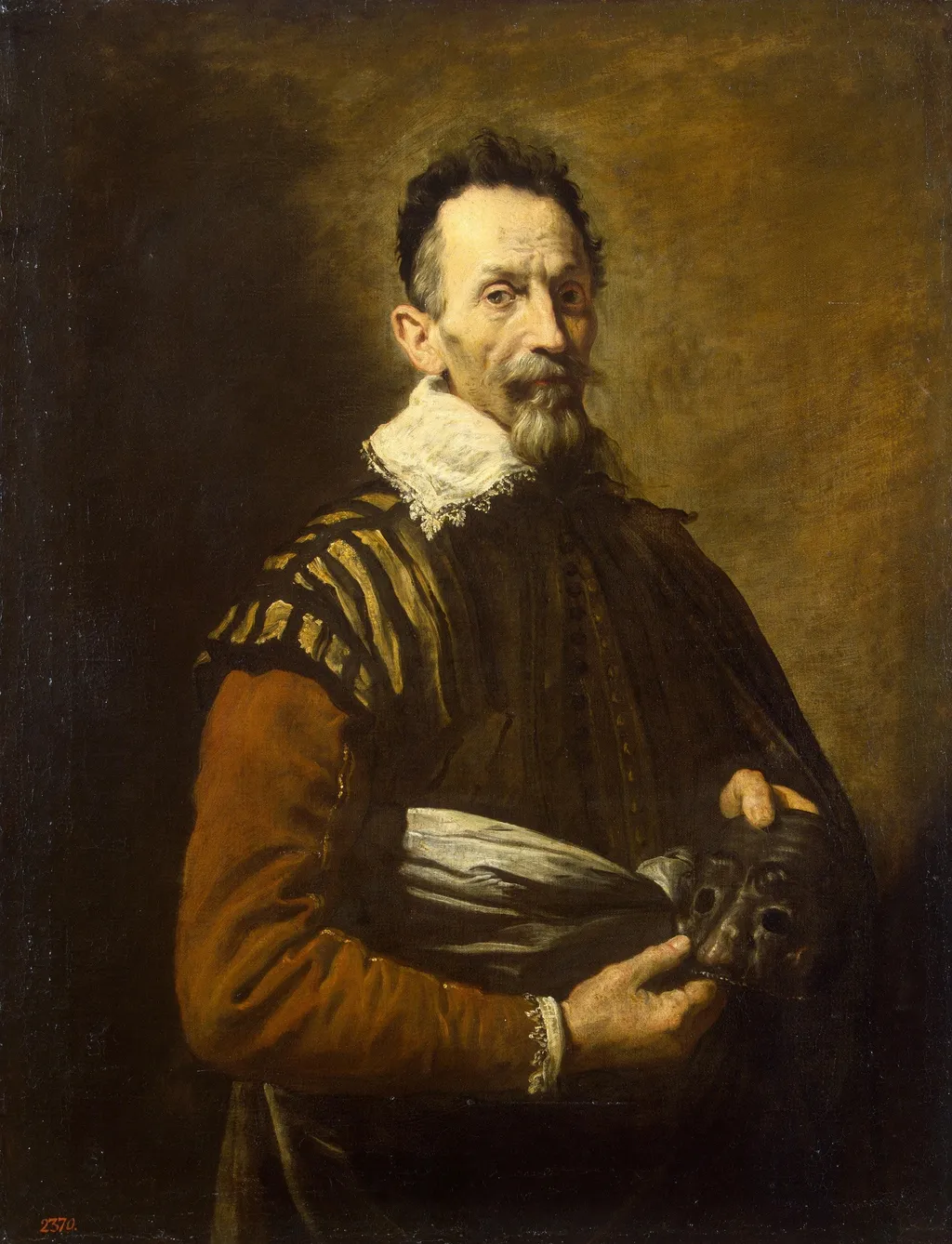
Portrait of an Actor is an oil painting by the Early Baroque Italian artist Domenico Fetti. It dates from 1621 and is held in the collection of the Hermitage Museum.
About this work
Subject & Meaning
The work's symbolic meaning lies in its representation of the actor's artistry and the cultural context of early 17th-century Italian theatre.
The painting depicts a theatrical performer holding a mask, likely representing a commedia dell'arte figure. The sitter is identified in scholarly sources as either Tristano Martinelli or Francesco Andreini, both prominent actors of the genre. Martinelli, known for popularizing the Harlequin role, is highlighted as a strong candidate based on historical records of his performances and connections to the French court.
Andreini is also considered, supported by comparisons to his published theatrical frontispiece. The work's symbolic meaning lies in its representation of the actor's artistry and the cultural context of early 17th-century Italian theatre.
Technique & Style
Domenico Fetti’s Portrait of an Actor is an oil painting executed on a canvas support, measuring 105.5 cm in height by 81 cm in width. Created around 1621 or 1622 in Mantua, the work is noted for its impressive power of characterization and execution, which scholars have described as the grandest and most penetrating of the artist's portraits. The formal composition depicts a man holding a theatre mask, identified as a figure from the commedia dell'arte tradition.
While the sitter's specific identity remains debated, the handling of the medium and the penetrating gaze of the subject are central to the painting's stylistic impact.
History & Provenance
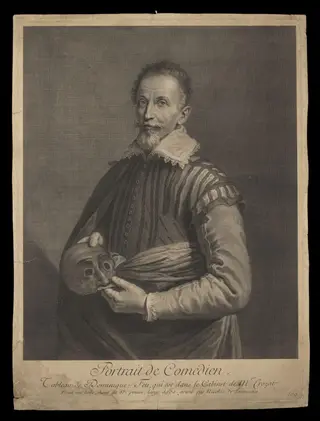
Probably executed in Mantua around 1621 or 1622, this oil painting first appears in historical records within the 1653 inventory of Cardinal Mazarin's collection at the Palais Mazarin in Paris. There, it was described as a depiction of Harlequin on canvas by Fetti. Following the Cardinal's death in 1661, the work entered the collection of Pierre Crozat, where it was engraved by Nicolas de Larmessin for the Recueil Crozat in 1729.
After Crozat died in 1740, the portrait passed to his nephew, Louis-Antoine Crozat, and was listed in an inventory dated 1755. Upon Louis-Antoine's death, his heir sold the piece to Catherine II of Russia in 1772. The painting has remained in the Hermitage Museum collection since its arrival in Saint Petersburg in 1774.
Portrait of an Actor by Domenico Fetti is held in the Hermitage Museum in Saint Petersburg, Russia. The work entered the museum's collection in 1774, following its sale in 1772 by the heir of Louis-Antoine Crozat to Catherine II of Russia. Prior to this, the painting was documented in the 1653 and 1661 inventories of Cardinal Mazarin's collection in Paris, described as a portrait of Harlequin.
It subsequently passed to Pierre Crozat, where it was engraved by Nicolas de Larmessin for the Recueil Crozat in 1729, and was later inherited by Louis-Antoine Crozat, appearing in his 1740 and 1755 inventories.
The painting was featured in a 1996 exhibition organized by Eduard Safarik at the Palazzo Te in Mantua, where it was displayed under the title Portrait of Francesco Andreini.
Context
Within Fetti's portraiture from his Gonzaga court period in Mantua (1614–1622), the Portrait of an Actor has drawn sustained scholarly attention. Pamela Askew described it as "the grandest and most penetrating of Fetti's portraits," citing its impressive power of characterisation and execution. The sitter's identity has been debated since the late nineteenth century, with Eduard Safarik listing five proposed candidates: actors Francesco Gabrielli, Giovanni Gabrielli, Giovanni Battista Andreini, and Tristano Martinelli, as well as composer Claudio Monteverdi.
Earlier attributions to Giovanni Gabrielli and Monteverdi were rejected. The Gabrielli identification, advanced in the 1891 Hermitage catalogue, was compounded by a 1962 Dresden Gallery misnaming of Annibale Carracci's Lute Player, which Denis Mahon questioned in 1947 and Posner definitively overturned in 1971. Askew first proposed Martinelli in 1954 and elaborated the case in The Burlington Magazine in 1978, while Safarik advanced Francesco Andreini in his 1990 monograph, an attribution the Hermitage painting carried when exhibited at the Palazzo Te in Mantua in 1996.
Legacy
The work's enduring reputation rests on its intense characterization, which scholar Pamela Askew described as the most penetrating of Domenico Fetti's portraits. Since the late 19th century, the painting has generated significant art-historical debate regarding the sitter's identity, with theories ranging from the composer Claudio Monteverdi to actors Giovanni Gabrielli, Francesco Andreini, and Tristano Martinelli. This scholarly interest is evidenced by extensive literature, including Askew's 1978 analysis in The Burlington Magazine and Eduard Safarik's 1990 monograph.
The painting's legacy was further cemented by its early reproduction as an engraving by Nicolas de Larmessin in the 1729 Recueil Crozat. A well-known copy by an unidentified artist also exists in the Gallerie dell'Accademia in Venice, attesting to the work's historical influence and circulation.
Overview
Domenico Fetti’s oil portrait, titled Portrait of an Actor, resides in the Hermitage Museum in Saint Petersburg. Executed in the early 1620s, likely 1621–1622, the work originates from Fetti’s period in Mantua, where he was active for the court of the Gonzaga family.
Own this work as a print
Artist & collection
Artist
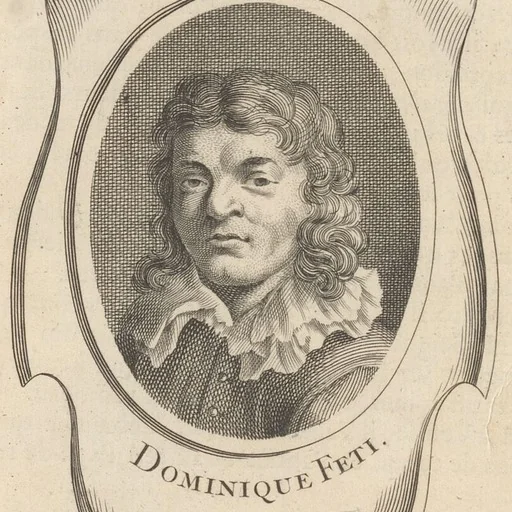
Domenico Fetti (also spelled Feti) (c. 1589 – 16 April 1623) was an Italian Baroque painter who was active mainly in Rome, Mantua and Venice.