Artwork
Self-Portrait (?)
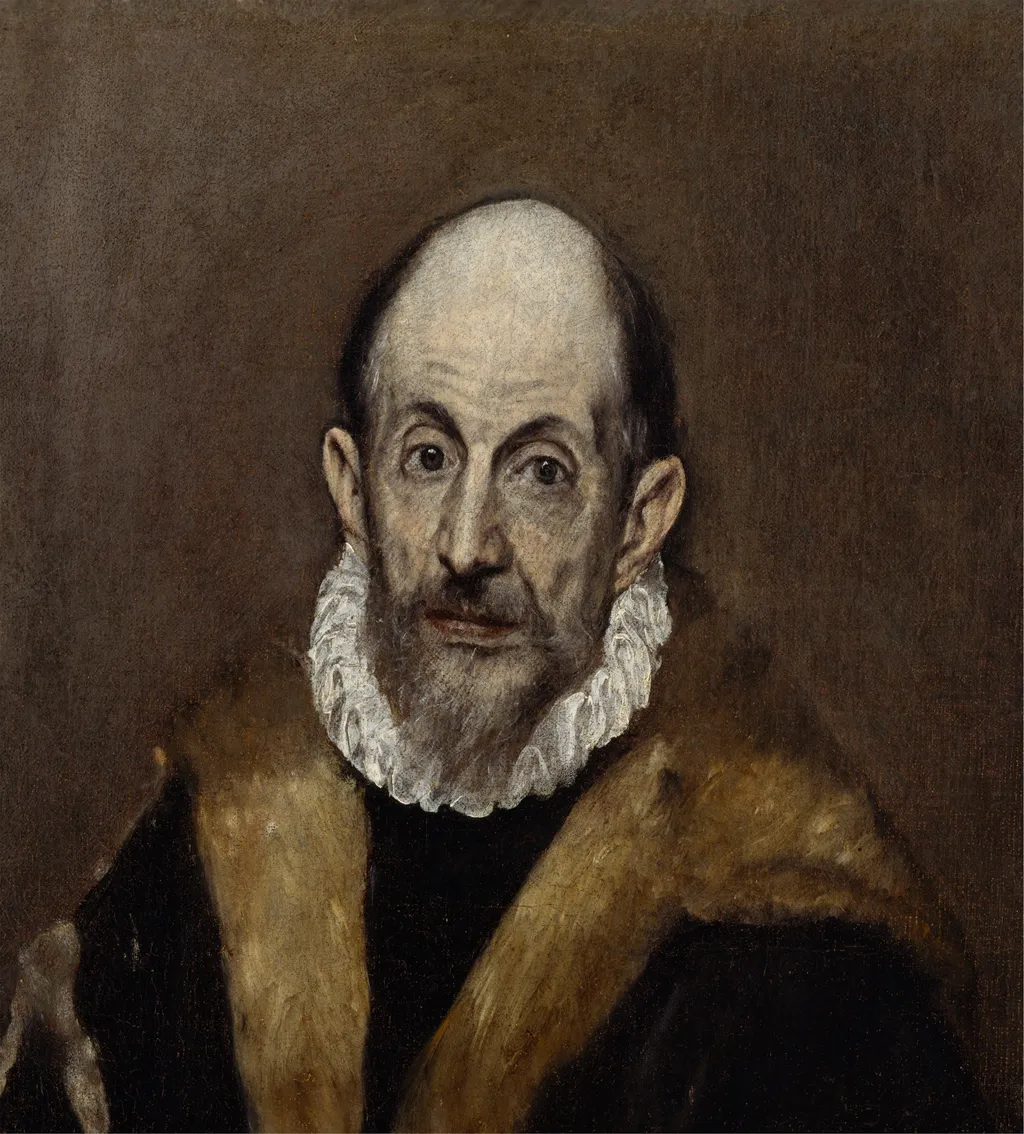
Self-Portrait (?) is an oil painting by the Mannerist artist El Greco. It dates from 1598 and is held in the collection of the Metropolitan Museum of Art.
About this work
Possibly El Greco himself, possibly not. For more than a century people have argued over it: some point to the same face aging across his other works, others say there is no proof. Either way, the hand belongs to someone who studied Titian and Tintoretto in Venice. Painted around 1598.
Subject & Meaning
The painting depicts an older man in half-length view against a plain brown ground, wearing a contemporary ruffled collar and fur-lined coat, features that align with Spanish fashion of the 1590s. Scholars since 1900 have alternately identified the sitter as El Greco or an unknown elder; the main argument for the artist rests on perceived resemblances to figures he reused in other works such as The Burial of the Count of Orgaz, whereas opponents note the absence of definitive proof and cite divergences from accepted self-portraits. Stylistic links to Venetian models like Titian and Tintoretto, absorbed during El Greco's years in Venice, inform the loose brushwork and expressive, melancholic gaze that dominate the image.
The work's unsettled title, Self-Portrait (?), reflects this ongoing debate, underscoring how physiognomic similarity and archival conjecture, rather than conclusive documentation, sustain its contested status as a possible self-representation.
Technique & Style
The subject is depicted with sunken eyes, a receded hairline, and a ruff typical of 1590s fashion.
Executed in oil paint on canvas, this half-length portrait dates to approximately 1595–1600. The work exhibits the artist's Venetian training, characterized by loose, rapid brushwork on the coat and a deliberate avoidance of hard contour lines, reflecting influences from Titian and Tintoretto. A monochromatic brown background recalls the artist's earlier icon-painting heritage.
The subject is depicted with sunken eyes, a receded hairline, and a ruff typical of 1590s fashion. The painting's physical condition is compromised; the canvas was trimmed on all sides, and a false signature in Greek cursive was removed during a 1947 cleaning. Additionally, a strip of canvas added to the bottom was folded back in 1974. The surface has darkened over time, and the overall state is described as poor.
History & Provenance
Created during El Greco's late Toledo period, the work is dated variously between 1579 and 1610, with the 1590s most widely accepted based on the sitter's fashionable ruffle. Originally bearing a Greek signature removed during a 1947 cleaning, the canvas was also trimmed and later had a bottom strip folded back in 1974. The painting's provenance begins with the Marqués de Heredia in Madrid, who sold it in 1892 to the critic Aureliano de Beruete y Moret.
Beruete retained the work until his death in 1922, after which it passed to his widow. It was subsequently sold to the Metropolitan Museum of Art in New York in 1924. While scholars debate whether the subject is the artist himself or a relative, the piece is cataloged as a portrait of an old man, potentially linked to item 189 in the 1621 inventory of the artist's son, Jorge Manuel Theotocopuli.
The work has been shown in multiple exhibitions, including the 1902 Madrid exhibition of Domenico Theotocopuli, the 1913–14 Grafton Galleries show of Spanish old masters, and the 1920–21 Royal Academy exhibition of Spanish paintings, and later featured in the Metropolitan Museum Masterpieces series. These exhibition records illustrate its public visibility across Europe and North America.
Context
The attribution of El Greco's Self-Portrait (?) to the artist has remained contested since its first scholarly identification in 1900 by Salvador Sanpere y Miguel. Early support came from Bryson Burroughs in 1925, who argued the sitter's recurring presence in El Greco's late works, including The Disrobing of Christ and The Burial of the Count of Orgaz, as evidence of self-representation. August L. Mayer's 1926 linkage to Jorge Manuel Theotocopuli's 1621 inventory further bolstered this view, though Harry B. Wehle's 1940 catalogue questioned the connection, and Harold E. Wethey's 1962 study dismissed the resemblance to accepted self-portraits.
Alternative theories propose the sitter as a relative, such as El Greco's brother, Manusso Theotokopoulos, or a generic aged model, reflecting broader Mannerist practices of idealized aging. The painting's Venetian-influenced loose brushwork and melancholic expressivity align with El Greco's mature style, yet its unresolved identity underscores the broader ambiguity of self-representation in late Renaissance portraiture.
Overview
This oil-on-canvas work by El Greco, likely created between 1595 and 1600, is known as Self-Portrait (?). The identity of the sitter has been a subject of scholarly discussion for over a century, with no definitive consensus. It is presently housed at the Metropolitan Museum of Art in New York.
Own this work as a print
Artist & collection
Artist
Doménikos Theotokópoulos was born in 1541 in Candia (modern Heraklion), the capital of Venetian-ruled Crete, where he was trained in the post-Byzantine tradition of icon painting.

 Self-Portrait
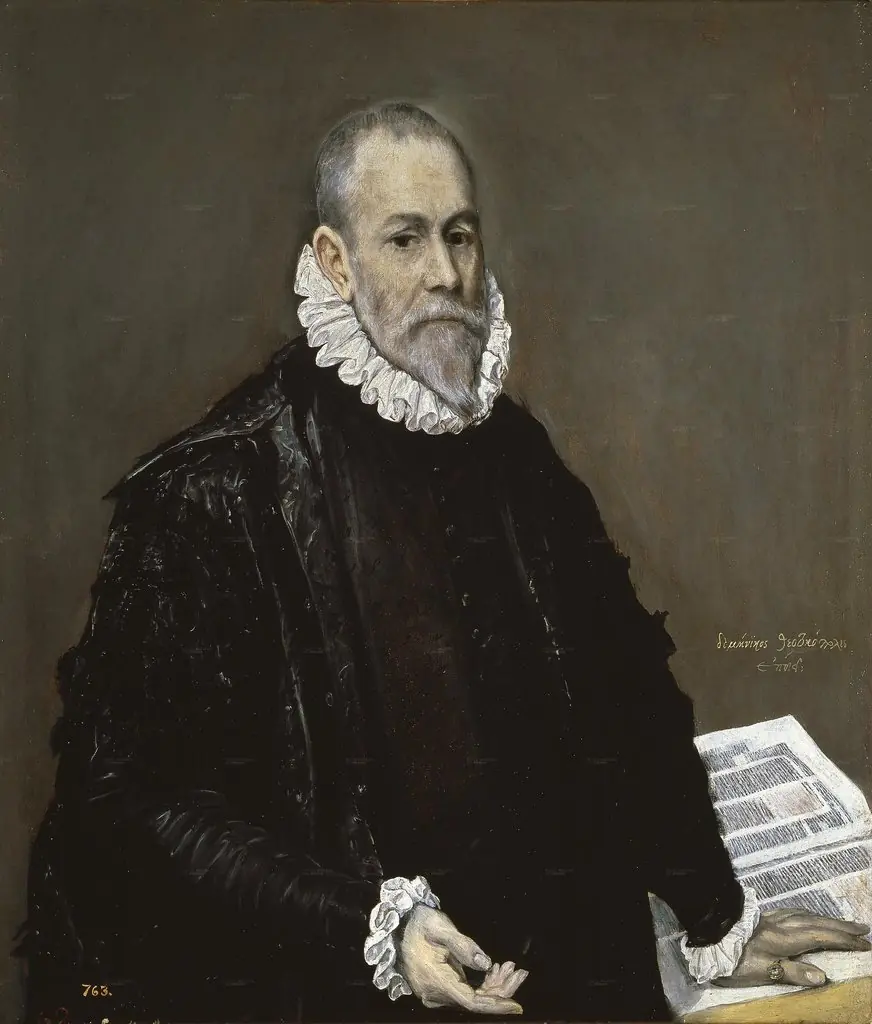 Portrait of Rodrigo de la Fuente
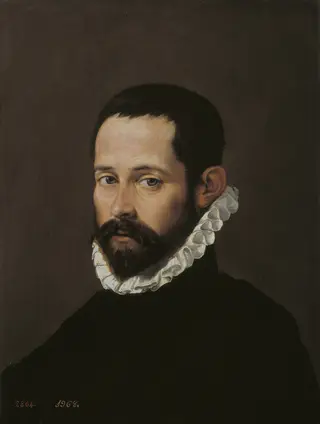 Portrait of Diego Hurtado de Mendoza
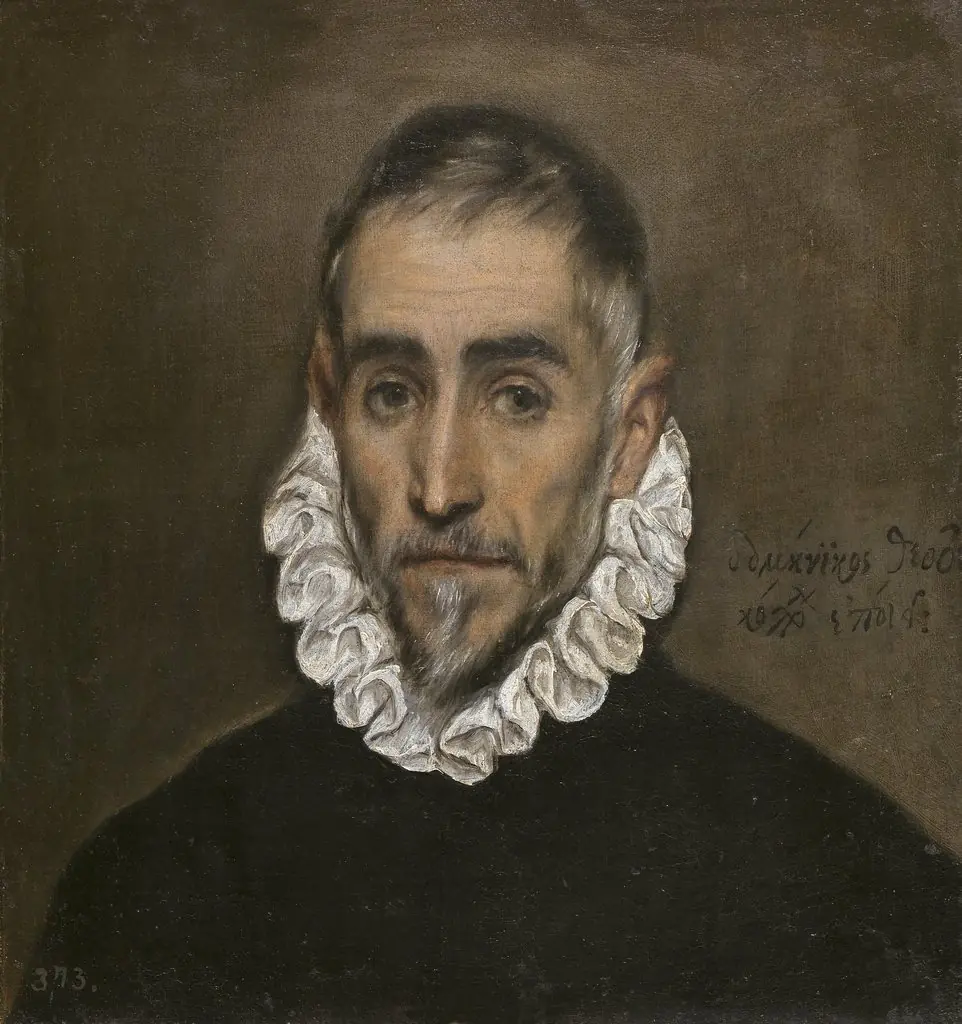 Portrait of an Elderly Man
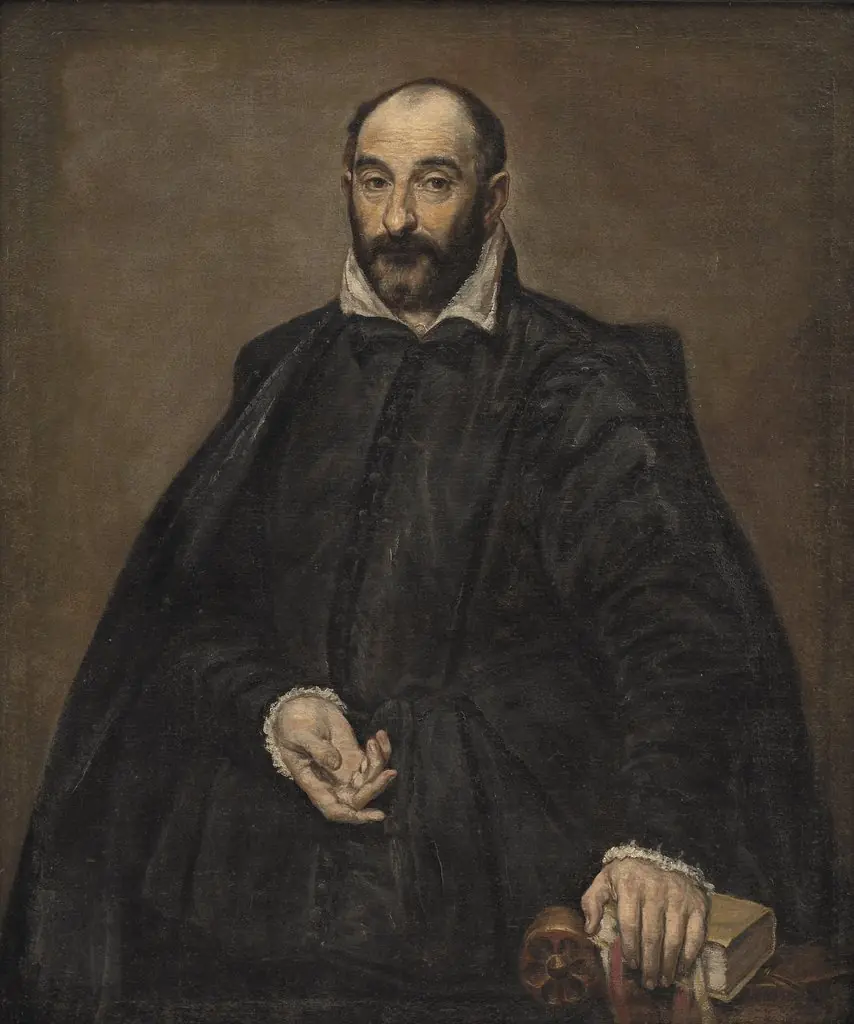 Portrait of a Man
 Portrait of a Gentleman
 The Nobleman with his Hand on his Chest
 Portrait of a gentleman
 Portrait of a 60-year-old Man
 Portrait of an Actor
 Portrait of Jerónimo de Cevallos
- Self-portrait (?)