Artwork
Francisco Pacheco
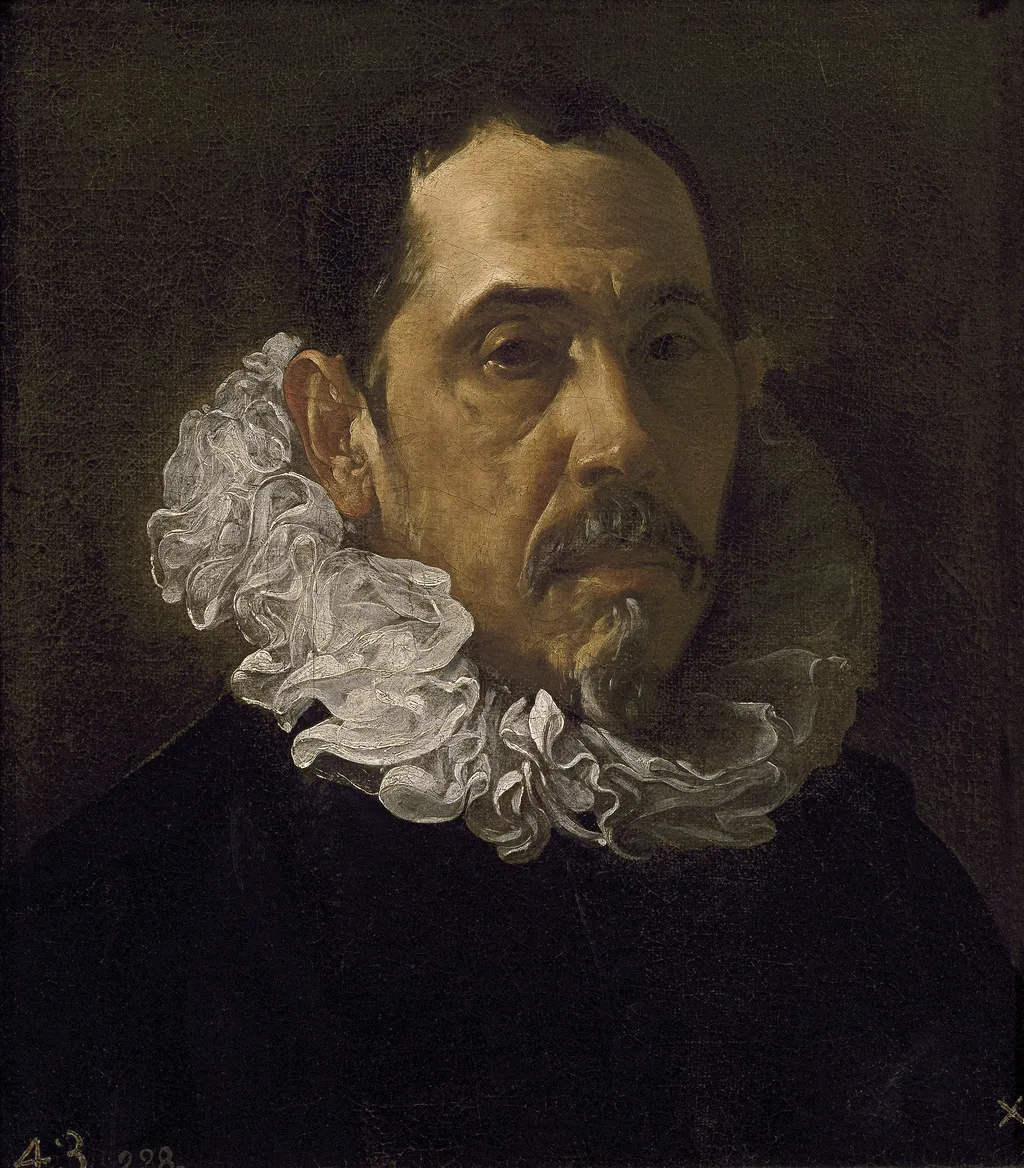
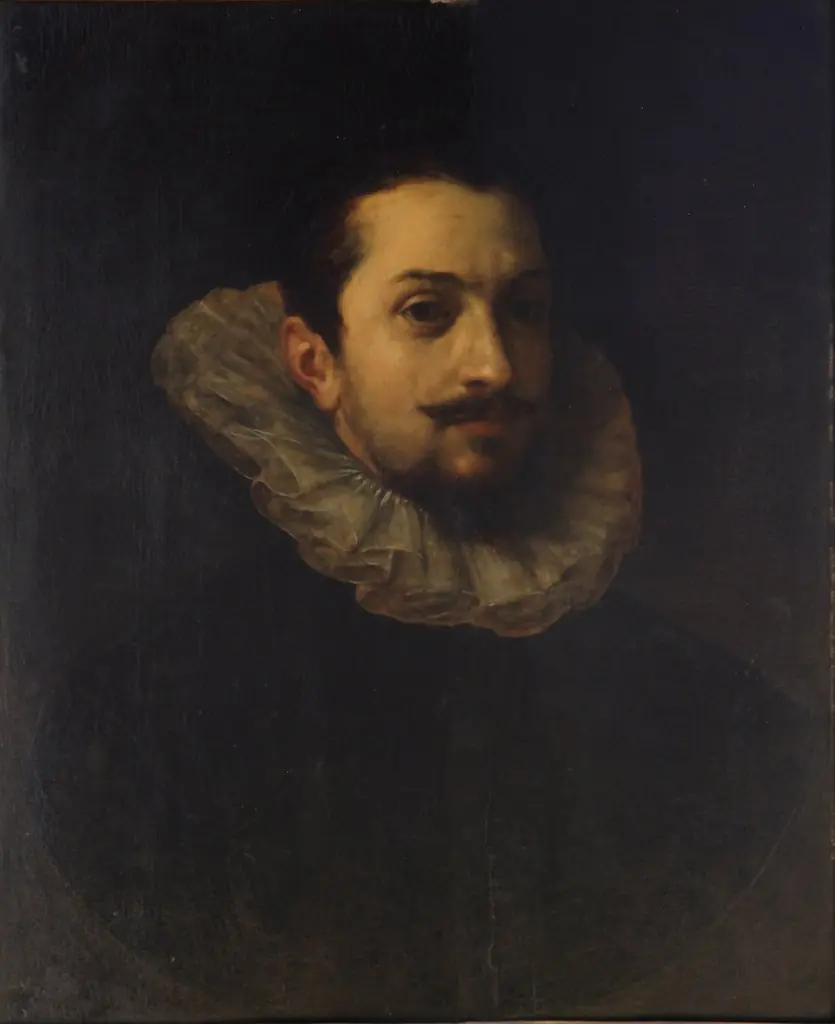
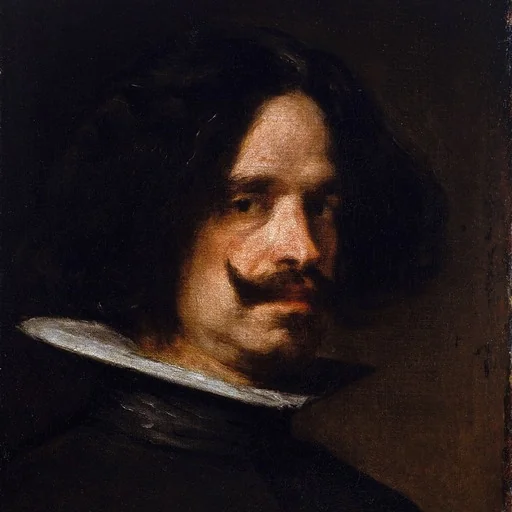
Francisco Pacheco is an oil painting by the Early Baroque Italian artist Diego Velázquez. It dates from 1620 and is held in the collection of the Museo del Prado.
About this work
Subject & Meaning
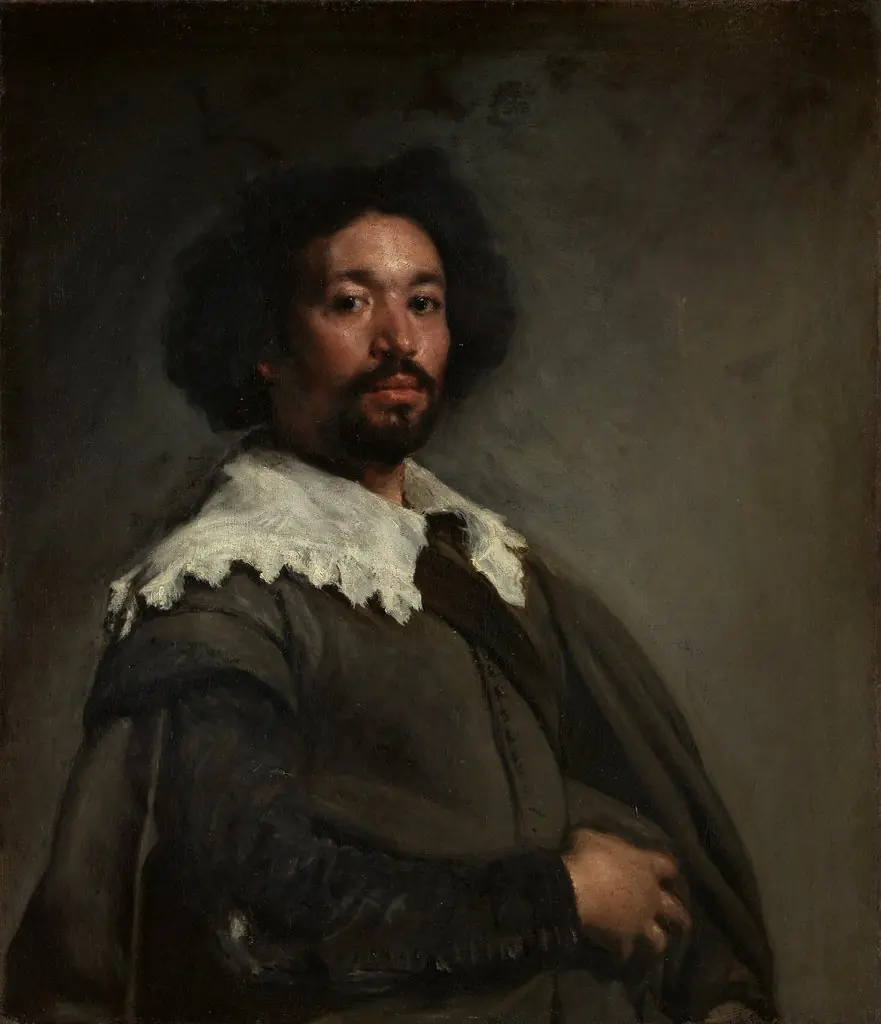
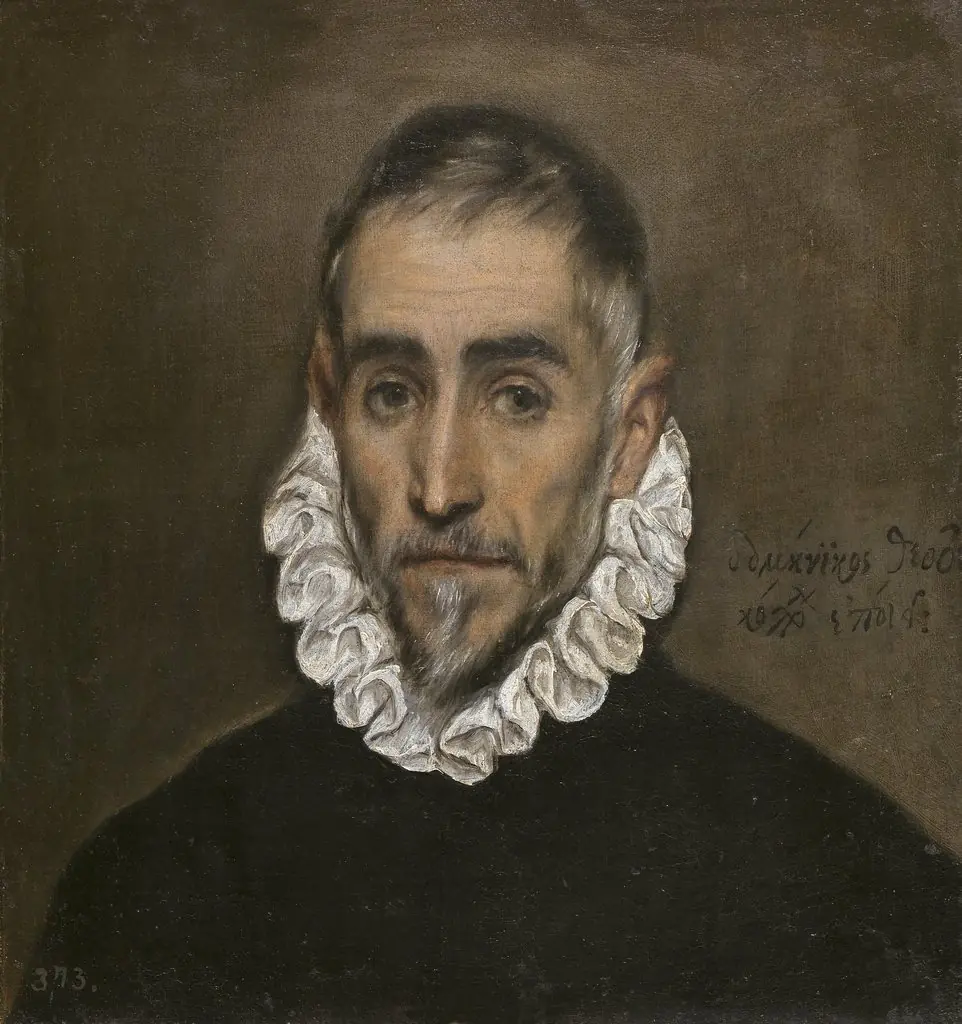
The portrait depicts a man in bust format against a neutral ground, dressed in a black doublet and a large, pleated lace collar known as a gorguera or lechuguilla, a style that fell under sumptuary prohibitions by 1623. The subject is traditionally identified as Francisco Pacheco, Velázquez’s master and father-in-law, a hypothesis first advanced by Allende-Salazar in 1625 and later revived by Javier Portús in 1999 on the basis of stylistic resemblances to Pacheco’s documented self-portrait in The Last Judgment at Castres. The Prado admitted this reading, noting correspondences with Pacheco’s description of his own likeness in his treatise Art of Painting, though some scholars, including Jonathan Brown, remain skeptical due to the absence of Pacheco’s explicit mention of such a portrait by his son-in-law. The painting’s iconography adheres to contemporary conventions of elite male portraiture, emphasizing sober attire and dignified frontality to convey social standing and probity.
Technique & Style
Stylistically, the artist applied specific highlights to the finished surface, such as on the tip of the nose, a technique characteristic of his later period.
The work is executed in oil paint on canvas, measuring approximately 41 by 36 centimeters. The composition follows portrait conventions, depicting a bust-length figure in black attire with a large, pleated ruff against a neutral background. Stylistically, the artist applied specific highlights to the finished surface, such as on the tip of the nose, a technique characteristic of his later period. The canvas preparation differs from the methods used during his Seville period and does not exactly match those employed after his move to Madrid, suggesting a date around 1622. This handling aligns the piece stylistically with the Portrait of Luis de Góngora from the same era.
History & Provenance
The painting was executed before 1623, the year Philip IV of Spain issued sumptuary restrictions that prohibited the large ruffs worn by men, a terminus derived from the costume depicted. Stylistic and technical analysis of the canvas preparation points to a probable execution around 1622, between Velázquez's first and second trips to the court, and the work is associated stylistically with the contemporaneous Portrait of Luis de Góngora.
The painting was inventoried in 1746 at the Palacio de la Granja de San Ildefonso, where it was recorded as a work by Tintoretto. It entered the Museo del Prado in Madrid at the museum's founding in 1819, by then attributed to Velázquez. Earlier royal ownership is recorded for Philip V of Spain, and the work subsequently passed through the collections of Charles III and Ferdinand VII of Spain before reaching the Prado.
The painting is held at the Museo del Prado in Madrid. It entered the museum's collection in 1819, when the pinacoteca was established, with the work already attributed to Velázquez.
Its earlier provenance traces to the Palacio de la Granja de San Ildefonso, where it was inventoried in 1746 as a work by Tintoretto. Prior to that, the painting was owned by a succession of Spanish monarchs, including Philip V of Spain, Ferdinand VII of Spain, and Charles III of Spain.
The work has been exhibited in "The Golden Century: The Age of Velázquez."
Context
Scholarship on the painting has long debated the identity of its sitter. Early interpretations linked the figure to Francisco Pacheco, Velázquez’s father‑in‑law, based on stylistic comparisons and an hypothesis first advanced by Allende‑Salazar in 1625, a view later supported by Javier Portús in 1999 and accepted by the Museo del Prado. At the same time, other scholars such as Jonathan Brown have rejected this identification, citing the absence of documentary evidence in Pacheco’s own writings. The work is discussed in relation to Velázquez’s broader circle, his court portraits, and his technical development between his early Sevillian period and his arrival at the Madrid court, situating the canvas within the evolution of Spanish portraiture in the early 17th century.
Own this work as a print
Artist & collection
Artist
Diego Rodríguez de Silva y Velázquez was a Spanish Baroque painter, the leading artist in the court of King Philip IV of Spain and Portugal, and of the Spanish Golden Age.