Artwork
Saint Christopher and the Infant Christ
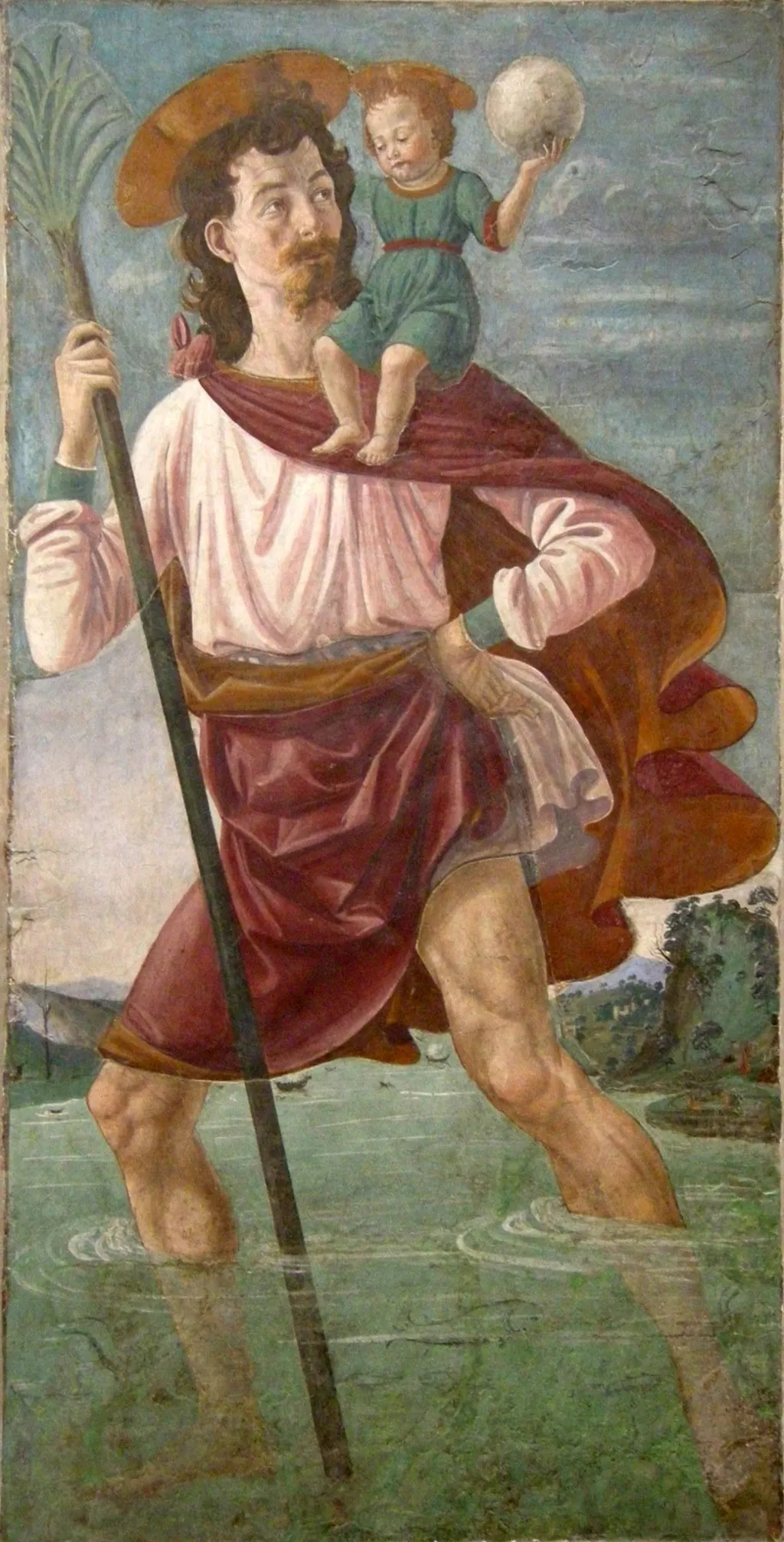
Saint Christopher and the Infant Christ is a fresco painting by the High Renaissance artist Domenico Ghirlandaio. It dates from 1473 and is held in the collection of the Metropolitan Museum of Art. This fresco depicts the legendary Saint Christopher carrying the Christ Child across a river.
About this work
Subject & Meaning
The composition emphasizes the monumental scale of the figures against a low horizon and a landscape of rolling hills that recede using aerial perspective.
Domenico Ghirlandaio's fresco depicts Saint Christopher, portrayed as a giant, carrying the Christ Child across a river. This iconography follows the tradition where the saint uses a palm staff, a symbol of his future martyrdom which legend states miraculously took root and bore fruit after the crossing. The Infant Jesus is shown blessing the saint while holding a globe inscribed with the continents Asia, Africa, and Europe, representing his sovereignty over the world.
The composition emphasizes the monumental scale of the figures against a low horizon and a landscape of rolling hills that recede using aerial perspective. The saint's dynamic, slightly forced posture and the wavy drapery, enhanced by chiaroscuro, convey a strong sense of movement as he turns to look at the child on his shoulder.
History & Provenance
Domenico Ghirlandaio created the fresco Saint Christopher and the Infant Christ circa 1473 during his early career, a period characterized by a style described as immature yet of high quality. The work was executed in seven distinct fresco sessions, with additional details applied a secco. Its original provenance remains uncertain; while some scholars hypothesize it originated from the church of San Miniato tra le Torri in Florence or the nearby Villa Michelozzi, historical sources alternatively attribute the monument to the Pollaiuolo brothers.
The painting entered the modern market when it was acquired by Cornelius Vanderbilt at a New York antiquities market in 1880. Following this acquisition, the detached fresco eventually found its permanent home at the Metropolitan Museum of Art in New York.
Context
Ghirlandaio’s Saint Christopher and the Infant Christ (c. 1473) is emblematic of early Florentine Renaissance frescoes, reflecting the artist’s formative years under Verrocchio’s influence. Scholars note its dynamic chiaroscuro and veristic drapery as hallmarks of the period, aligning with contemporary workshop practices in Florence. The composition’s monumental figures and aerial perspective situate it within the broader shift toward naturalism in Italian Renaissance art.
While its exact provenance remains unresolved, debated between San Miniato al Monte and Villa Michelozzi, its acquisition by Cornelius Vanderbilt in 1880 underscores its later valorization in transatlantic collections. The work’s iconography, rooted in medieval tradition, was revitalized during the Renaissance, emphasizing narrative clarity and devotional immediacy. Its technical execution, including seven giornate and dry-applied details, exemplifies mid-Quattrocento fresco methods, bridging medieval craftsmanship and Renaissance innovation.
Overview
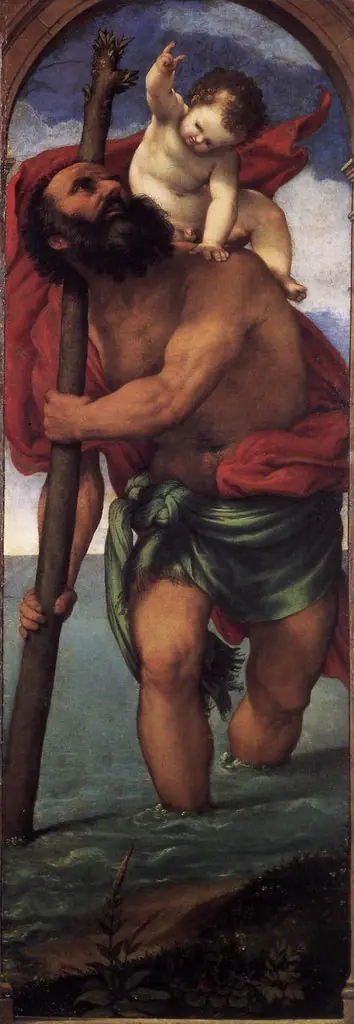
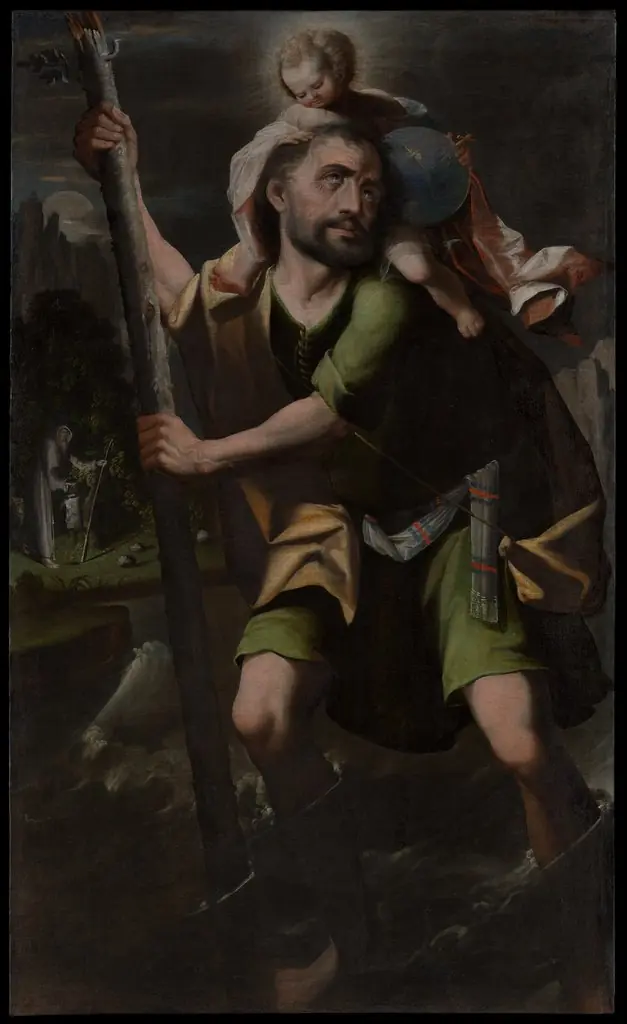
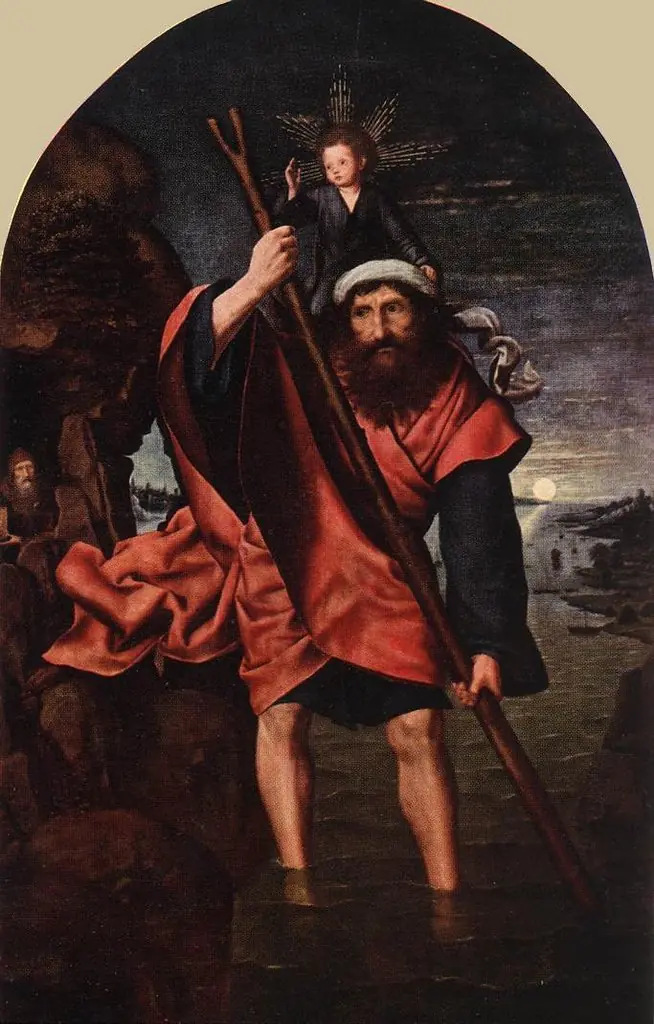
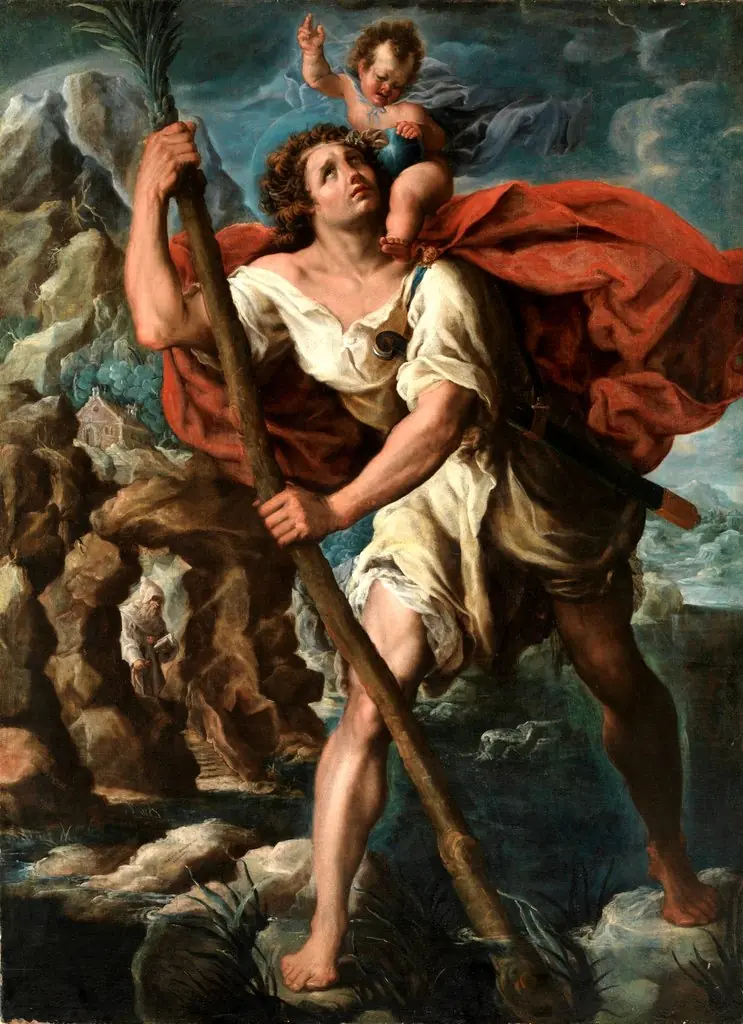
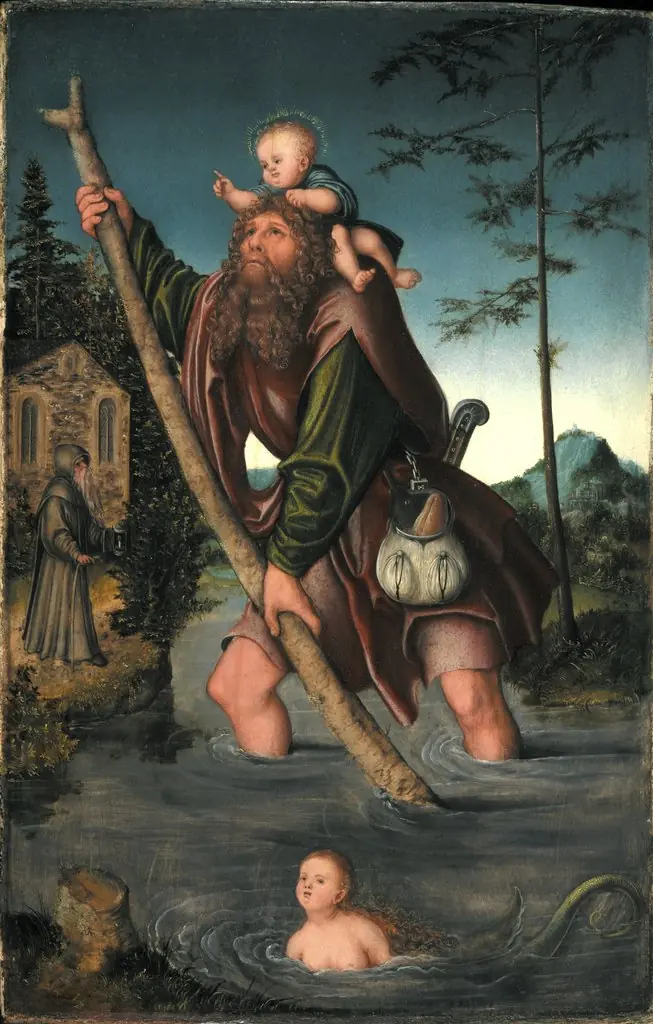
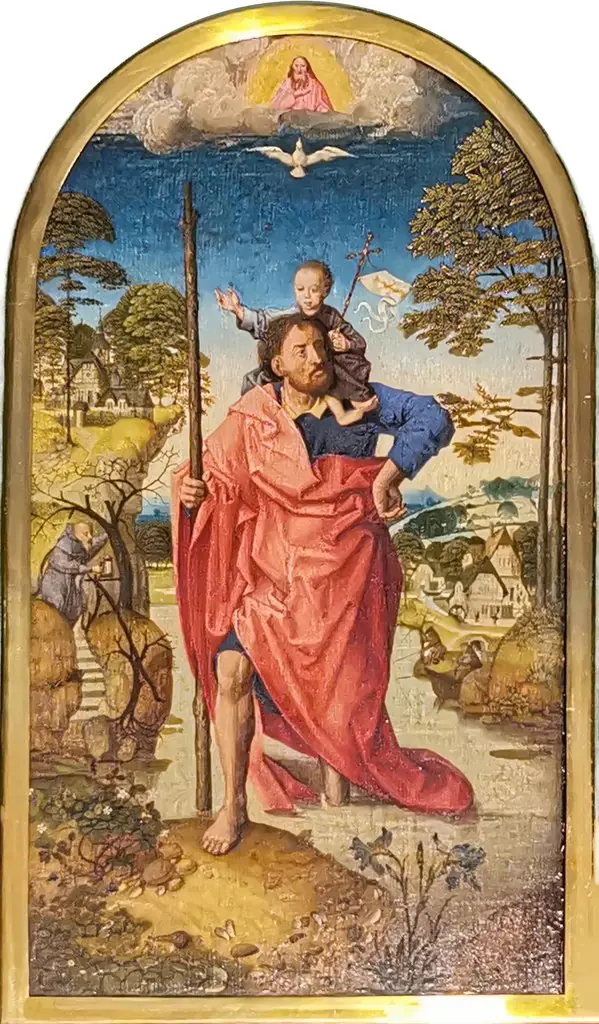
This fresco depicts the legendary Saint Christopher carrying the Christ Child across a river. The painting features a robust, bearded man in a red robe, balancing a staff as a small child clings to his shoulder. The child reaches towards a spherical object, possibly a globe.
The artwork exhibits characteristics of an older painting, with a muted palette and a somewhat aged appearance, set against a simple natural backdrop of trees and water.
Technique & Style
Executed as a fresco, this painting was created by applying pigments directly onto wet lime plaster. This ancient technique chemically binds the color to the wall as it dries, resulting in a highly durable mural. The visual style features soft colors and a somewhat faded quality, typical of aged frescoes.
The artist's rendering includes a dynamic element in the saint's billowing cloak, contrasting with the simple, unadorned landscape and the detailed depiction of the figures.
Artist & collection

Artist
Domenico di Tommaso Curradi di Doffo Bigordi (2 June 1448 – 11 January 1494), professionally known as Domenico Ghirlandaio (also spelt as Ghirlandajo), was an Italian Renaissance painter born in Florence.