Artwork
Madonna and Child
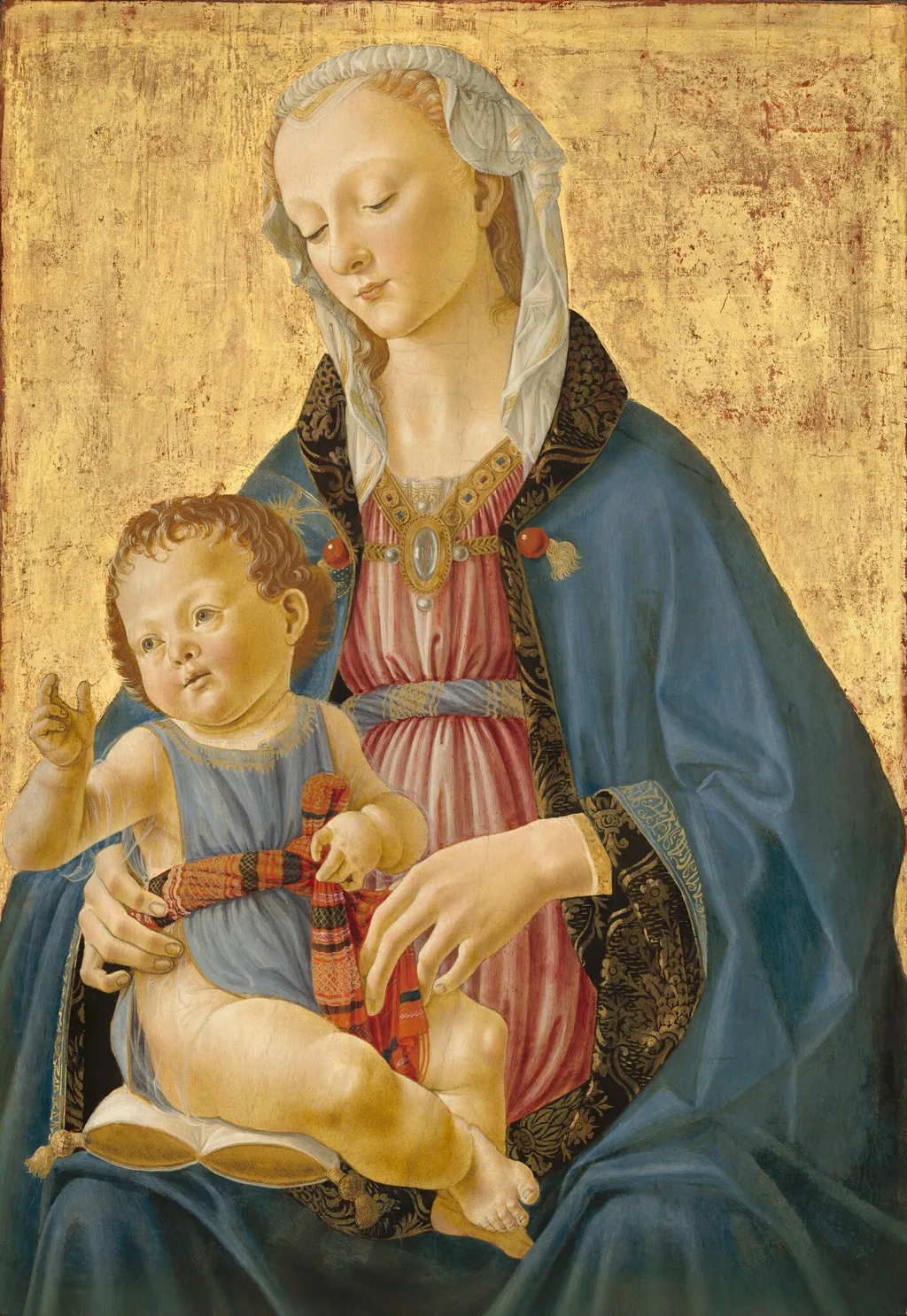
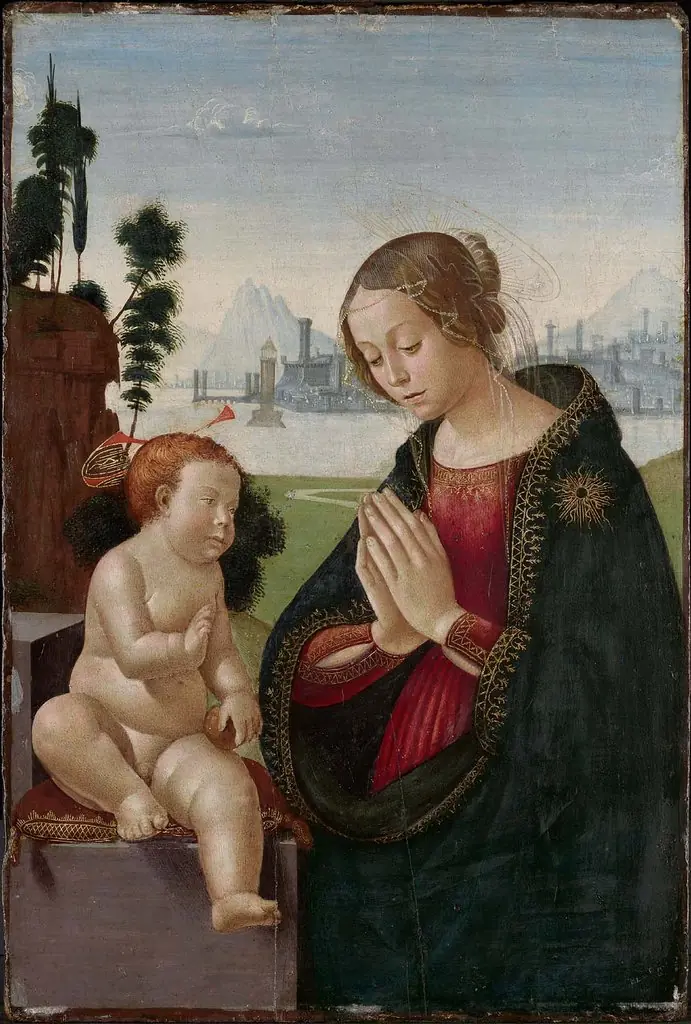
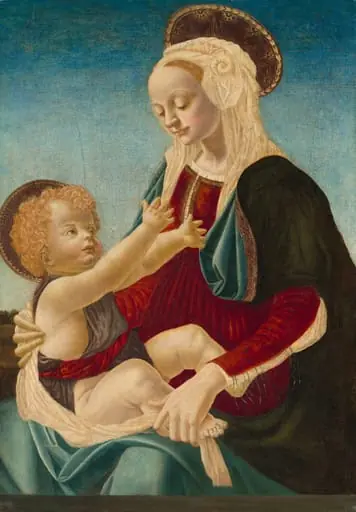
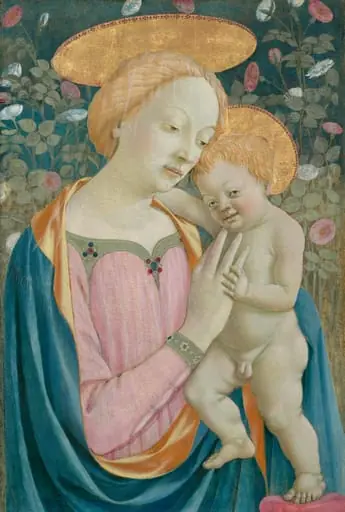
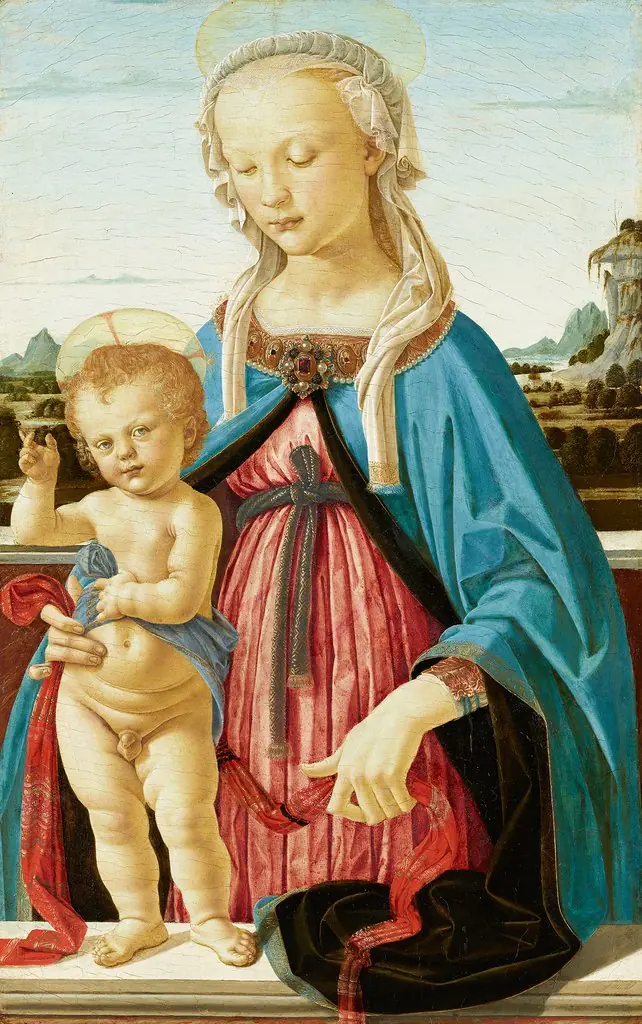
Madonna and Child is a tempera painting by the High Renaissance artist Domenico Ghirlandaio. It dates from 1472 and is held in the collection of the National Gallery of Art.
About this work
Subject & Meaning
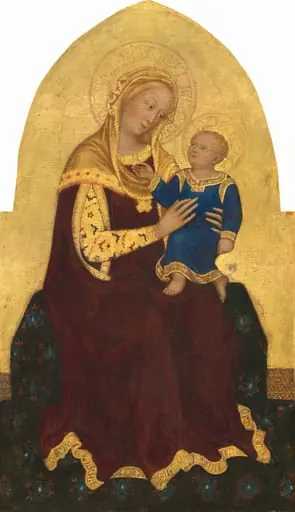
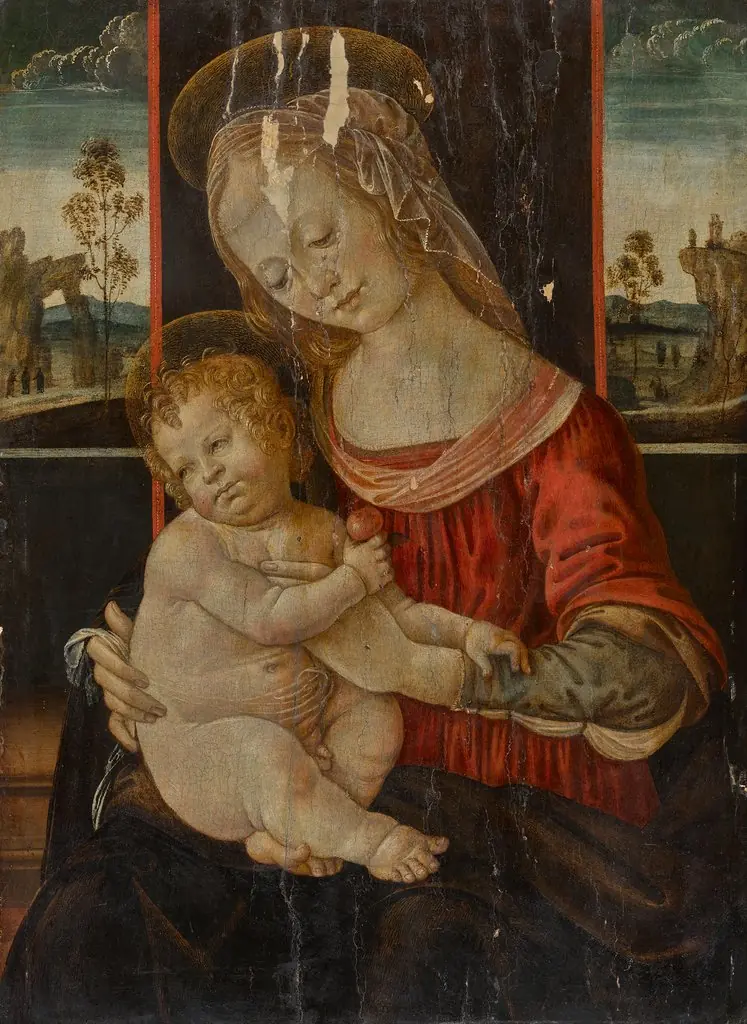
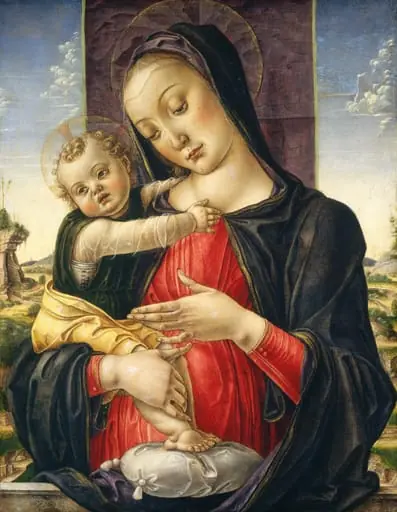
The painting shows the Virgin Mary holding the infant Christ, the traditional Madonna and Child composition that dominates the work.
The painting shows the Virgin Mary holding the infant Christ, the traditional Madonna and Child composition that dominates the work. By presenting Mary with the infant Christ, the image conveys the theological theme of the Incarnation and emphasizes maternal tenderness as a vehicle for divine grace. As a religious painting from the Italian Renaissance, its subject functions as a visual meditation on the human and divine natures of Jesus, using the familiar iconography of mother and child to evoke devotion and spiritual intimacy.
Technique & Style
The Madonna and Child (1470) by Domenico Ghirlandaio is executed in tempera on a wooden panel, later transferred to hardboard. This medium, characteristic of Italian Renaissance religious paintings, allowed for precise detailing and luminous color effects. The handling reflects Ghirlandaio’s refined technique, marked by delicate modeling of figures and subtle gradations of tone.
Stylistically, the work exhibits balanced composition and harmonious proportions, aligning with Quattrocento ideals. The Virgin’s drapery is rendered with linear precision, while the Christ Child’s form displays naturalistic volume. Though transferred from its original support, the painting retains its formal qualities, with no major losses to the pictorial surface documented in available records.
History & Provenance
The panel was commissioned after Ghirlandaio’s return from Rome in the late 1460s, placing its execution around 1470. It entered the modern market through Mrs. E.L. Scott in London, possibly before 1953. The work surfaced at Sotheby’s, London, on 22 April 1953 as an attribution to Verrocchio, after which it was purchased by the Hazlitt Gallery, London.
Count Alessandro Contini Bonacossi acquired it in 1954 and listed it as a recently acquired Verrocchio in draft purchase documents. The Samuel H. Kress Foundation acquired it from the Count in June 1954, completing payment by early 1957. The Foundation then donated the work to the National Gallery of Art, Washington, D.C., in 1961.
Domenico Ghirlandaio's Madonna and Child is held in the permanent collection of the National Gallery of Art in Washington, D.C., as part of the Samuel H. Kress Collection. The work bears the accession number 1961.9.49 and was gifted to the museum in 1961. Prior to its arrival in the United States, the panel passed through several European hands, including Count Alessandro Contini Bonacossi of Florence.
In June 1954, the Samuel H. Kress Foundation purchased the painting from the Count, though the attribution at the time of sale listed it as a work by Verrocchio. Final payment for the acquisition was completed in early 1957. The painting was subsequently transferred to the National Gallery of Art in 1961, where it remains on display. No specific exhibition history beyond its long-term installation at the NGA is detailed in the provided records.
Context
Scholarship situates Madonna and Child (1470) within Domenico Ghirlandaio’s early career, marking a transitional phase where his refined draftsmanship and delicate modeling reflect both Verrocchio’s influence, evident in its initial misattribution to the master, and the burgeoning naturalism of the Florentine Renaissance. While the painting lacks the monumental scale of Ghirlandaio’s later fresco cycles, its intimate composition and meticulous rendering of textiles underscore his role in elevating devotional imagery through technical precision. Art historians, including those cataloging the Kress Collection, note its significance as a bridge between quattrocento workshop practices and the artist’s mature style, though it remains less studied than his narrative works.
Its inclusion in the National Gallery of Art’s holdings has reinforced its place in surveys of Italian Renaissance painting, particularly as an exemplar of Ghirlandaio’s contribution to the Madonna and Child genre.
Overview
This painting by Domenico Ghirlandaio, created around 1472, depicts the Virgin Mary tenderly holding the Christ Child. Executed in tempera on panel, it exemplifies the Florentine High Renaissance style. Ghirlandaio, a prominent artist of his generation in Florence, was recognized for his detailed realism and clear narrative approach in religious compositions, characteristics evident in this work. The painting reflects the artistic innovations of the period.
Own this work as a print
Artist & collection

Artist
Domenico di Tommaso Curradi di Doffo Bigordi (2 June 1448 – 11 January 1494), professionally known as Domenico Ghirlandaio (also spelt as Ghirlandajo), was an Italian Renaissance painter born in Florence.