Artwork
Santa Lucia de' Magnoli Altarpiece
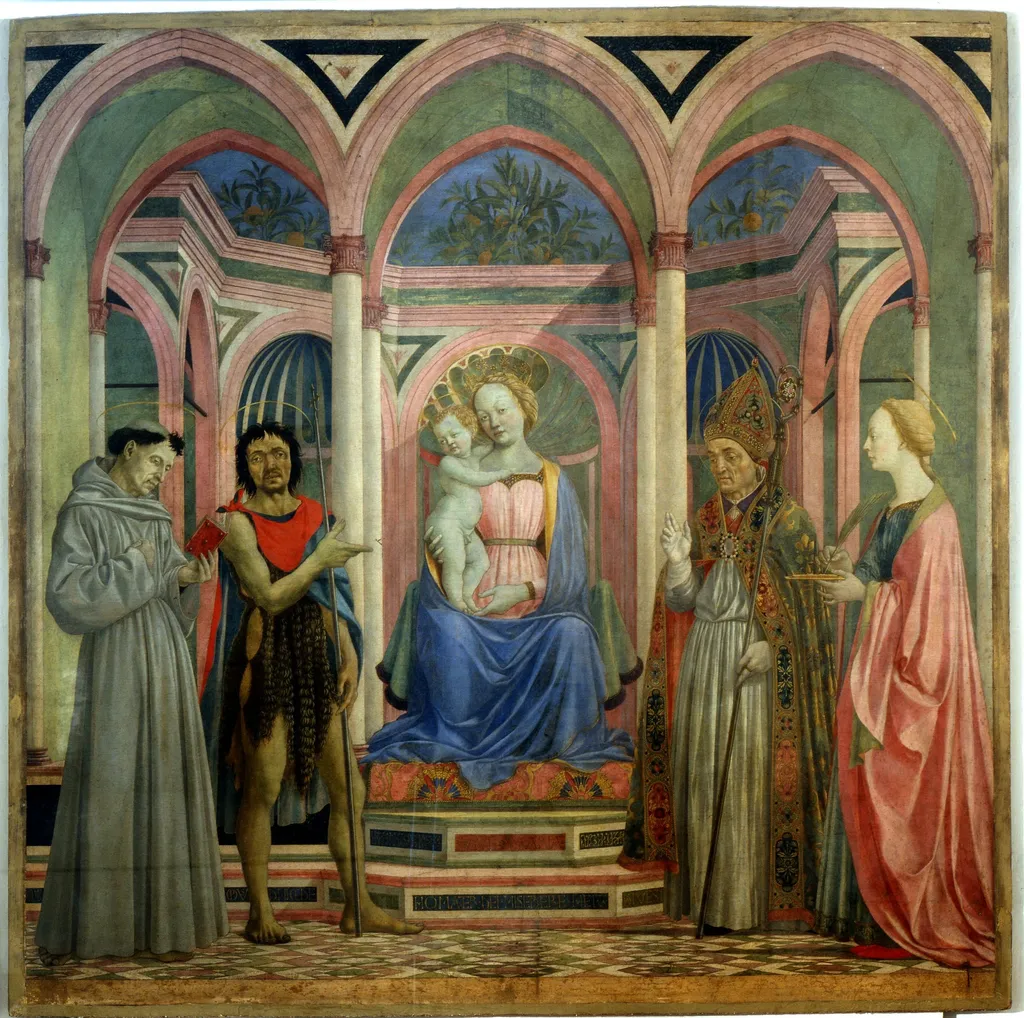
Santa Lucia de' Magnoli Altarpiece is a tempera painting by the Early Renaissance artist Domenico Veneziano. It dates from 1445 and is held in the collection of the Uffizi Gallery.
About this work
Overview
The painting is currently housed in the Galleria degli Uffizi in Florence, where it is displayed in Room 8 of the Early Renaissance section.
The Santa Lucia de' Magnoli Altarpiece, also known as the Pala di Santa Lucia de' Magnoli or Sacra conversazione coi santi Francesco, Giovanni Battista, Zanobi e Lucia, is a tempera on panel painting by the Italian Early Renaissance master Domenico Veneziano, dated to circa 1445. Measuring 209 by 216 centimeters, this large-scale altarpiece is widely regarded as one of the most important surviving works for understanding Domenico's fundamental role in Florentine Renaissance painting, particularly after the loss of the fresco cycle he executed with Andrea del Castagno in the church of Sant'Egidio. The painting is currently housed in the Galleria degli Uffizi in Florence, where it is displayed in Room 8 of the Early Renaissance section. It has been described as almost certainly the first true sacra conversazione, a revolutionary format in which the Virgin and Child with saints share a unified scale and the same architectural space, breaking decisively with medieval polyptych conventions.
Subject & Meaning
The painting depicts a sacra conversazione, or sacred conversation, centered on the Virgin Mary enthroned with the Christ Child, flanked by four saints arranged in a symmetrical composition. From left to right, the figures are Saint Francis of Assisi, identifiable by his grey Franciscan habit and small red book; Saint John the Baptist, nearly naked in a hair garment with red cloak and staff, gesturing toward the center; Saint Zenobius, the first bishop of Florence, in jeweled mitre and richly ornamented cope holding a crozier; and Saint Lucy, titular saint of the church, in rose and blue garments holding her attributes of a dish and palm frond. Both the Virgin and Saint Lucy bear gold halos. The selection of saints carries specific local significance: John the Baptist and Zenobius are patron saints of Florence and its diocese, Lucy's presence honors the church's dedication, and Francis's inclusion references his historic arrival at this very church in 1211 during his first visit to Florence. The Christological and civic dimensions are thus intertwined, with the holy figures occupying a shared earthly space that collapses the distinction between temporal and sacred Florence. A Latin inscription runs along the base of the throne, and the painter's signature appears on the lowest step: OPVS DOMINICI DE VENETIIS HO[C] MATER DEI MISERERE MEI DATVM EST.
Technique & Style
The altarpiece is executed in tempera on panel, employing a smooth, matte surface with fine detail in drapery and architectural ornament. Its most celebrated formal quality is the sophisticated handling of light and color. The palette is dominated by pinks, blues, greens, and warm earth tones, with a pastel tonality achieved through subtle variations of light and space rather than strong hues. Light enters from the upper right, casting soft shadows and illuminating the figures with a clear, diffused quality that scholars have compared to morning light. The architectural setting demonstrates advanced command of geometrical perspective, with three vanishing points converging in the complex marble-inlaid floor and the receding arcade of three ogival arches, columns, and shell-shaped niches. This creates a tripartite spatial structure: foreground pavement, central loggia, and polygonal courtyard with niches opening to a garden with orange trees visible in blue lunettes. The composition balances modernity and tradition through its use of both pointed arches and classical round arches in the niches. Roberto Longhi characterized the work's achievement as a synthesis of light and color, an element that proved fundamental to the development of Piero della Francesca. The volumes are modeled with grace, and the linear perspective is softened by the atmospheric light that unifies the figures within their architectural setting.
History & Provenance
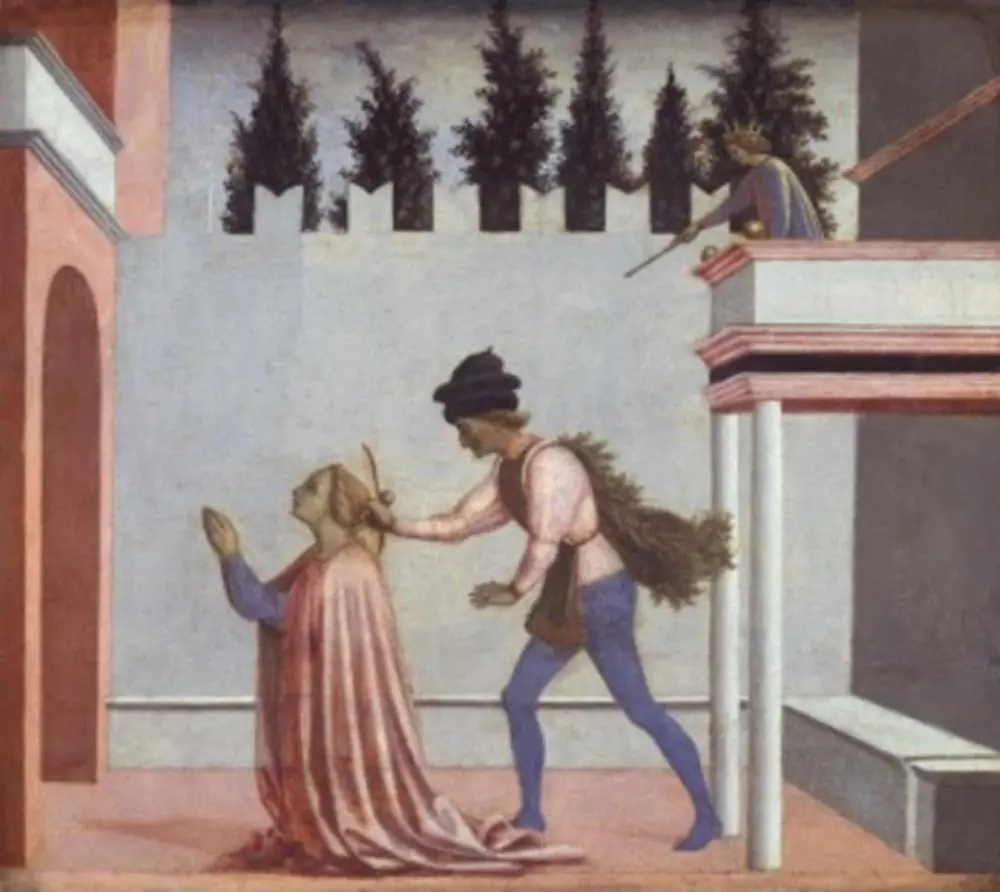
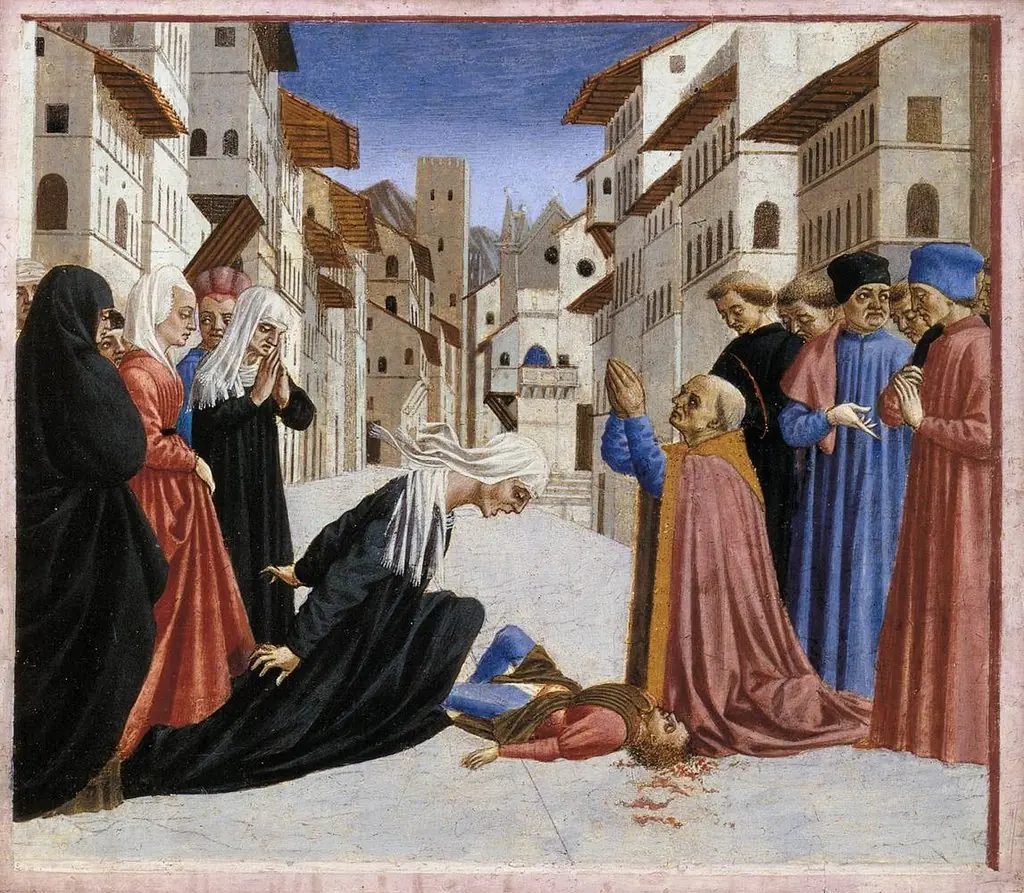
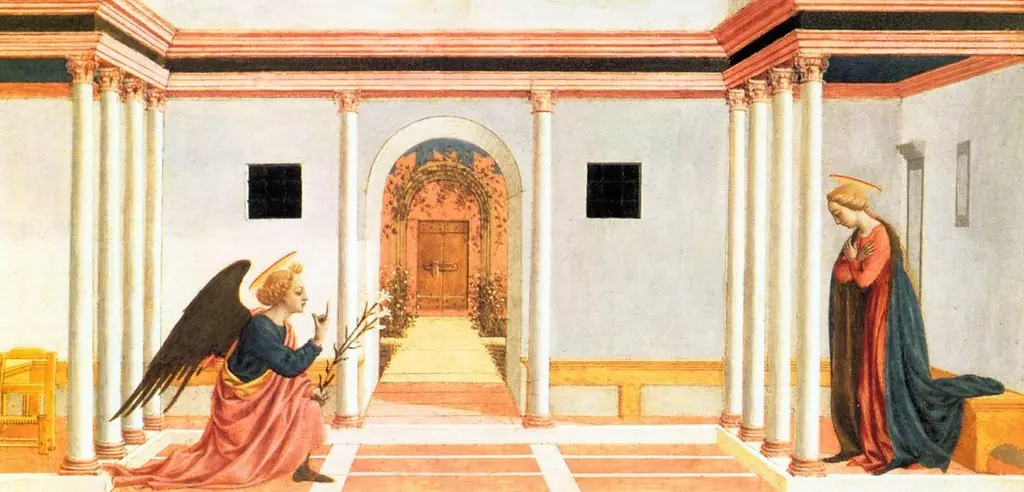
The altarpiece was commissioned for the high altar of the church of Santa Lucia dei Magnoli in Florence, where it remained until its removal. The painting is signed on the first step of the throne platform with the Latin inscription noted above. It originally included a predella, which has since been divided among several museums: the Stigmatization of Saint Francis and Saint John the Baptist in the Desert are in the National Gallery of Art, Washington; the Annunciation and The Miracle of Saint Zenobius are in the Fitzwilliam Museum, Cambridge; and the Martyrdom of Saint Lucy is in the Berlin State Museums. The original frame, which would have emphasized the window-like effect of the composition, has been lost. The painting was later acquired by the Galleria degli Uffizi in Florence, where it is now preserved. Its accession to the Uffizi represents part of the broader consolidation of major Florentine altarpieces in the city's principal museum.
Context
The Santa Lucia de' Magnoli Altarpiece emerges from the critical artistic environment of mid-15th-century Florence, where painters and theorists were actively redefining the possibilities of pictorial space. The work exemplifies the tabula quadrata et sine civoriis, a modern type of painting without inner frames or gilded backgrounds, recommended by Filippo Brunelleschi in 1425 for San Lorenzo and increasingly demanded by Florentine patrons seeking to break with medieval aesthetic canons. Following Fra Angelico's Annunciation of 1426, it stands among the earliest surviving examples of this format. The painting also demonstrates the application of perspective principles articulated by Leon Battista Alberti in his treatise De Pictura of 1435. Domenico Veneziano's presumed Venetian origin, though actually suggested only by his name, has frequently been invoked to explain his work's luminous colorism; the clarity and purity of his palette were long attributed to this supposed northern Italian background. The altarpiece occupies a pivotal position in scholarship on Early Renaissance painting as the probable first true sacra conversazione, a format that would become dominant in Italian altarpiece design. Its influence on Piero della Francesca, particularly visible in the Legend of the True Cross cycle at Arezzo, has been extensively documented. The work's importance is further magnified by the destruction of Domenico's major fresco cycle at Sant'Egidio, making this panel the most substantial surviving evidence of his contribution to Florentine Renaissance painting.
Legacy
The Santa Lucia de' Magnoli Altarpiece has secured Domenico Veneziano's reputation as a foundational figure in the development of Renaissance pictorial language, despite the significant loss of his other major works. Its legacy rests primarily on two achievements: the establishment of the sacra conversazione as a viable and influential altarpiece format, and the demonstration that color and light could serve as unifying structural principles equivalent to perspective drawing. The transmission of what Roberto Longhi termed the synthesis of light and color to Piero della Francesca represents perhaps its most consequential artistic legacy, directly shaping the latter's masterpieces including the Arezzo frescoes. The predella panels, now dispersed across three countries, continue to attract scholarly attention as evidence of Domenico's narrative capabilities. The painting's residence in the Uffizi ensures its visibility to scholars and the public, while its reproduction and discussion in major surveys of Western art have maintained its canonical status. The work remains a touchstone for studies of Early Renaissance perspective, color theory, and the evolution of altarpiece design from the medieval polyptych to the unified pictorial field of the High Renaissance.
Own this work as a print
Artist & collection




- Saint Lawrence Arraigned Before the Prefect Valerianus
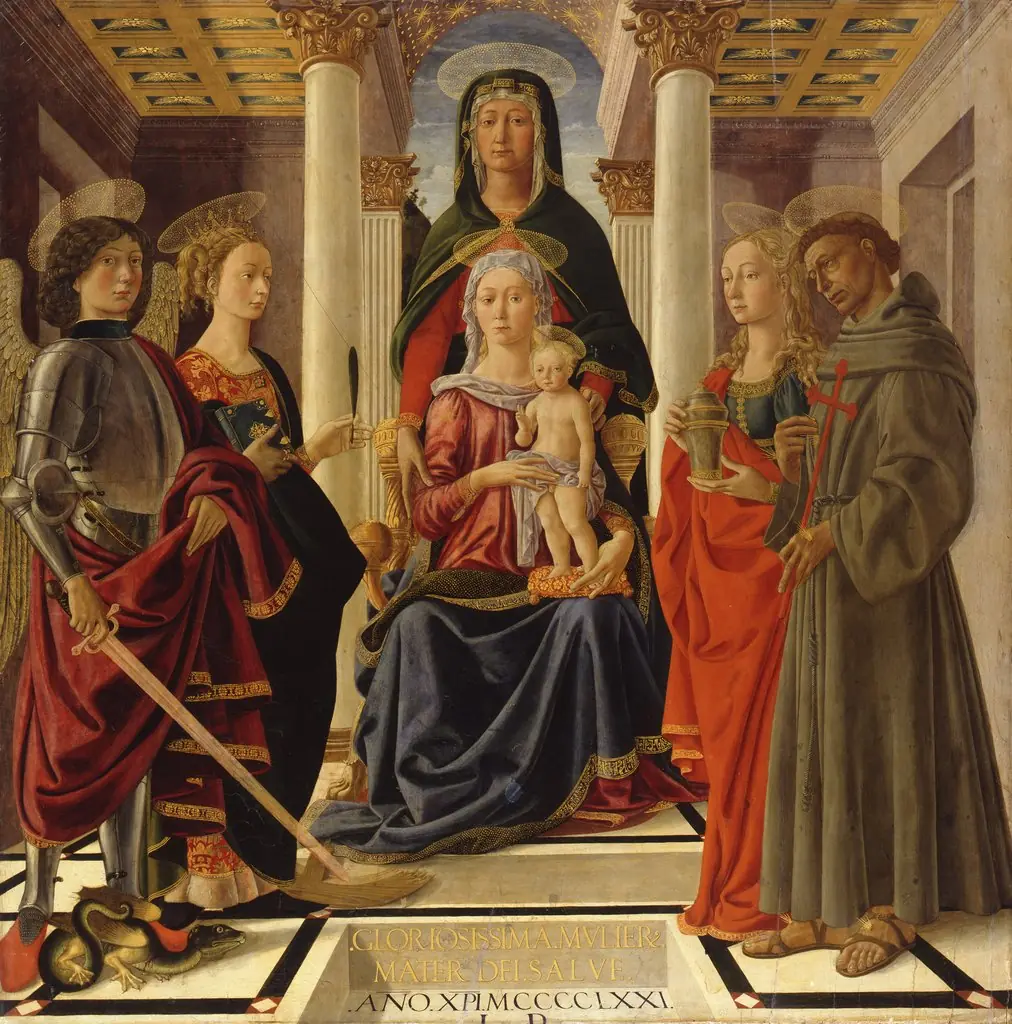 St. Anne Selbdritt with Archangel Michael and Saints
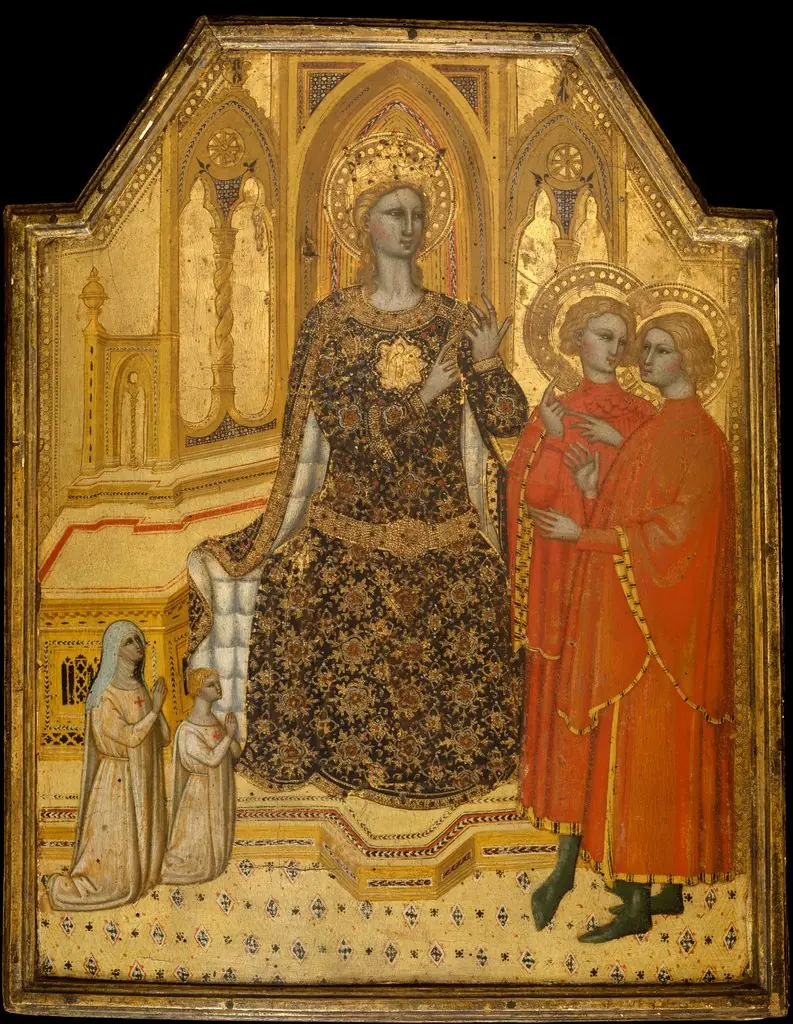 Saint Catherine Disputing and Two Donors
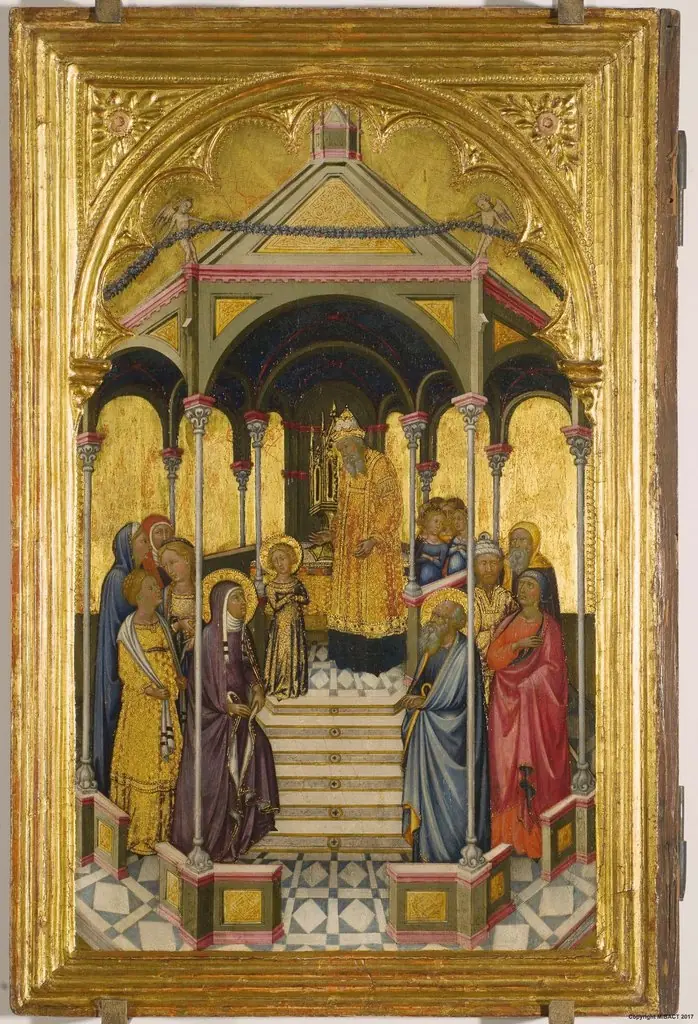 The Presentation of the Virgin at the Temple
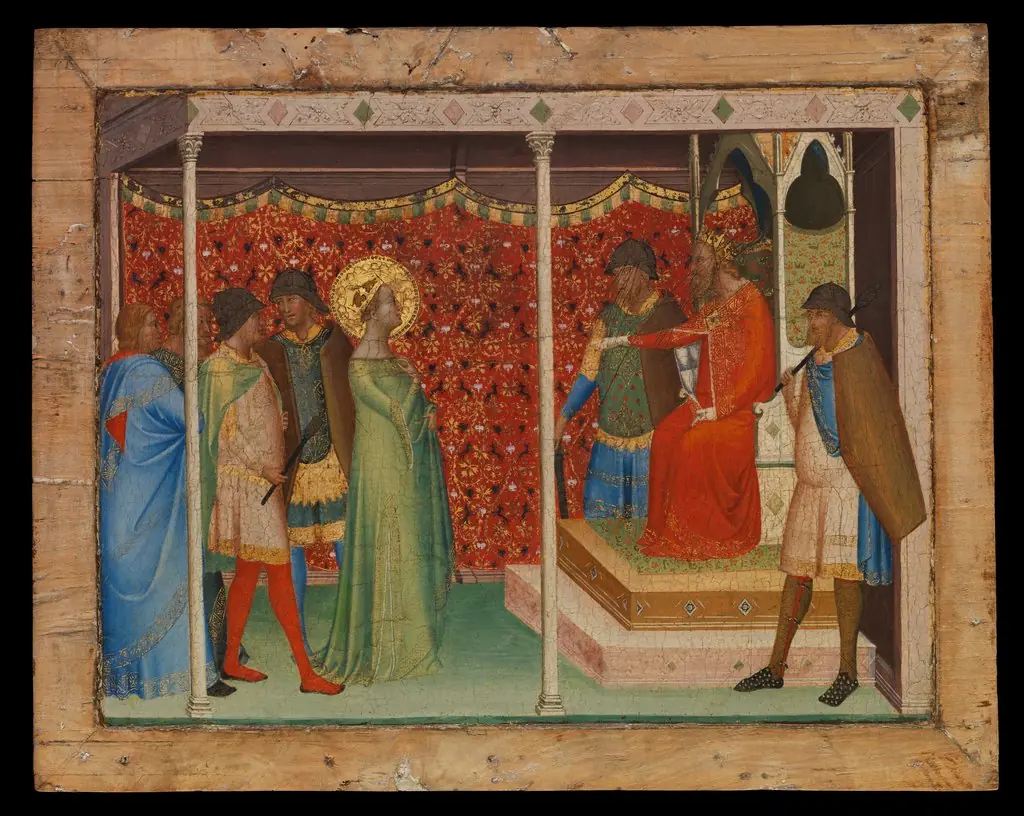 Saint Reparata before the Emperor Decius
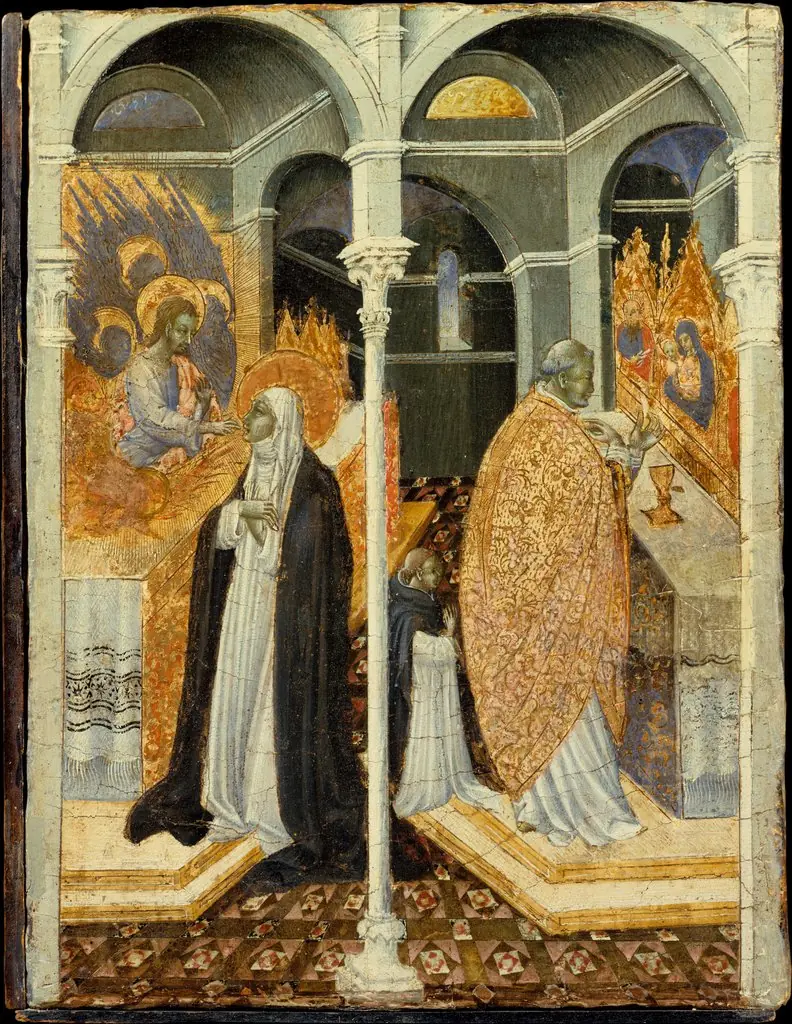 The Miraculous Communion of Saint Catherine of Siena
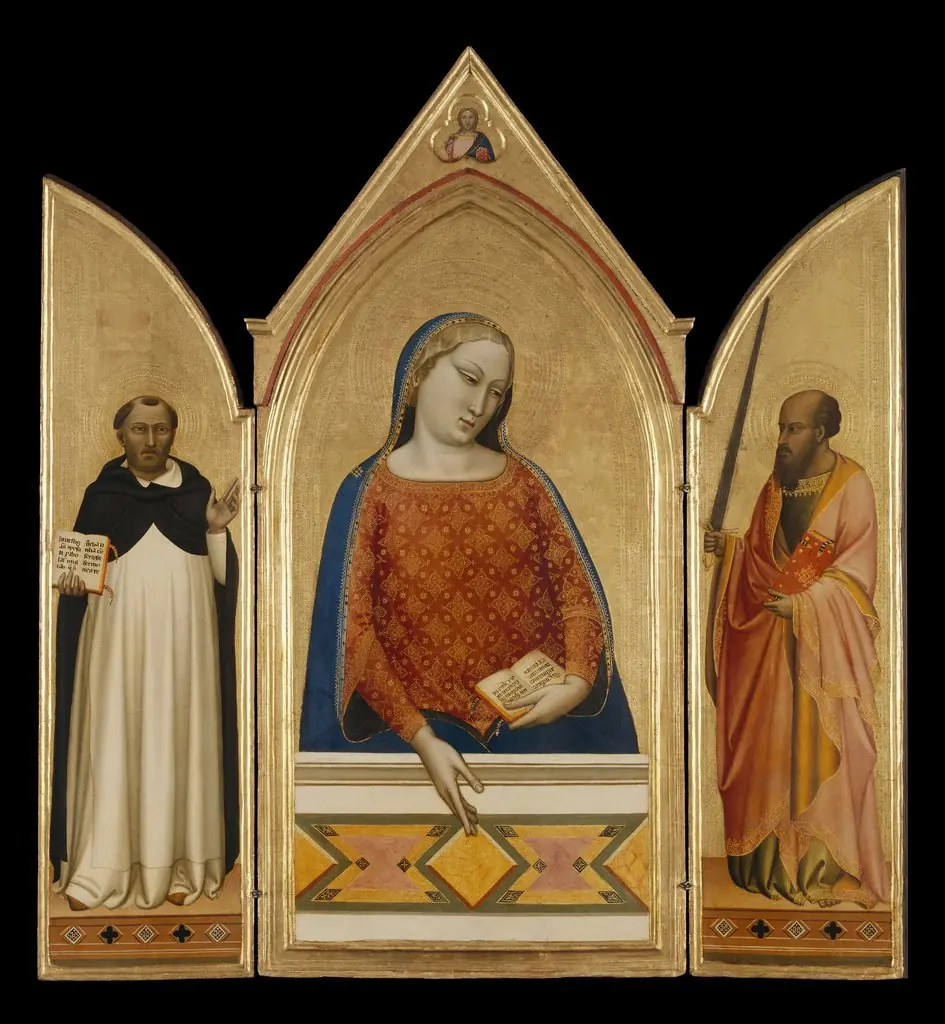 The Virgin Mary with Saints Thomas Aquinas and Paul
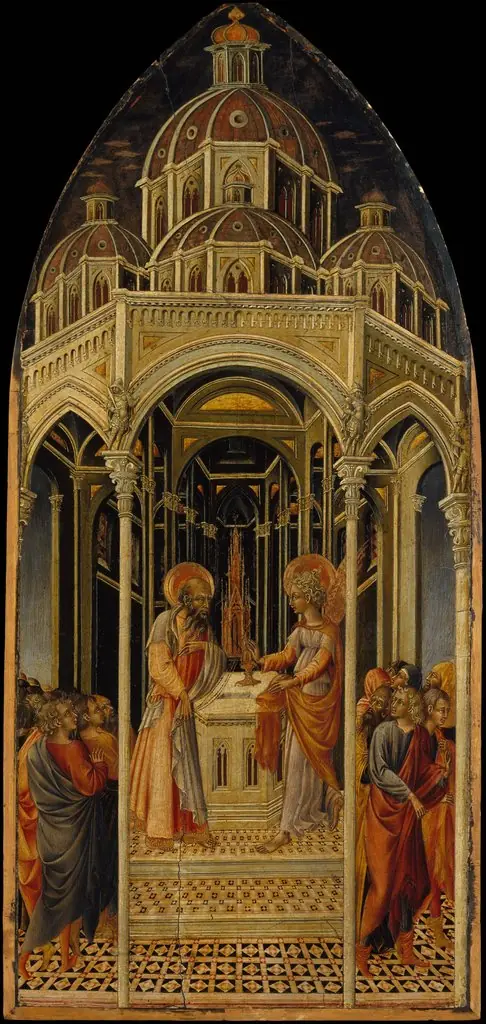 The Annunciation to Zacharias; (verso) The Angel of the Annunciation
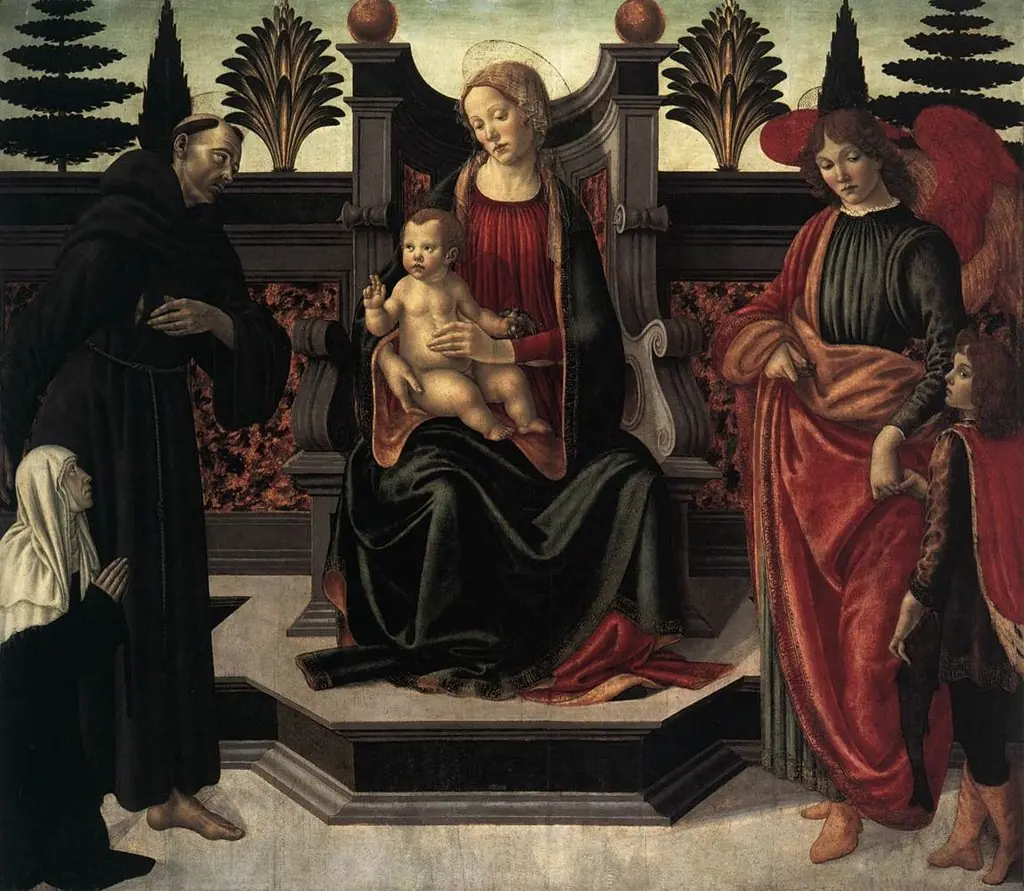 Madonna and Child Enthroned
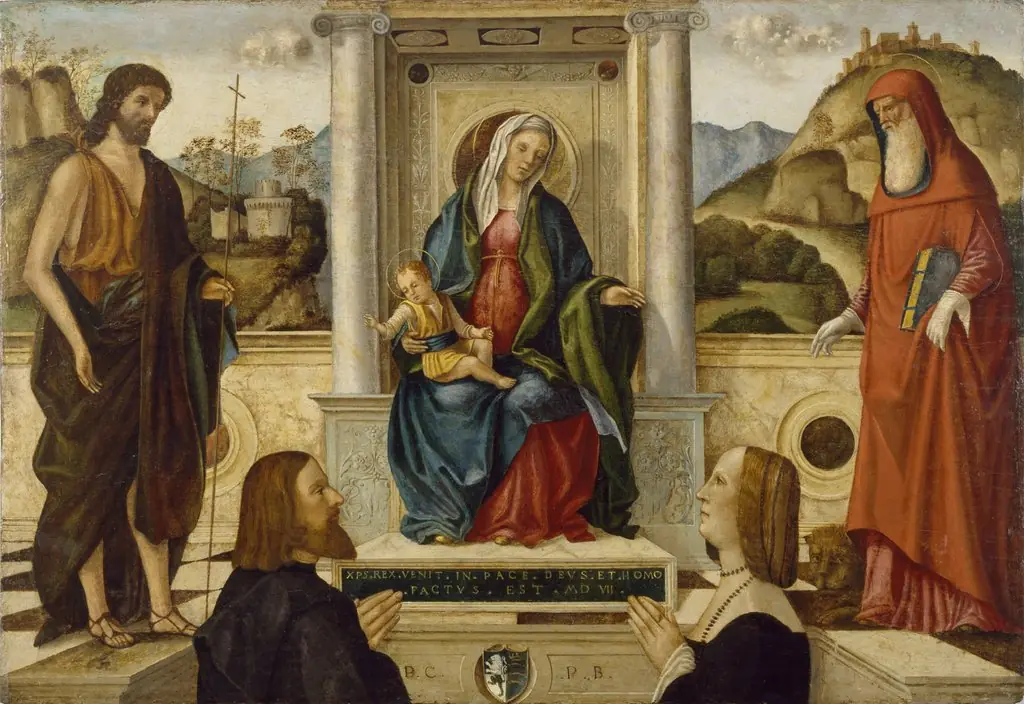 Madonna and Child Enthroned with Saints and Donor
 The Mystic Marriage of Saint Catherine of Siena
 Saint John the Baptist and Saint Catherine Altar Piece