Artwork
Mt. Qingbian
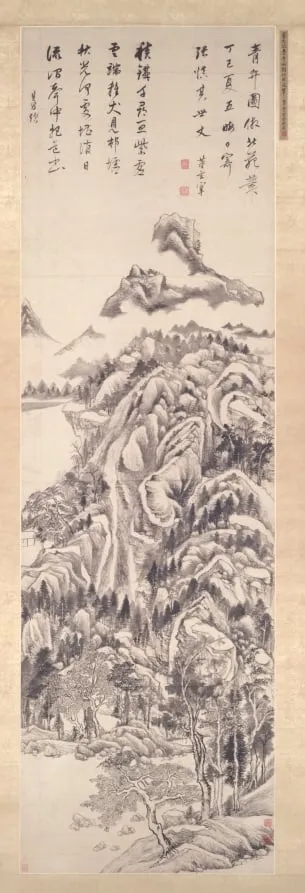
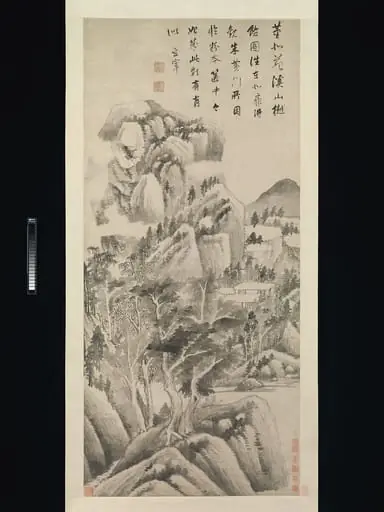
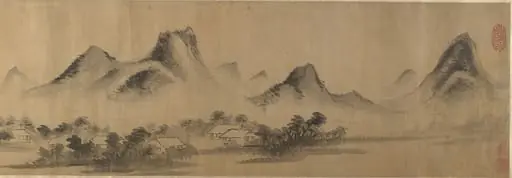
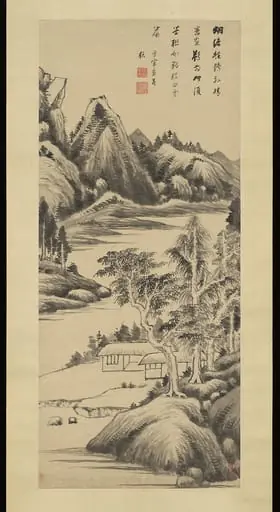
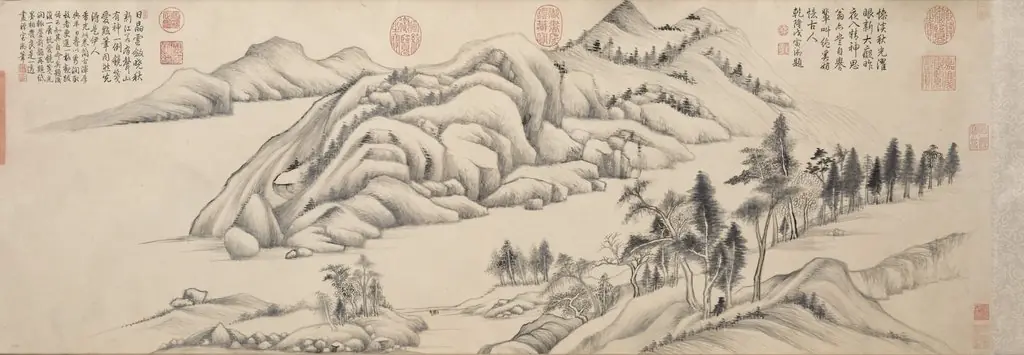
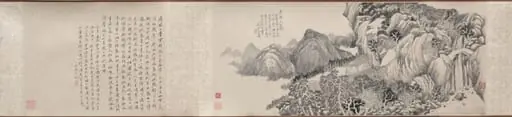
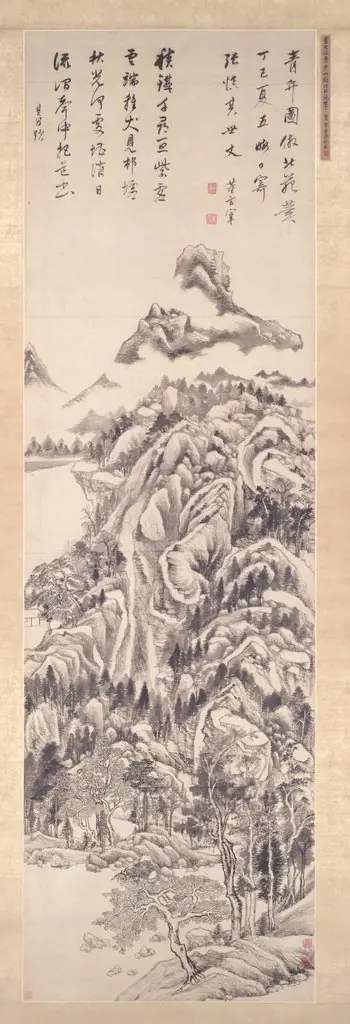
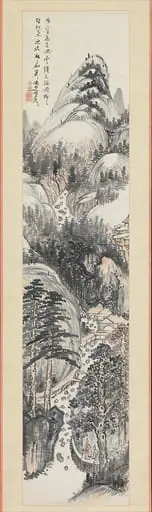
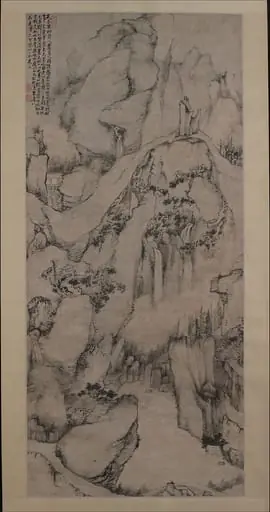
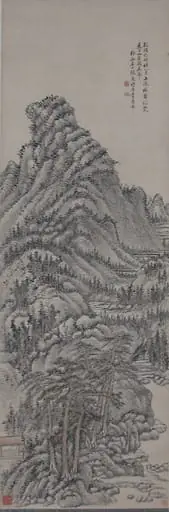
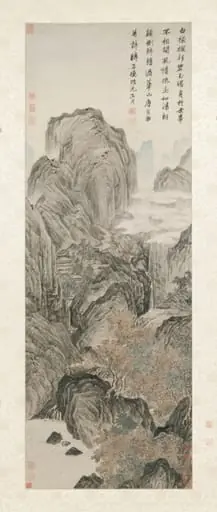
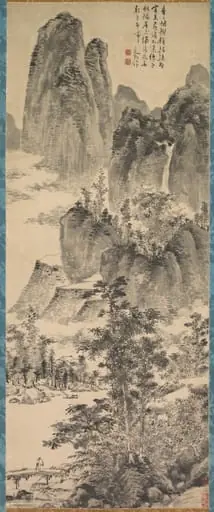
Mt. Qingbian is an unspecified painting by the Baroque artist Dong Qichang. It dates from 1617 and is held in the collection of the Cleveland Museum of Art. Mt.
- Accession no.
- 1980.10
- Credit line
- Leonard C. Hanna Jr. Fund
About this work
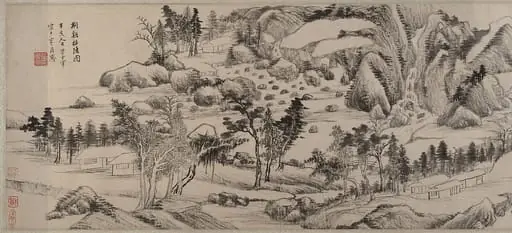
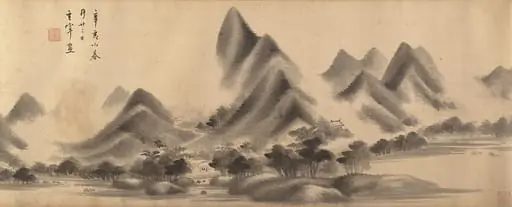
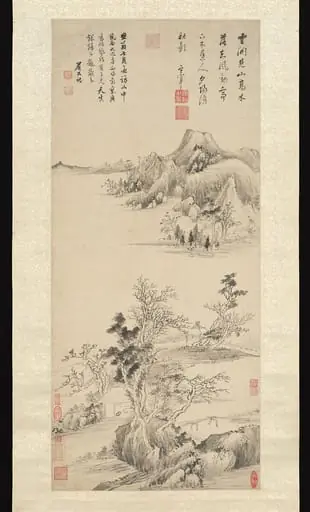
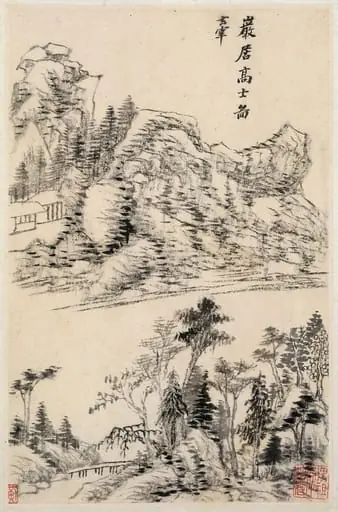
You see a tall mountain rising in layers of black ink, like stacked paper cutouts.
You see a tall mountain rising in layers of black ink, like stacked paper cutouts. The brushstrokes are bold, some thick, some thin, with no shading or color.
Dong Qichang didn’t paint mountains to look real. He wanted the ink itself to feel alive, like calligraphy. The shapes guide your eye up and down, as if the mountain breathes.
To see how ink can feel like energy, look up china, ming dynasty (1368–1644).
Overview
Mt. Qingbian is a painting by Dong Qichang, characterized by its abstracted landscape composition and emphasis on expressive brushwork and ink.
Technique & Style
The painting features layered mountain forms rendered in black ink, with bold brushstrokes varying in thickness. The artist's focus on the vitality of brush and ink is reminiscent of calligraphy, creating a dynamic visual rhythm.
Subject & Meaning
The composition is organized to convey a sense of structure and energy, with the mountain forms guiding the viewer's eye in a flowing motion, evoking the concepts of qi and shi.
Artist & collection

Artist
Dong Qichang (Chinese: 董其昌; pinyin: Dǒng Qíchāng; Wade–Giles: Tung Ch'i-ch'ang; courtesy name Xuanzai (玄宰); 1555–1636) was a Chinese art theorist, calligrapher, painter, and politician of the later period of the Ming dynasty.