Artwork
清 張庚 倣王蒙山水圖 軸|Landscape After Wang Meng
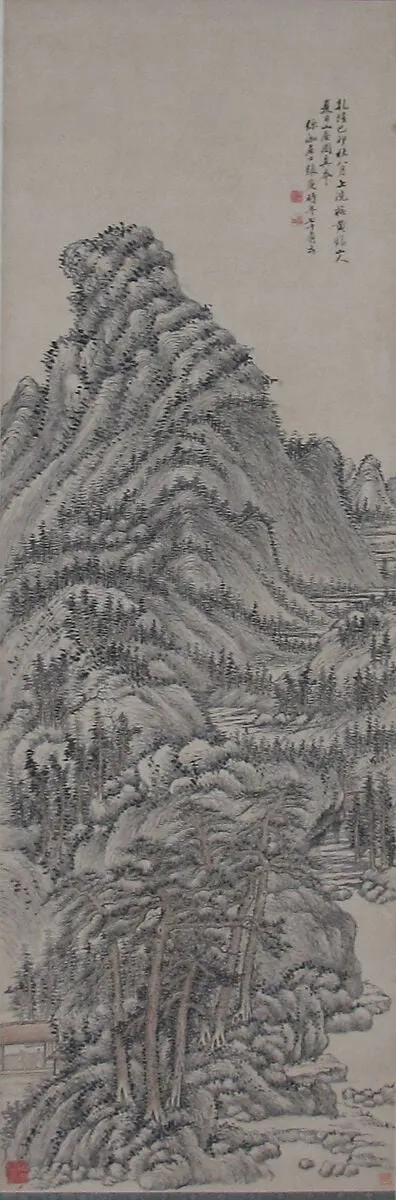
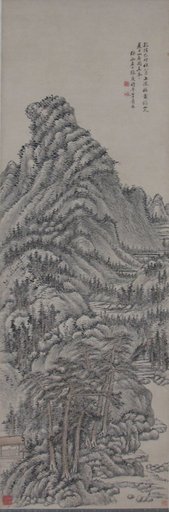
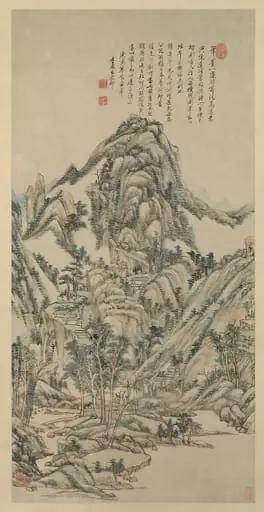
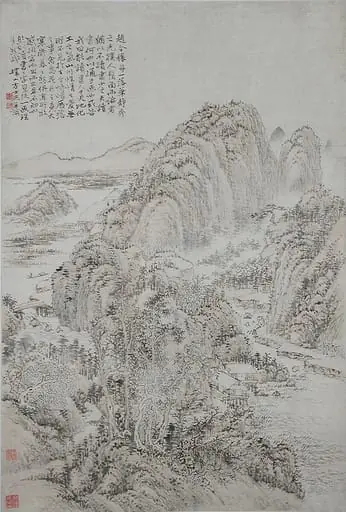
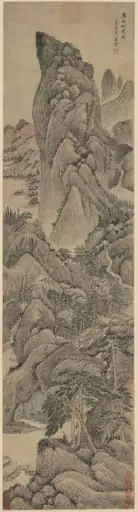
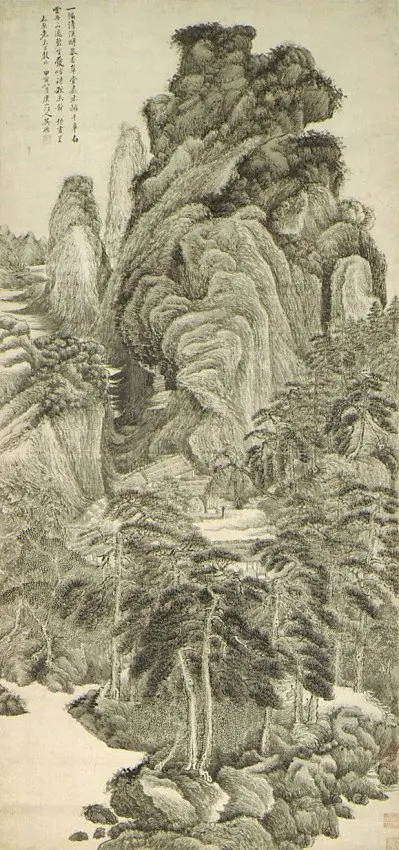
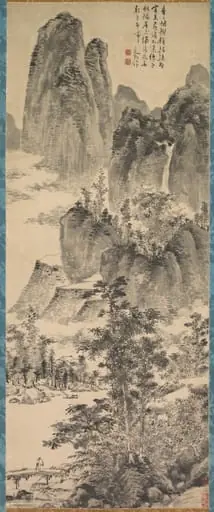
清 張庚 倣王蒙山水圖 軸|Landscape After Wang Meng is an ink painting by the Qing dynasty painting artist Zhang Geng. It dates from 1759 and is held in the collection of the Metropolitan Museum of Art.
About this work
Technique & Style
This hanging scroll by Zhang Geng is executed in ink and color on paper, a format suited to vertical landscape compositions, and measures 124.
This hanging scroll by Zhang Geng is executed in ink and color on paper, a format suited to vertical landscape compositions, and measures 124.5 cm high by 40.6 cm wide. Zhang Geng's brushwork emulates the dense, layered manner of Wang Meng, the Yuan-dynasty master known for tightly woven mountain scenery. The painting, dated 1759, is held in the Metropolitan Museum of Art. No notes on condition or mounting are recorded in the available sources.
History & Provenance
Zhang Geng painted Landscape After Wang Meng in 1759 in China, producing a hanging scroll in ink and color on paper that imitates the fourteenth-century master Wang Meng. Catalogued as a landscape painting, it entered the collection of the Metropolitan Museum of Art, reflecting the Qing-era practice of studying earlier masters. No accession number or exhibition history is documented beyond its presence in the museum's holdings.
Overview
This hanging scroll, titled Landscape After Wang Meng, was created by Zhang Geng in 1759. Executed with ink and color on paper, the painting presents a towering mountain scene. It exemplifies the practice of later artists engaging with the styles of historical masters, as Zhang Geng consciously drew inspiration from the fourteenth-century painter Wang Meng, reinterpreting a classic aesthetic nearly five centuries later.
Subject & Meaning
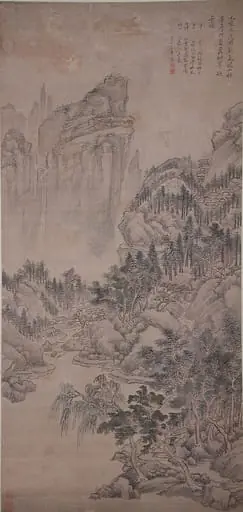
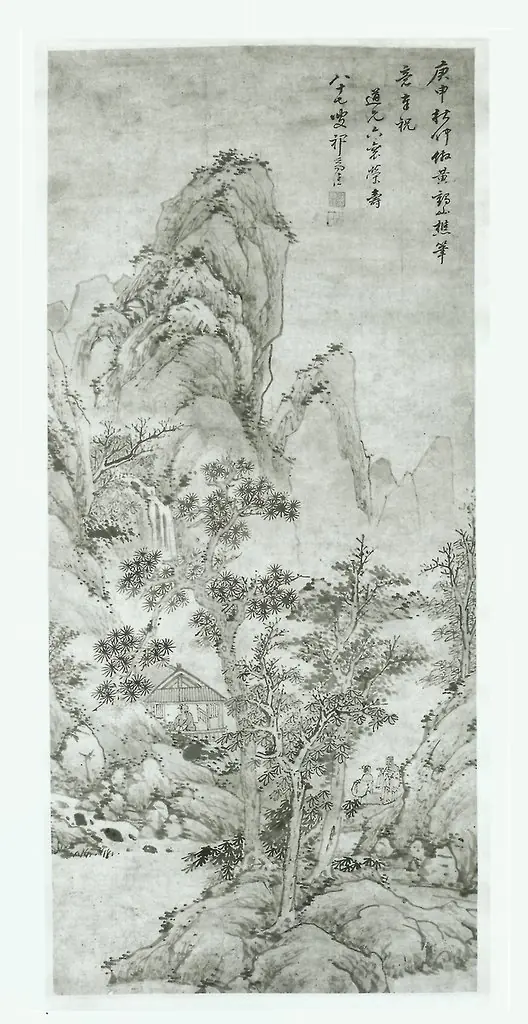
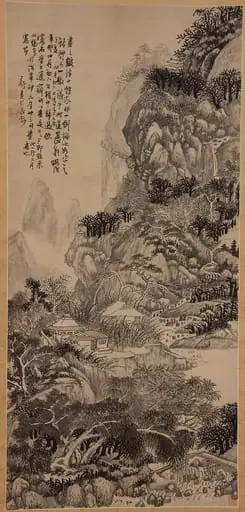
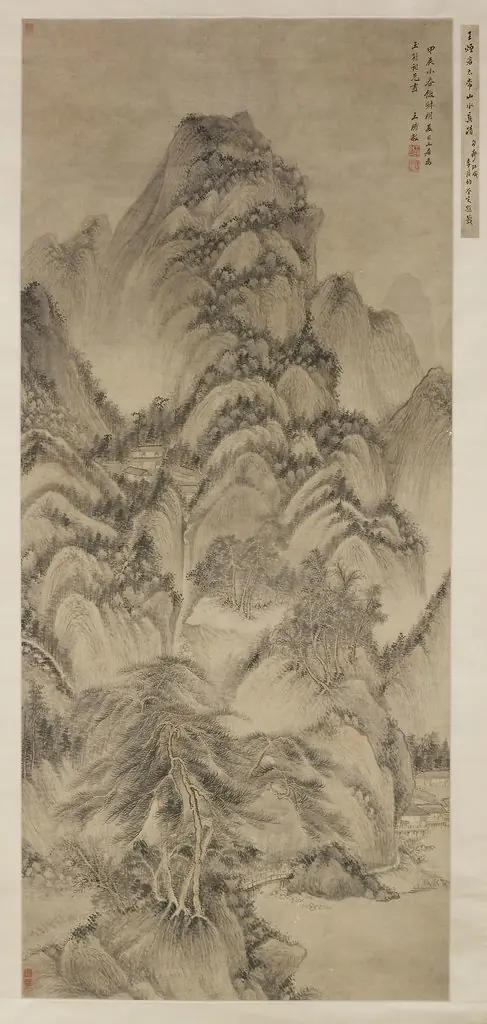
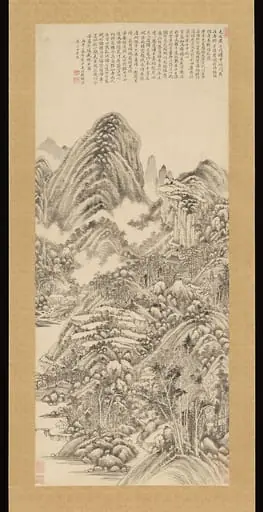
The artwork depicts a dramatic mountainscape, characterized by jagged peaks that dominate the vertical composition. Within this formidable natural setting, small trees cling to the slopes, and a few scholarly figures can be discerned traversing a winding path. Such landscape paintings often invite contemplation and reflect philosophical ideals concerning humanity's place within the vastness of nature, a common theme in traditional Chinese art.
Context
Created during the Qing dynasty, Zhang Geng's Landscape After Wang Meng participates in a long-standing tradition within Chinese painting where artists studied and reinterpreted the works of revered predecessors. This practice was not merely imitation but a means of artistic dialogue and development. By explicitly referencing Wang Meng, a prominent painter from the Yuan dynasty (active in the 1300s), Zhang Geng positioned his work within a rich lineage, acknowledging and subtly evolving a historical aesthetic.
Artist & collection