Artwork
A Girl with a Broom
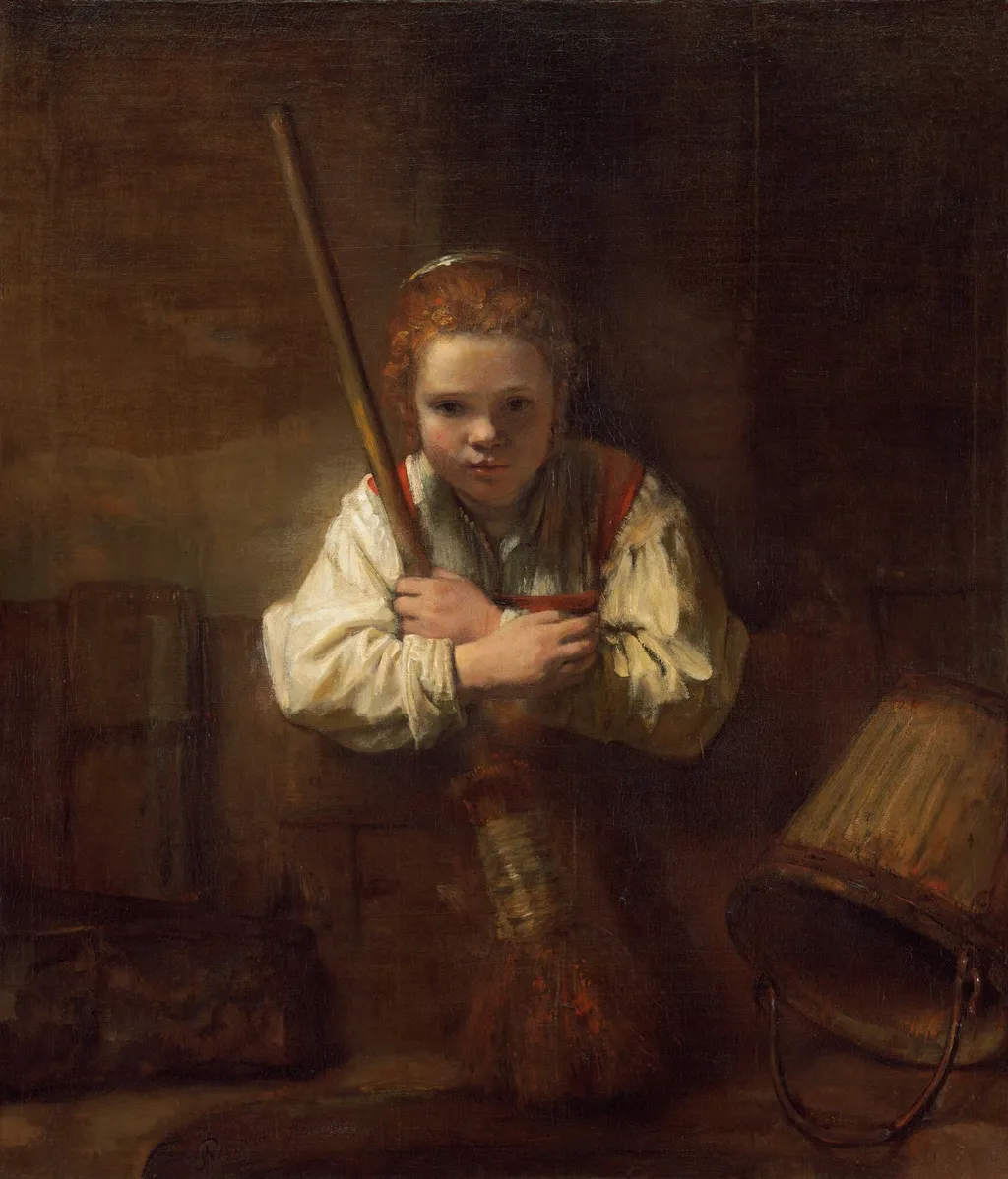
A Girl with a Broom is an oil painting. It dates from 1647 and is held in the collection of the Hermitage Museum.
- Inscription
- Inscribed:lower left on rim of well: Rembrandt f. 1651
About this work
Subject & Meaning
The subject depicted is a young girl holding a broom and bucket, a motif linked to domestic labor and cleanliness in Dutch 17th-century genre scenes.
The subject depicted is a young girl holding a broom and bucket, a motif linked to domestic labor and cleanliness in Dutch 17th-century genre scenes. Art historians such as Arthur K. Wheelock Jr. and Ernst van de Wetering suggest the painting was produced in Rembrandt’s workshop around 1651, possibly begun by Carel Fabritius, who painted the girl, with the composition later completed by another hand under Rembrandt’s supervision. The work may have been conceived as a trompe-l’oeil, echoing Rembrandt’s earlier experiments in illusionistic framing, such as Young Woman in a Picture Frame (1641).
Its iconography emphasizes the everyday and the ephemeral, aligning with broader trends in Dutch art where household tasks carried moral or allegorical undertones, often tied to themes of virtue and industriousness. The Dutch title Een vrouwtje aende put ("A little woman at the well") and later French designation La balayeuse ("The sweeper") underscore the figure’s engagement with domestic chores, reinforcing its representation of modest, virtuous labor.
Technique & Style
The work is an oil painting on canvas, measuring about 107 × 91 cm, executed in the mid‑1650s in Rembrandt’s studio. Its surface is built up with layered oil paint, a technique typical of the workshop where apprentices such as Carel Fabritius are thought to have contributed figures while the master provided the overall design. The composition relies on a modest trompe‑l’oeil effect, presenting a girl with a broom and bucket in a shallow spatial setting, and the handling of light creates a strong chiaroscuro that emphasizes the three‑dimensional illusion. The canvas remains largely intact, showing only minor craquelure consistent with age.
History & Provenance
The painting is dated to 1651 and was produced in Rembrandt’s workshop around that year, possibly by Carel Fabritius; Arthur K. Wheelock Jr. suggested in 2014 that Fabritius painted the girl, after which the canvas remained unfinished in the workshop and was later completed and signed by Rembrandt for sale. Its earliest certain owner was the Amsterdam collector Herman Becker (c. 1617‑1678), whose 1678 inventory lists it as ‘Een vrouwtje aende put van Rembrandt van Rijn’. After Becker’s death it passed to Pierre Crozat (Paris) before 1740, then to his nephews Louis‑François Crozat, marquis du Châtel, and Louis‑Antoine Crozat, baron de Thiers.
In 1772 Denis Diderot acquired it for Catherine II of Russia, placing it in the Imperial Hermitage. Sold in February 1931 through the Matthiesen Gallery (Berlin), P. & D. Colnaghi & Co. (London) and M. Knoedler & Co.
(New York) to Andrew W. Mellon, it was deeded to the Mellon Trust on 1 May 1937 and given the same year to the National Gallery of Art, Washington, D.C.
The painting is currently held in the collection of the National Gallery of Art in Washington, D.C., having entered the institution as a gift in 1937 from the A.W. Mellon Educational and Charitable Trust. Prior to this, the work was acquired in February 1931 by Andrew W. Mellon through a consortium of dealers including Matthiesen Gallery, Colnaghi, and Knoedler, following its sale from the Imperial Hermitage Gallery in Saint Petersburg. The Hermitage had obtained the piece in 1772 via Denis Diderot acting for Catherine II, purchasing it from the heirs of Louis-Antoine Crozat in Paris.
Earlier provenance traces the object to the collections of Pierre Crozat and, almost certainly, the Amsterdam collector Herman Becker, where it appeared in a 1678 inventory. While the work resided in the Hermitage during the eighteenth and early twentieth centuries, specific exhibition records beyond its institutional housing are not detailed in the provided sources.
Context
The painting, dated 1651 and showing a girl with a broom and bucket, has long been debated as a product of Rembrandt’s workshop, possibly executed by Carel Fabritius【2†source】【3†source】. Arthur K. Wheelock Jr. proposed in 2014 that Fabritius painted the figure while another hand finished it and added Rembrandt’s signature【3†source】. Ernst van de Wetering later regarded it as a possible variant on Rembrandt’s Girl in a Window (1651), exemplifying the workshop practice whereby pupils’ copies, made under supervision, could be sold as authentic Rembrandts【3†source】.
This context is echoed in Matsier’s 2009 study of trompe‑l’oeil effects, linking the work to Rembrandt’s illusionistic experiments such as the Night Watch and his 1641 portrait in a frame【3†source】. Provenance traces the picture from Herman Becker’s 1678 inventory through the Crozat collection, Diderot’s acquisition for Catherine II, its Hermitage tenure, and its 1931 sale as a Rembrandt to Andrew W. Mellon, who donated it to the National Gallery of Art【1†source】【3†source】
Legacy
The work’s later reputation rests on its contested attribution and its role in shaping ideas about Rembrandt’s studio practice. Scholars trace its journey from the 1678 inventory of Herman Becker to the Hermitage, the 1931 sale to Andrew Mellon, and its 1937 donation to the National Gallery of Art, a trajectory documented in. Analyses of its authorship, linking the piece to the workshop of Rembrandt and suggesting a contribution by Carel Fabritius, draw on and the observations of Wheelock and Van de Wetering in. Discussions of its trompe‑l’oeil intent and its status as a prototype for later genre scenes illustrate how the painting has influenced interpretations of 17th‑century Dutch genre painting and pupil production.
Overview
This oil on canvas painting, titled A Girl with a Broom, captures a moment of domestic labor. The artwork depicts a young girl engaged in the simple act of sweeping, her attention entirely fixed on her task. It exemplifies a common artistic trend in Dutch art of its era, which frequently elevated scenes from daily life to subjects worthy of artistic representation.
Artist & collection

- The Village Fool
 Lace-Maker
 Young Woman at an Open Half-Door
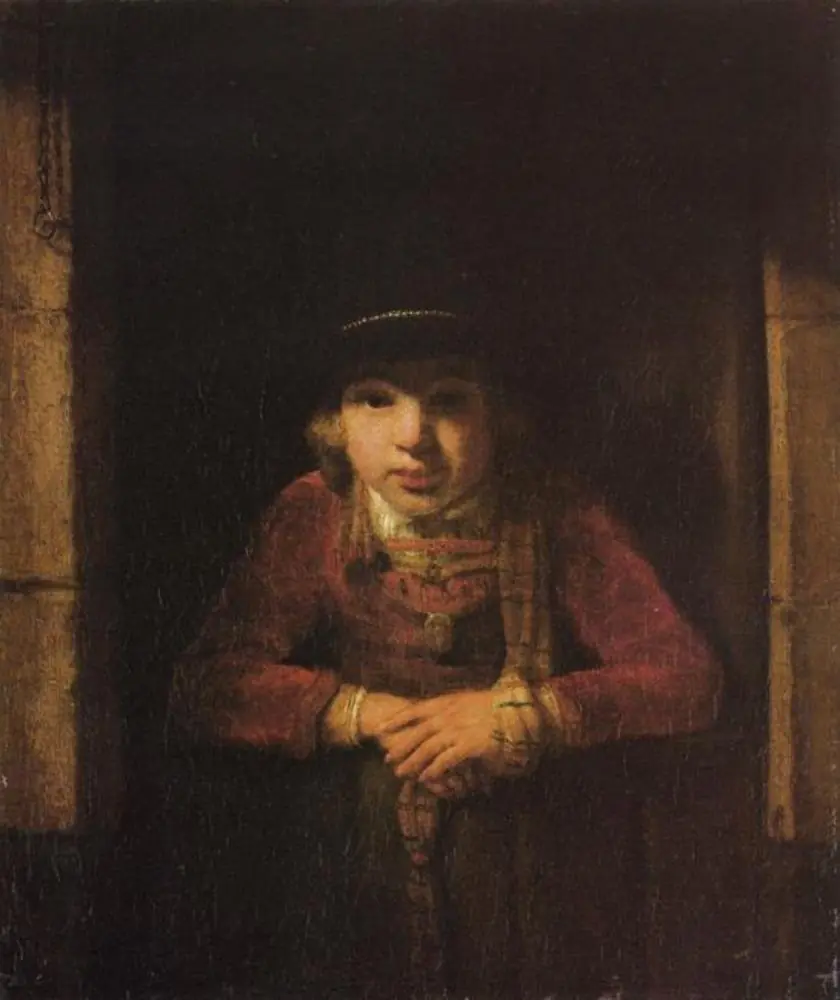 Boy Looking through the Window
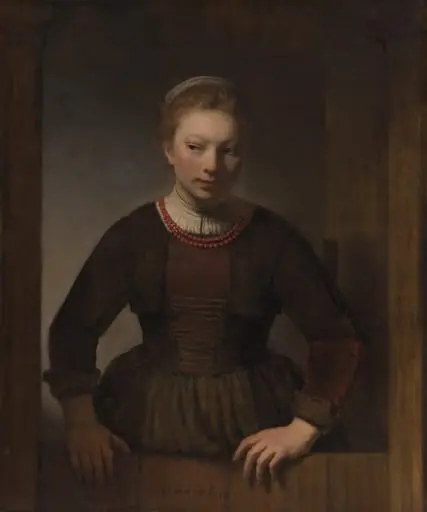 Young Woman at an Open Half-Door
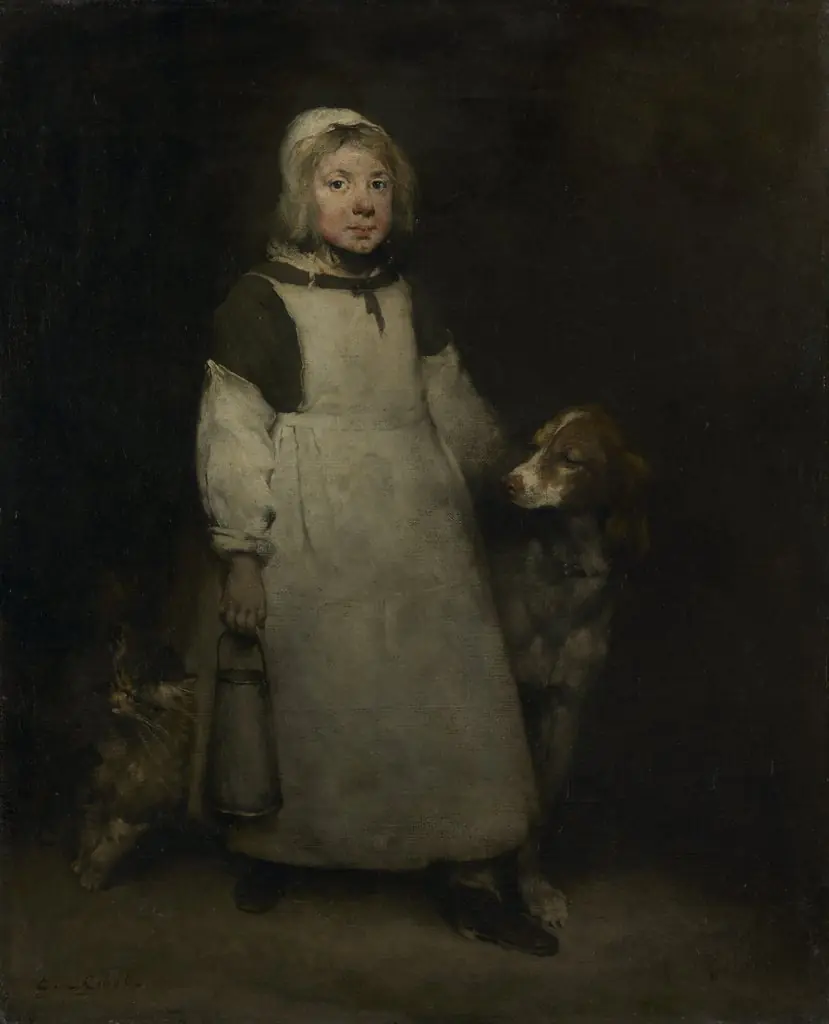 The Little Milkmaid
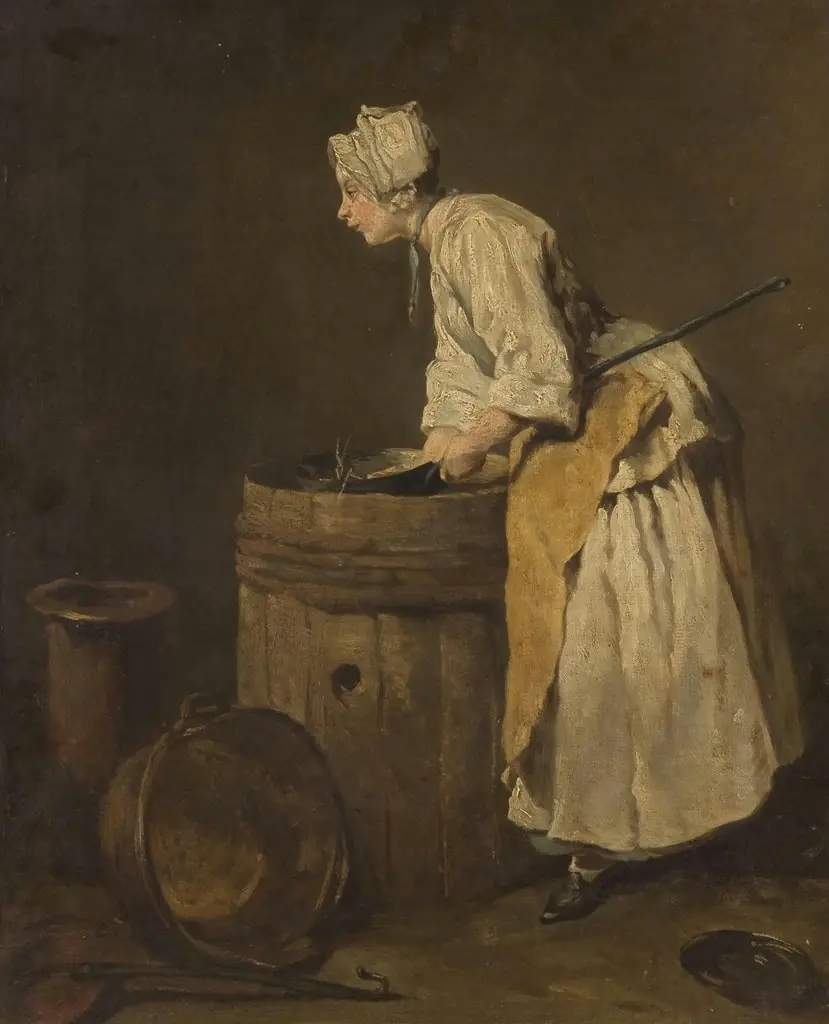 Scullery Maid
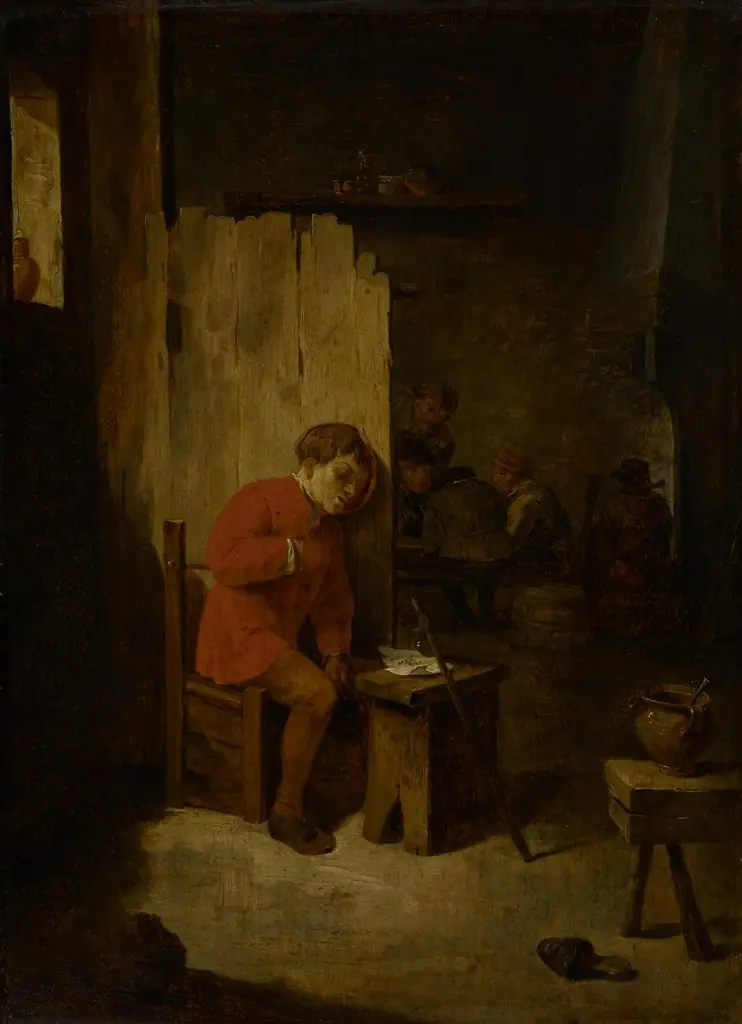 Schlafender Bauer
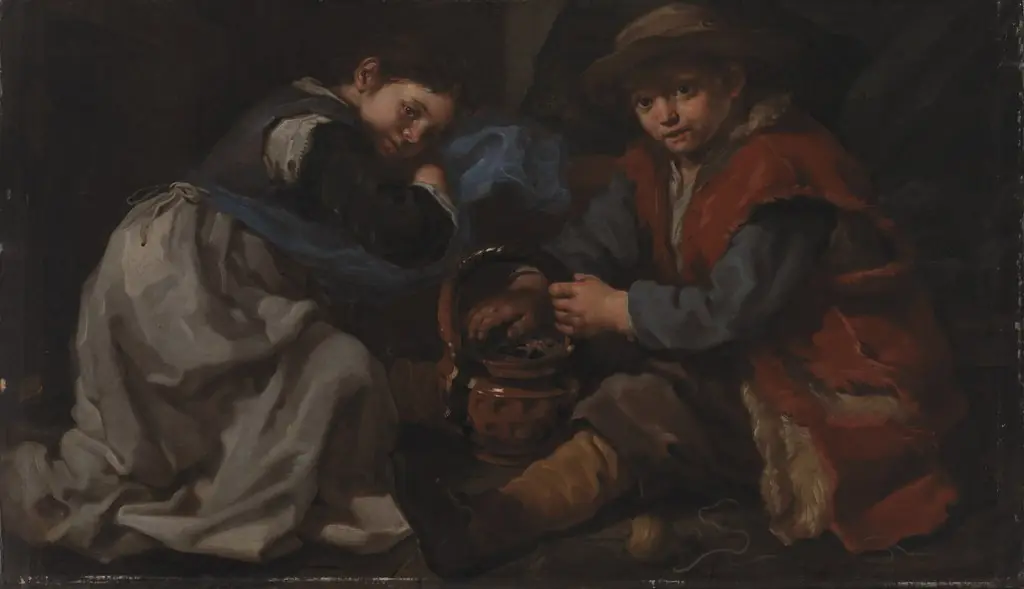 En pige og en dreng, der varmer sig ved et kulbækken
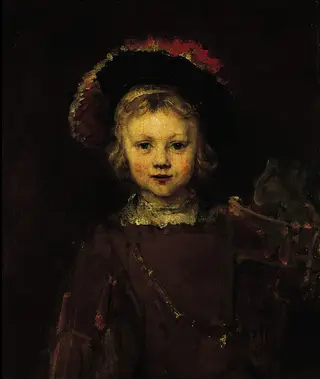 Unfinished Portrait of a Boy
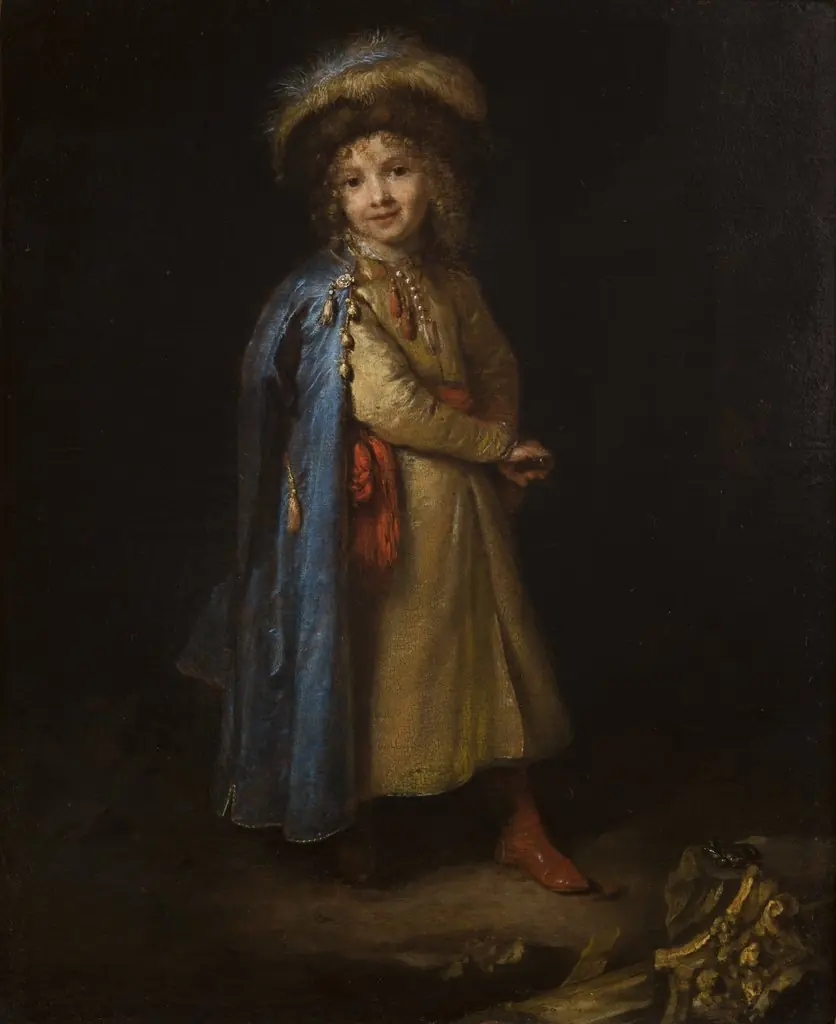 Portrait of a Boy in the Polish National Costume
 A Boy Picking Fleas off a Dog