Artwork
Madonna and Child with the Young Saint John the Baptist
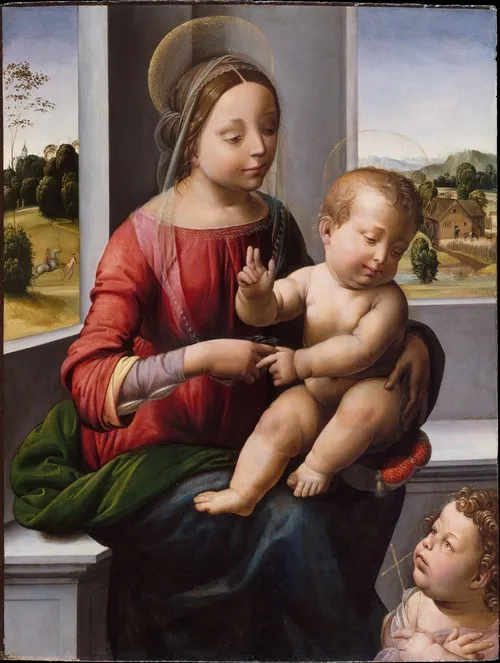
Madonna and Child with the Young Saint John the Baptist is an oil painting by the High Renaissance artist Fra Bartolomeo. It dates from 1499 and is held in the collection of the Metropolitan Museum of Art.
About this work
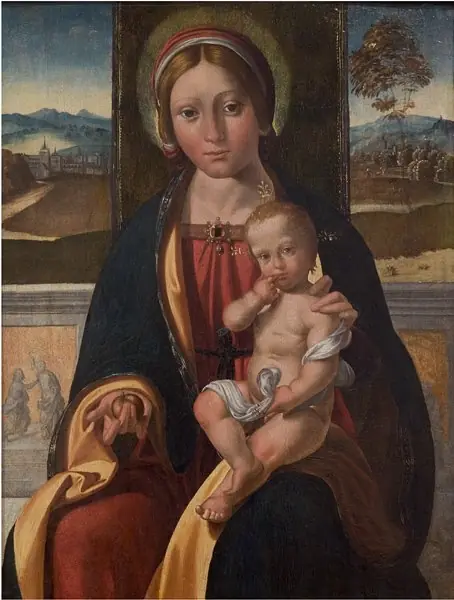
The panel shows the Virgin with the Christ Child and the young Saint John the Baptist, their figures emerging from shadow into a quiet calm.
Through the window of a softly lit interior, a watermill turns in a landscape borrowed from the Netherlandish painter Hans Memling. Fra Bartolomeo painted the devotional scene around 1497 for private worship in a Florentine home, before he entered the Dominican order in 1500 and set down his brush. The panel shows the Virgin with the Christ Child and the young Saint John the Baptist, their figures emerging from shadow into a quiet calm.
Subject & Meaning
This devotional painting depicts the Virgin Mary with the infant Jesus and the young Saint John the Baptist, a standard subject in Renaissance religious art. Iconographic attributes include a dove, lamb, and cross, symbolizing the Holy Spirit, Christ's sacrificial role, and the Crucifixion. These elements emphasize John the Baptist's function as the forerunner who acknowledges the Messiah, and the work's main subject is the Madonna and Child. The religious genre underscores its intended use for private or liturgical devotion.
History & Provenance
Fra Bartolomeo created this painting in 1497, as indicated by the work's recorded inception date. The artist's authorship is established in both source references. The painting is currently owned by the Metropolitan Museum of Art in New York, where it forms part of the museum's collection.
No information regarding an original commission or earlier ownership chain is provided in the available sources, leaving the work's early provenance undocumented.
Overview
This oil and gold on wood panel, created by Fra Bartolomeo around 1497, depicts the Madonna and Child alongside the young Saint John the Baptist. Intended for private devotion within a domestic setting, the painting showcases a softly illuminated interior that opens onto a distant landscape. The work, measuring approximately 58 by 44 centimeters, predates the artist's decision to join the Dominican order and temporarily cease painting, offering insight into his early artistic period.
Technique & Style
Fra Bartolomeo's early mastery of oil painting is evident in the detailed rendering of drapery, particularly the layered fabric over the Virgin's right forearm and her delicate, translucent veil. The tender flesh tones of the infant figures also demonstrate the artist's developing skill in conveying human warmth and softness. These elements highlight his technical proficiency and stylistic approach before his later monastic period.
Legacy
A notable feature of the painting is the watermill visible through the window, directly borrowed from the Netherlandish painter Hans Memling. This detail, referencing Memling's Saint Lawrence and the Uffizi Virgin and Child, illustrates the significant circulation of Northern European artistic motifs among Florentine patrons. It reveals Fra Bartolomeo's close study of Netherlandish painting, reflecting the broader international exchange that influenced the Italian Renaissance.
Context
This panel was completed around 1497, preceding a pivotal spiritual crisis that led Fra Bartolomeo to enter the Dominican order in 1500. His conversion prompted a temporary abandonment of his artistic practice, with painting resuming only in 1504. The work thus represents a moment before his monastic life, capturing his artistic output when he still accepted secular commissions, prior to his profound personal and professional transformation.
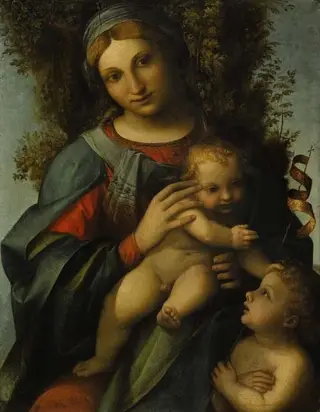
Artist & collection
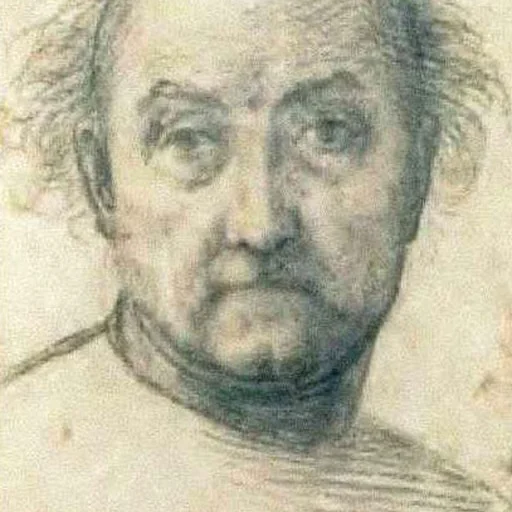
Artist
Fra Bartolomeo or Bartolommeo (UK: US: Italian:; 28 March 1472 – 31 October 1517), also known as Bartolommeo di Pagholo, Bartolommeo di San Marco, Bartolomeo di Paolo di Jacopo del Fattorino, and his original nickname…

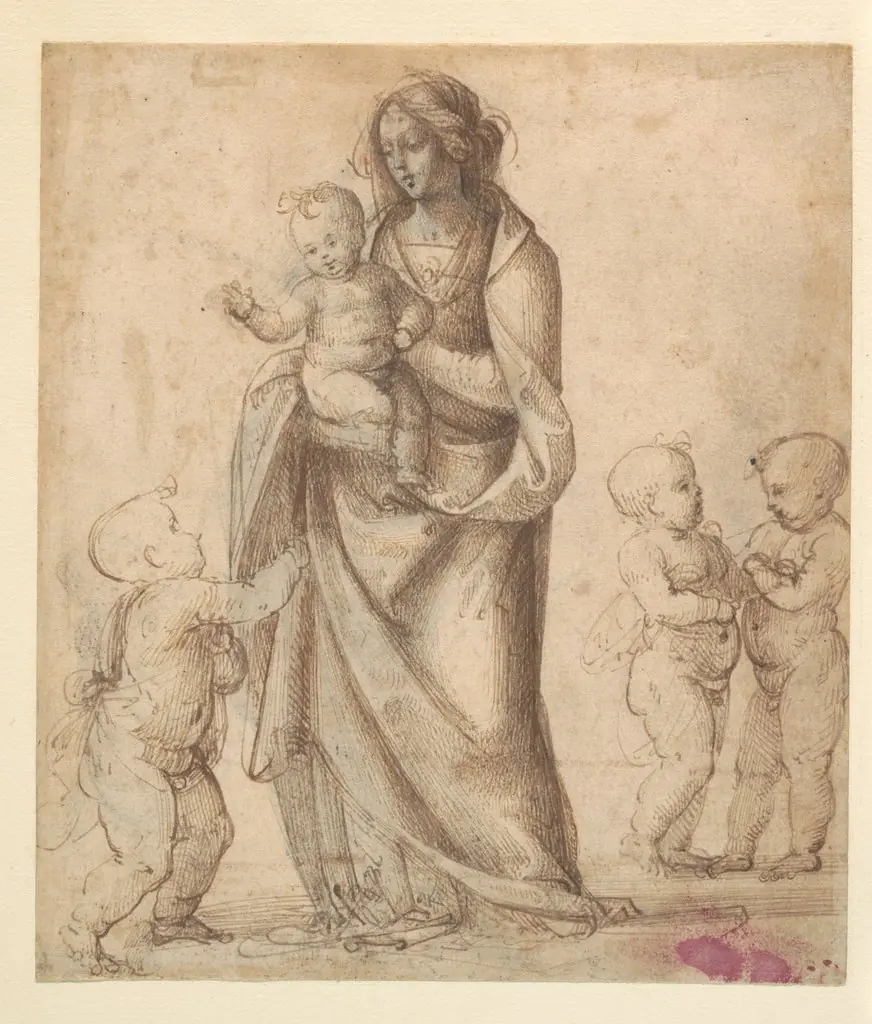 Madonna and Child with the Infant Saint John the Baptist and Two Putti (recto); Madonna and Child with the Infant Saint John the Baptist and a Putto (verso)
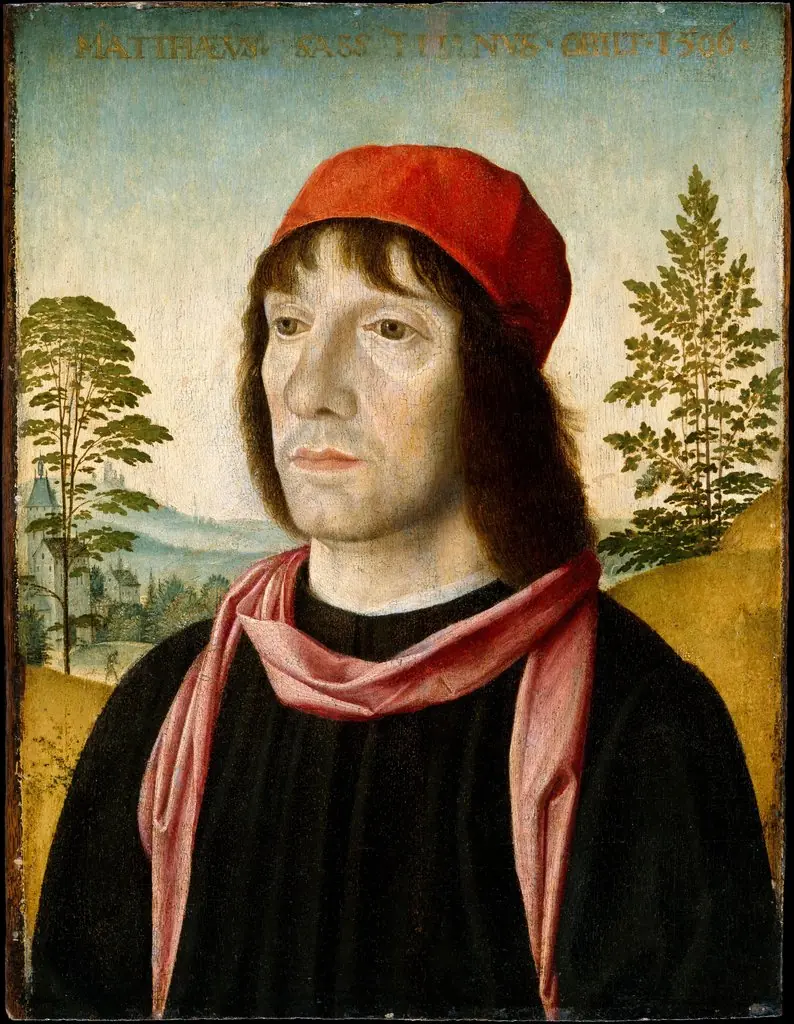 Portrait of a Man
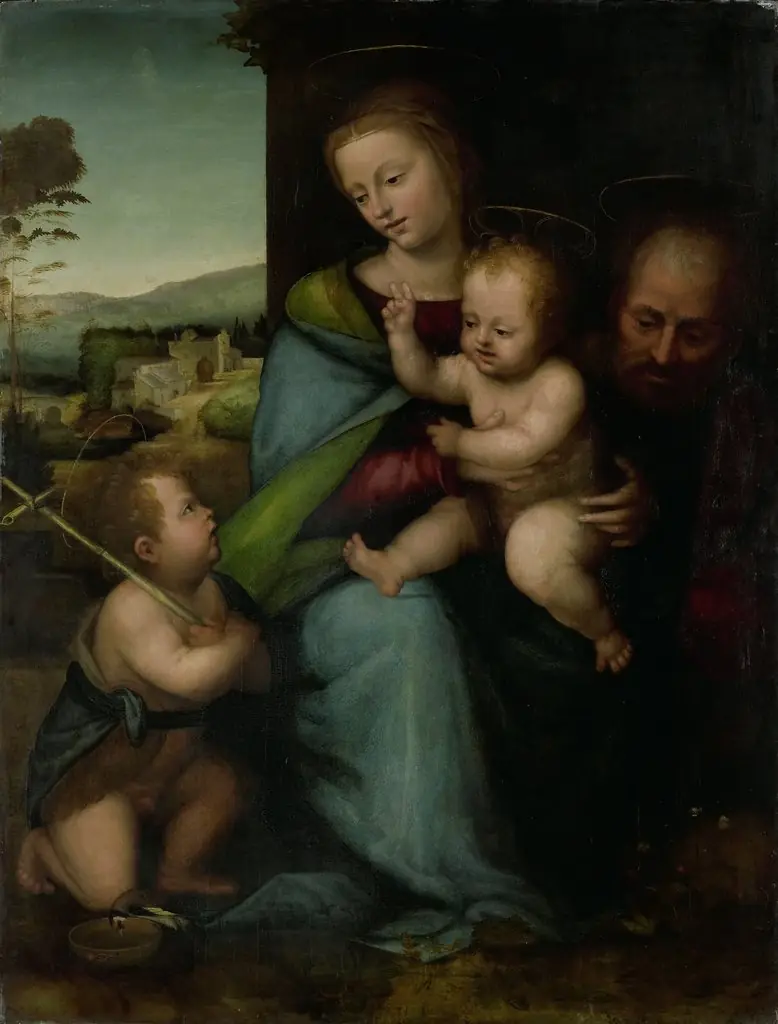 The Holy Family with the Infant John the Baptist
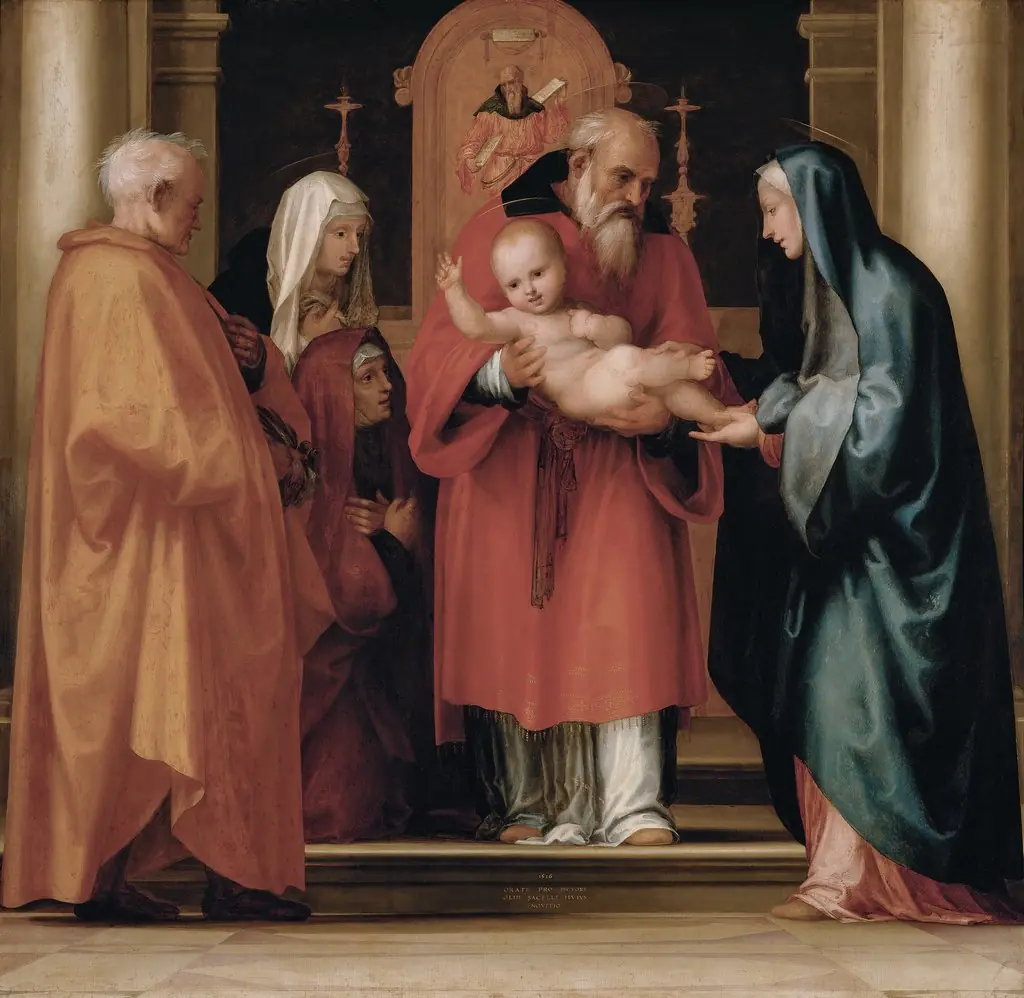 Presentation of Christ in the Temple
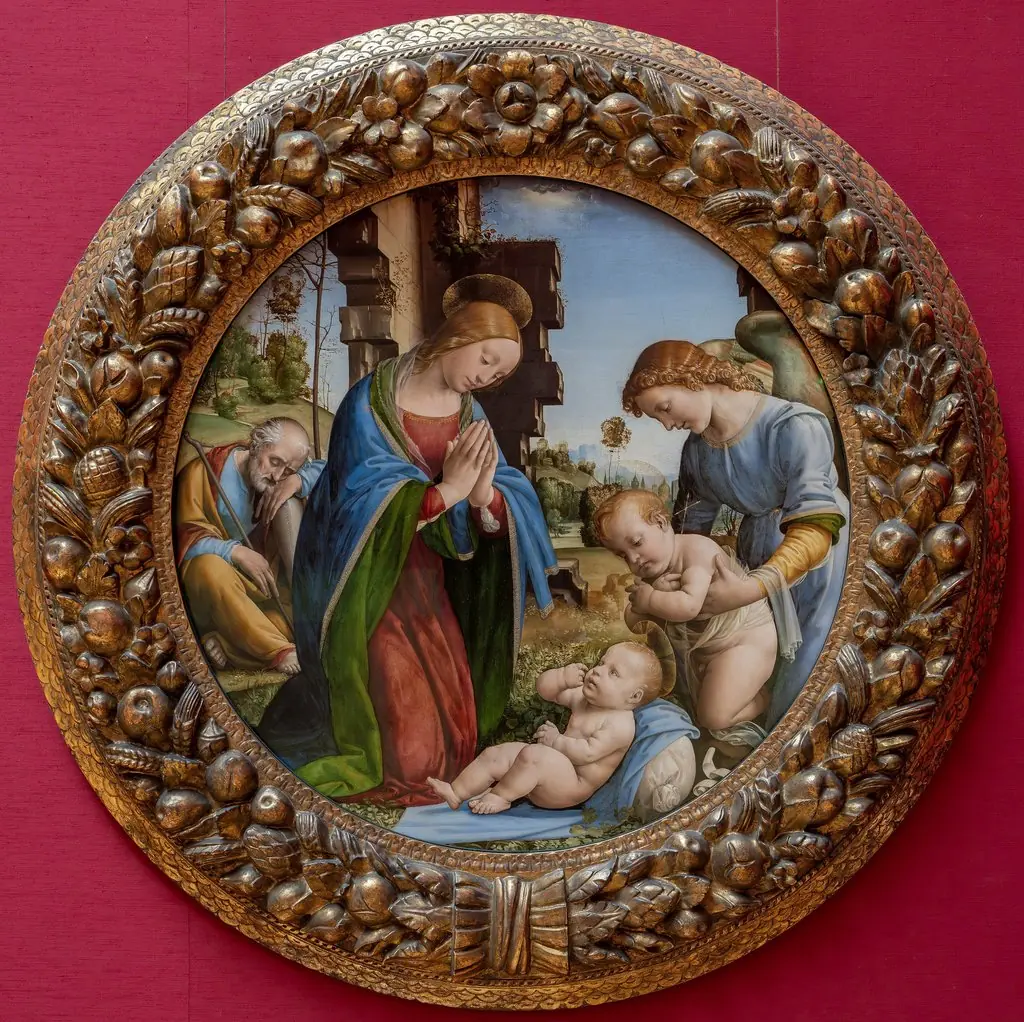 Adoration of the Child - Holy Family with child St. John
 Compared in the Renaissance Florence course