Artwork
Joseph accused by Potiphar's wife
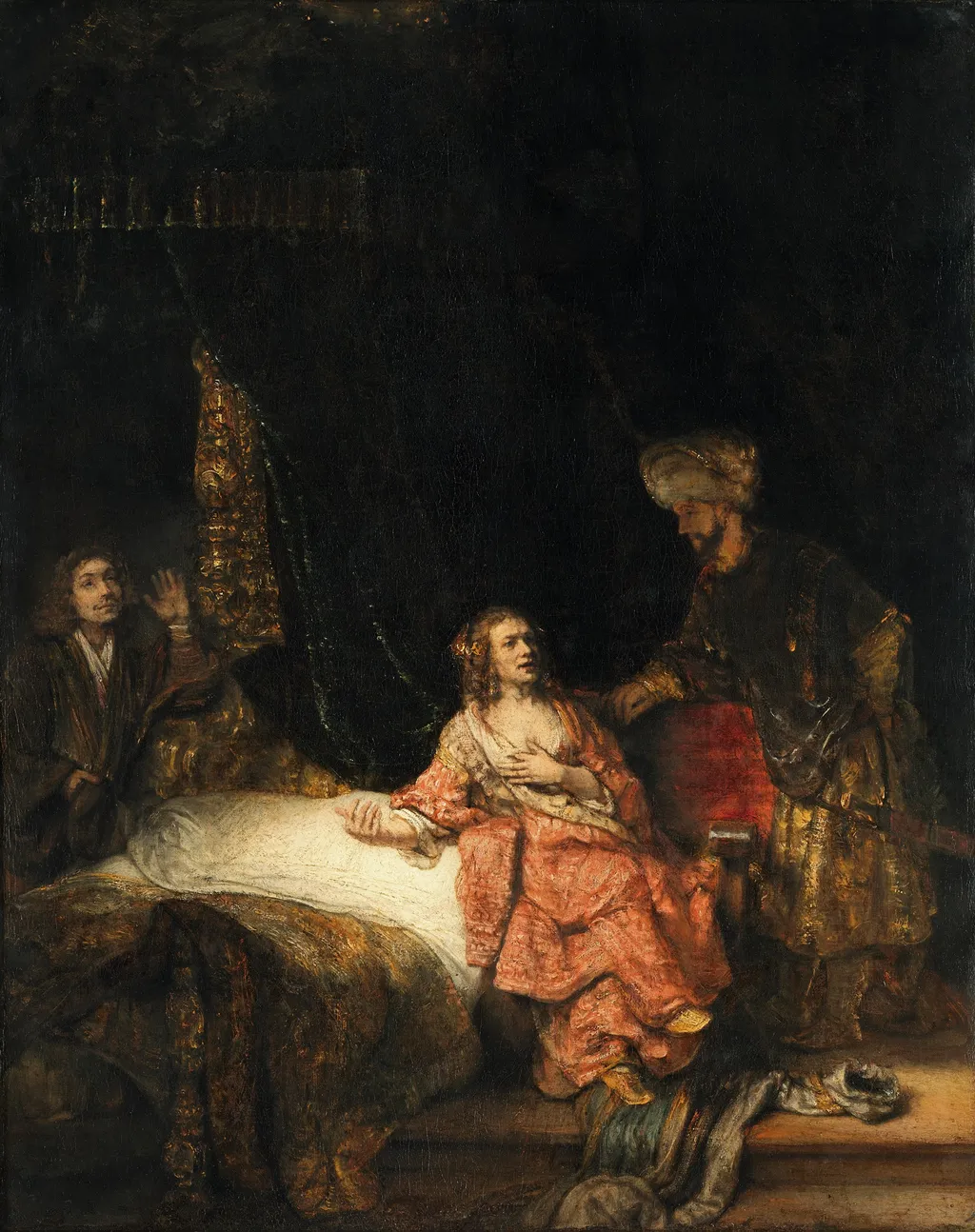
Joseph accused by Potiphar's wife is an oil painting by the Dutch Golden Age artist Rembrandt van Rijn. It dates from 1655 and is held in the collection of the Gemäldegalerie Berlin.
About this work
Subject & Meaning
Rembrandt's 1655 painting illustrates the biblical narrative of Joseph and Potiphar's wife, specifically drawing from Genesis 39.
Rembrandt's 1655 painting illustrates the biblical narrative of Joseph and Potiphar's wife, specifically drawing from Genesis 39. Unlike standard biblical accounts, the composition aligns with the version found in Flavius Josephus's 'Jewish Antiquities,' which includes Joseph's presence during the accusation and explicitly features the marital bed as a central element. This literary influence distinguishes the work from other seventeenth-century depictions of the same theme by artists such as Bartolomé Murillo or Willem van Mieris.
The visual execution emphasizes an opulent Oriental splendor through its specific color palette and scenic arrangement. By adhering to Josephus's account rather than the scripture alone, the artwork captures the dramatic moment of false accusation within a setting of lavish domestic interiority, highlighting the tension between the figures and the symbolic weight of the bed.
Technique & Style
Rembrandt employed oil paint on canvas to render Joseph accused by Potiphar's wife, a religious scene from the Dutch Golden Age. The work measures 113.5 cm in height and 90 cm in width, reflecting Rembrandt's characteristic handling of light and texture to emphasize the dramatic narrative. The composition draws on Flavius Josephus's Jewish Antiquities, incorporating the bed and heightened theatricality, while the use of rich colors and orientalizing details underscores the story's biblical gravitas. The painting's condition and formal qualities align with Rembrandt's mature technique, blending narrative clarity with emotive realism.
History & Provenance
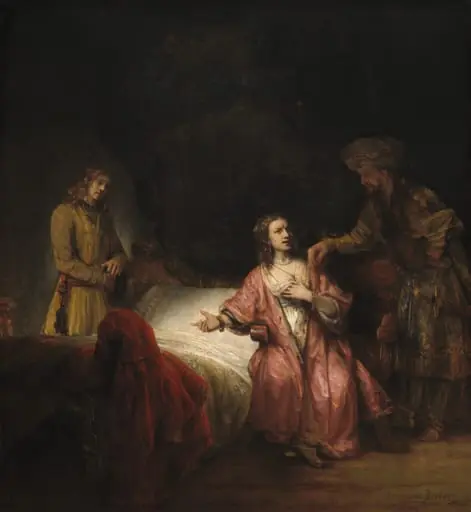
Rembrandt created the oil painting Joseph accused by Potiphar's wife in 1655. The work depicts the biblical narrative as interpreted through Flavius Josephus's Jewish Antiquities, a literary source that influenced the specific inclusion of the bed and the presence of Joseph during the accusation. A related version from the artist's workshop is held by the National Gallery of Art in Washington, D.C. The documented ownership chain begins with Sir John Neeld, 1st Baronet, who acquired the piece in 1883 through the Parisian art dealer Charles Sedelmeyer.
Prior to this transaction, the painting passed through the collections of Thomas Lawrence and John Peyto-Verney, 15th Baron Willoughby de Broke. The work is currently housed in the Gemäldegalerie Berlin.
The painting Joseph accused by Potiphar's wife by Rembrandt is held in the Gemäldegalerie Berlin. It entered the collection through the Charles Sedelmeyer collection and was acquired in 1883 from Sir John Neeld of Grittleton House, Wiltshire, via the dealer Charles Sedelmeyer. The work has been exhibited in Late Rembrandt and is part of the museum's permanent display.
Its dimensions are 113.5 cm in height and 90 cm in width, and it remains in the Gemäldegalerie Berlin.
The provenance traces back to Charles Sedelmeyer, Sir John Neeld, Thomas Lawrence, John Peyto-Verney, and the 15th Baron Willoughby de Broke before its acquisition by the museum.
Context
Rembrandt's 1655 depiction of Joseph accused by Potiphar's wife engages with a motif widespread in seventeenth-century art, yet distinguishes itself through specific literary adherence. Unlike the standard biblical narrative, the composition incorporates elements found in Flavius Josephus's 'Jewish Antiquities,' specifically the presence of Joseph during the accusation and the explicit inclusion of the marital bed. This adherence to the Josephus variant allows the artist to render an opulent Oriental splendor through his scenic arrangement and color palette.
The work exists within a broader artistic conversation that includes versions by Bartolomé Murillo and Willem van Mieris, while a related version from Rembrandt's workshop is held in Washington, D.C. Scholarly attention has focused on the painting's technical history, including radiographic analysis, and its role in illustrating Old Testament themes during the Dutch Golden Age.
Legacy
The painting Joseph accused by Potiphar's wife has shaped how later artists approached the biblical narrative of seduction and false accusation. 19th‑century scholars highlighted its moral drama, influencing academic studies of Dutch biblical art. 20th‑century exhibitions such as Late Rembrandt reinforced its role as a benchmark for narrative realism.
Contemporary scholarship continues to cite the work when discussing the reception of Josephus’ Jewish Antiquities in European visual culture.
Overview
Created in 1655, this oil painting by Rembrandt van Rijn portrays a moment from the Genesis narrative in which Joseph confronts the advances of his master’s wife. Executed during the height of the Dutch Golden Age, the work now belongs to the Gemäldegalerie in Berlin and exemplifies the artist’s engagement with biblical drama.
Own this work as a print
Artist & collection

Artist
Rembrandt Harmenszoon van Rijn, known mononymously as Rembrandt, was a Dutch Golden Age painter, printmaker, and draughtsman.





 The Death of Lucretia
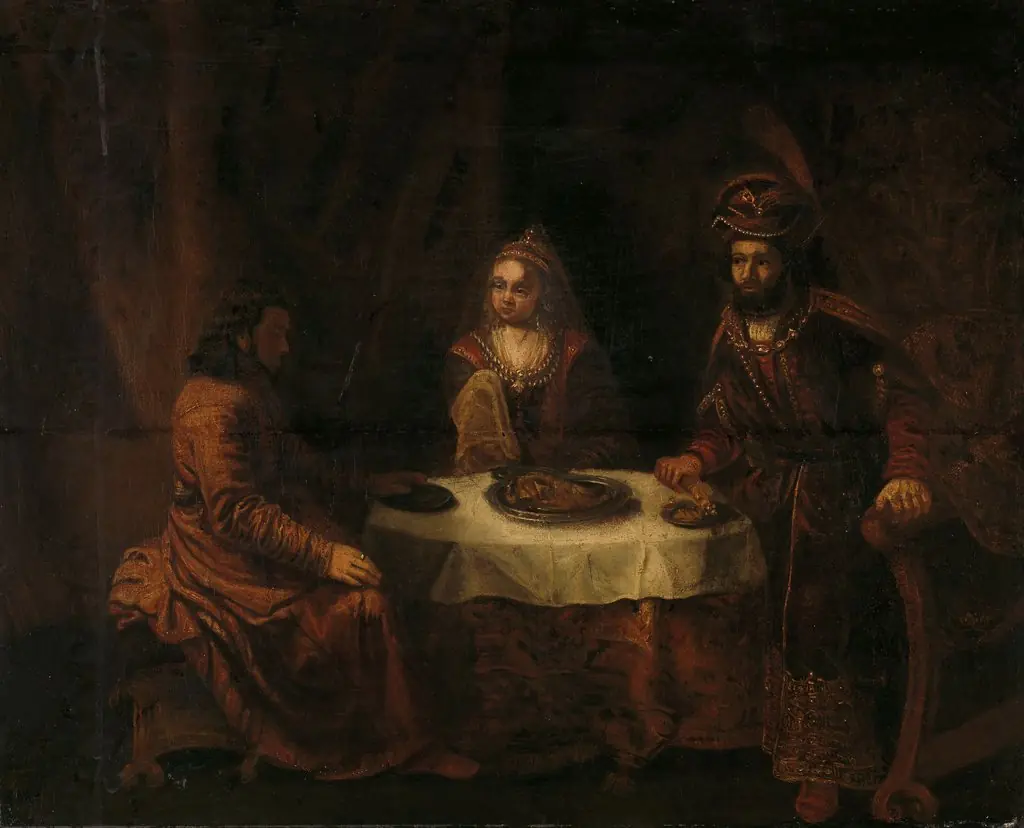 The wrath of Ahasuerus
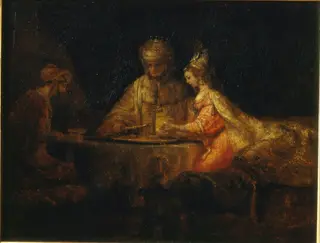 Ahasuerus and Haman at the Feast of Esther
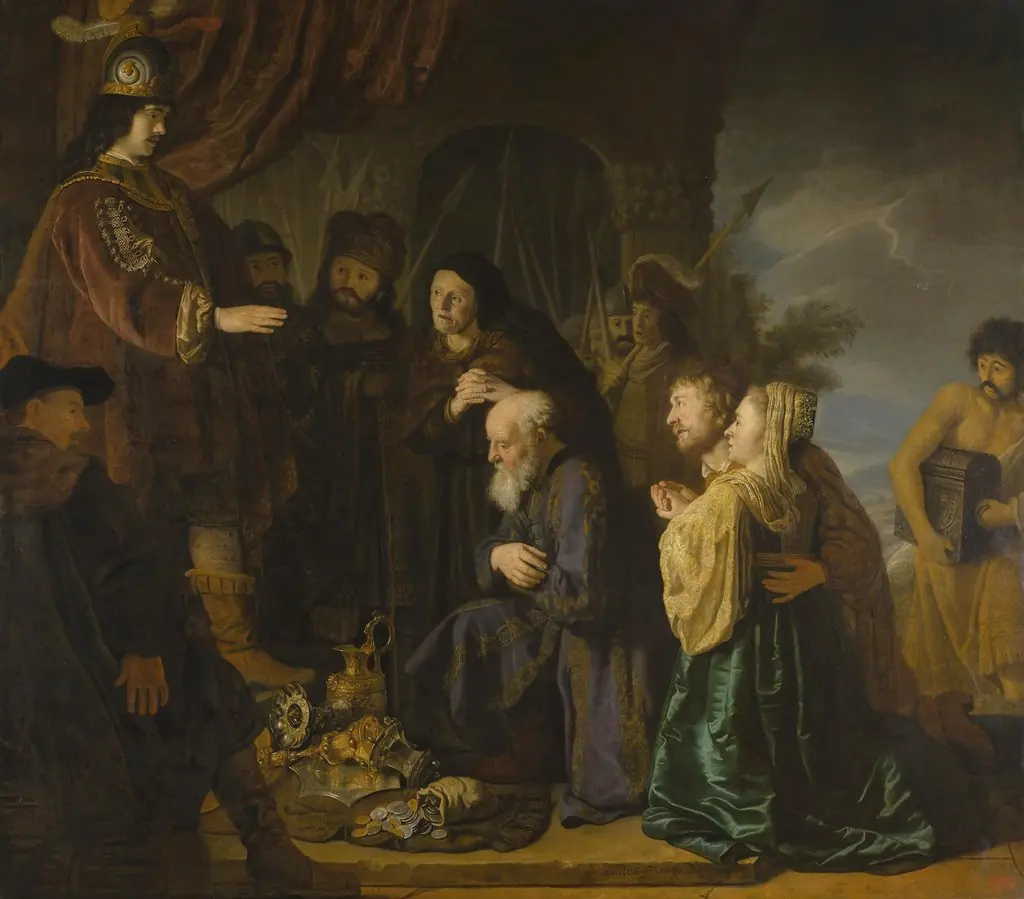 The Magnanimity of Scipio Africanus
 The Circumcision
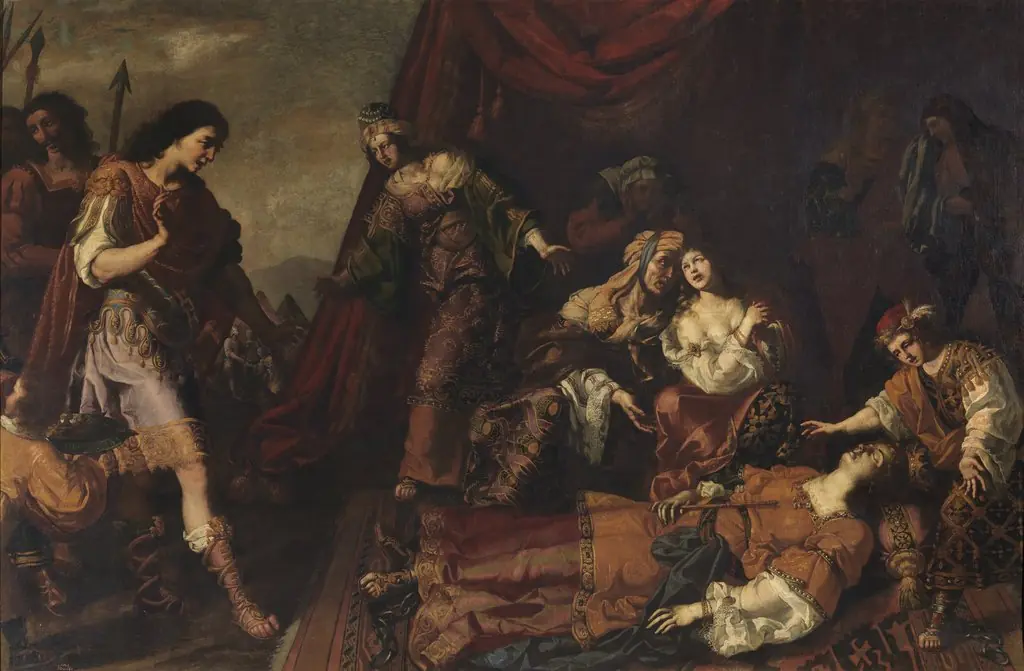 Masinissa Mourning Over the Death of Sophonisba (?)
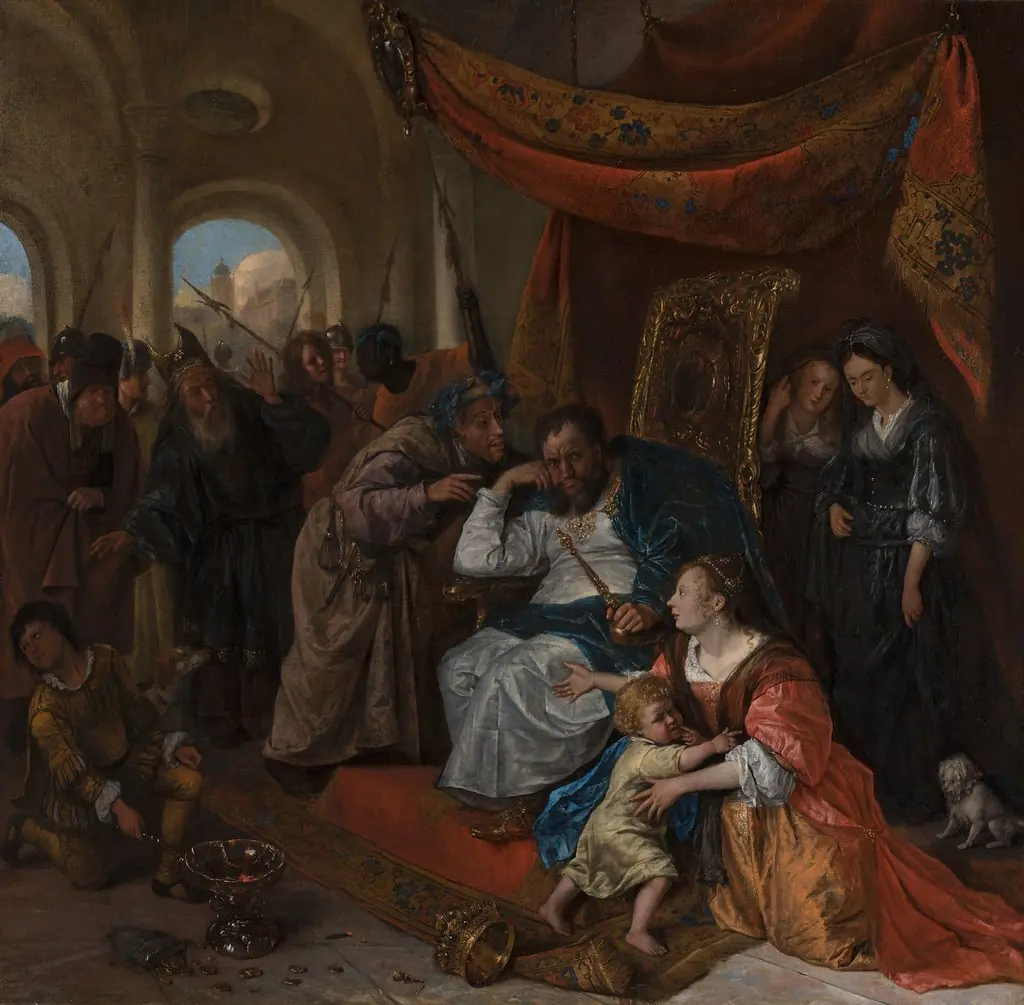 Moses and Pharaoh’s Crown
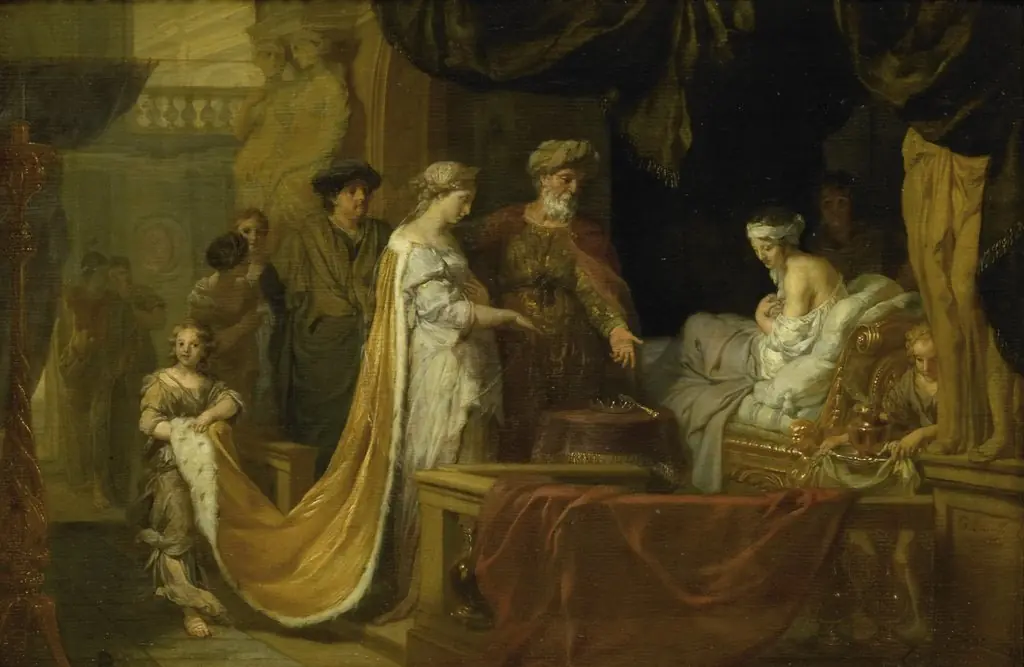 Antiochus and Stratonice
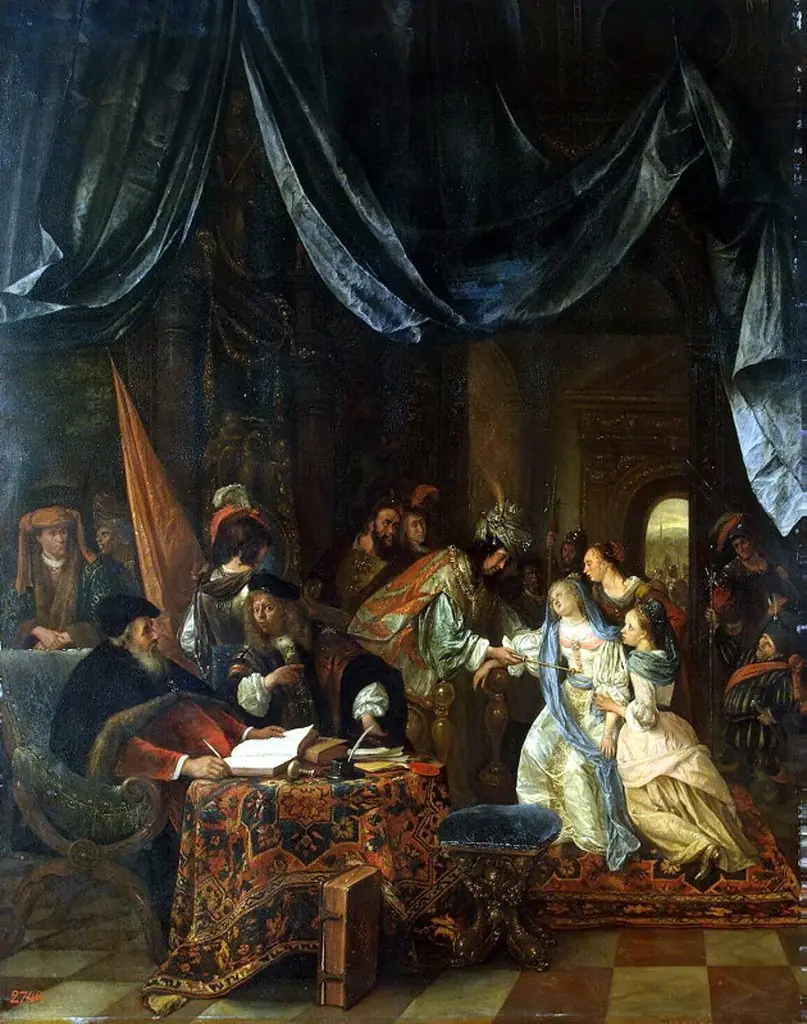 Esther before Ahasuerus
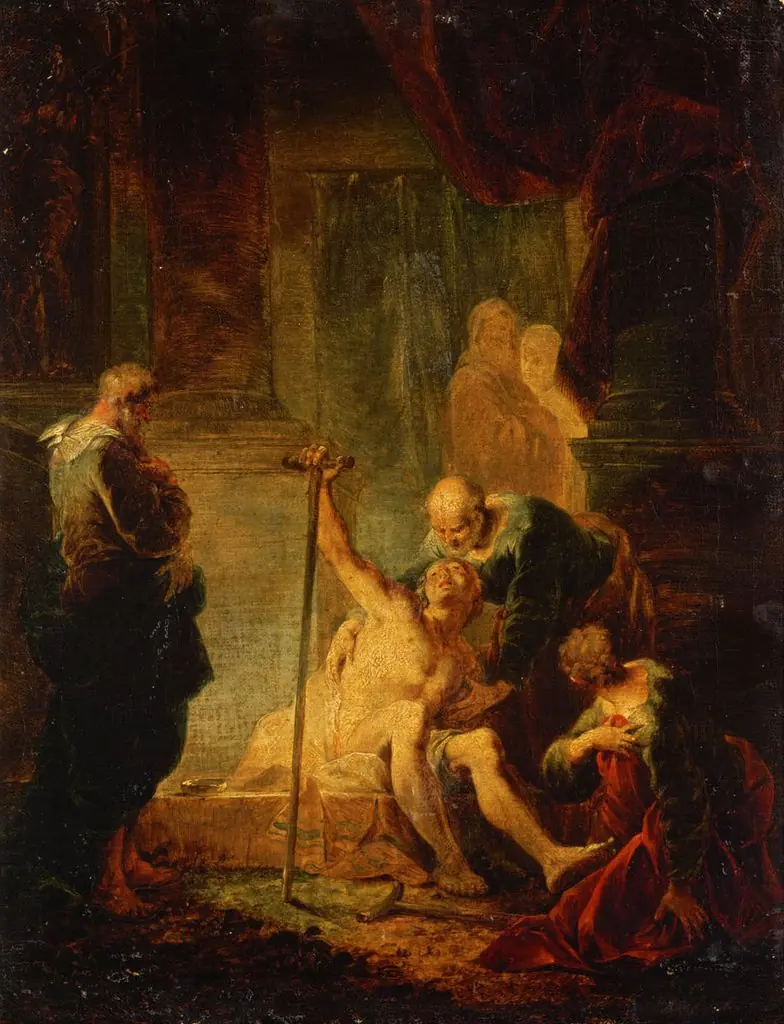 Petrus und Johannes heilen den Lahmgeborenen im Tempel