Artwork
The Circumcision
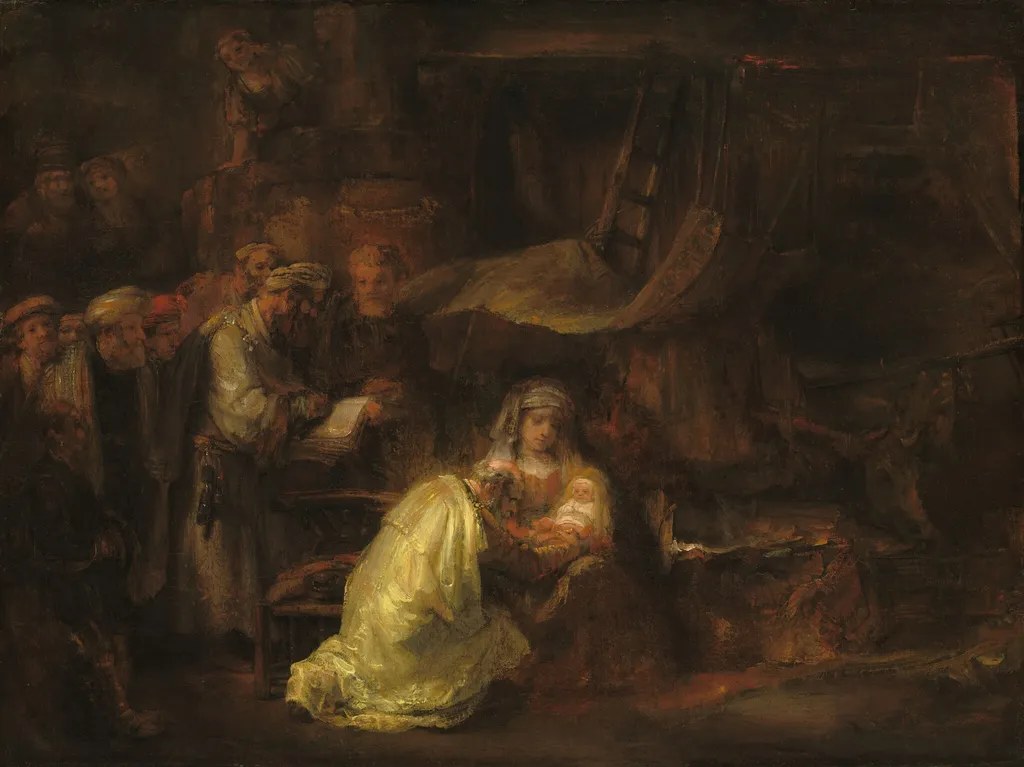
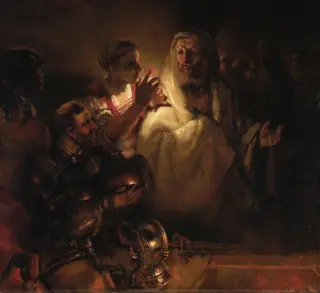
The Circumcision is an oil painting by the Baroque artist Rembrandt van Rijn. It dates from 1661 and is held in the collection of the National Gallery of Art.
- Inscription
- Inscribed:lower right: Rembrandt. f. 1661
About this work
Subject & Meaning
The painting's enduring identification with this single event underscores its role in conveying the theological significance of Jesus's submission to the Law.
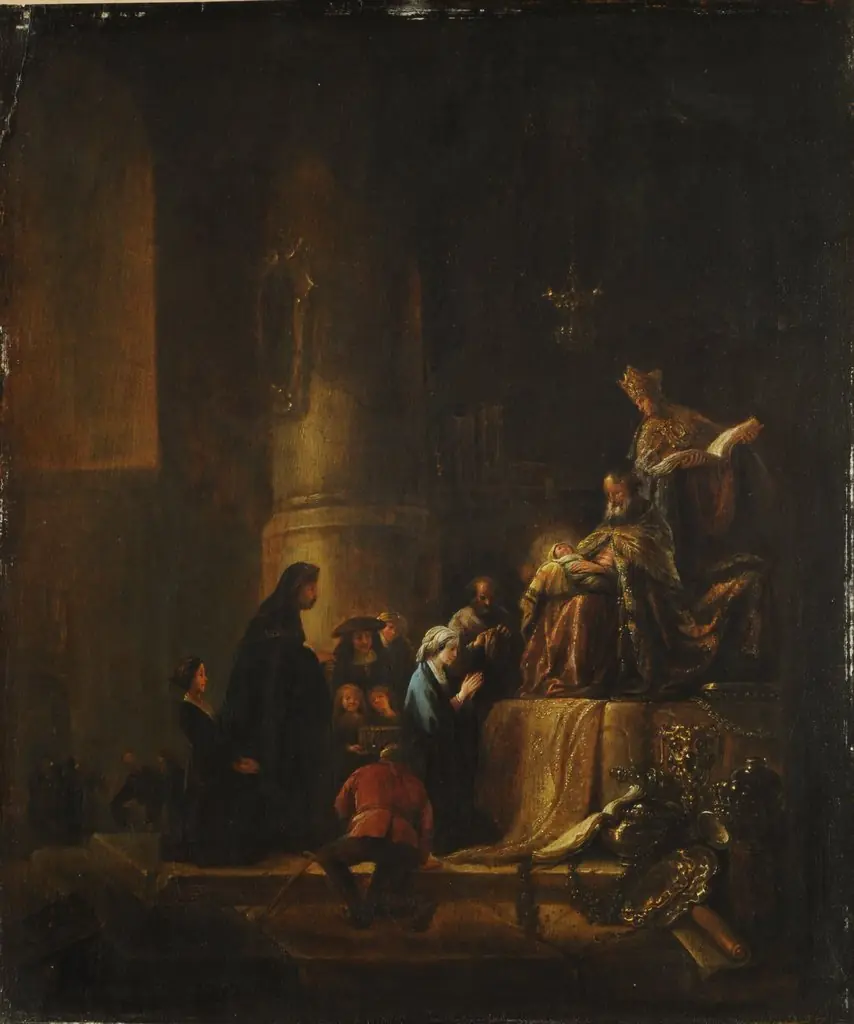
Rembrandt van Rijn's 1661 oil painting depicts the Circumcision of Jesus, a specific event from Christian religious tradition. As a work of religious art, the canvas focuses entirely on this biblical narrative as its main subject. The composition serves as a visual representation of the ritual circumcision performed on the infant Jesus eight days after his birth, adhering to Jewish law as described in the Gospel of Luke.
While the specific iconographic details of the figures surrounding the central action are not enumerated in the available records, the work's classification and title confirm its function as a devotional image illustrating this pivotal moment in the life of Christ. The painting's enduring identification with this single event underscores its role in conveying the theological significance of Jesus's submission to the Law.
Technique & Style
Executed in 1661, this religious work by Rembrandt van Rijn is an oil painting on canvas. The composition measures 56.5 centimeters in height and 75 centimeters in width. As a piece classified within the genre of religious art, it depicts the circumcision of Jesus.
The work currently resides in the collection of the National Gallery of Art in Washington, D.C., having entered the institution as a gift in 1942 following a lineage of ownership that included the Spencer family and Peter A.B. Widener.
History & Provenance
The Circumcision is dated to 1661 based on the contract between Rembrandt and Lodewijck van Ludick, which references an earlier sale of the painting to Van Ludick by the artist.
The work’s early ownership chain begins with Van Ludick in Amsterdam by 1662, followed by Ferdinand Bol by 1669. It later passed to Isaak van den Blooken, whose estate was sold in Amsterdam on 11 May 1707. Subsequent owners included the Duke of Ancaster, Andrew Hay, and John Spencer, 1st Earl Spencer, whose family retained it until inherited by John Poyntz, 5th Earl Spencer.
The painting was later acquired by Arthur J. Sulley & Co. and Peter A.B. Widener before entering the collection of the National Gallery of Art, Washington, as a gift in 1942.
The Circumcision has been held by the National Gallery of Art in Washington, D.C. since 1942, when it entered the collection as a gift from Joseph E. Widener of Elkins Park, Pennsylvania, through an inheritance from the Estate of Peter A. B. Widener. Prior to that, the painting had been at Lynnewood Hall in Elkins Park, acquired by Peter A. B. Widener by 1912 through the London dealer Arthur J. Sulley & Co. The work traces back through the earls Spencer at Althorp, Northamptonshire, having passed by inheritance from John Spencer, 1st Earl Spencer, to John Poyntz, 5th Earl Spencer.
The provenance is documented through earlier English owners, including Andrew Hay (sold at Cock, London, 14–15 February 1745, no. 47) and the Duke of Ancaster (sold March 1724, no. 18), with an even earlier appearance in the sale of Isaak van den Blooken (Jan Pietersz. Zomer, Amsterdam, 11 May 1707, no. 1). The painting's seventeenth-century history includes ownership by Lodewijck van Ludick in Amsterdam by 1662 and probable possession by Ferdinand Bol by 1669.
Legacy
The Circumcision has been part of the National Gallery of Art’s collection since a 1942 gift, reflecting its passage through European private collections and Anglo‑American ownership documented in archival sales records [1]. Its attribution to Rembrandt and religious subject matter have made it a reference point for studies of his late religious paintings and for scholarship on 17th‑century Dutch portraiture [1][2]. As a work displayed in a major public institution, it continues to influence curatorial narratives about the artist’s evolving treatment of biblical narratives, contributing to the broader reputation of the painting within art‑historical discourse [2]
Overview
Rembrandt van Rijn's oil painting, The Circumcision, created in 1661, presents a religious scene from the New Testament. This canvas depicts the ritual circumcision of the infant Jesus, a significant event in Christian tradition. The work exemplifies the artist's mature style, characterized by its profound emotional depth and masterful handling of light. It invites contemplation of a sacred moment, rendered with both solemnity and intimate detail.
Own this work as a print
Artist & collection

Artist
Rembrandt Harmenszoon van Rijn, known mononymously as Rembrandt, was a Dutch Golden Age painter, printmaker, and draughtsman.