Artwork
The wrath of Ahasuerus
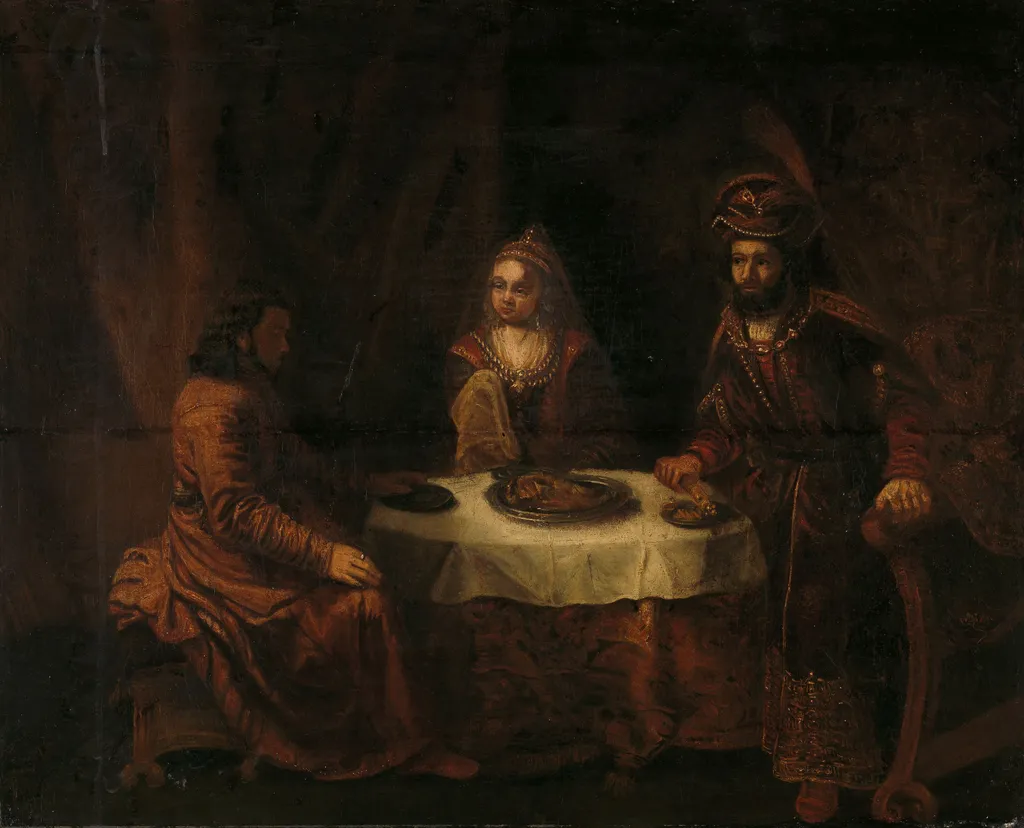
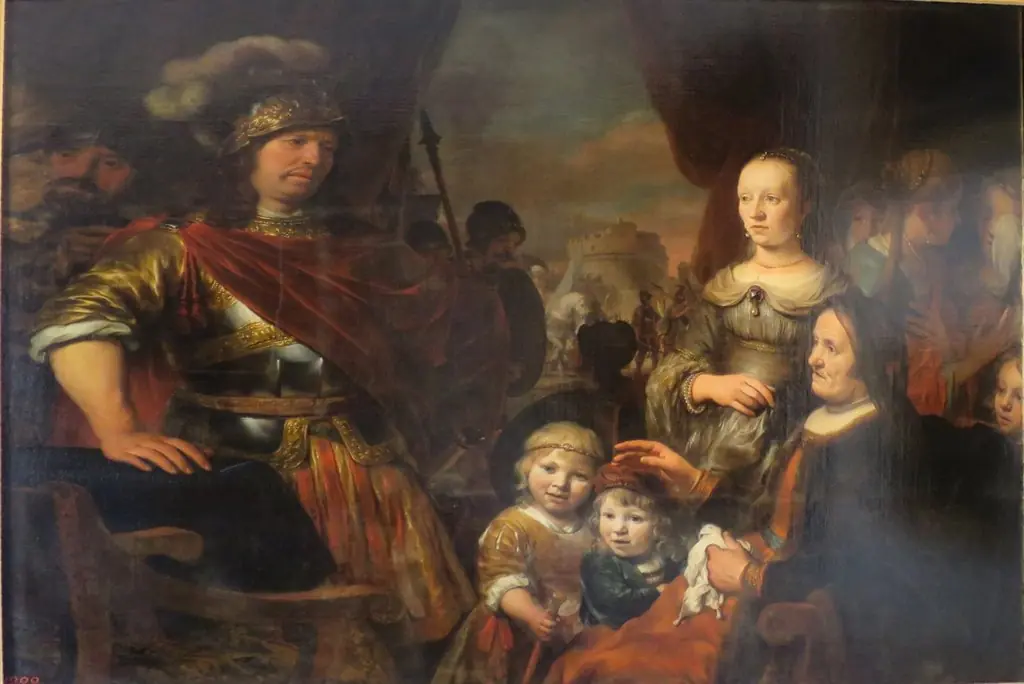
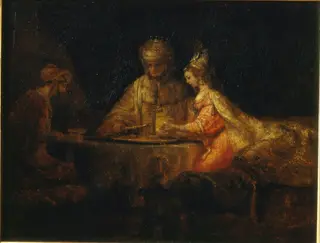
The wrath of Ahasuerus is an oil painting by the Dutch Golden Age artist Gerbrand van den Eeckhout. It is held in the collection of the Rijksmuseum.
About this work
Subject & Meaning
As a work of religious art, the piece utilizes these figures to represent the themes of divine justice and the peril of courtly intrigue inherent in the story.
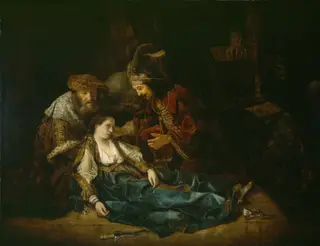
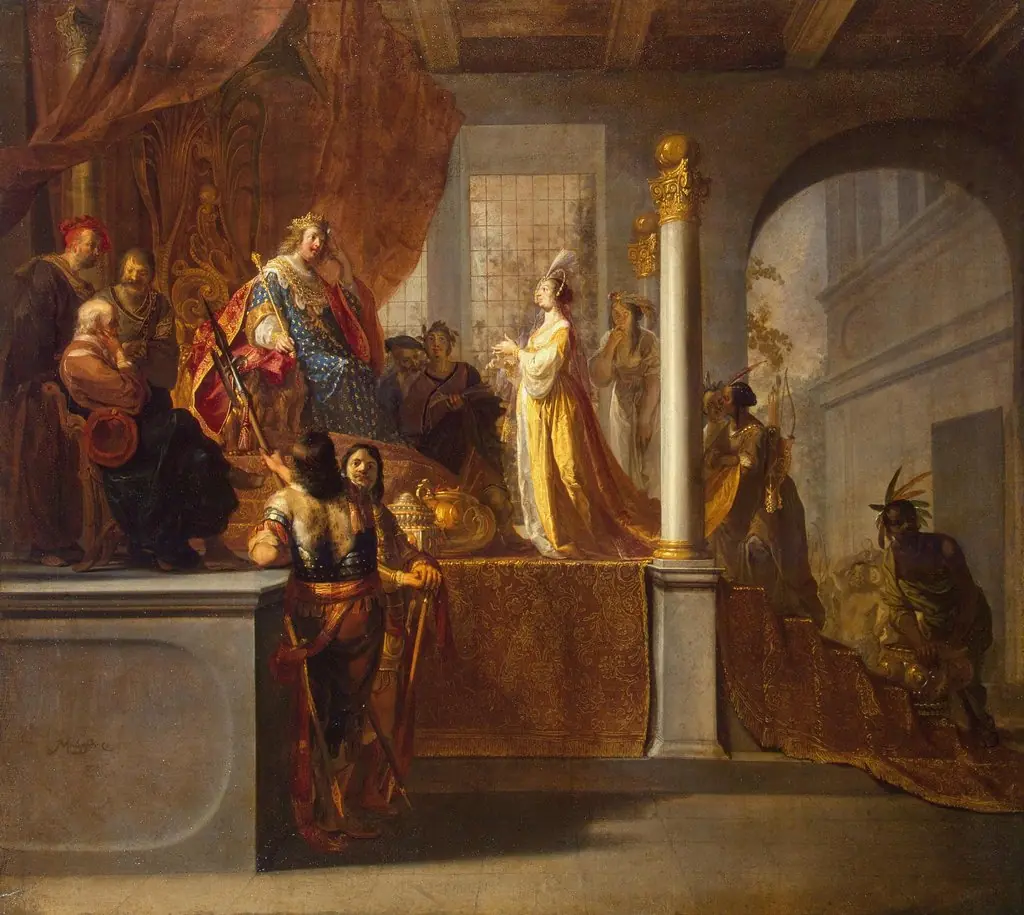
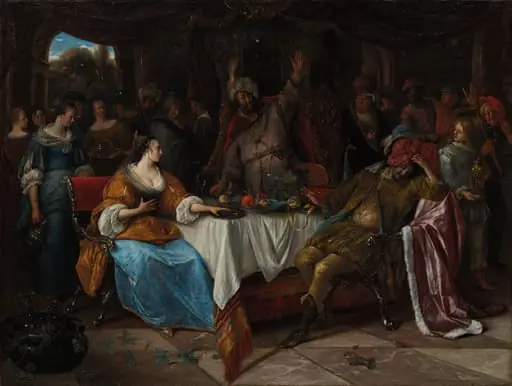
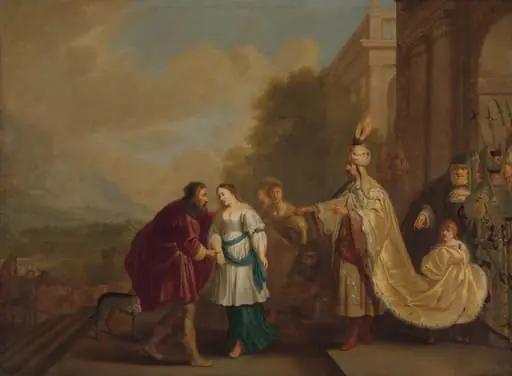
Gerbrand van den Eeckhout's 1682 oil painting illustrates a dramatic moment from the biblical Book of Esther, specifically depicting the wrath of King Ahasuerus. The composition features the king alongside Queen Esther and Haman, capturing the tension of the narrative where the monarch's fury is directed toward his advisor. As a work of religious art, the piece utilizes these figures to represent the themes of divine justice and the peril of courtly intrigue inherent in the story.
The iconography focuses on the interaction between these three central characters to convey the emotional intensity of the royal decree and the impending downfall of Haman.
Technique & Style
Executed in 1682, this religious painting by Gerbrand van den Eeckhout utilizes oil paint applied to a canvas support. The work measures 61 cm in height and 74 cm in width. As a piece of religious art, the composition depicts the biblical figures of Ahasuerus, Esther, and Haman within a narrative scene involving a man and a woman.
History & Provenance
The painting titled "The wrath of Ahasuerus" was executed by Gerbrand van den Eeckhout in 1682. It is an oil-on-canvas work measuring 61 cm by 74 cm and belongs to the religious genre, depicting figures from the Book of Esther. The artwork has been part of the Rijksmuseum collection in Amsterdam since its acquisition, remaining on display there.
The sources do not provide details on a prior ownership chain or any commissioning event, so only the creation date and the artist’s authorship are documented.
Gerbrand van den Eeckhout's 1682 oil painting, The Wrath of Ahasuerus, is held in the collection of the Rijksmuseum in Amsterdam. The work is executed on canvas and measures 61 cm in height by 74 cm in width. While the painting depicts the biblical figures Esther, Ahasuerus, and Haman, the provided sources do not list a specific inventory or accession number for the piece. Furthermore, no exhibition history is recorded in the available documentation for this artwork.
Overview
Gerbrand van den Eeckhout, a prominent artist of the Dutch Golden Age, completed The Wrath of Ahasuerus in 1692. This oil painting captures a dramatic moment from the biblical book of Esther, a popular subject during its time, showcasing the artist's skill in narrative composition. The artwork is currently held in the collection of the Rijksmuseum.
Context
Gerbrand van den Eeckhout was a notable figure of the Dutch Golden Age, recognized for his versatility as a painter, etcher, and poet. As a favored student of Rembrandt, he absorbed the master's influence while developing his own distinct style. His engagement with biblical narratives like The Wrath of Ahasuerus reflects the strong demand for religious subjects prevalent in 17th-century Dutch art.
Own this work as a print
Artist & collection
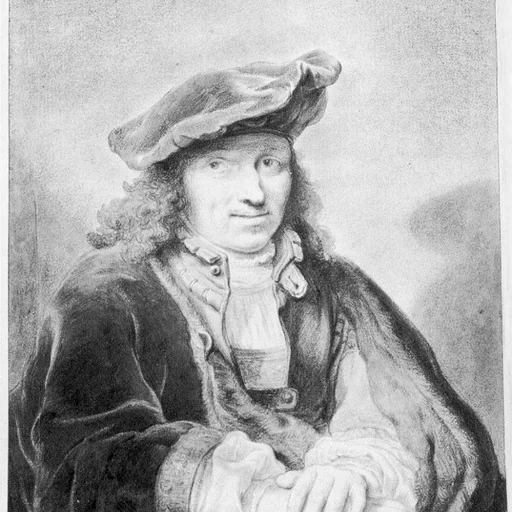
Artist
Gerbrand van den Eeckhout (19 August 1621 – 29 September 1674) was a Dutch Golden Age painter and a favourite student of Rembrandt. He was also an etcher, an amateur poet, a collector and an adviser on art.