Artwork
Trompe l'Oeil of an Etching by Ferdinand Bol
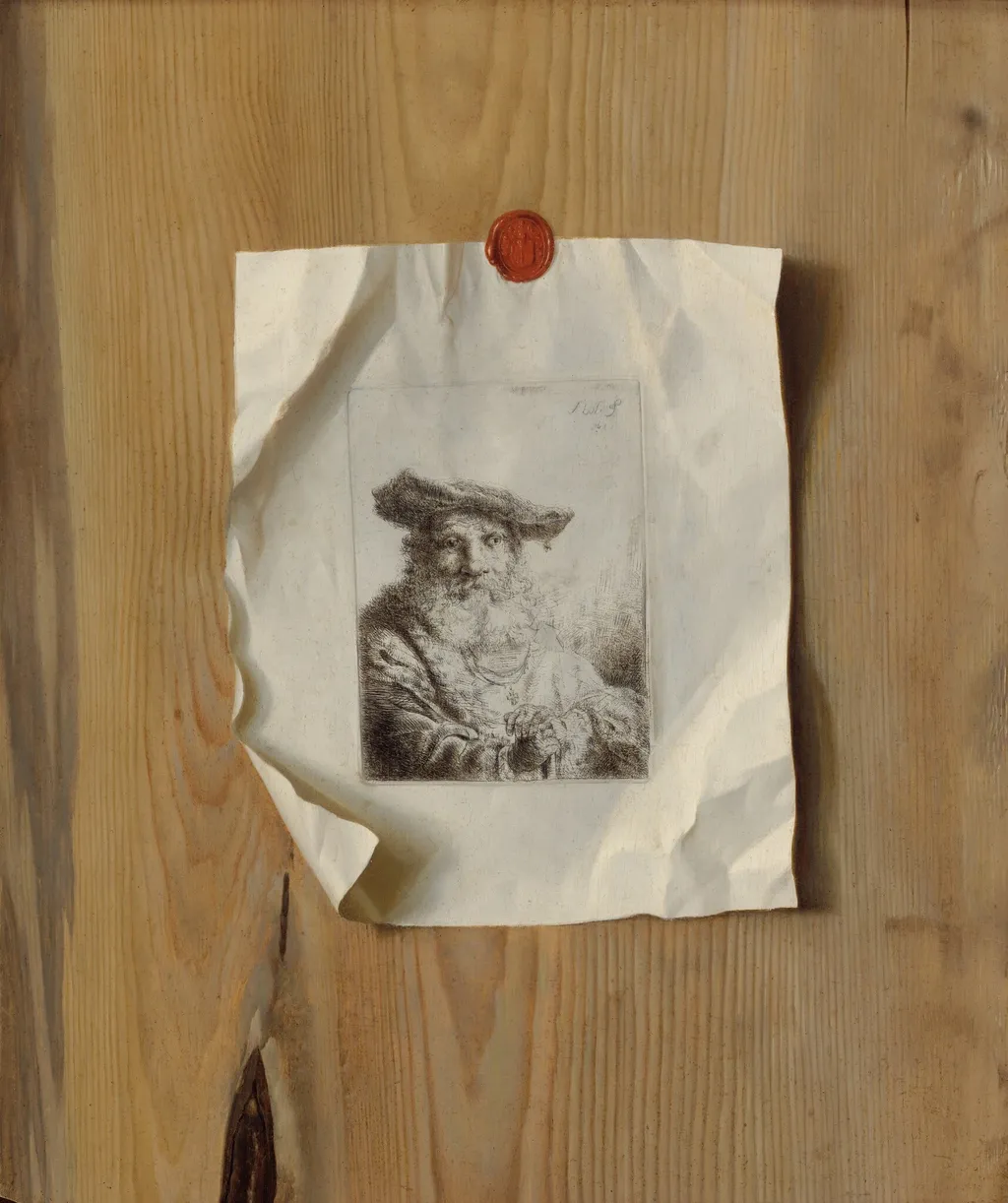
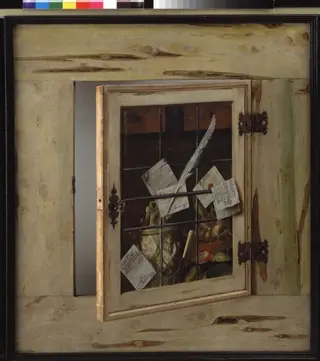
Trompe l'Oeil of an Etching by Ferdinand Bol is an oil painting. It is held in the collection of the National Gallery of Art. The work, executed in oil on panel, presents a painted illusion of a crumpled sheet of paper affixed to a wooden backing.
- Inscription
- Inscribed:upper right of the etching depicted in the painting: f. bol. f / 1642
About this work
Technique & Style
This stylistic approach relies on the precise handling of oil paint to mimic the flat, linear qualities of printmaking on a rigid panel surface.
Created in 1675, Trompe l'Oeil of an Etching by Ferdinand Bol is executed in oil paint on a panel support. The work measures 37.5 cm in height and 31.4 cm in width. As a trompe l'oeil composition, the painting employs the medium of oil to create a visual deception, simulating the appearance of an etching rather than a traditional painted scene.
This stylistic approach relies on the precise handling of oil paint to mimic the flat, linear qualities of printmaking on a rigid panel surface.
History & Provenance
Created in 1675, this oil-on-panel work was historically held by Dr. Friedrich Tröster in Vienna until his death in 1956. Ownership passed via inheritance to his daughter, Dr. Sieglinde Kretschmer, who retained the piece in Vienna. In 2015, the painting was sold to Galerie Nissl, located in Eschen, Liechtenstein.
The National Gallery of Art in Washington, D.C., subsequently acquired the work on February 19, 2016, where it remains in the collection.
The work is held in the collection of the National Gallery of Art in Washington, D.C. It was acquired by the museum on 19 February 2016, following its purchase from Galerie Nissl in Eschen, Liechtenstein. Prior to this acquisition, the painting belonged to Dr. Friedrich Tröster of Vienna until his death in 1956, after which it was inherited by his daughter, Dr. Sieglinde Kretschmer, also of Vienna. The provided sources do not list specific inventory or accession numbers nor do they document any exhibition history for this piece.
Overview
The work, executed in oil on panel, presents a painted illusion of a crumpled sheet of paper affixed to a wooden backing. The paper bears a monochrome image of a bearded, hat‑wearing figure, rendered as if it were an etched print. A vivid red wax seal secures the paper, enhancing the trompe‑lé effect.
Subject & Meaning
The central motif is the simulated etching of a male portrait, suggesting a commentary on the relationship between original artworks and their reproductions. By depicting a printed image within a painted context, the piece invites viewers to consider the boundaries between reality and representation.
Context
During the Baroque period, trompe l'oeil paintings enjoyed popularity for their capacity to astonish viewers through hyperrealistic detail. Bol’s rendition participates in this tradition, echoing contemporary experiments with perspective and the interplay of painted and printed media.
Artist & collection

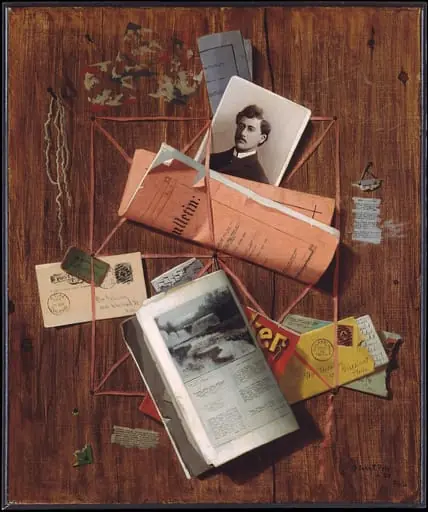
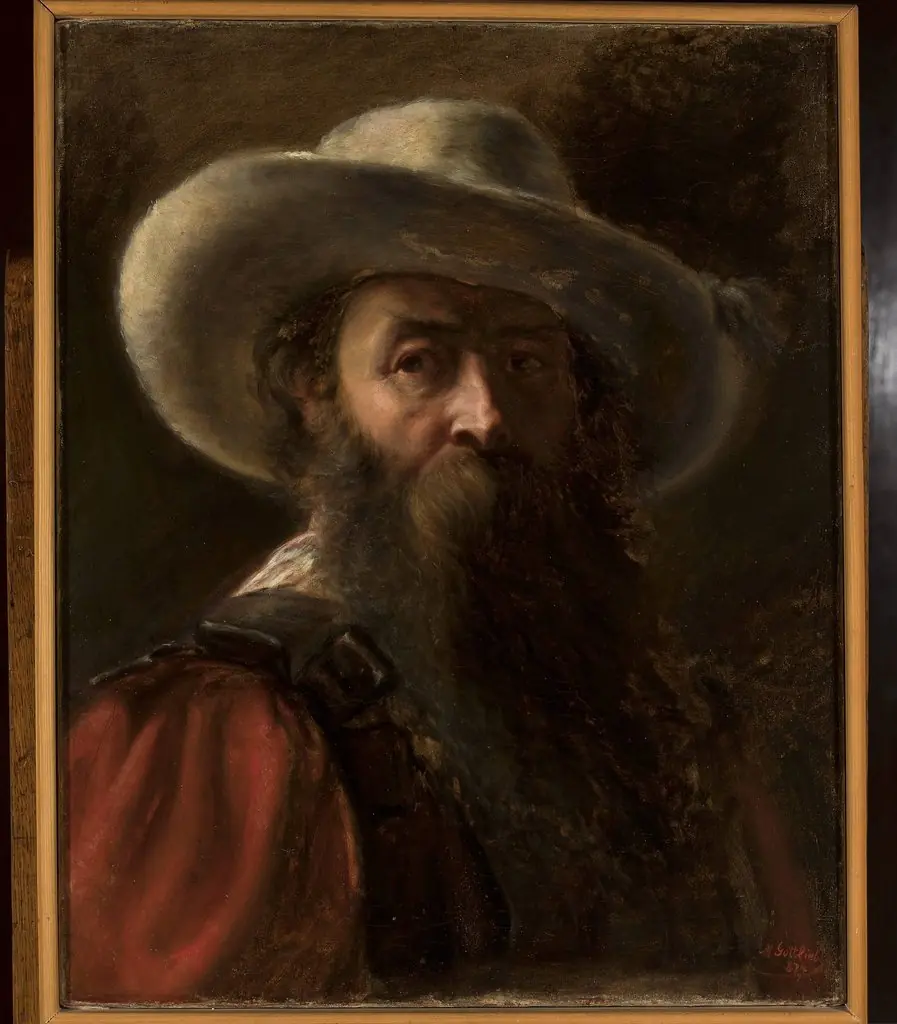
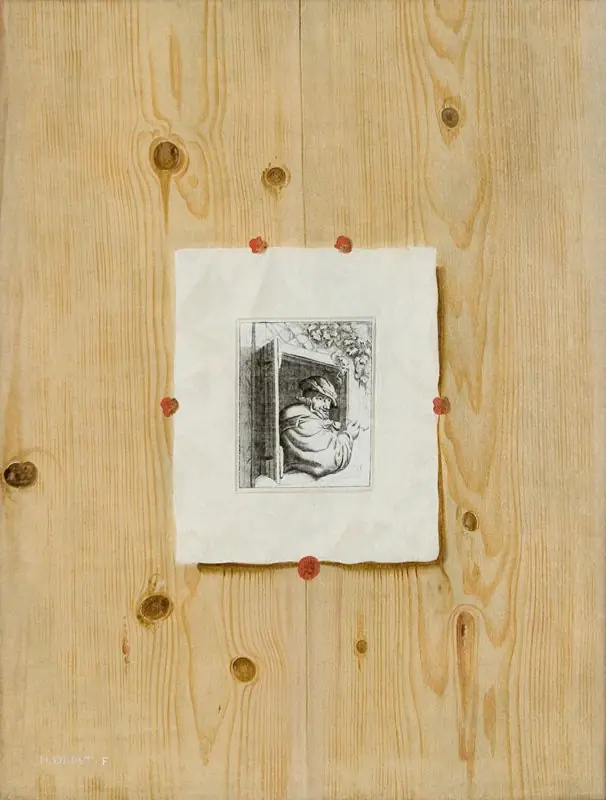
- Trompe l'Oeil. Board with an Etching of a Man with a Pipe
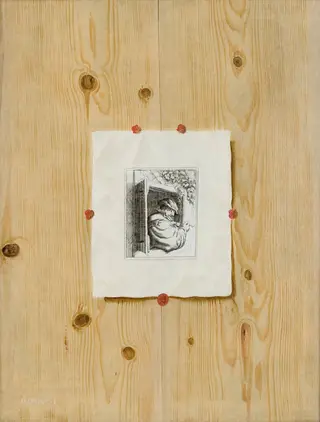 Trompe l'Oeil. Board with an Etching of a Man with a Pipe
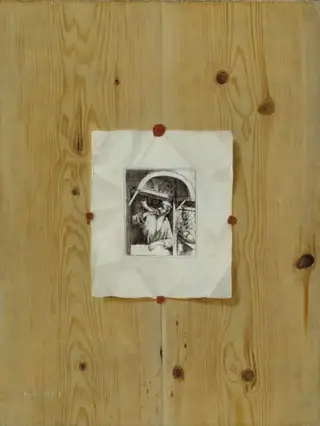 Trompe l'Oeil. Board with an Etching of a Baker Sounding his Horn
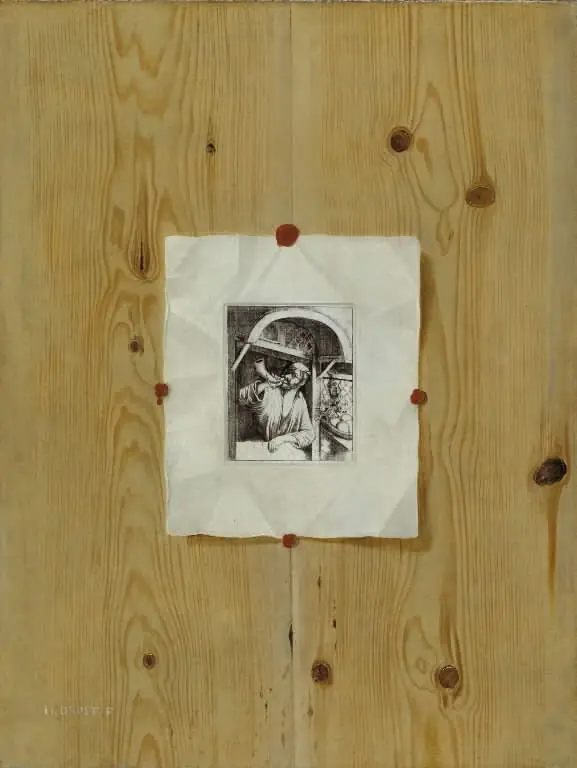 Trompe l'Oeil. Board with an Etching of a Baker Sounding his Horn
 Trompe l'Oeil. A Cabinet of Curiosities with an Ivory Tankard