Artwork
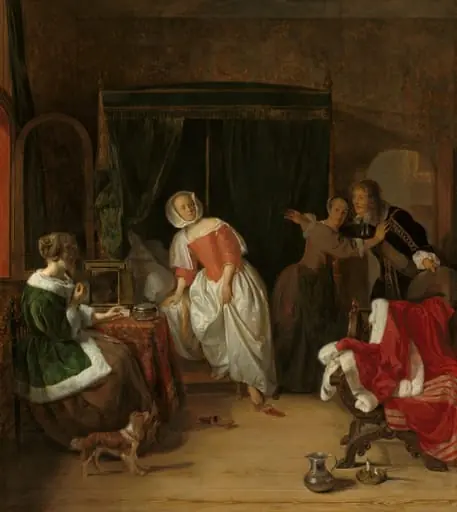
Lady Undressing for a Bath
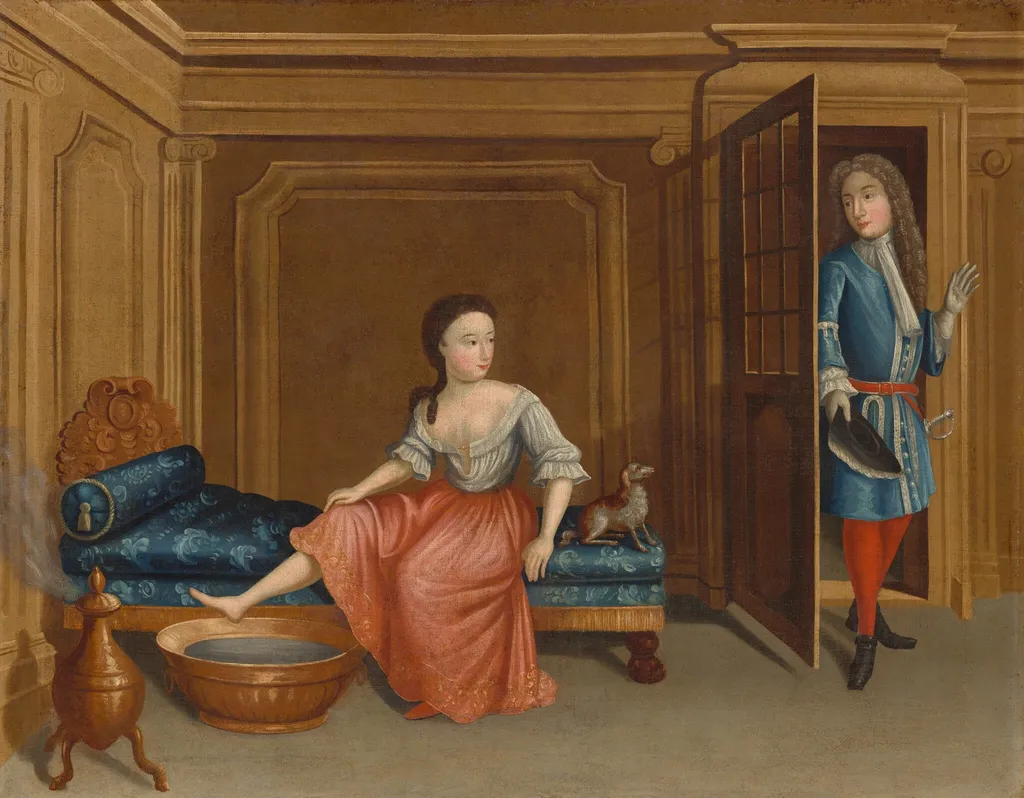
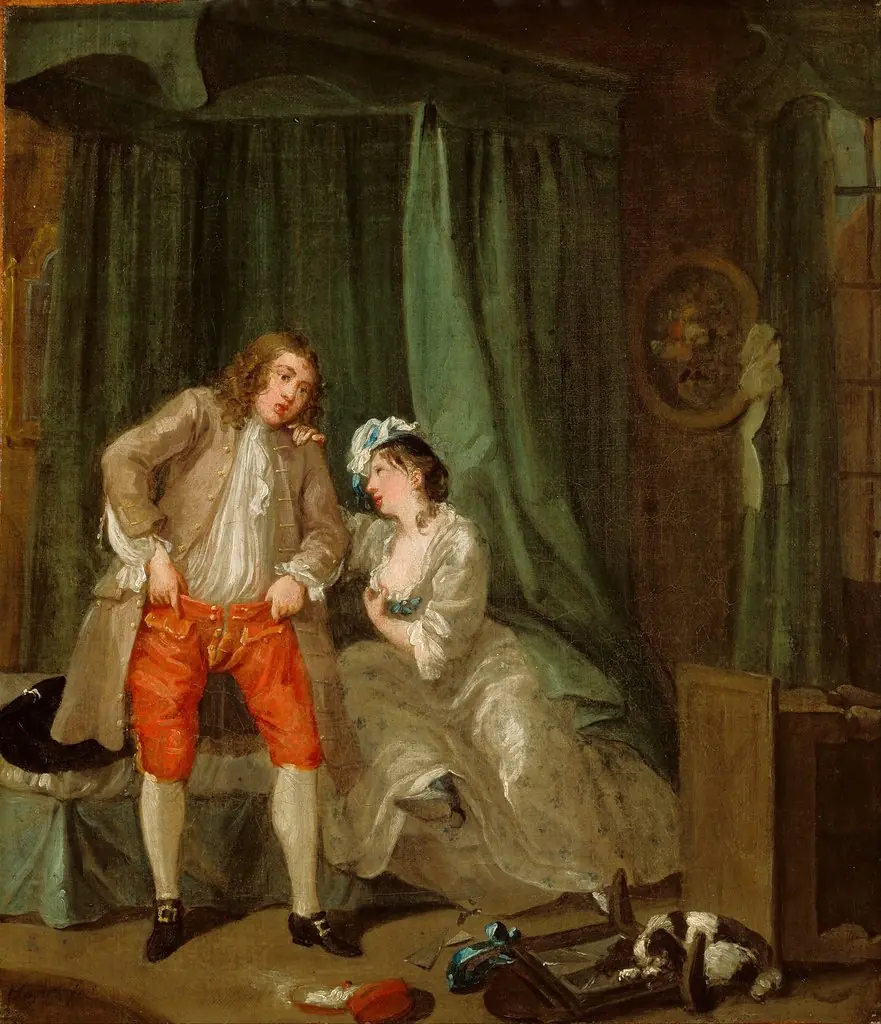
Lady Undressing for a Bath is an oil painting by the Baroque artist Gerardus Duyckinck I. It dates from 1735 and is held in the collection of the National Gallery of Art. Created around 1735, this oil on canvas depicts an intimate domestic scene.
About this work
Technique & Style
The work is executed in oil on canvas, measuring 84.2 cm by 107.6 cm. It depicts a figure in the act of removing clothing for a bath, rendered with a restrained composition and naturalistic modeling characteristic of 18th-century portraiture. The handling of light emphasizes the contours of the body while maintaining a modest presentation consistent with the genre of the nude.
History & Provenance
It descended to his son John Sanders II [1757–1834], and then to his daughter Mary Elizabeth Sanders, who married Harold Wilson of Germantown, New York.
Lady Undressing for a Bath is an oil on canvas painted by Gerardus Duyckinck in 1735. The work's early history is associated with Clermont, New York, where it is thought to have passed through the family of John Sanders [1714–1782] of Scotia, New York. It descended to his son John Sanders II [1757–1834], and then to his daughter Mary Elizabeth Sanders, who married Harold Wilson of Germantown, New York.
The painting passed to their daughters Anne and Jane Wilson, who sold it to Thurston Thacher of Hyde Park, New York. Thacher sold the painting in 1952 to Edgar William and Bernice Chrysler Garbisch, who gifted it to the National Gallery of Art in 1956.
The painting is held in the collection of the National Gallery of Art in Washington, D.C., accessioned as a gift from the Garbisches in 1956. No specific inventory or accession number is provided in the available records, nor is an exhibition history documented in the sources.
Overview
Created around 1735, this oil on canvas depicts an intimate domestic scene. A woman, partially disrobed, sits on a blue chaise longue while lowering her foot into a copper foot bath. A man in a blue coat stands in the doorway, hat in hand, observing the moment. A small dog rests beside the woman, and the interior is lined with wooden paneling.
Subject & Meaning
The composition captures a private ritual of preparation for bathing, emphasizing the contrast between the woman's delicate, white‑and‑pink garments and the surrounding furnishings. The presence of the male figure, poised at the threshold, introduces a narrative tension, suggesting a moment of voyeurism or a courteous assistance, while the dog adds a domestic, everyday touch to the scene.
Context
The painting reflects the Baroque fascination with everyday luxury and the portrayal of intimate, genre‑type moments. Domestic interiors, elaborate furnishings, and the inclusion of pets were common motifs that signaled both wealth and the private lives of the bourgeoisie during the early eighteenth century.
Own this work as a print
Artist & collection