Artwork
Portrait of Robert Muys and his Wife Maria Nozeman
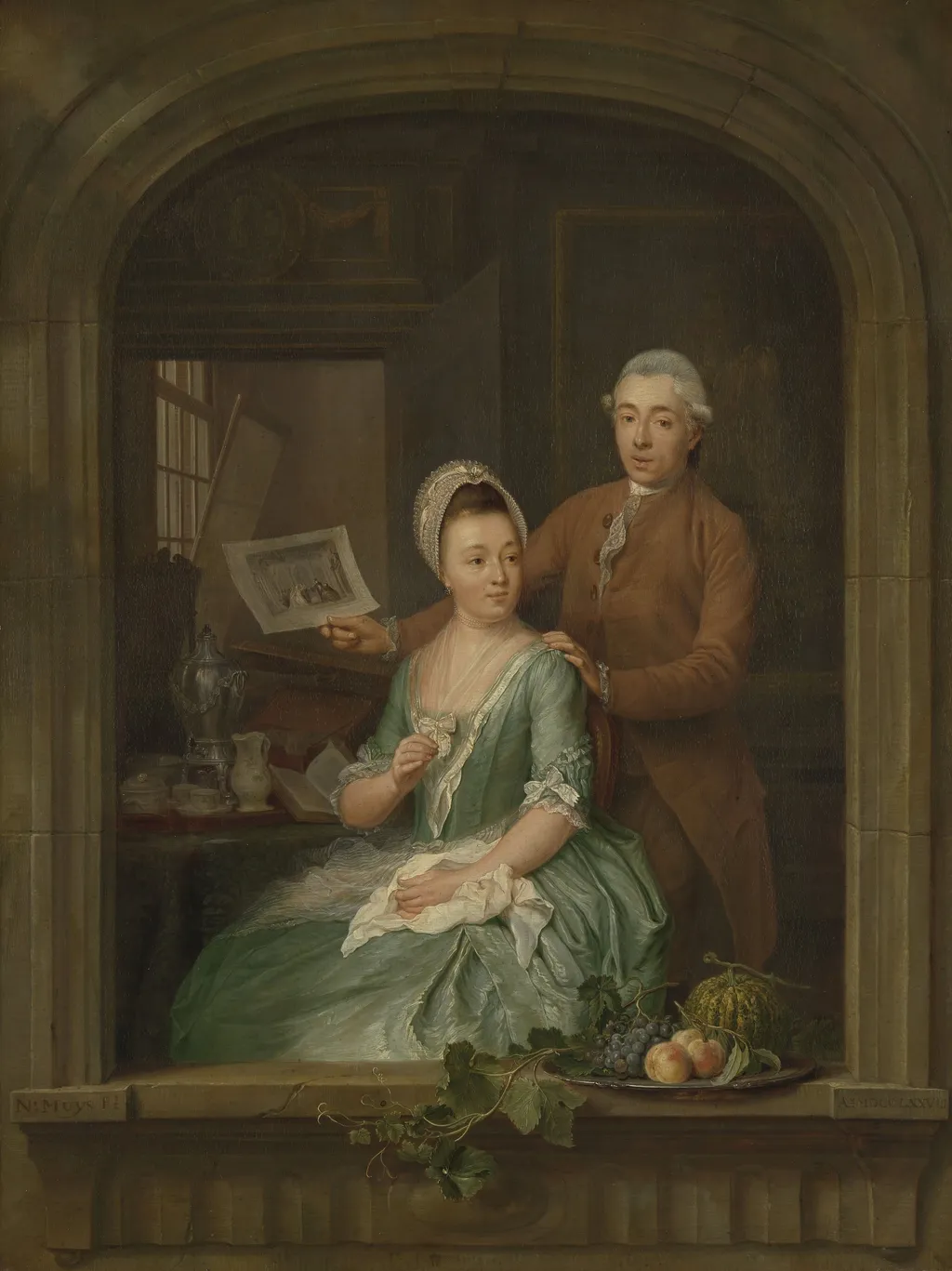
Portrait of Robert Muys and his Wife Maria Nozeman is an oil painting by Nicolaes Muys. It dates from 1790 and is held in the collection of the Rijksmuseum.
About this work
Subject & Meaning
Their joined hands suggest unity and marital partnership, while fine clothing and the interior space signal their affluent status in 18th‑century Dutch society.
The painting shows Robbert Muys and his wife Maria Nozeman, a married couple portrayed together in a domestic setting. Their joined hands suggest unity and marital partnership, while fine clothing and the interior space signal their affluent status in 18th‑century Dutch society. These visual cues convey themes of conjugal harmony and social standing.
The work was created by Nicolaes Muys in 1778 using oil on panel, measuring 62 cm by 47 cm. It is housed in the Rijksmuseum collection.
The composition emphasizes familial connection and reflects contemporary values of marriage as a public, economically reinforced bond.
Technique & Style
The work is an oil painting executed on panel, a support typical of Dutch portraiture of the period. According to the catalogue record, the medium is classified simply as oil paint, and the panel support is confirmed in the linked structured data.
The painted surface measures 62 cm in height by 47 cm in width, giving a vertical, single-panel format suited to a paired, half-length or three-quarter-length double portrait. The classification is recorded as a painting within the portrait genre, depicting the two sitters named in the title.
No further technical information regarding underdrawing, paint handling, layering, surface condition, or stylistic characterization is provided in the available sources.
History & Provenance
The portrait was commissioned by the subjects themselves and painted in 1778 by Nicolaes Muys. It entered the collection of the Rijksmuseum in Amsterdam and has remained in the museum's holdings since its acquisition, as recorded in the work’s inception date of 1 January 1778 and its physical dimensions of 62 centimeters by 47 centimeters. The painting is classified as an oil on panel portrait depicting Robbert Muys and his wife Maria Nozeman.
The Portrait of Robert Muys and his Wife Maria Nozeman is housed in the Rijksmuseum in Amsterdam. It bears the inventory number SK-A-1457. The work was first exhibited publicly at the Rijksmuseum in 1885 as part of the museum’s inaugural public display of its 19th-century acquisitions.
It has since been featured in several retrospective exhibitions of Dutch portraiture, including a 1950s survey of 17th- and 18th-century Dutch painting at the museum and a 2018 exhibition titled Dutch Portraits: The Age of Rembrandt.
Context
The 1778 double portrait by Nicolaes Muys depicts merchant Robert Muys alongside his wife Maria Nozeman, reflecting Enlightenment-era portraiture's emphasis on familial respectability and mercantile status in Amsterdam's elite circles. Stylistically, it demonstrates Muys' transition from Rembrandt's chiaroscuro toward Neoclassical clarity, positioning the work at a pivotal moment in Dutch portraiture where technical precision merged with emerging academic conventions. Current scholarship emphasizes its significance as a rare surviving record of 18th-century bourgeois identity, though detailed analysis remains limited by the painting's private ownership history.
The attribution to Nicolaes Muys has been consistently documented in museum records and academic publications, with the Rijksmuseum's cataloguing confirming its provenance and condition through systematic conservation assessments.
Overview
Created in 1790, this oil painting by Nicolaes Muys presents a married couple seated within an intimate interior. The work is part of the Rijksmuseum’s collection and measures the domestic setting with a modest composition that draws attention to the figures and the objects surrounding them.
Own this work as a print
Artist & collection

- Presumed Portrait of the Duc de Choiseul and Two Companions
 Conversation Piece (Portrait of Sir Andrew Fountaine with Other Men and Women)
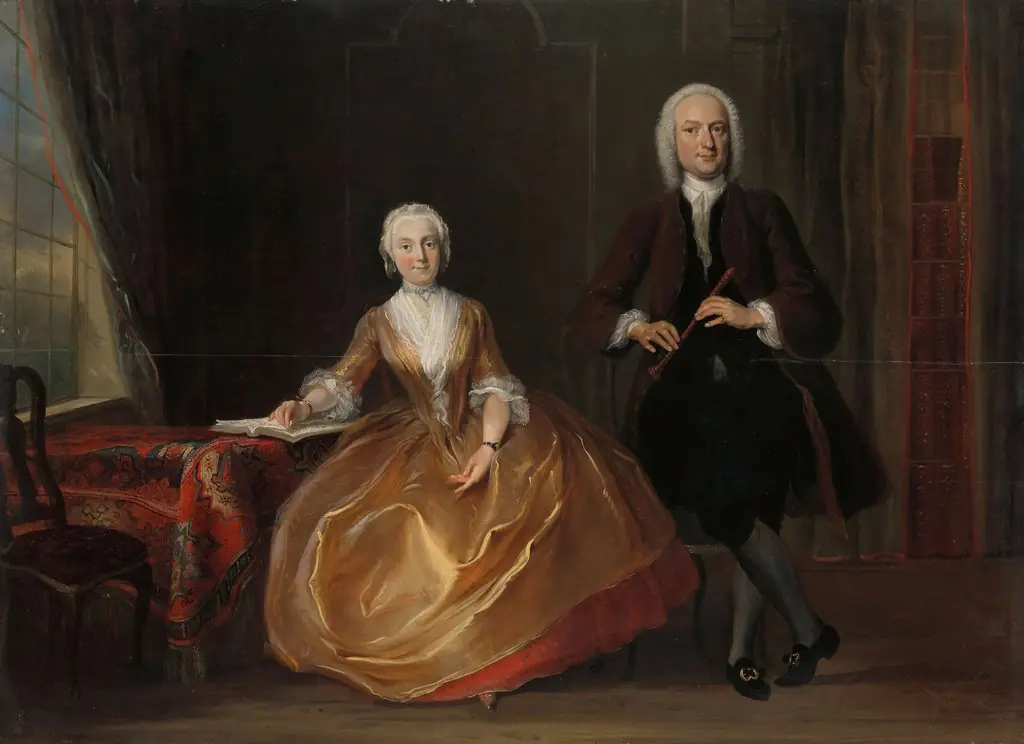 A Couple Making Music
 Afternoon Tea
 The Indiscreet Gentleman
 Les offres seduisantes
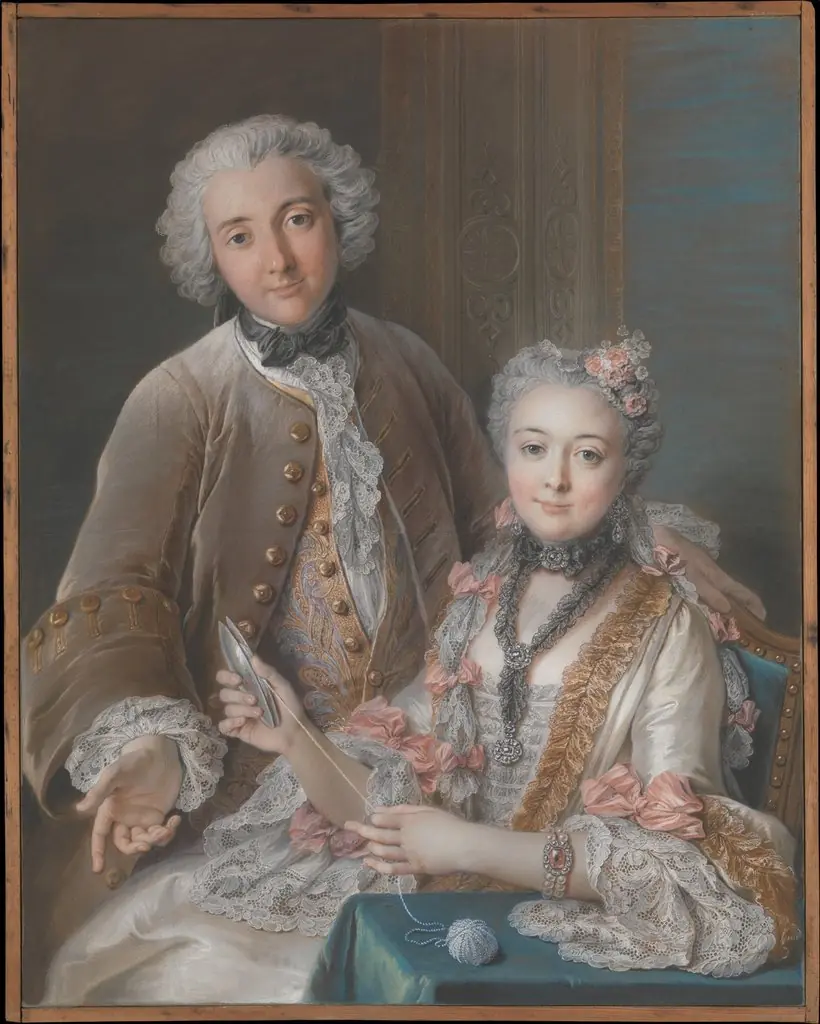 François de Jullienne (1722–1754) and Marie Elisabeth de Jullienne (Marie Elisabeth de Séré de Rieux, 1724–1795)
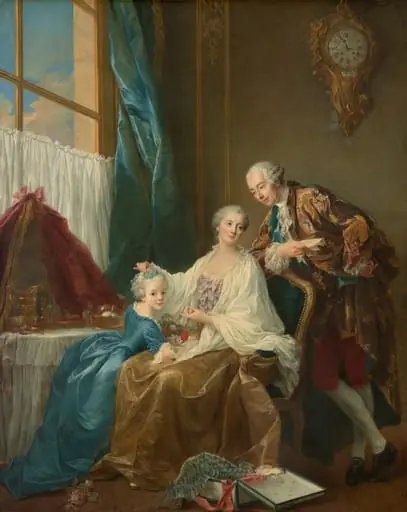 Family Portrait
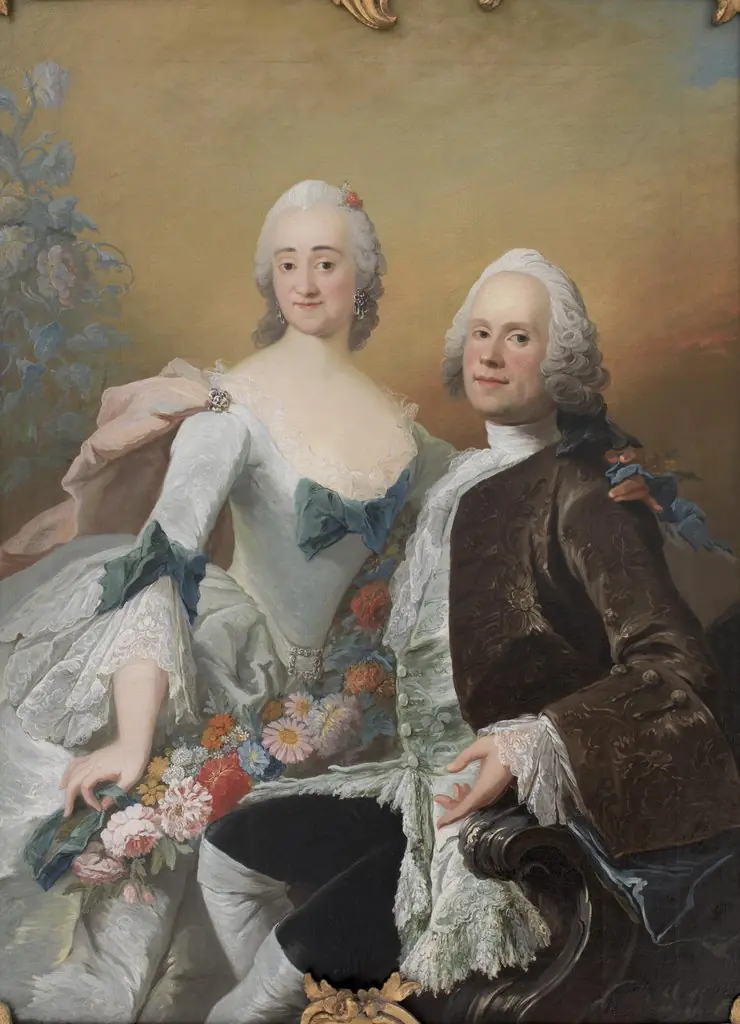 The Court Jeweller Christopher Fabritius and his Wife Gundel, née Berntz
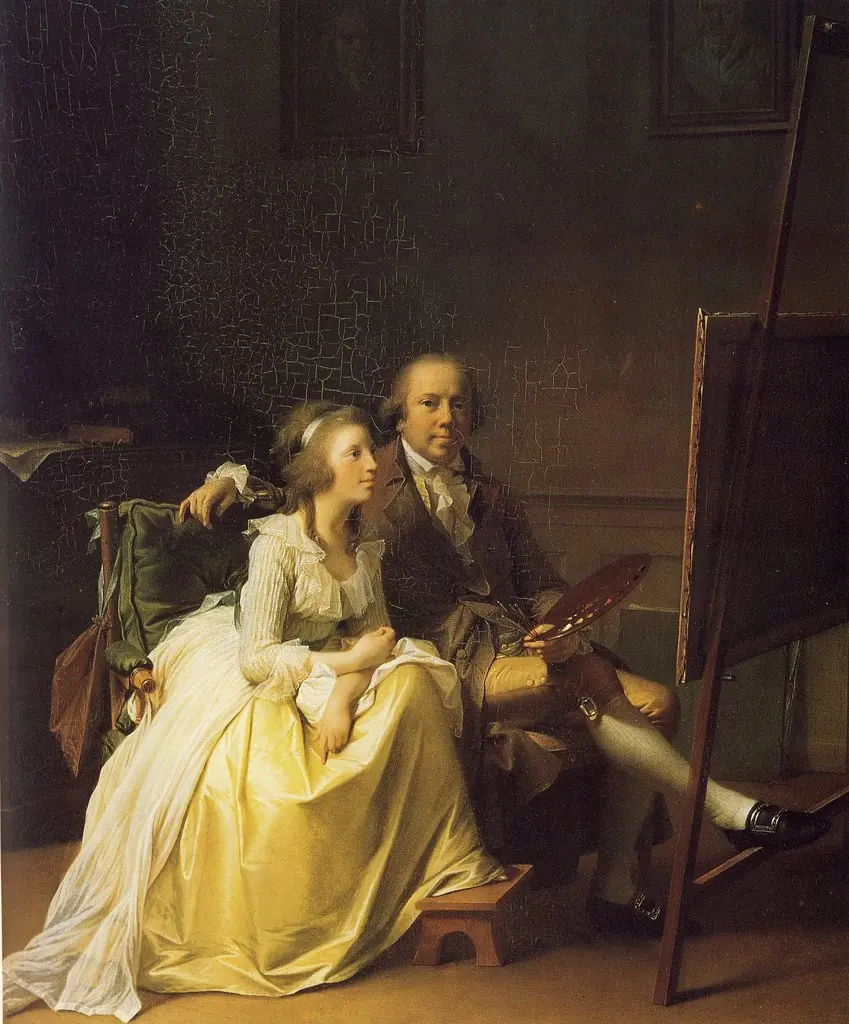 The Artist and his Wife Rosine, née Dørschel
 Princess Anne-Henriette of France - The Fire
 Portrait of Jacob Feitama (1726-1797) and his Wife, Elisabeth de Haan (1735-1800)