Artwork
Dancers in the Rehearsal Room with a Double Bass
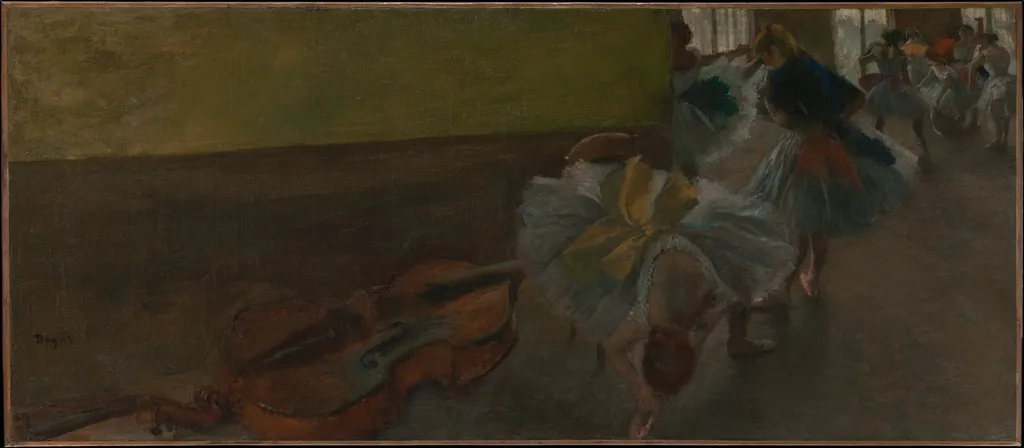
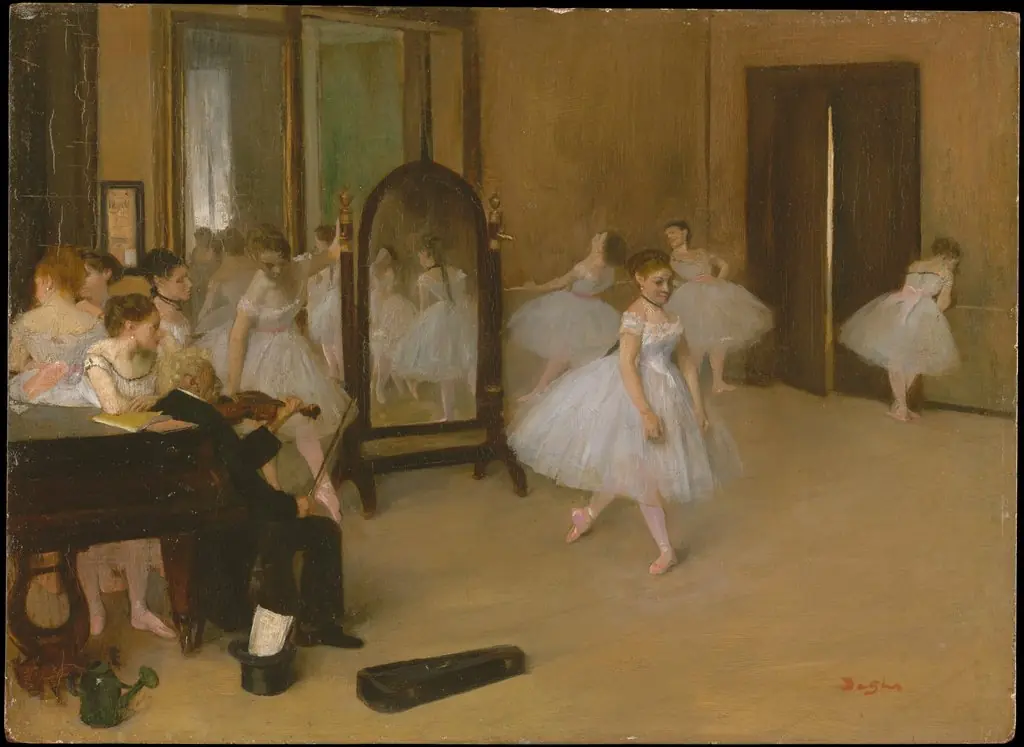
Dancers in the Rehearsal Room with a Double Bass is an oil painting by the Impressionist artist Edgar Degas. It dates from 1892 and is held in the collection of the Metropolitan Museum of Art.
About this work
Subject & Meaning
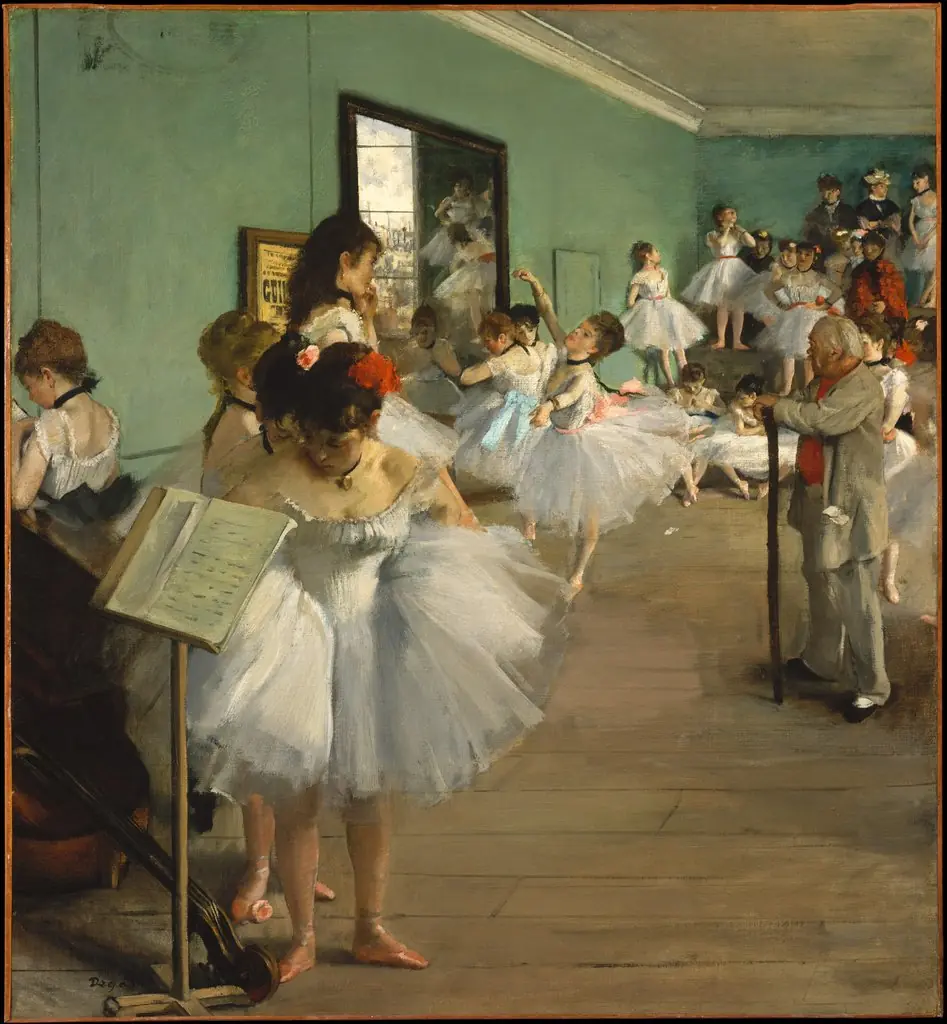
The artwork portrays a group of female dancers situated within a rehearsal space, accompanied by a prominent musical instrument, specifically a double bass.
The artwork portrays a group of female dancers situated within a rehearsal space, accompanied by a prominent musical instrument, specifically a double bass. The composition centers on the intersection of human figures and musical objects, capturing the dancers in their practice environment rather than during a formal performance. The inclusion of the large double bass alongside the women provides a visual contrast and anchors the scene in the physical reality of the rehearsal room.
Through this subject matter, the work represents the behind-the-scenes atmosphere of a dancer's life, emphasizing the labor and routine of practice over the glamour of the stage, while the instrument highlights the intrinsic connection between the performing arts of dance and music.
Technique & Style
The painting, titled Dancers in the Rehearsal Room with a Double Bass, was executed in 1882 using oil paint on canvas;. Its dimensions measure roughly 39.1 × 89.5 cm, reflecting the standard support for Degas’s mid‑career works. The composition places a solitary dancer beside a double bass, creating a balanced yet dynamic arrangement that emphasizes the quiet intensity of rehearsal.
Degas’s handling of light and muted tonalities, combined with loose brushwork, conveys a sense of movement while maintaining a formal, almost staged spatial order. The work remains in the collection of the Metropolitan Museum of Art, where it is preserved under standard museum conditions.
History & Provenance
Degas painted Dancers in the Rehearsal Room with a Double Bass in 1882, placing it among the artist’s late-realist rehearsal scenes. The work remained in the artist’s possession until at least 1893, after which it entered the collection of the Havemeyer family. Louisine Havemeyer acquired the painting by 1913, and it later passed to her daughter Electra Havemeyer Webb.
In 1929 the Havemeyers donated the work to the Metropolitan Museum of Art, New York, where it has been held since.
Edgar Degas's 1882 oil painting, Dancers in the Rehearsal Room with a Double Bass, is currently held in the collection of the Metropolitan Museum of Art in New York. The work, executed on canvas and measuring 39.1 by 89.5 centimeters, was formerly owned by Louisine Havemeyer before entering the museum's holdings. While the specific accession number is not provided in the available records, the painting's provenance links it directly to Havemeyer's significant collection of Impressionist art.
The Metropolitan Museum of Art maintains the piece as part of its permanent display of Degas's works, reflecting its importance in the study of the artist's depictions of ballet dancers and rehearsal spaces.
Overview
Edgar Degas's 1892 oil painting, Dancers in the Rehearsal Room with a Double Bass, captures a candid moment within a Parisian ballet studio. The composition is defined by an asymmetrical arrangement and a high vantage point, characteristic of the artist's interest in unconventional perspectives and the influence of photography. In the foreground, a seated dancer in a blue dress holds a yellow ribbon, her posture relaxed yet attentive, while a double bass player stands nearby, grounding the scene in the reality of musical accompaniment.
Behind them, other dancers engage in stretching and waiting, their dark practice attire contrasting with the muted, earthy tones of the studio walls. Degas employs loose, visible brushwork to convey movement and the fleeting nature of the rehearsal process, avoiding idealized poses in favor of observed, everyday gestures. Created during the height of his career focused on ballet subjects, this work exemplifies his dedication to depicting the labor behind the spectacle of performance.
The painting reflects his mature style, where the boundaries between sketch and finished work blur to prioritize the immediacy of the human figure in motion.
Artist & collection

Artist
Born Hilaire-Germain-Edgar De Gas on 19 July 1834 in Paris, Edgar Degas came from an affluent banking family with aristocratic roots and spent his childhood among the cultivated circles of the French capital.