Artwork
Dancers, Pink and Green
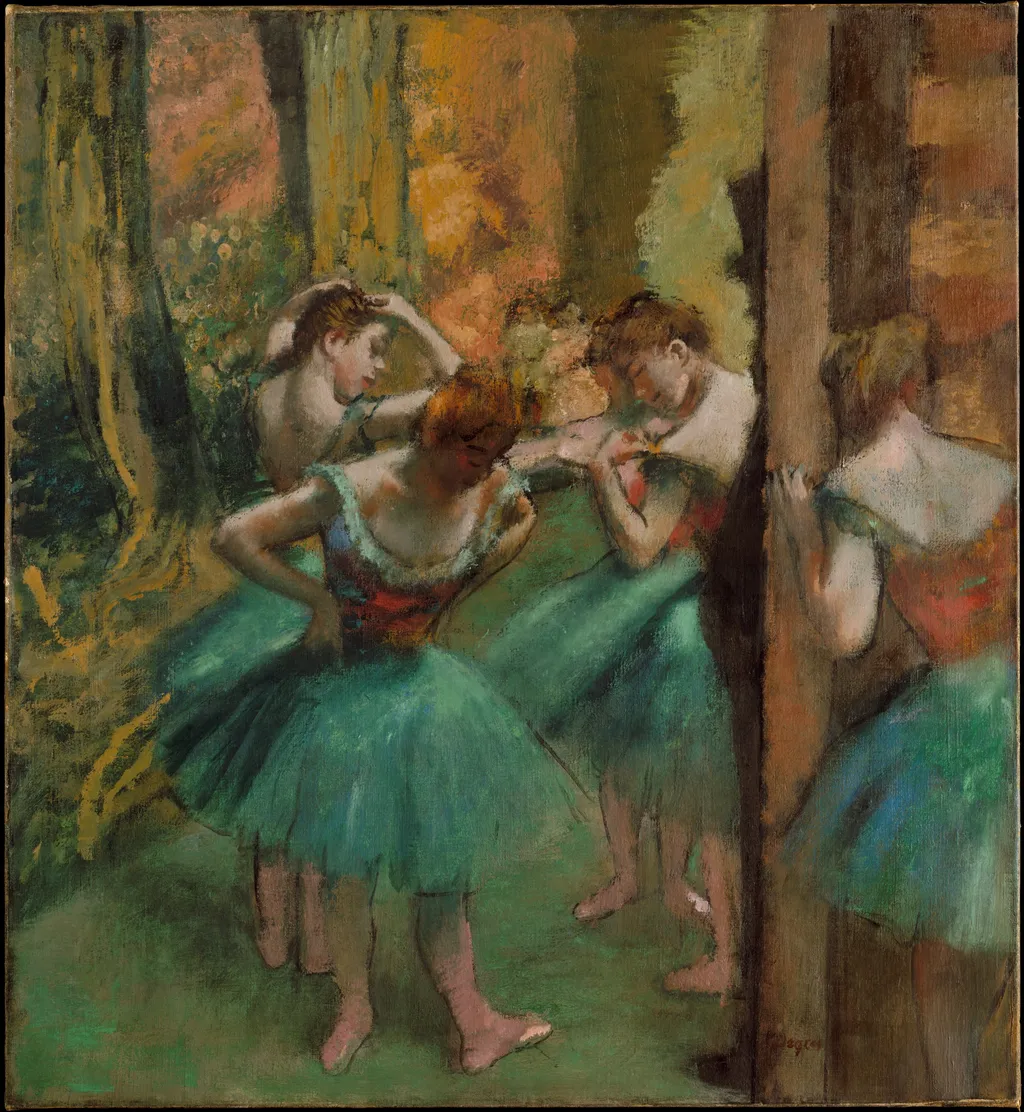
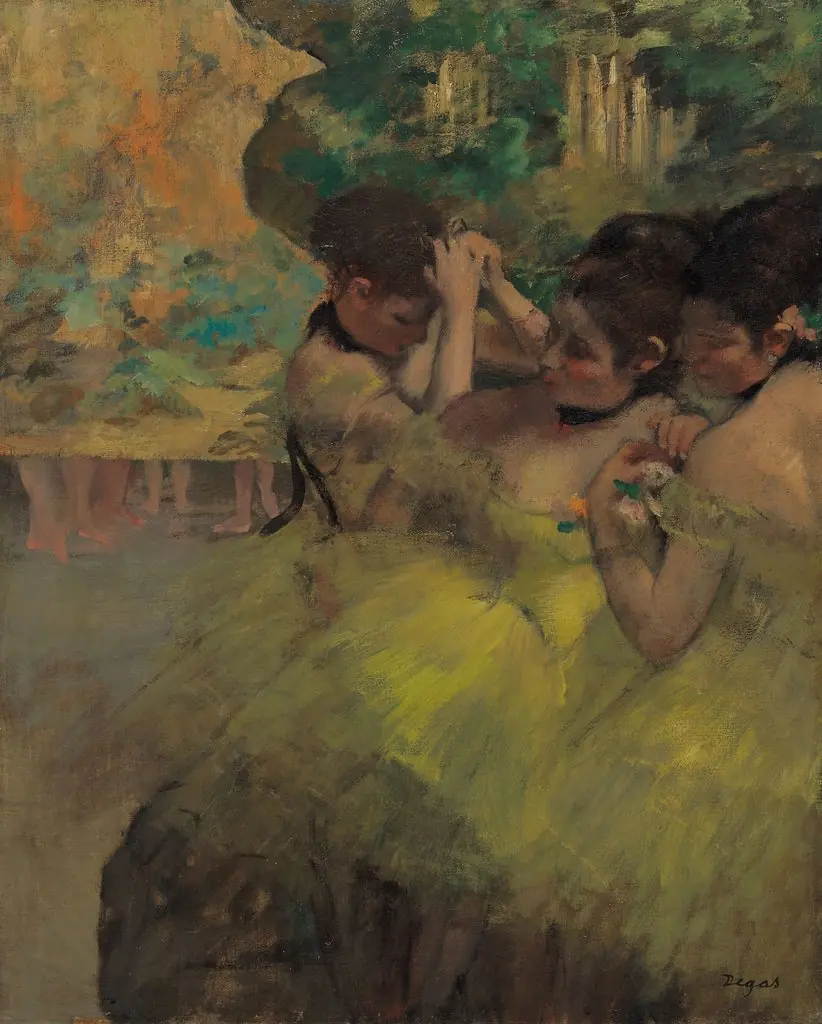
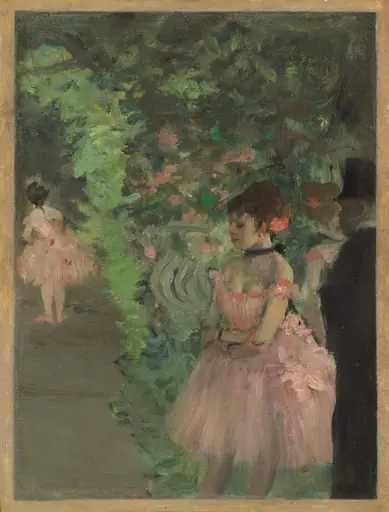
Dancers, Pink and Green is an oil painting by the Impressionist artist Edgar Degas. It dates from 1896 and is held in the collection of the Metropolitan Museum of Art.
About this work
Subject & Meaning
The work presents a woman in a dance pose, utilizing the medium of oil on canvas to render the figure against a neutral background.
Edgar Degas's 1890 painting, Dancers, Pink and Green, depicts a solitary female ballet dancer, capturing the artist's enduring focus on the mechanics and aesthetics of the ballet world. The work presents a woman in a dance pose, utilizing the medium of oil on canvas to render the figure against a neutral background. While the title highlights the specific color palette of pink and green, the primary subject remains the dancer herself, reflecting Degas's systematic exploration of movement and the behind-the-scenes reality of performance.
The piece is recognized for its depiction of a woman engaged in the art of ballet, illustrating the intersection of discipline and grace that characterized the artist's broader oeuvre regarding dancers.
History & Provenance
Created in 1890 by Edgar Degas, Dancers, Pink and Green is an oil painting on canvas depicting ballet dancers. The work entered the collection of Louisine Havemeyer, who owned the piece prior to its acquisition by the Metropolitan Museum of Art. Currently held by the Metropolitan Museum of Art under the accession number 29.100.42, the painting measures 82.2 cm in height and 75.6 cm in width.
While specific details regarding the original commission or the exact circumstances of its creation are not provided in the available records, the dating of the inception is firmly established as 1890.
The painting Dancers, Pink and Green by Edgar Degas is held in the collection of the Metropolitan Museum of Art. The work carries the accession number 29.100.42 within the museum's inventory. Historical records indicate that the piece was previously owned by Louisine Havemeyer before entering the museum's holdings.
While the work's current location and identifying numbers are documented, the provided sources do not contain specific details regarding its exhibition history or public display records.
Context
Edgar Degas completed Dancers, Pink and Green in 1890, an oil on canvas measuring 82.2 × 75.6 cm that depicts a solitary dancer within a ballet setting. The work is classified as a painting and entered the Metropolitan Museum of Art through the collection of Louisine Havemeyer, as recorded in the museum’s provenance. Its creation falls within Degas’s late period, when he increasingly focused on the gestures and choreography of ballet, a subject that defined much of his artistic output.
The painting’s composition and color scheme reflect the artist’s interest in capturing movement through informal arrangement, positioning it among the notable examples of his ballet series in art‑historical surveys.
Overview
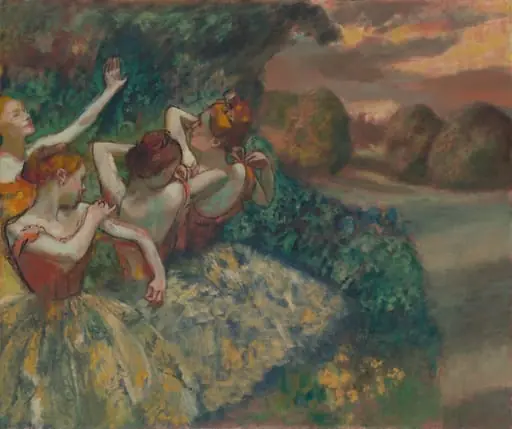
Dancers, Pink and Green (1896) is an oil painting by Edgar Degas depicting four ballerinas in a rehearsal space. The composition features three standing figures and one seated on a bench, all oriented downward in moments of rest or preparation. The dancers wear tutus in shades of pink and green, rendered with Degas's characteristic loose, sketch-like brushwork that prioritizes movement and light over precise detail.
The background is indistinct, suggesting curtains or drapes through blurred strokes of color, which isolates the figures and emphasizes their forms. Created during the late 1890s, this work reflects Degas's enduring fascination with the ballet as a subject, capturing the mundane reality behind the stage performance rather than the spectacle itself. The painting exemplifies his mature style, where the boundaries between drawing and painting dissolve, and the viewer is positioned as an observer of a private, unposed moment.
It stands as a significant example of Degas's exploration of asymmetry and the effects of artificial lighting on the human figure.
Technique & Style
Degas utilized oil paint to create a soft, muted color palette, which imbues the scene with a gentle and contemplative atmosphere. The background elements, suggesting drapes or curtains, are rendered with a deliberate blur, drawing the viewer's focus to the figures themselves. This stylistic choice emphasizes the private nature of the moment, contributing to the painting's overall dreamy and introspective quality.
Own this work as a print
Artist & collection

Artist
Born Hilaire-Germain-Edgar De Gas on 19 July 1834 in Paris, Edgar Degas came from an affluent banking family with aristocratic roots and spent his childhood among the cultivated circles of the French capital.