Artwork
Yellow Dancers (In the Wings)
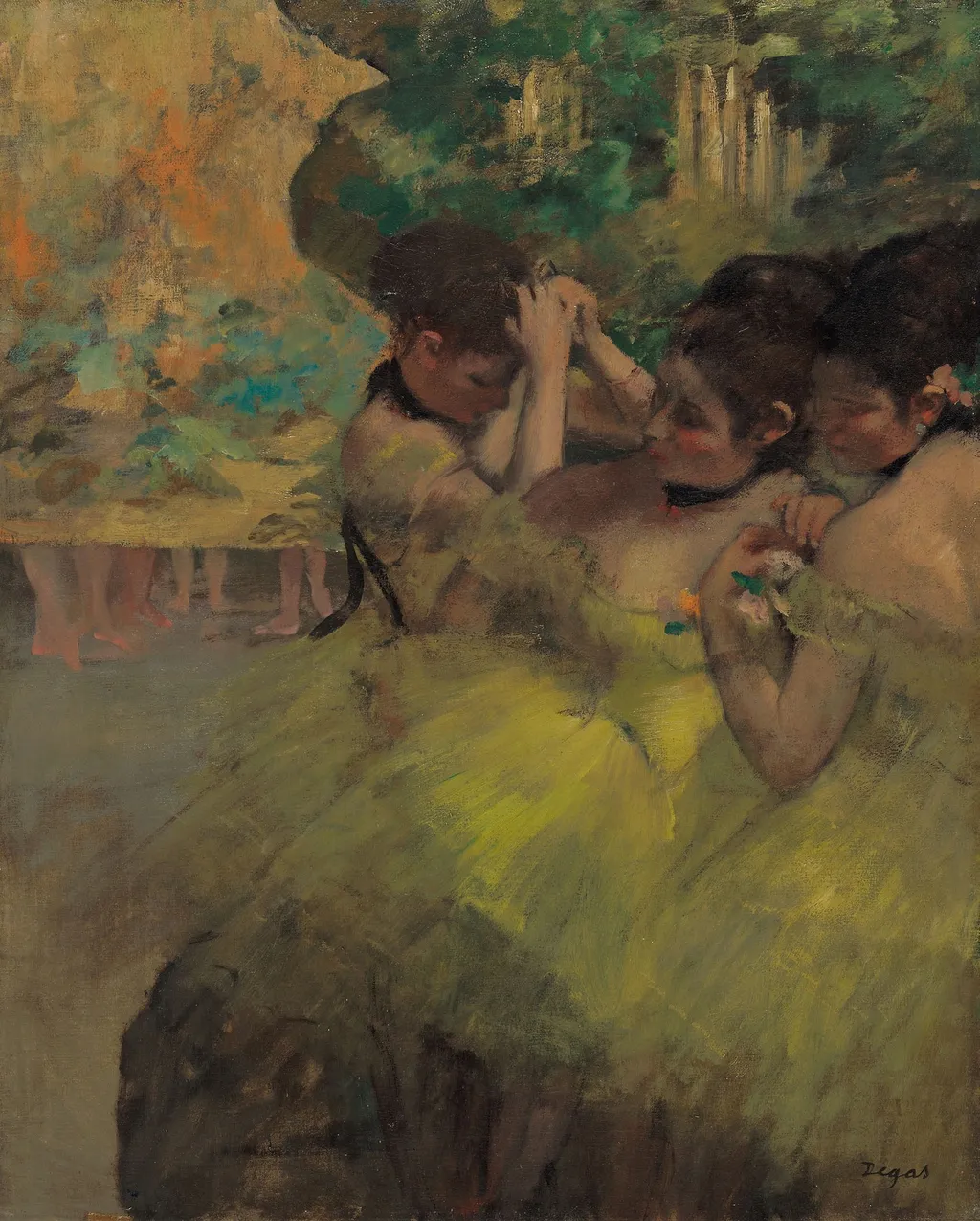
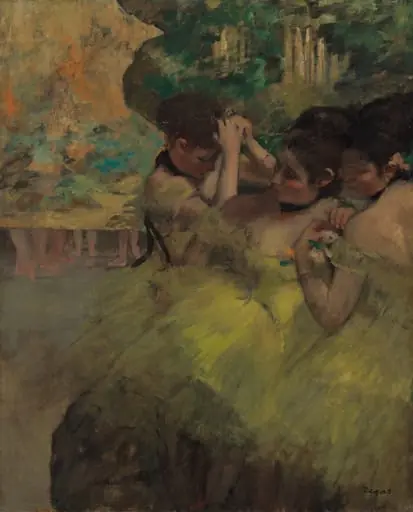
Yellow Dancers (In the Wings) is an oil painting by the Impressionist artist Edgar Degas. It dates from 1875 and is held in the collection of the Art Institute of Chicago.
About this work
Overview
The figures are clad in bright yellow tutus, a color choice that distinguishes them from the more common pastel tones found in the artist's repertoire.
Yellow Dancers (In the Wings), executed by Edgar Degas in 1875, depicts three ballet dancers standing in close proximity during a moment of pause. The figures are clad in bright yellow tutus, a color choice that distinguishes them from the more common pastel tones found in the artist's repertoire. The composition centers on the interaction between the women: the central figure looks downward with a contemplative or weary expression, while the two flanking her turn their heads inward to gaze at her, their arms linked in a gesture of camaraderie or support.
Degas employs a loose, visible brushwork style that captures the texture of the costumes and the fleeting nature of the scene, leaving the background indistinct to focus attention on the group dynamics. This work exemplifies Degas's enduring fascination with the ballet, specifically his interest in depicting the unglamorous reality of rehearsals and backstage intervals rather than the polished performance on stage. Created during the height of his engagement with the subject, the painting reflects his innovative approach to modern life, utilizing asymmetrical composition and cropped perspectives to convey a sense of immediacy and candid observation.
Subject & Meaning
The composition shows three adolescent figures in yellow tutus, their arms linked as they stand close together. The central figure gazes downward while the two flanking dancers look toward her, suggesting a shared focus or private exchange. The setting, suggested by a softened background, evokes a backstage or rehearsal space, emphasizing the intimacy of the performers before they appear onstage.
Technique & Style
Degas employs oil on canvas with a muted palette dominated by yellows, greens, and soft neutrals. His brushwork renders the figures with delicate modeling, while the surrounding environment is rendered in a blurred, almost impressionistic manner. The contrast between the crisp rendering of the dancers and the vague backdrop highlights the artist’s interest in capturing fleeting moments.
History & Provenance
Created in the mid‑1870s, the painting reflects Degas’s ongoing fascination with ballet and theatrical subjects. After changing hands through private collections, it entered the Art Institute of Chicago’s holdings, where it remains on display as part of the museum’s European painting collection.
Own this work as a print
Artist & collection

Artist
Born Hilaire-Germain-Edgar De Gas on 19 July 1834 in Paris, Edgar Degas came from an affluent banking family with aristocratic roots and spent his childhood among the cultivated circles of the French capital.