Artwork
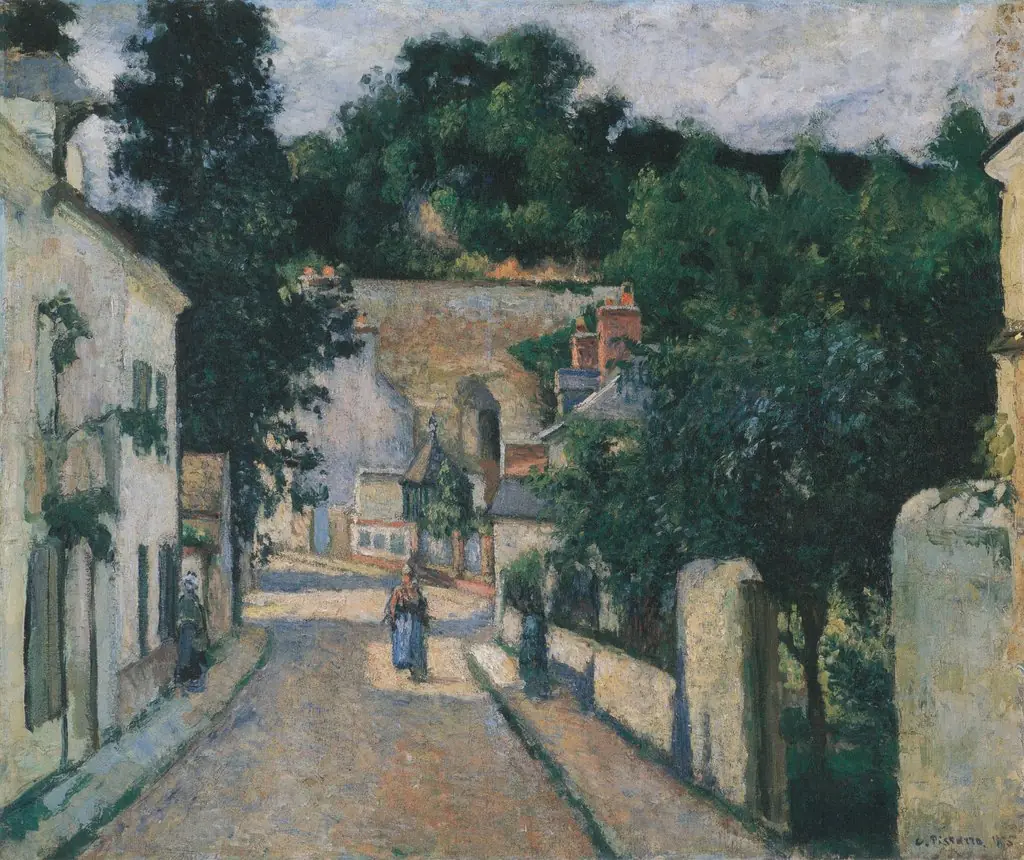
Village Street. Saint-Valéry-sur-Somme
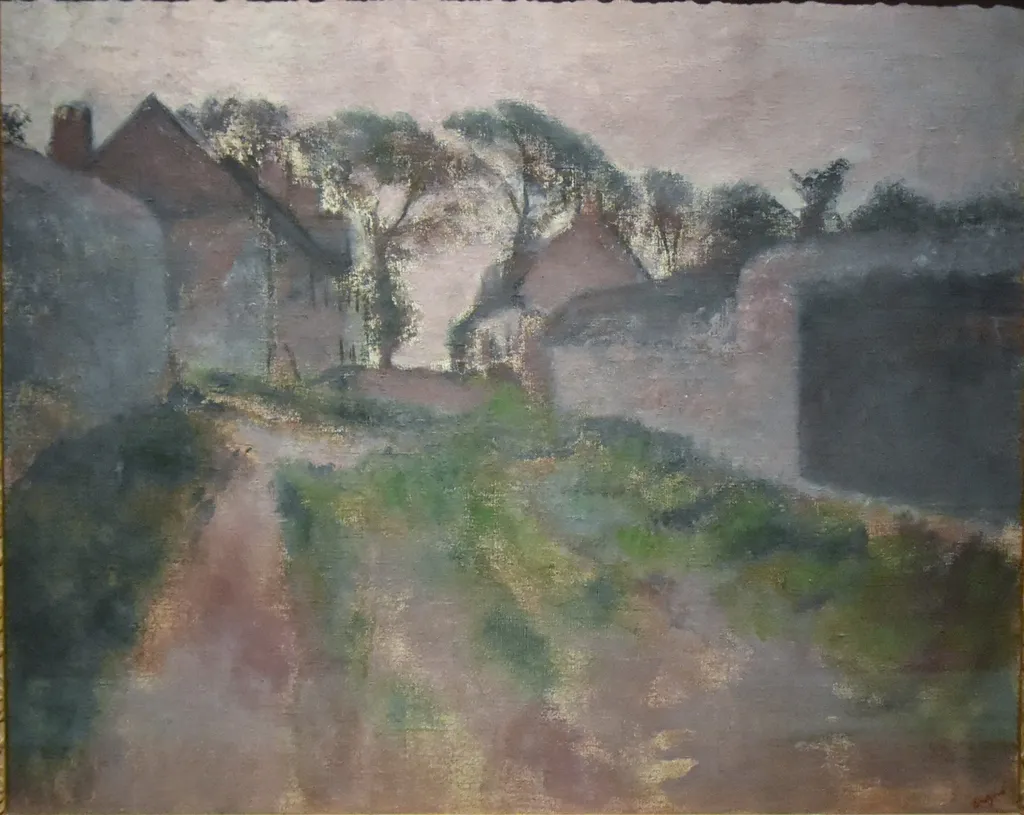
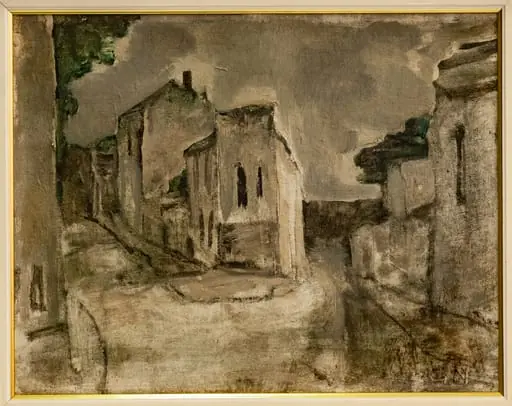
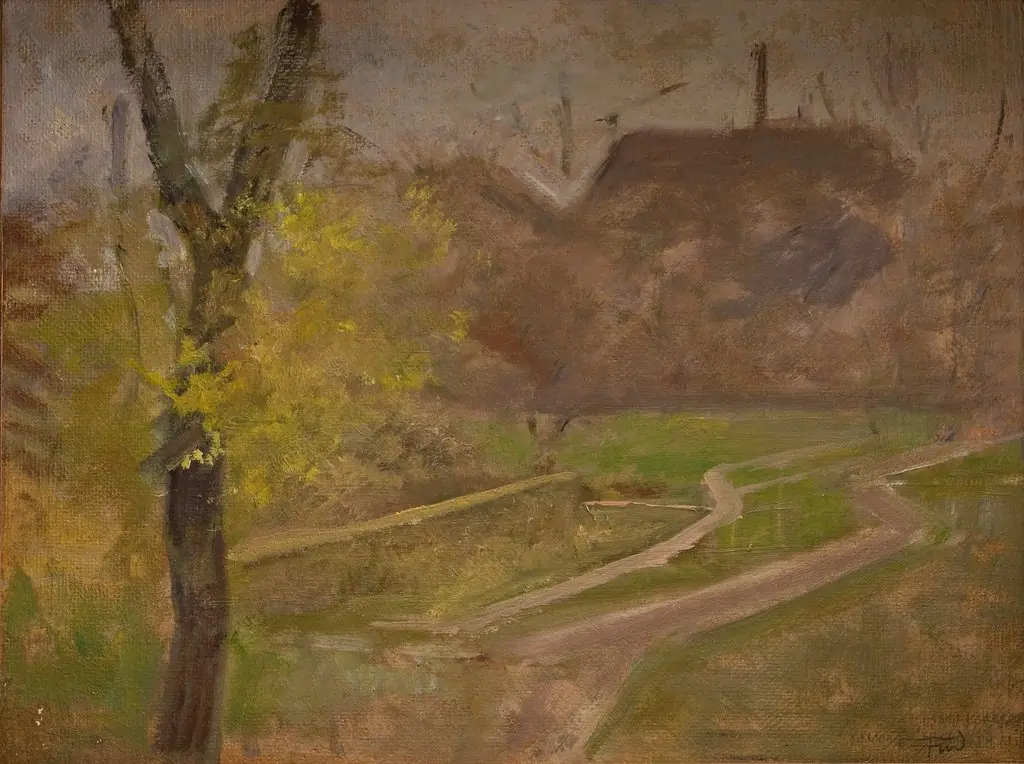
Village Street. Saint-Valéry-sur-Somme is an oil painting by the Impressionist artist Edgar Degas. It dates from 1900 and is held in the collection of the Statens Museum for Kunst. Painted in 1900, Village Street.
About this work
Overview
The painting resides in the collection of Statens Museum for Kunst in Copenhagen, representing a lesser-known but significant phase of Degas’s later career.
Painted in 1900, Village Street. Saint-Valéry-sur-Somme is an oil work by Edgar Degas depicting a quiet French coastal village lane. Unlike his more famous ballet and horse subjects, this piece focuses on an unpopulated urban corridor, emphasizing atmosphere over narrative.
The painting resides in the collection of Statens Museum for Kunst in Copenhagen, representing a lesser-known but significant phase of Degas’s later career.
Subject & Meaning
The scene presents an empty street lined with modest, weathered houses on the left, their facades softened by time and light. No figures interrupt the stillness, and the absence of human presence invites a meditative tone. The quietude of the setting suggests a pause in daily life, reflecting Degas’s interest in ordinary spaces rendered with emotional restraint rather than dramatic emphasis.
Technique & Style
Degas employed a restrained palette of earthy grays, ochres, and muted greens, with a pale pink horizon subtly defining the sky. Brushwork is loose yet deliberate, suggesting form through tone rather than sharp outline. The composition leads the eye down the street using receding planes and minimal perspective, reinforcing the sense of calm and spatial depth without theatricality.
History & Provenance
Created during Degas’s final years, the painting likely stems from a visit to Saint-Valéry-sur-Somme, a small port town in northern France. It entered the Danish national collection in the early 20th century, possibly through a private acquisition or exchange. Its presence in Copenhagen underscores the international appreciation for Degas’s quieter, post-impressionist works beyond his Parisian themes.
Context
In the early 1900s, Degas increasingly turned to landscapes and townscapes, moving away from figure studies. This shift coincided with declining eyesight and a desire for simpler subjects. Village Street reflects broader trends among late 19th-century artists who sought solace in everyday environments, valuing mood and light over narrative or social commentary.
Legacy
Though less celebrated than his dancers or jockeys, this painting contributes to understanding Degas’s evolving vision in his later years. It reveals an artist attuned to subtlety, where quiet composition and restrained color convey emotional resonance. The work remains a quiet testament to his ability to find depth in the unremarkable.
Own this work as a print
Artist & collection
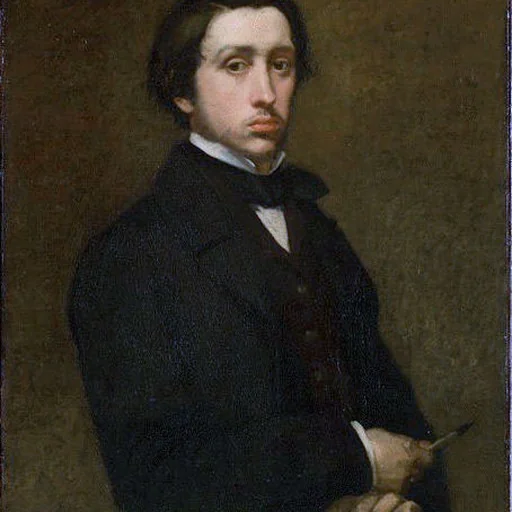
Artist
Born Hilaire-Germain-Edgar De Gas on 19 July 1834 in Paris, Edgar Degas came from an affluent banking family with aristocratic roots and spent his childhood among the cultivated circles of the French capital.