Artwork
Landscape near Paris
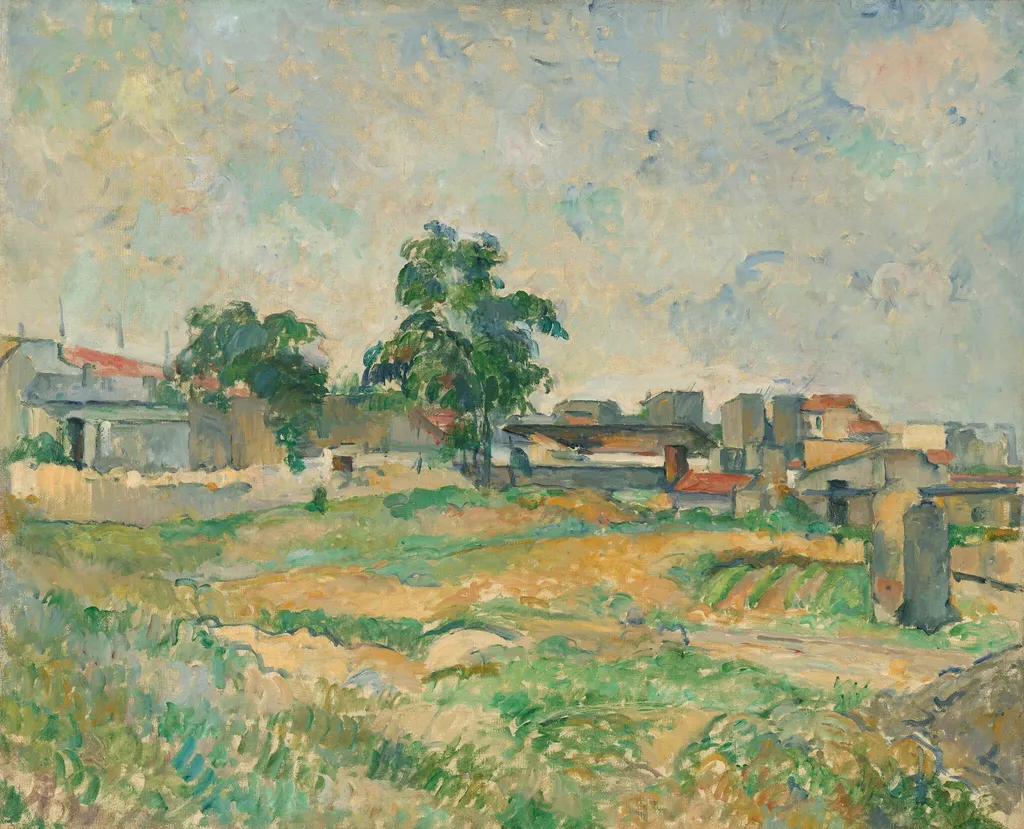
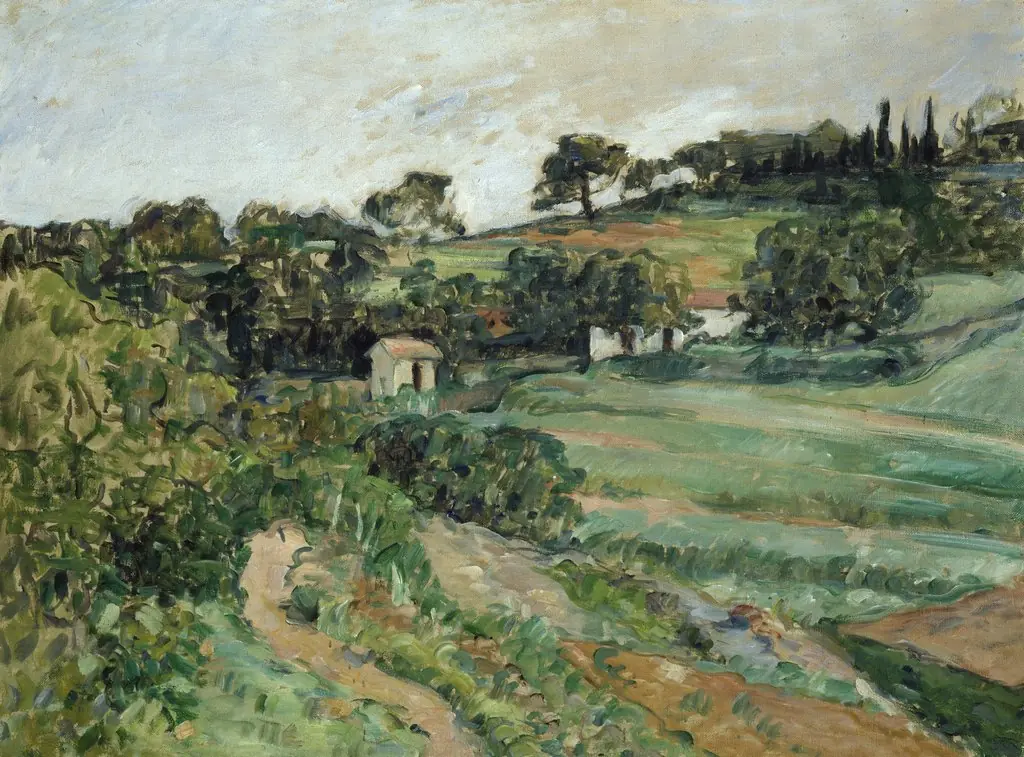
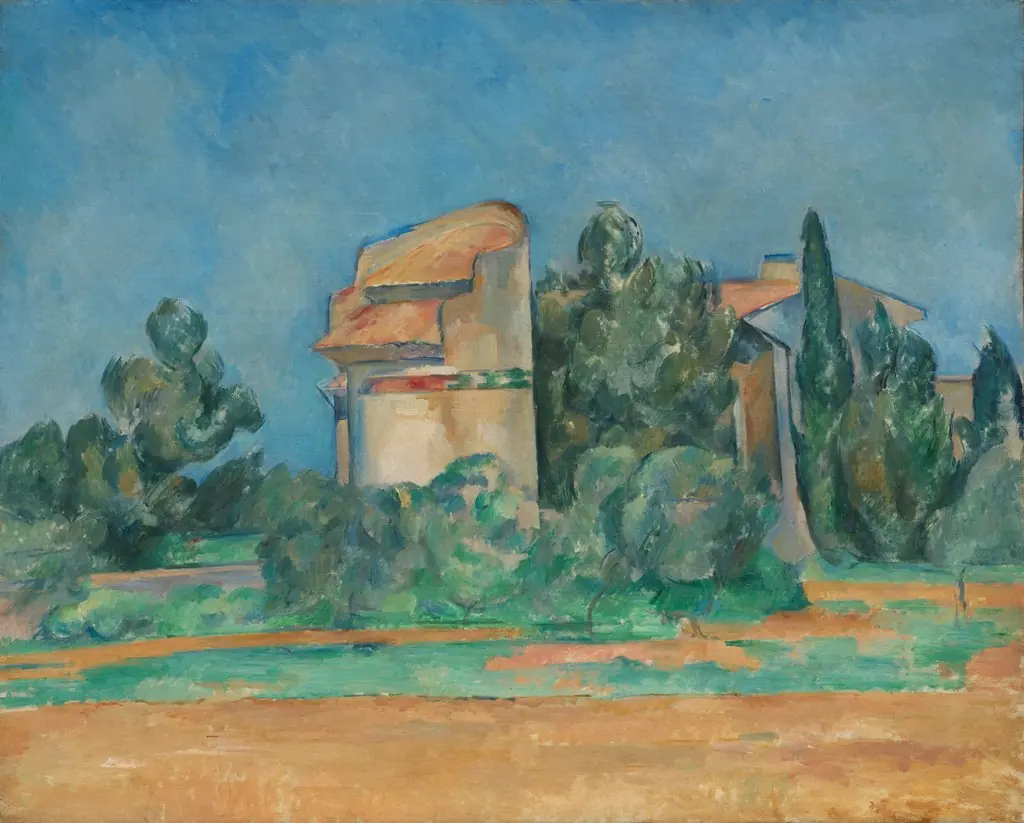
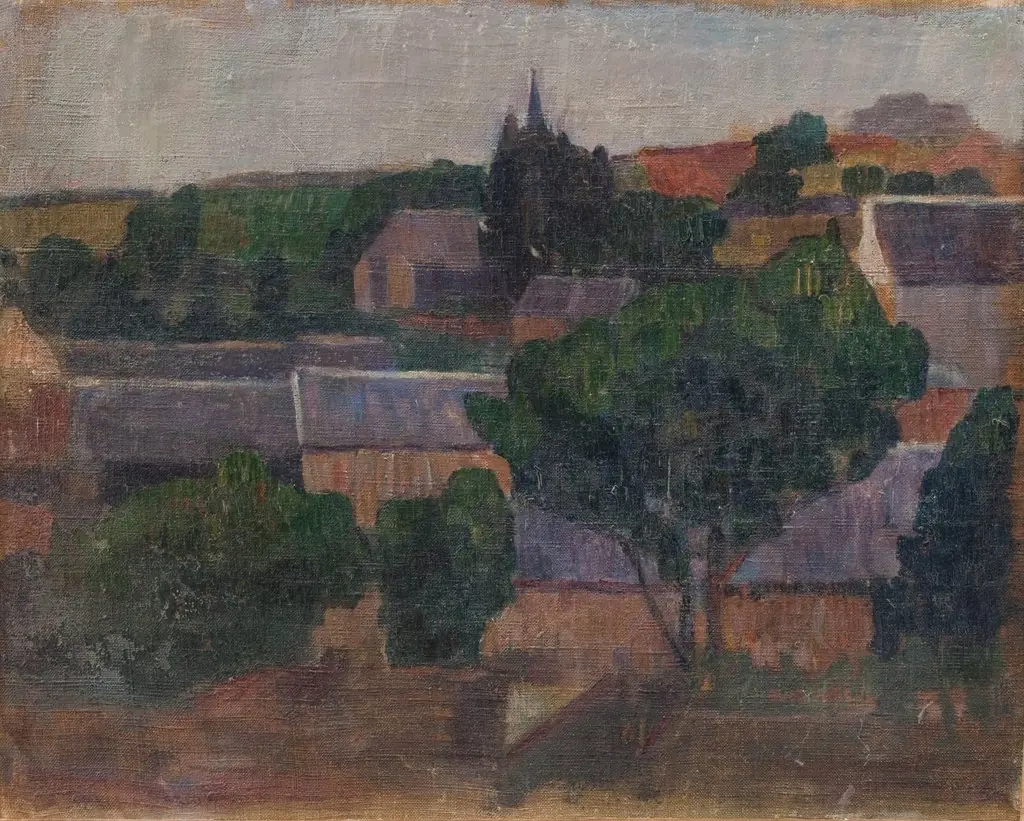
Landscape near Paris is an oil painting by the Impressionist artist Paul Cézanne. It dates from 1876 and is held in the collection of the National Gallery of Art.
About this work
Subject & Meaning
The work’s subject therefore reflects both a particular view near Paris and a broader meditation on order and serenity.
The painting shows a modest house framed by a solitary tree set against a modest landscape outside Paris, a motif that Cézanne uses to suggest a quiet, rural refuge rather than a specific narrative. The house, rendered with simplified geometry, and the lone tree function as emblematic elements of domestic stability and the artist’s interest in the underlying structure of nature. By placing these forms within a loosely defined space, Cézanne conveys a contemplative mood that emphasizes the harmonious relationship between built environment and natural surroundings.
The work’s subject therefore reflects both a particular view near Paris and a broader meditation on order and serenity.
Technique & Style
Landscape near Paris is executed in oil on canvas, measuring 50.2 by 60 centimeters. The work belongs to the landscape genre and depicts a house and tree, rendered through Cézanne's characteristic handling of the medium. As a painting from 1876, it reflects the artist's mature approach to structuring natural motifs through painterly construction rather than purely descriptive rendering.
The canvas support and oil medium allowed for the layered, deliberate brushwork associated with Cézanne's landscape practice of this period, in which architectural and arboreal forms are built up through modulated patches of pigment.
History & Provenance
Paul Cézanne’s Landscape near Paris was created in 1876, as established by documentary consensus. The painting likely entered the collection of American financier Egisto Fabbri in Florence through dealer Ambroise Vollard, remaining in Fabbri’s possession until at least 1920. By 1927, it passed to the Paris, London, and New York gallery of Paul Rosenberg and Co., which sold it on 14 November of that year to Chester Dale, a prominent New York collector.
Dale retained ownership until his death in 1962, after which the work was gifted to the National Gallery of Art, Washington, D.C., in 1963, where it remains in the permanent collection. No direct commission records exist, suggesting Cézanne painted it independently.
Landscape near Paris is held by the National Gallery of Art in Washington, D.C., where it entered the collection in 1963 as a gift from Chester Dale (1883–1962) of New York. Dale had acquired the painting on 14 November 1927 from Paul Rosenberg and Co., which operated in London, New York, and Paris. The work had previously been owned by Egisto Fabbri (1866–1933) of Florence, who held it at least until 1920, and was probably acquired by Fabbri from Ambroise Vollard (1866–1939) in Paris. The painting is catalogued as no. 496 in John Rewald's catalogue raisonné of Cézanne's paintings (1996).
Overview
Paul Cézanne's "Landscape near Paris," an oil on canvas from approximately 1876, captures a serene rural vista. This painting showcases the artist's developing style in landscape, moving beyond conventional representation to explore the underlying structure of nature. It presents a quiet segment of the countryside, emphasizing essential forms and the interaction of light and shade rather than intricate realism.
Own this work as a print
Artist & collection

Artist
Paul Cézanne ( say-ZAN, UK also siz-AN, US also say-ZAHN; French: ; Occitan: Pau Cesana; 19 January 1839 – 22 October 1906) was a French Post-Impressionist painter whose work introduced new modes of representation,…

 Harlequin
 The Card Players
 Mont Sainte-Victoire and the Viaduct of the Arc River Valley
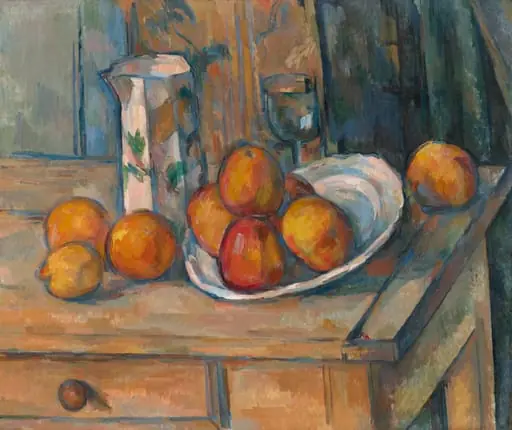 Still Life with Milk Jug and Fruit
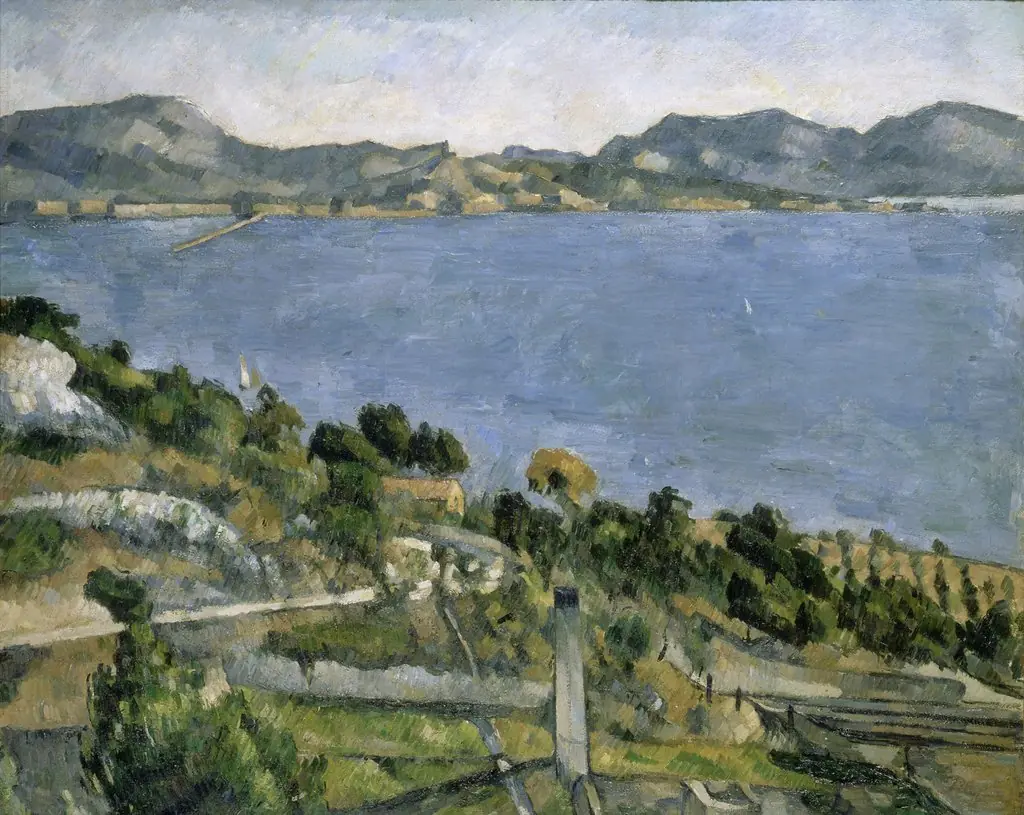 Le Golfe de Marseille vu de l'Estaque (The Gulf of Marseille Seen from L'Estaque)
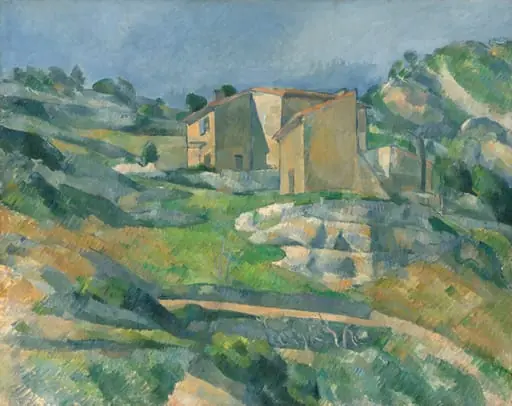 Houses in Provence: The Riaux Valley near L'Estaque
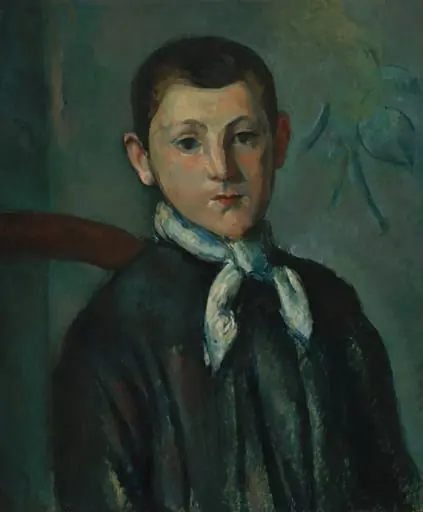 Louis Guillaume
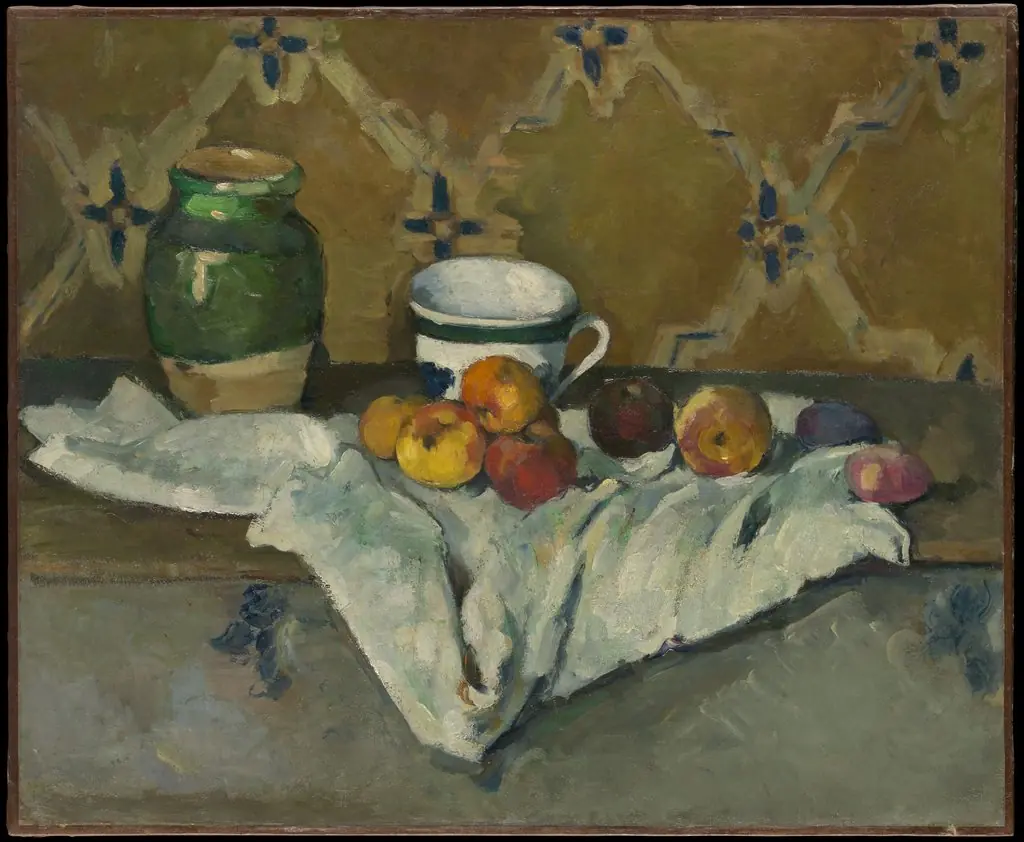 Still Life with Jar, Cup, and Apples