Artwork
The Path to Les Pouilleux, Pontoise
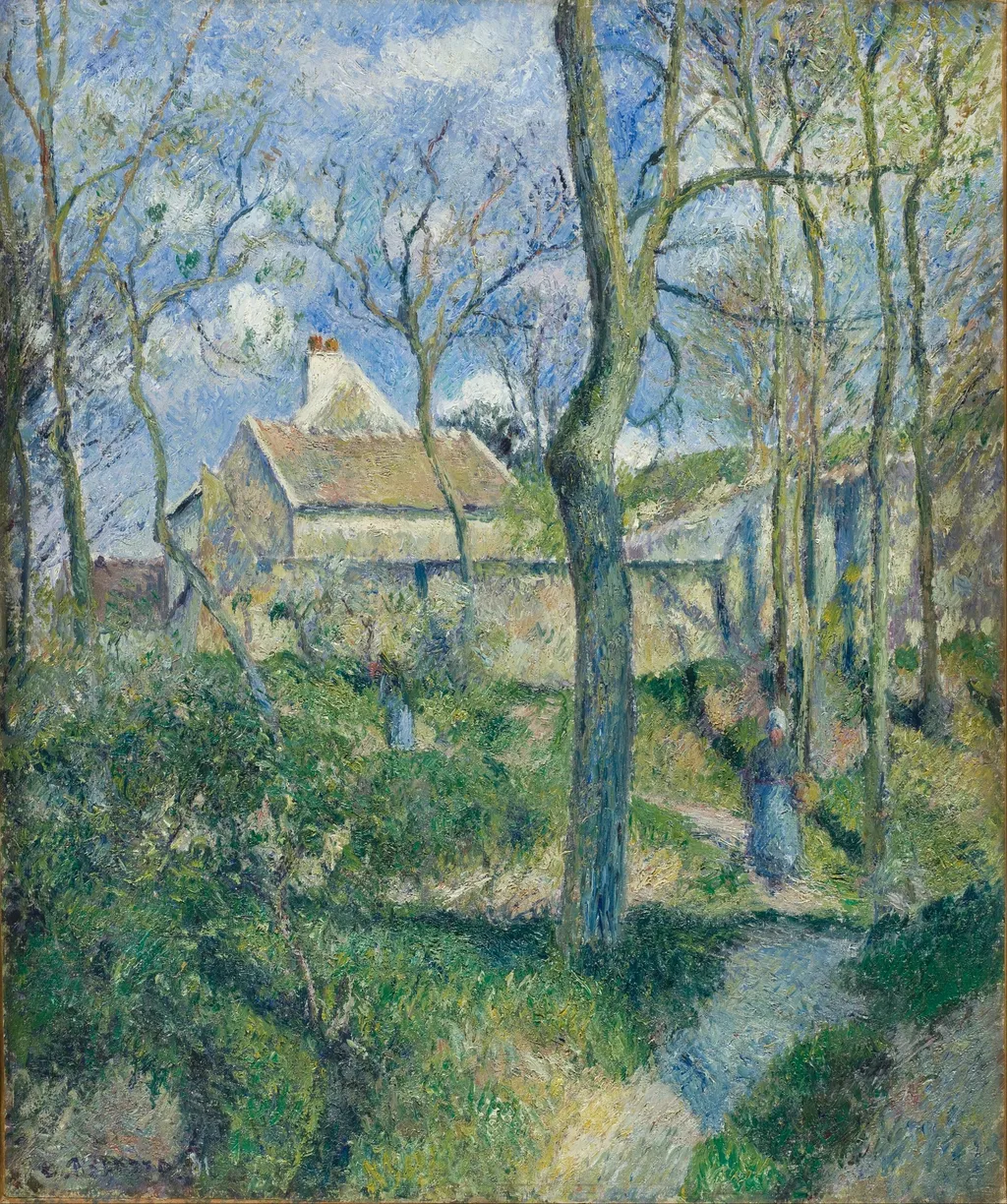
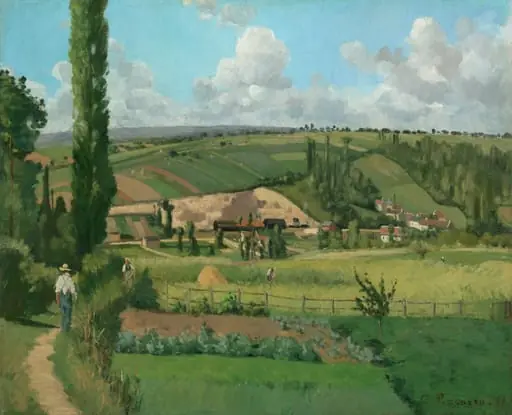
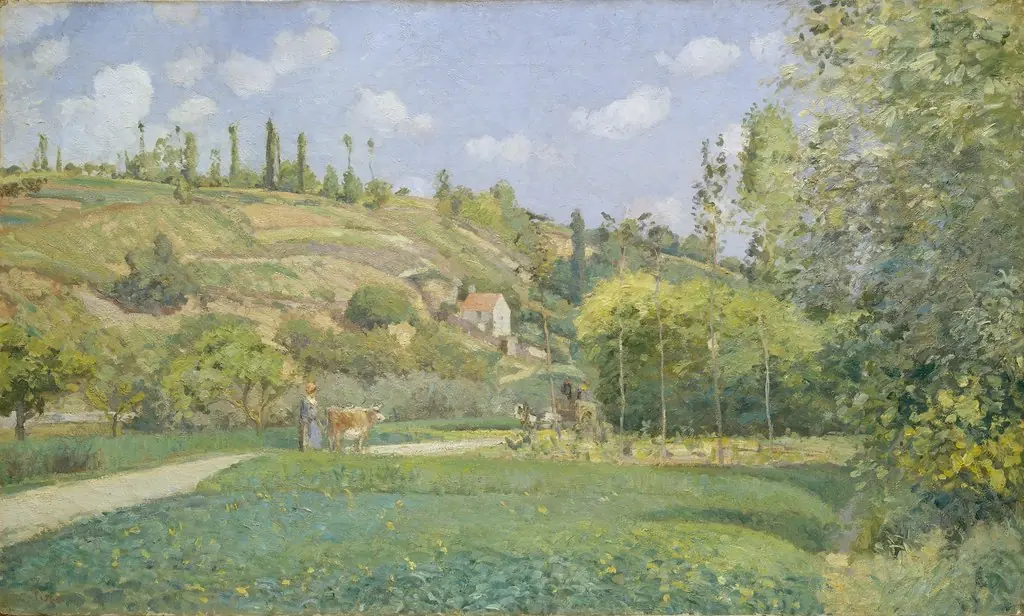
The Path to Les Pouilleux, Pontoise is an oil painting by the Impressionist artist Camille Pissarro. It dates from 1891 and is held in the collection of the Los Angeles County Museum of Art.
About this work
Overview
The Path to Les Pouilleux, Pontoise is an oil on canvas landscape painting created by Camille Pissarro in 1881.
The Path to Les Pouilleux, Pontoise is an oil on canvas landscape painting created by Camille Pissarro in 1881. Measuring 56 by 47 centimeters, the work depicts a rural path winding toward a house in the Pontoise region. The painting is unsigned and currently resides in the Los Angeles County Museum of Art as a partial, fractional, and promised gift of Janice and Henri Lazarof, accessioned as M.2005.70.117. The work exemplifies Pissarro's dedication to rural genre scenes and his role in the Impressionist movement.
Subject & Meaning
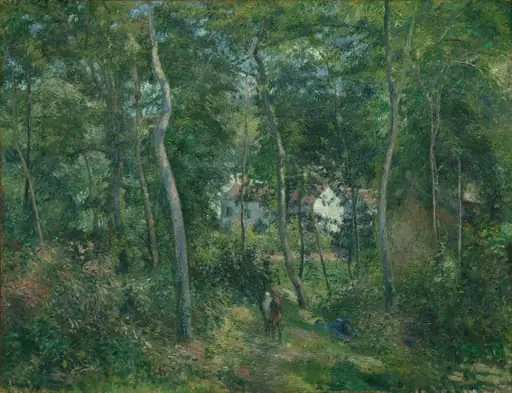
The composition centers on a winding path leading the eye toward a simple house with a sloped roof and two chimneys, nestled among dense trees. Two small figures animate the scene: one in blue stands amid the greenery to the center-left, while another in darker clothing with a lighter head covering stands to the right. The architecture is functional and unadorned, integrated seamlessly into the natural environment. A stone wall runs horizontally behind the foreground vegetation. The figures' minimal detail and small scale relative to the vast landscape emphasize the dominance of nature, while the smoke rising from a chimney implies domesticity and warmth, introducing a quiet human element into the pastoral setting.
Technique & Style
Pissarro employed short, broken, and visible brushstrokes to build a textured, unblended matte surface across the canvas. The palette relies on muted greens, blues, yellows, and earth tones, avoiding strong contrasts. Light is diffused and even, lacking a single strong directional source, and filters through the canopy to create dappled shadows on the ground and illuminate patches of the building facades. Atmospheric perspective softens the background buildings with a hazy blue-grey tonality, creating depth. This handling of light and color, combined with the vibrating brushwork, firmly situates the painting within the Impressionist style, prioritizing the optical sensation of light over precise linear detail.
History & Provenance
Created in 1881, the painting passed through several prominent Parisian collections before reaching its current home. It was owned by Henri Vever of Paris until it was sold at Galerie Georges Petit in February 1897. Durand-Ruel acquired it before selling it to Bernheim-Jeune and Georges Petit in February 1899. It subsequently belonged to M.G. Bing, who sold it at Hotel Drouot in June 1927. Jerome Stoneborough of New York acquired it, and it was sold at Parke-Bernet in October 1940. Durand-Ruel and Sam Salz jointly purchased it, selling it again in December 1942. Francis and Beatrice Steegmuller then owned the work, eventually passing it to Francis's widow, Shirley Hazzard Steegmuller. She sold it to Acquavella Galleries in March 1996, who sold it to Janice and Henri Lazarof of Los Angeles. The Lazarofs gave the painting to LACMA in 2005.
Context
Painted in 1881, this work falls within Pissarro's mature Impressionist period, a time when he was deeply engaged with the rural landscapes and peasant life around Pontoise. The depiction of a functional, unadorned rural dwelling and the integration of incidental figures within a broader natural setting align with Pissarro's broader artistic project of elevating everyday rural labor and life. The painting embodies the Impressionist interest in capturing the fleeting, optical realities of light and atmosphere rather than dramatic narratives, presenting a meditative observation of the rhythms of the natural world and human habitation within it.
Legacy
The Path to Les Pouilleux, Pontoise remains a significant example of Pissarro's Impressionist landscape work, valued for its structural composition and atmospheric handling of light. Its public accessibility has been ensured through its entry into the Los Angeles County Museum of Art, where it continues to be reproduced for on-demand prints and studied as a representation of late nineteenth century French landscape painting. The winding path and the harmonious integration of simple architecture within nature continue to be interpreted as an exploration of the passage of time and the enduring rhythms of rural existence.
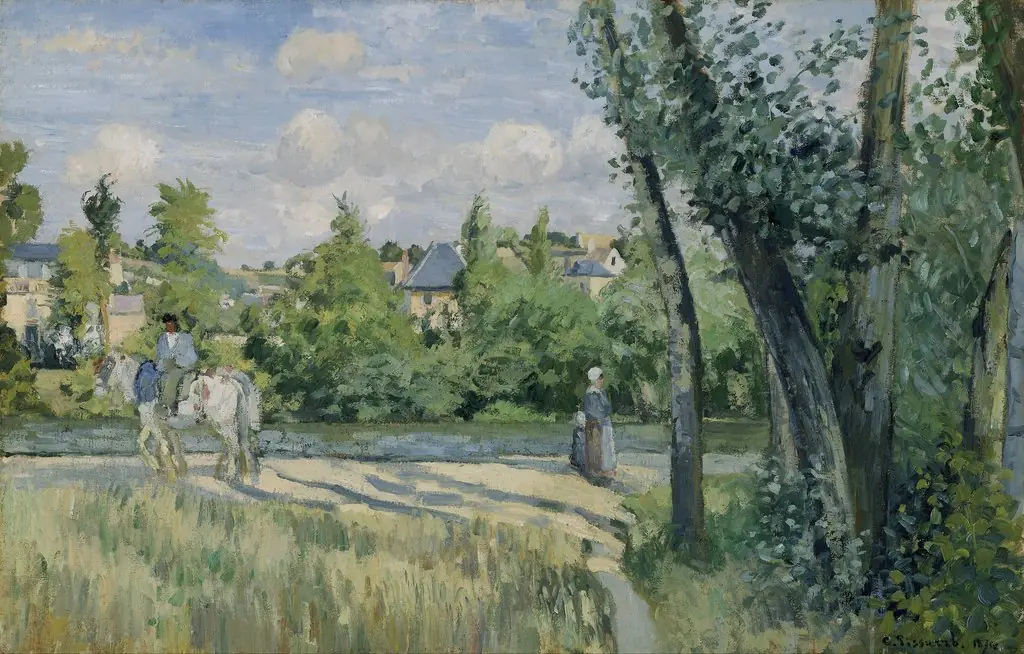
Own this work as a print
Artist & collection


- Sunlight on the Road, Pontoise
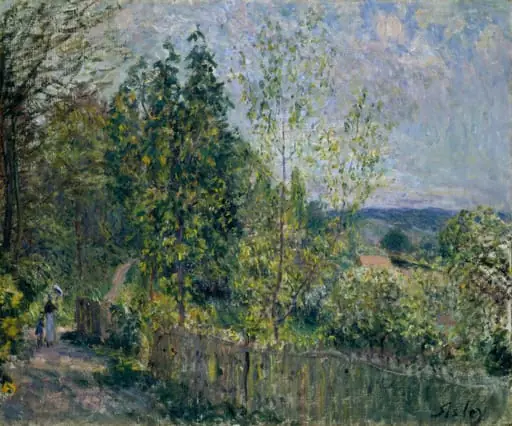 The Road in the Woods
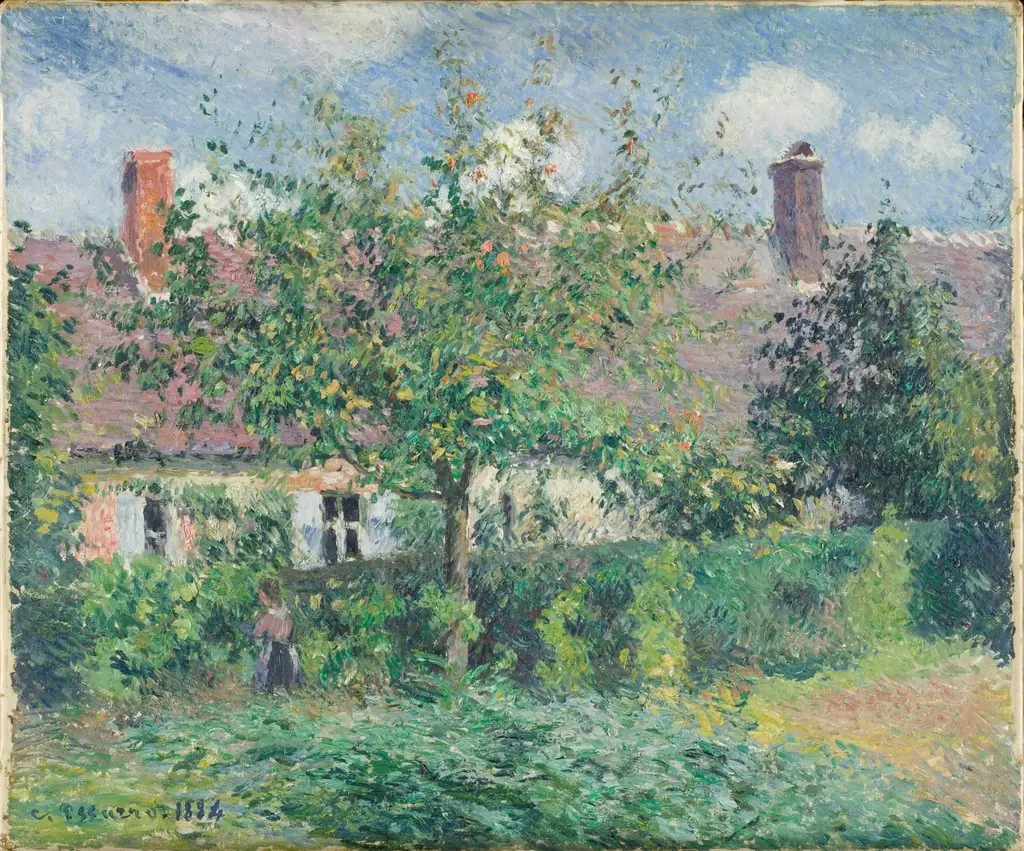 Peasant House at Éragny
 The Delafolie House, Éragny
 Edge of the Woods Near L'Hermitage, Pontoise
 Camille Monet (1847–1879) in the Garden at Argenteuil
 The Road from Moret to Saint-Mammès
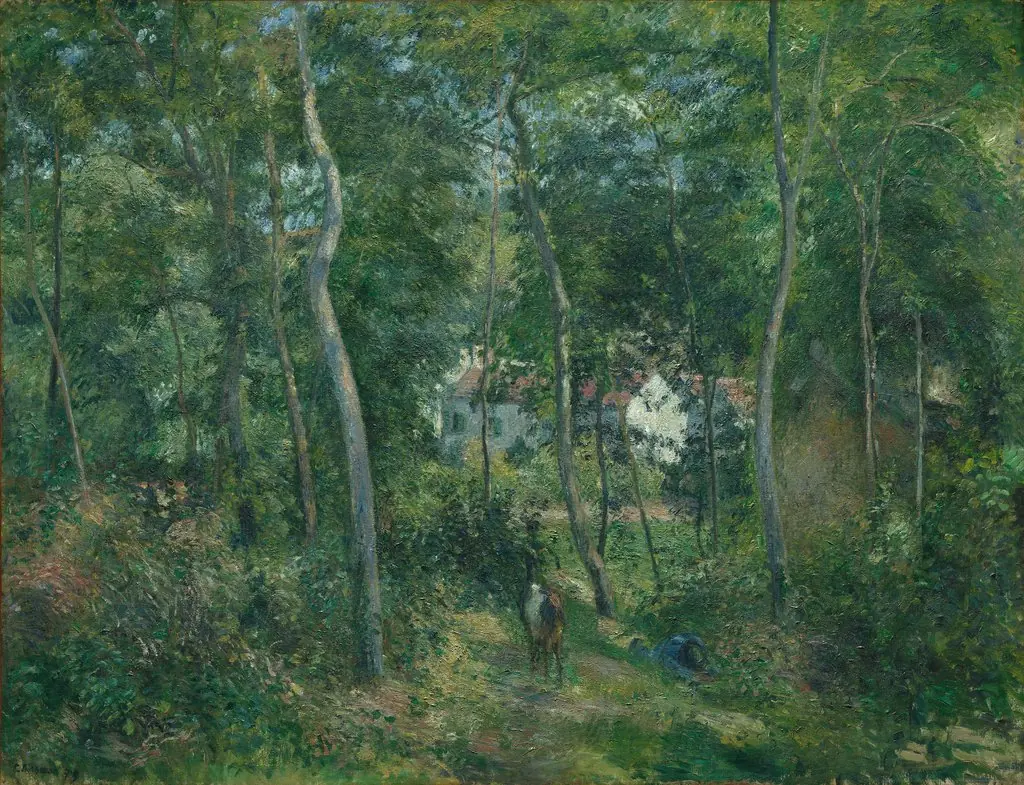 Edge of the Woods Near L'Hermitage, Pontoise
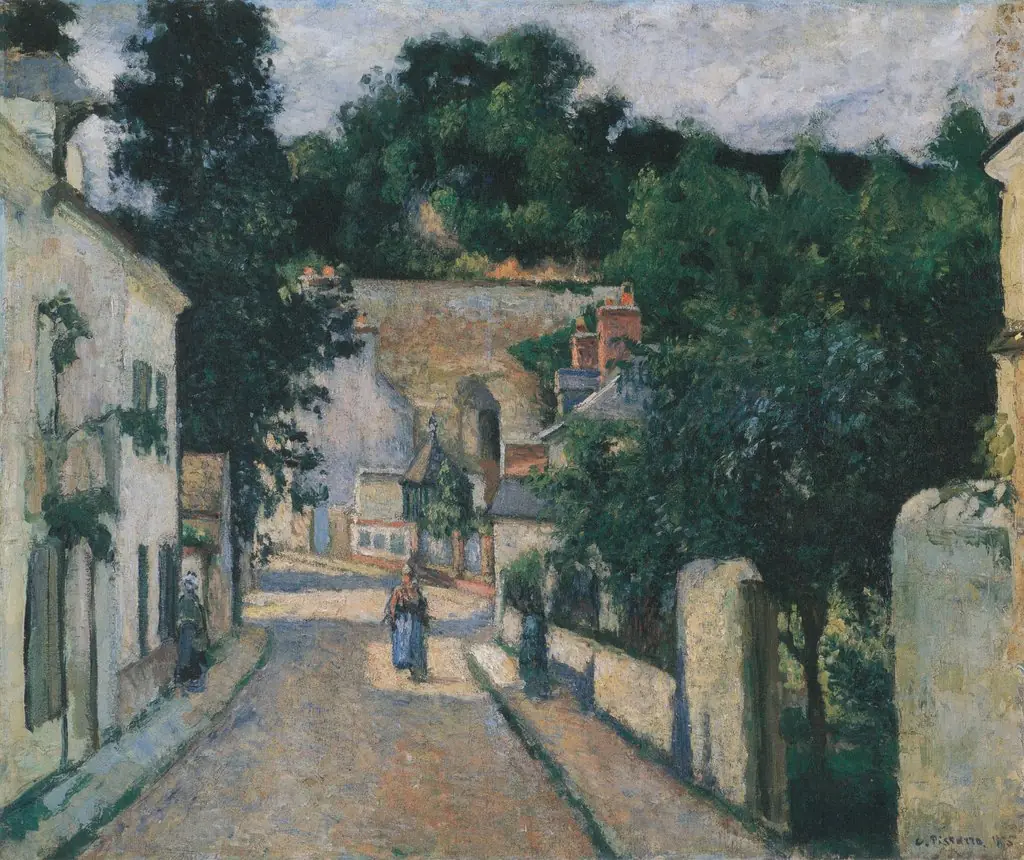 Rue du Haut-de-l'Hermitage, Pontoise
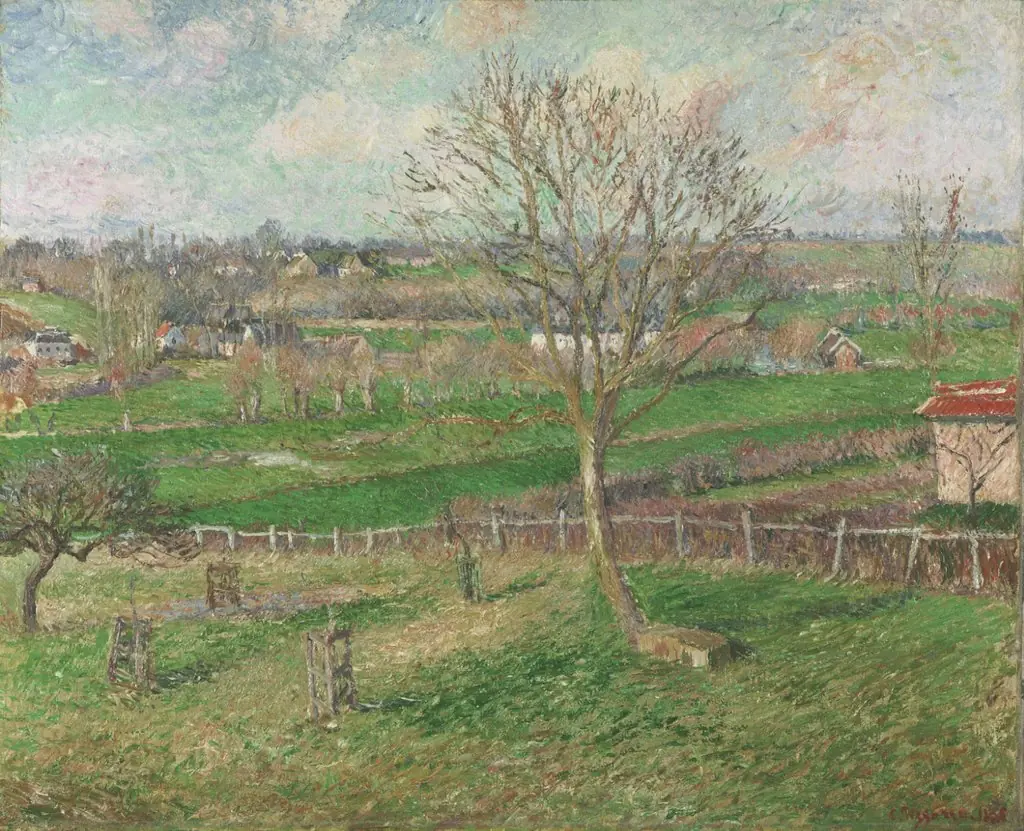 The Field and the Great Walnut Tree in Winter, Eragny