Artwork
House of Père Lacroix
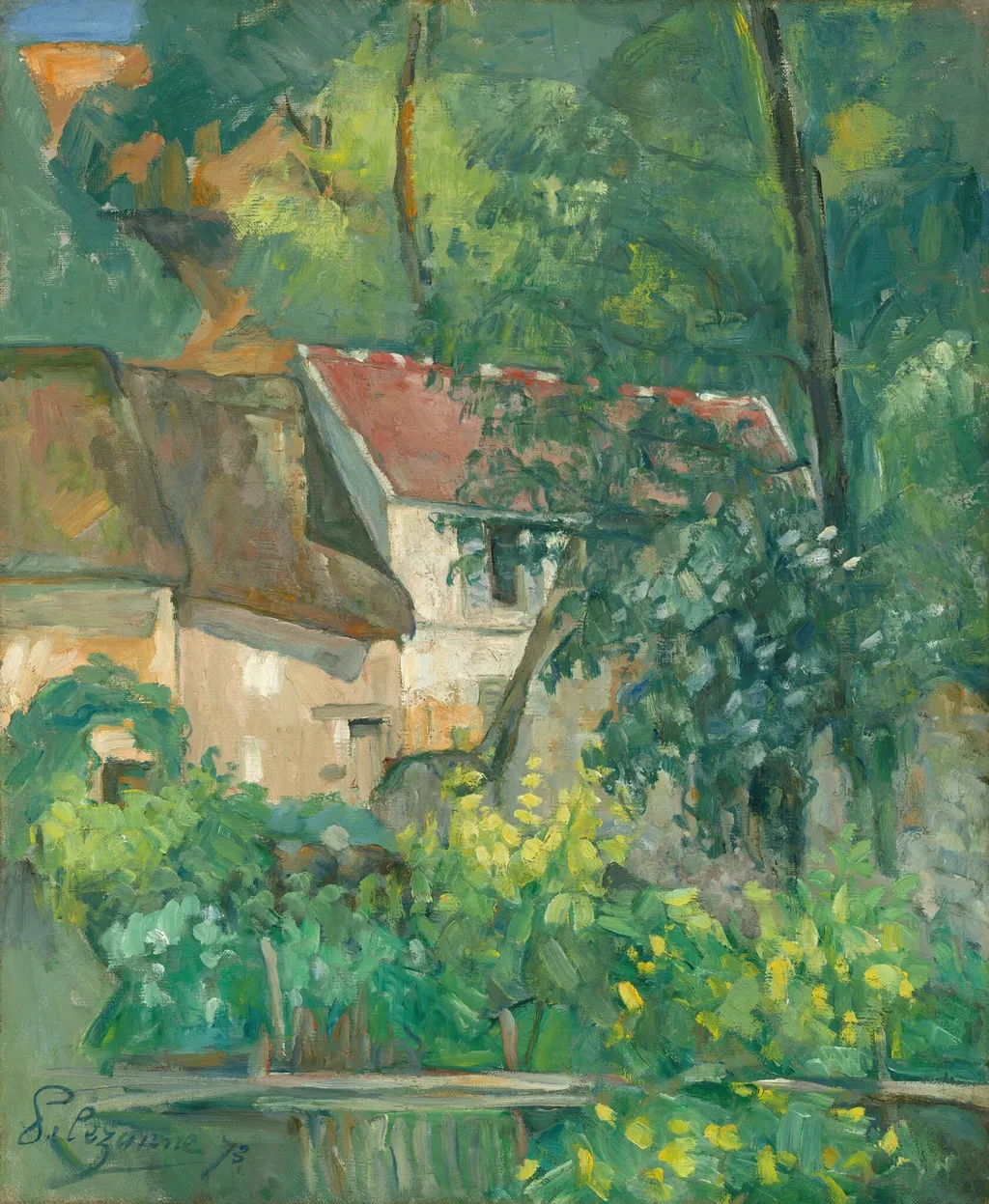
House of Père Lacroix is an oil painting by the Impressionist artist Paul Cézanne. It dates from 1873 and is held in the collection of the National Gallery of Art.
- Inscription
- Inscribed:lower left: P. Cezanne 73.
About this work
A small house with a few windows and a door sits behind a single tree. Paul Cezanne treated the ordinary scene quietly, apart from the more dramatic subjects others were painting then. Oil on canvas, 1873.
History & Provenance
Prior to Dale's ownership, the canvas passed through the collections of Auguste Pellerin, Alphonse Kann, Bernheim-Jeune, and Ambroise Vollard.
House of Père Lacroix was painted by Paul Cézanne in 1873 in oil on canvas. The documented ownership chain begins with Ambroise Vollard (1866–1939) in Paris, followed by Bernheim-Jeune in Paris, and then Alphonse Kann (1870–1948) of Saint-Germain-en-Laye. The work subsequently passed to Auguste Pellerin (1852–1929) in Paris; notably, it was not included in Pellerin's 1926 Paris sale, and at his death in 1929 the collection was inherited by his son Jean-Victor Pellerin and his daughter Mme René Lecomte.
The painting next appears with Durand-Ruel in New York, which sold it on 27 November 1937 to Chester Dale (1882–1962) of New York, according to Chester Dale papers in NGA curatorial files. Dale bequeathed the painting in 1963 to the National Gallery of Art, where it remains.
The painting is held in the collection of the National Gallery of Art in Washington, D.C., having entered the institution in 1963 as part of the bequest from Chester Dale. Dale originally acquired the work from Durand-Ruel in New York on November 27, 1937. Prior to Dale's ownership, the canvas passed through the collections of Auguste Pellerin, Alphonse Kann, Bernheim-Jeune, and Ambroise Vollard.
Although specific inventory numbers are not detailed in the provided records, the work's transfer from Dale to the gallery is documented in the museum's curatorial files. The piece has a recorded exhibition history that includes the 1st Impressionist Exhibition.
Context
The 1873 landscape by Paul Cézanne, known as House of Père Lacroix, entered public view through its participation in the inaugural impressionist exhibition, signaling early acknowledgment of the artist’s innovative treatment of space. Its documented chain of ownership, from Ambroise Vollard and Bernheim‑Jeune to Alphonse Kann and Chester Dale, highlights the painting’s circulation among major collectors and its eventual bequest to the National Gallery of Art, a trajectory noted in curatorial records. Scholarship on Cézanne’s mature landscape has repeatedly cited this work for its synthesis of naturalistic detail and abstracted geometry, positioning it within the broader development of modernist painting.
Overview
Paul Cézanne's House of Père Lacroix, an oil on canvas from 1873, presents a quiet landscape featuring a modest dwelling and a prominent tree. This painting exemplifies the artist's early engagement with everyday subjects, marking a departure from more conventional landscape compositions. It showcases his developing interest in the structural qualities of natural and architectural forms.
Subject & Meaning
The artwork centers on a simple house, detailed with a few windows and a door, partially obscured by a tree in the foreground. This choice of an ordinary, tranquil scene diverges from the more dramatic or narrative subjects often favored by artists of the era. Cézanne's focus here appears to be on the intrinsic presence and form of the domestic environment rather than grand spectacle.
Technique & Style
Cézanne employed an observational and understated style in House of Père Lacroix, setting it apart from the more expressive works of his contemporaries. The application of oil paint, potentially utilizing impasto, contributes to the texture and solidity of the depicted forms. This approach highlights his evolving method of constructing visual reality through deliberate brushwork and color.
Own this work as a print
Artist & collection

Artist
Paul Cézanne ( say-ZAN, UK also siz-AN, US also say-ZAHN; French: ; Occitan: Pau Cesana; 19 January 1839 – 22 October 1906) was a French Post-Impressionist painter whose work introduced new modes of representation,…

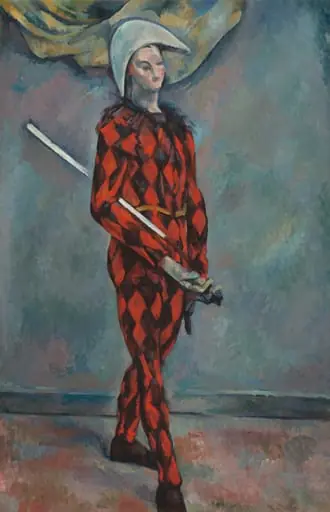 Harlequin
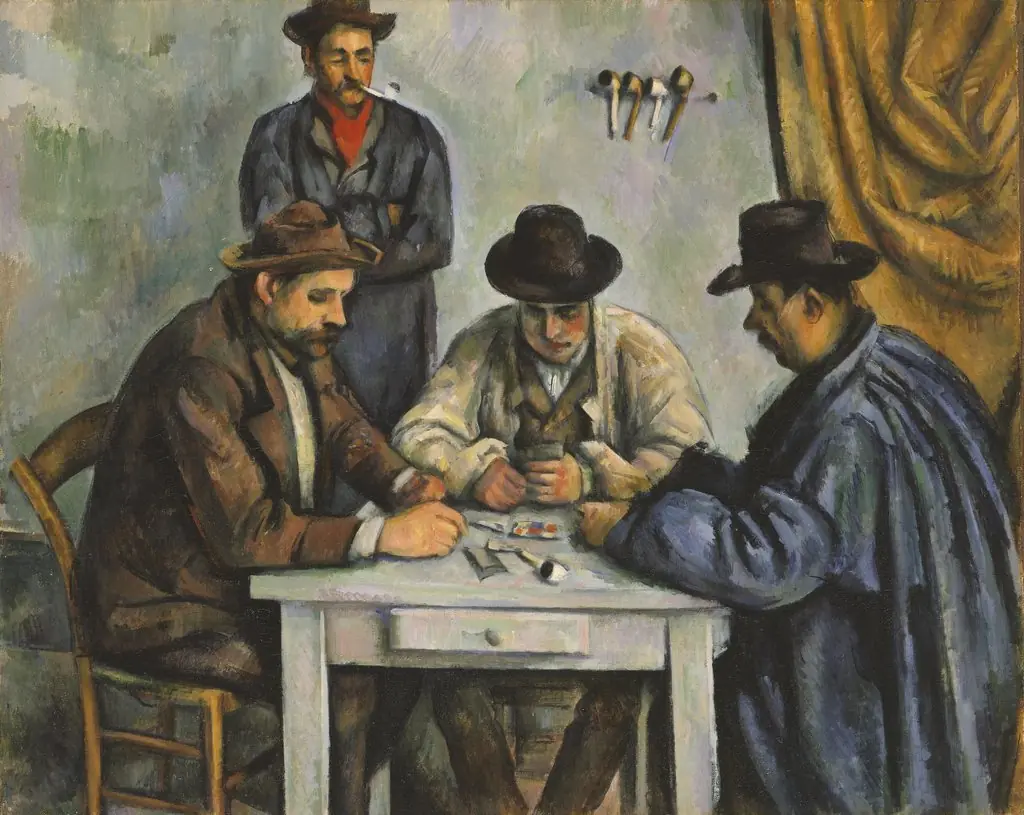 The Card Players
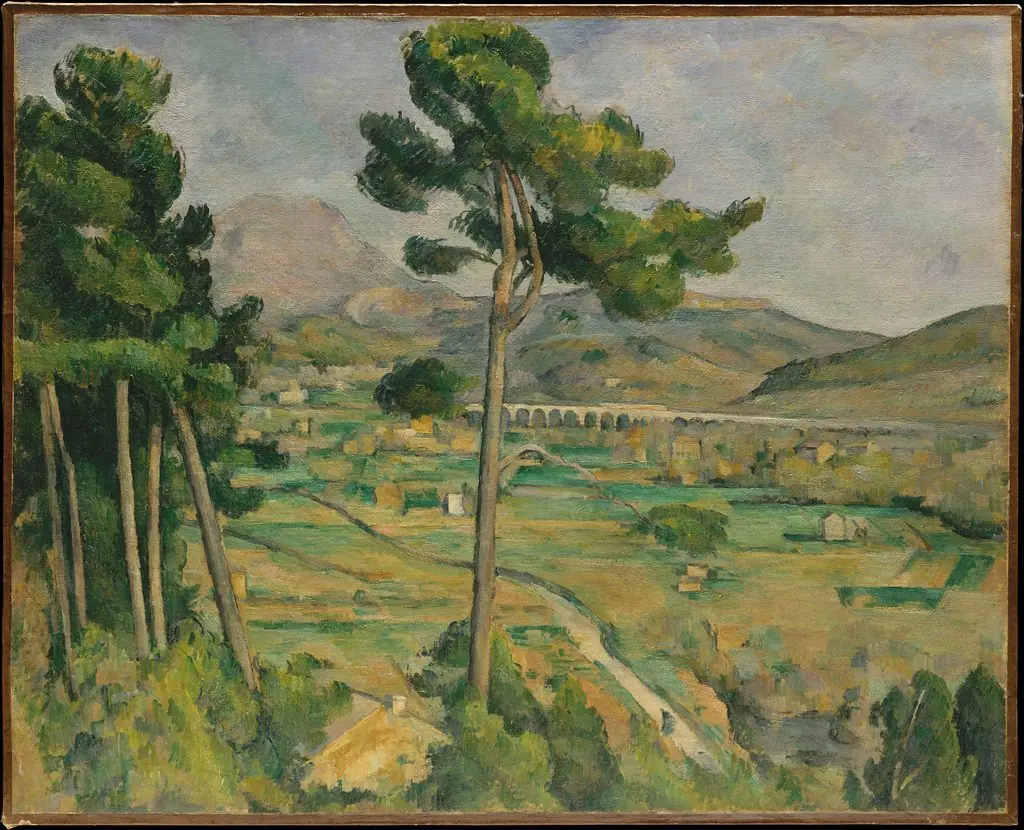 Mont Sainte-Victoire and the Viaduct of the Arc River Valley
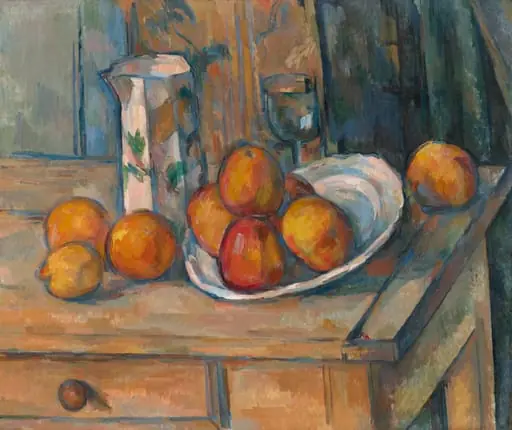 Still Life with Milk Jug and Fruit
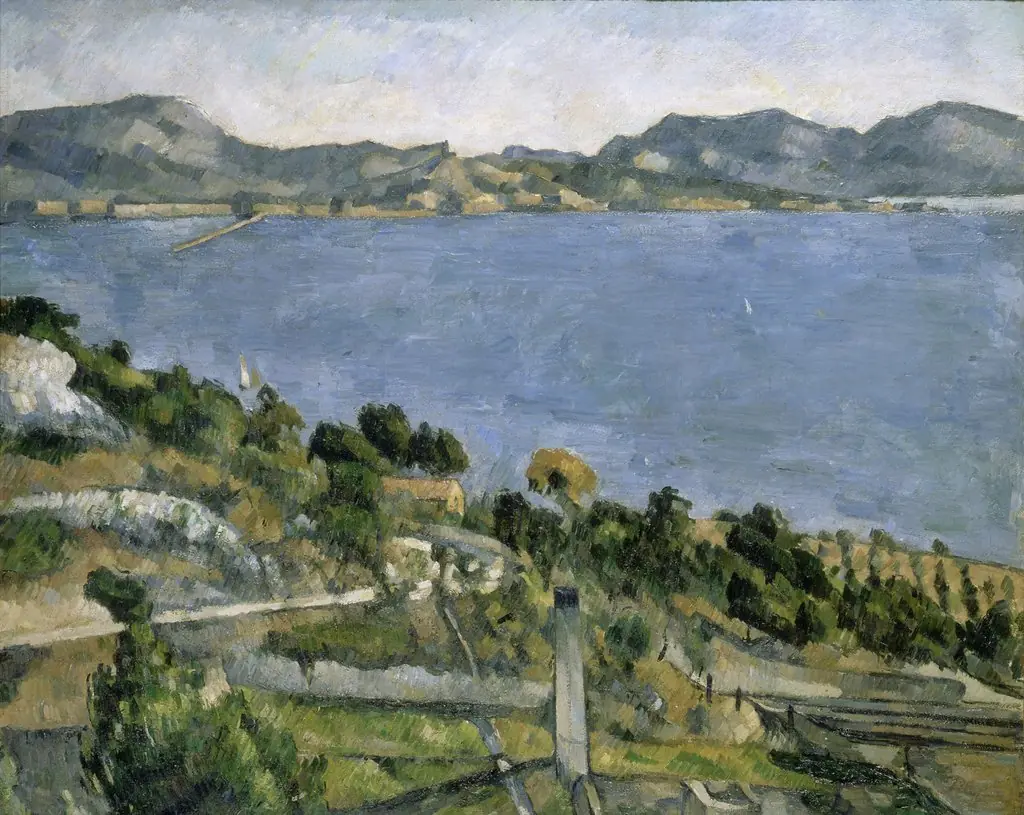 Le Golfe de Marseille vu de l'Estaque (The Gulf of Marseille Seen from L'Estaque)
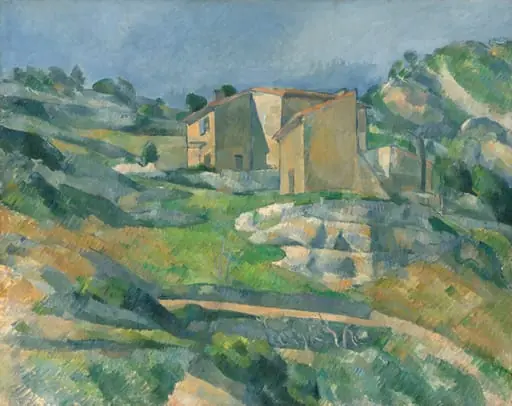
- Houses in Provence: The Riaux Valley near L'Estaque
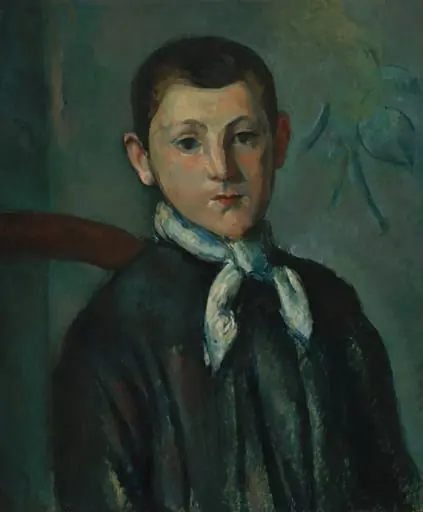 Louis Guillaume
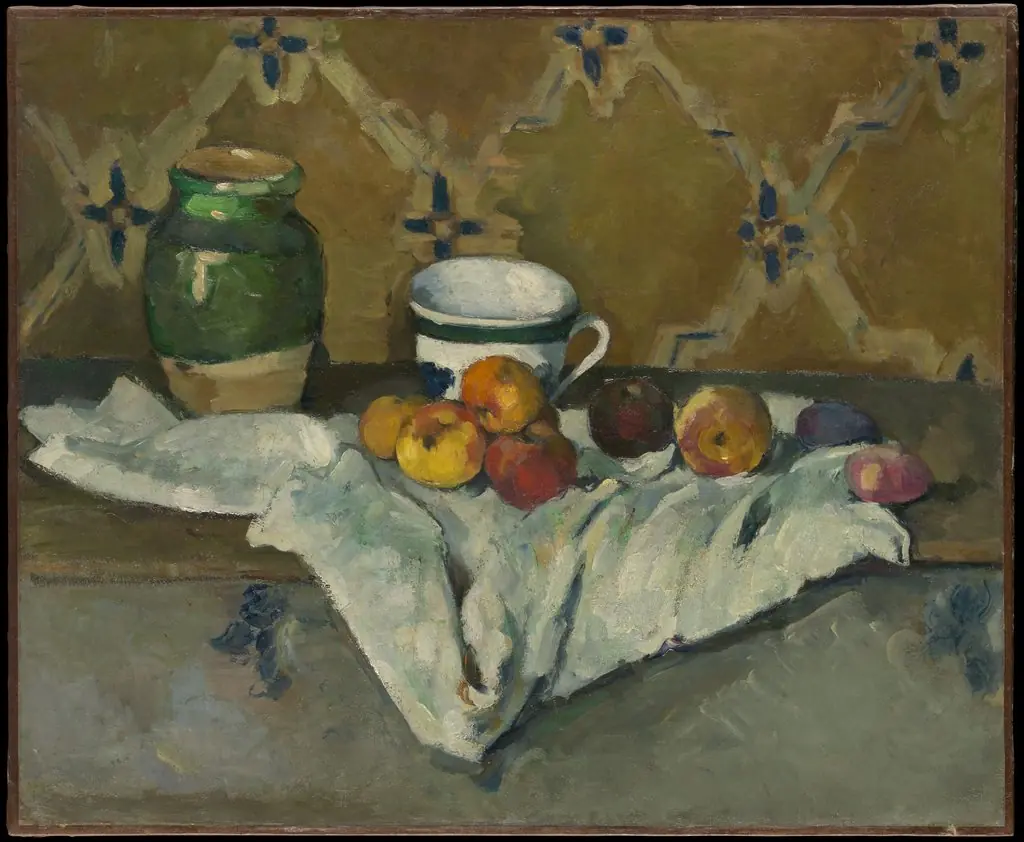 Still Life with Jar, Cup, and Apples
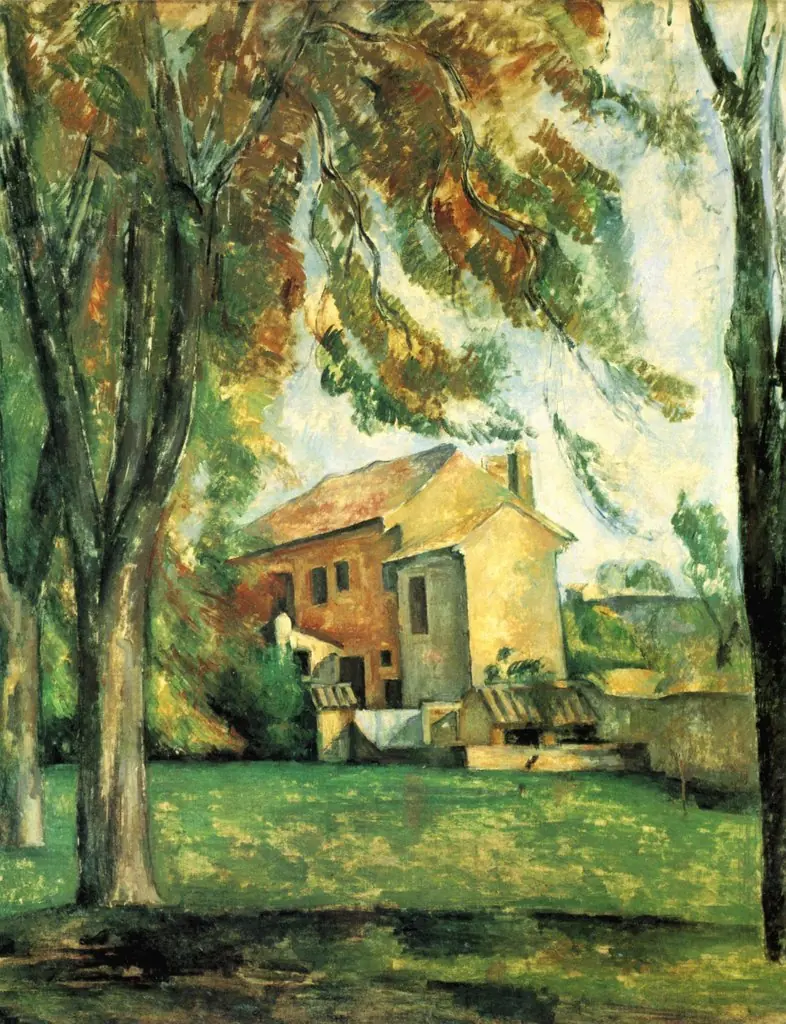 Farmhouse and Chestnut Trees at Jas de Bouffan
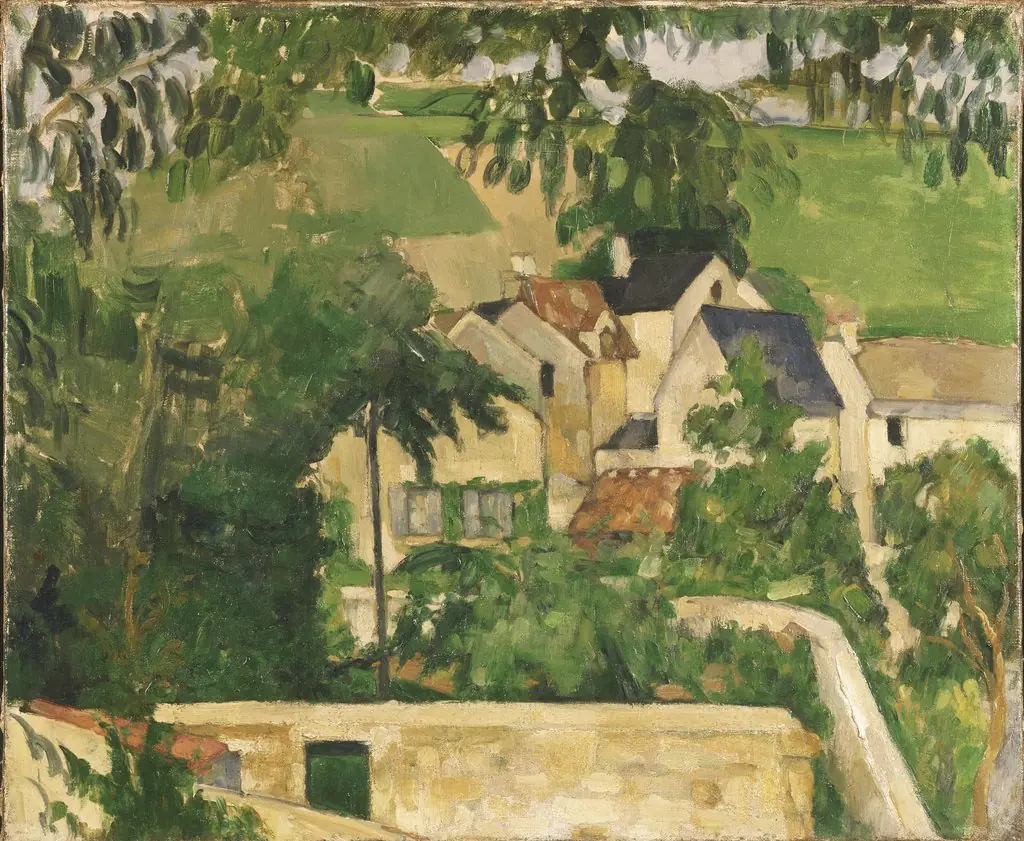 Quartier Four, Auvers-sur-Oise (Landscape, Auvers)
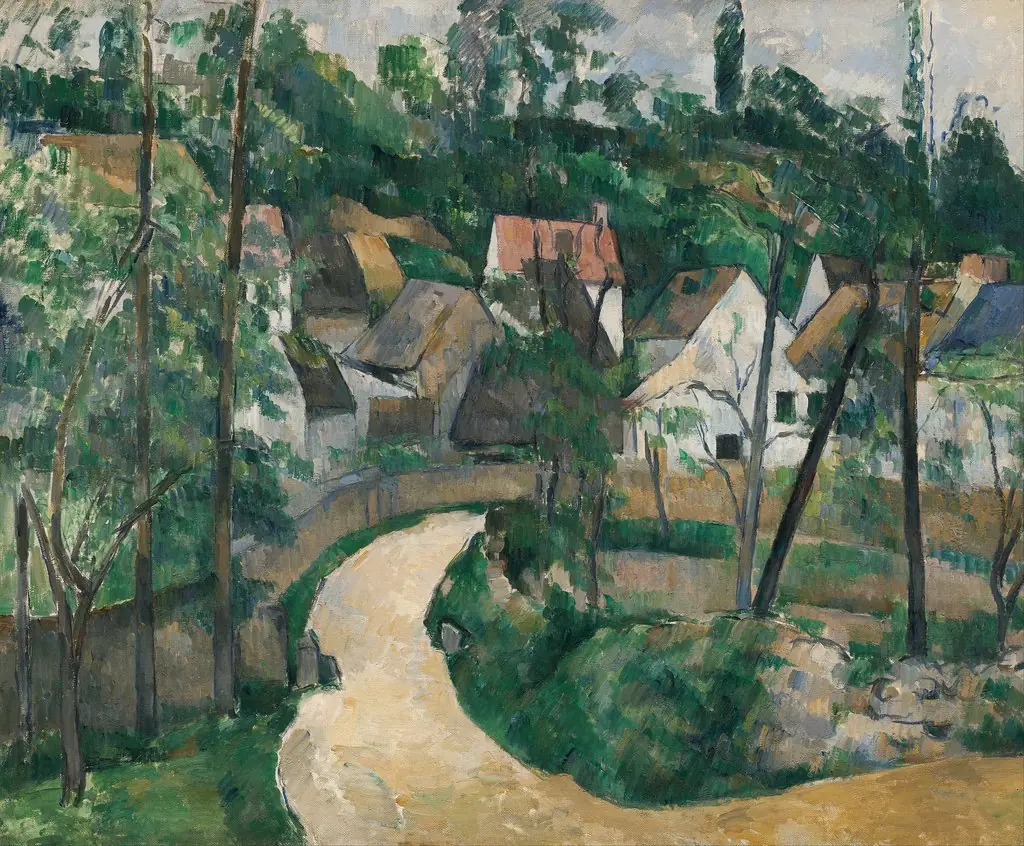 La Route tournante (Turn in the Road)
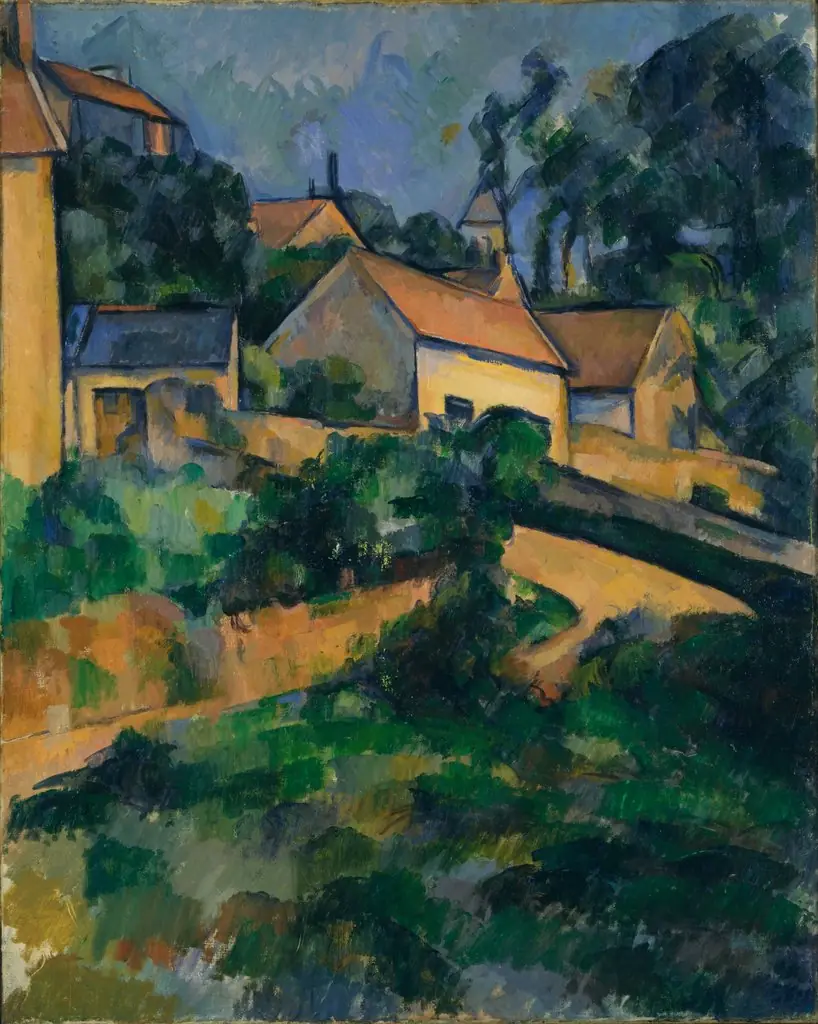 Turning Road at Montgeroult
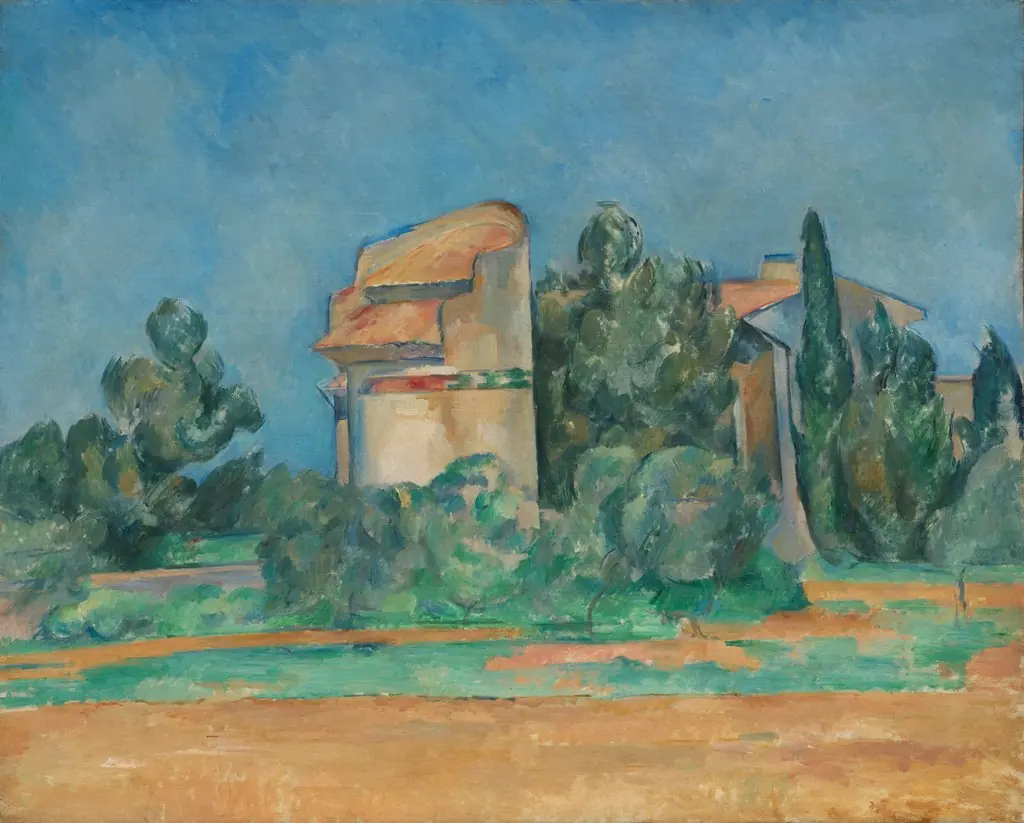 The Pigeon Tower at Bellevue
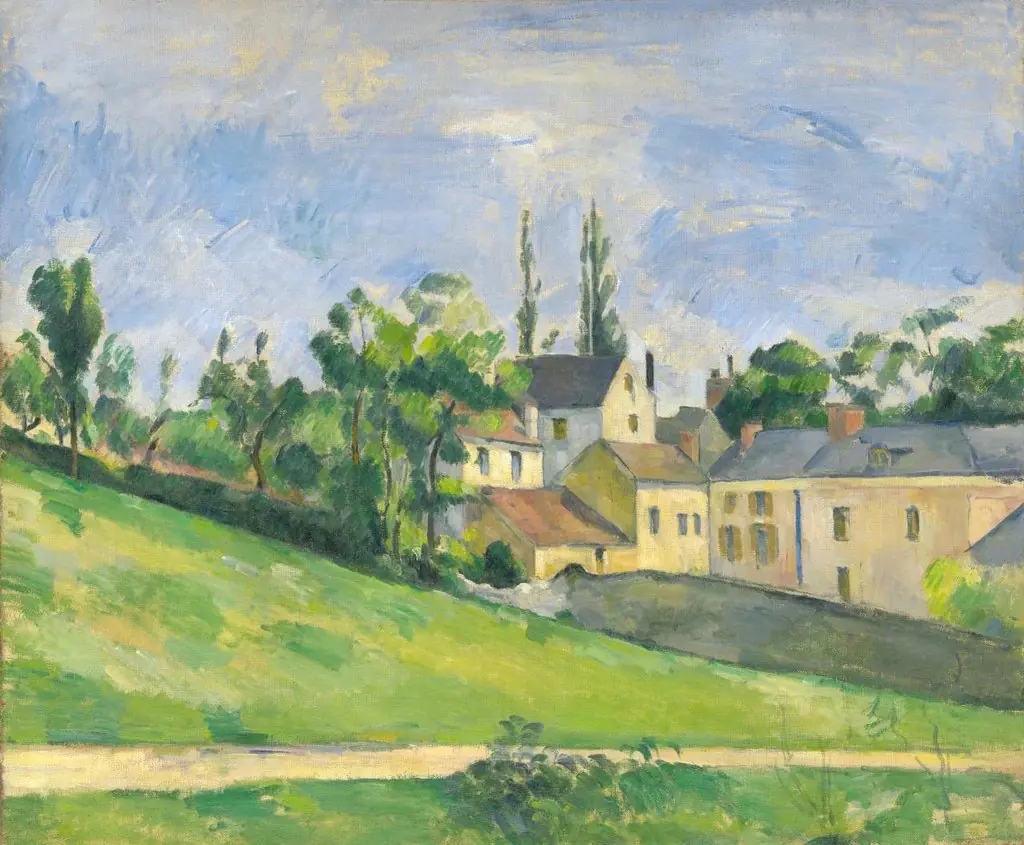 The uphill road
 Case din Bretania
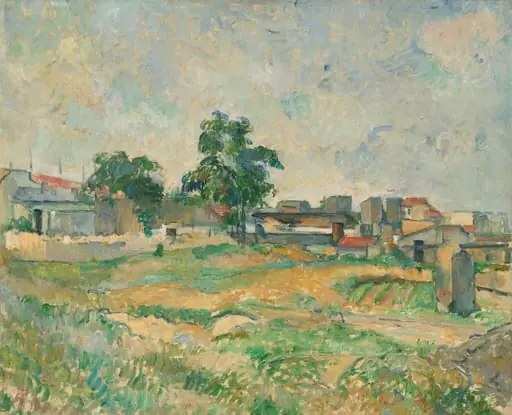 Landscape near Paris
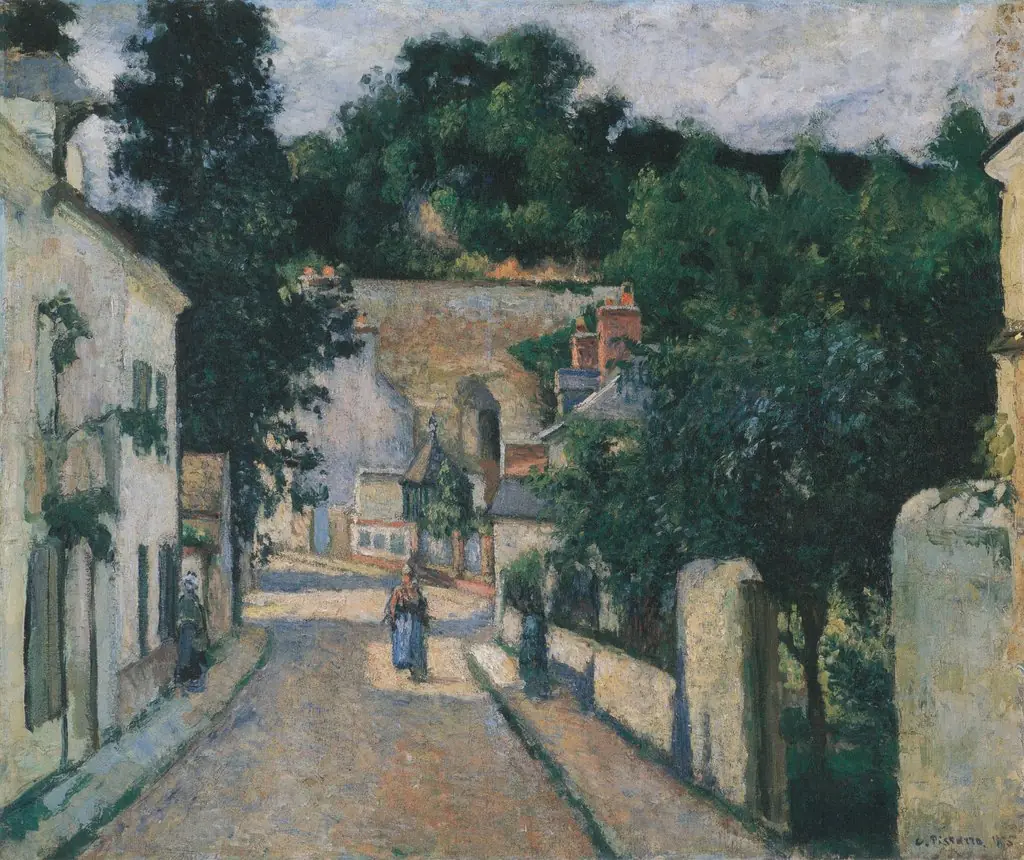 Rue du Haut-de-l'Hermitage, Pontoise
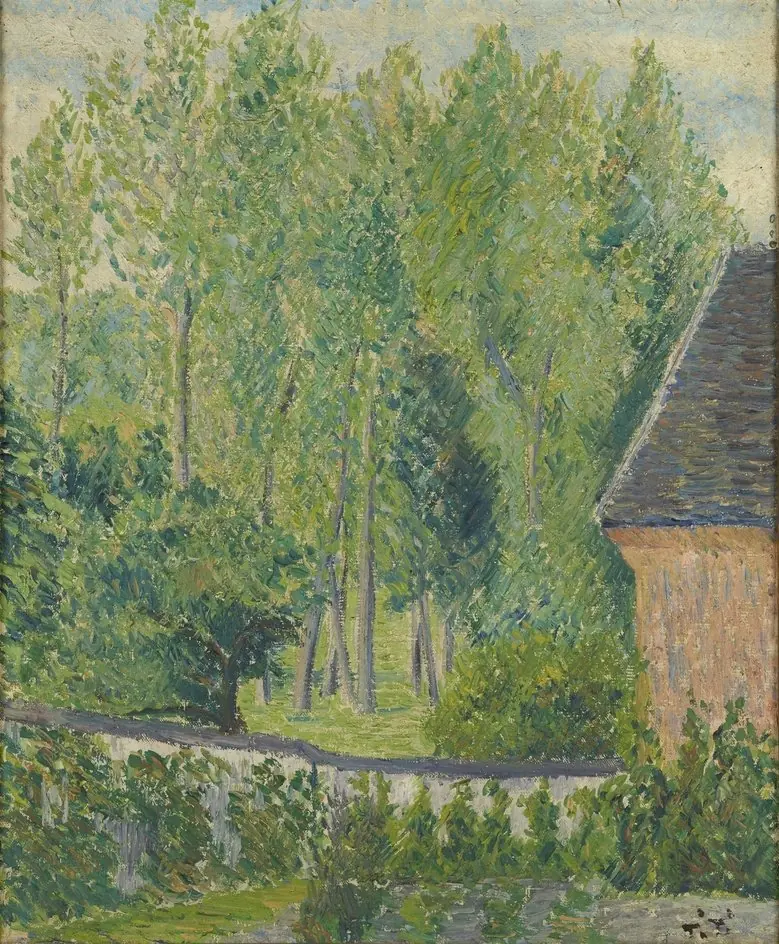 Poplar Trees
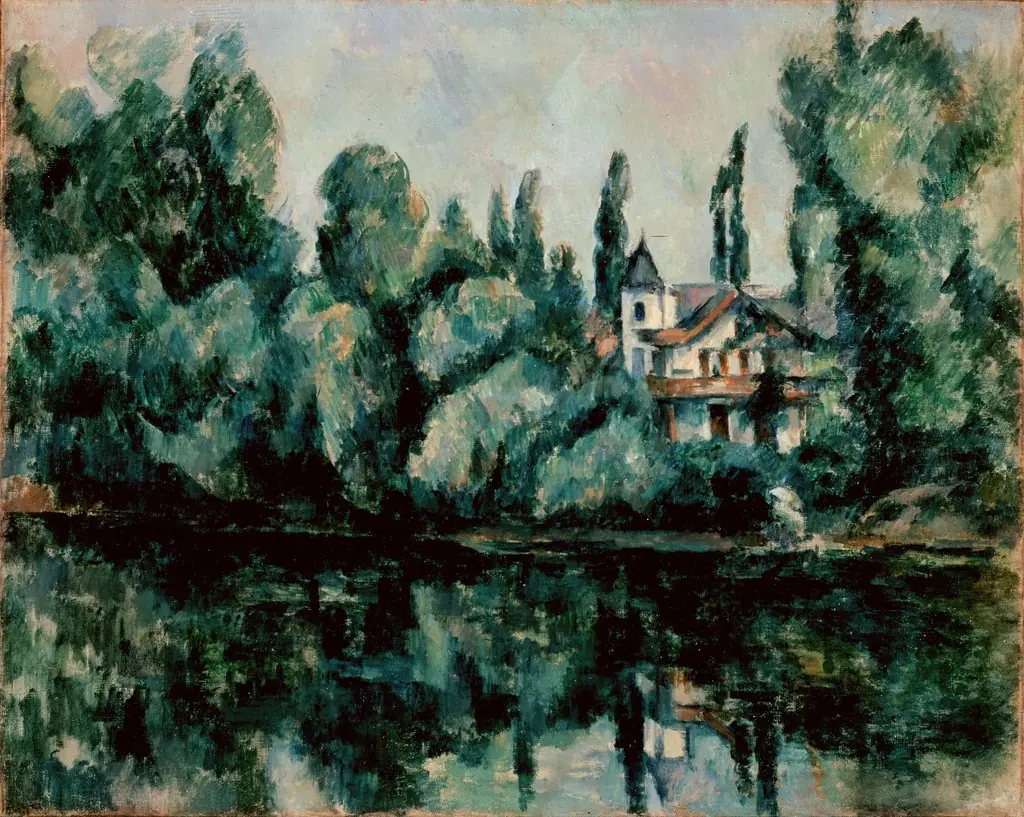 Along the Banks of the Marne