Artwork
Smith Square, Westminster
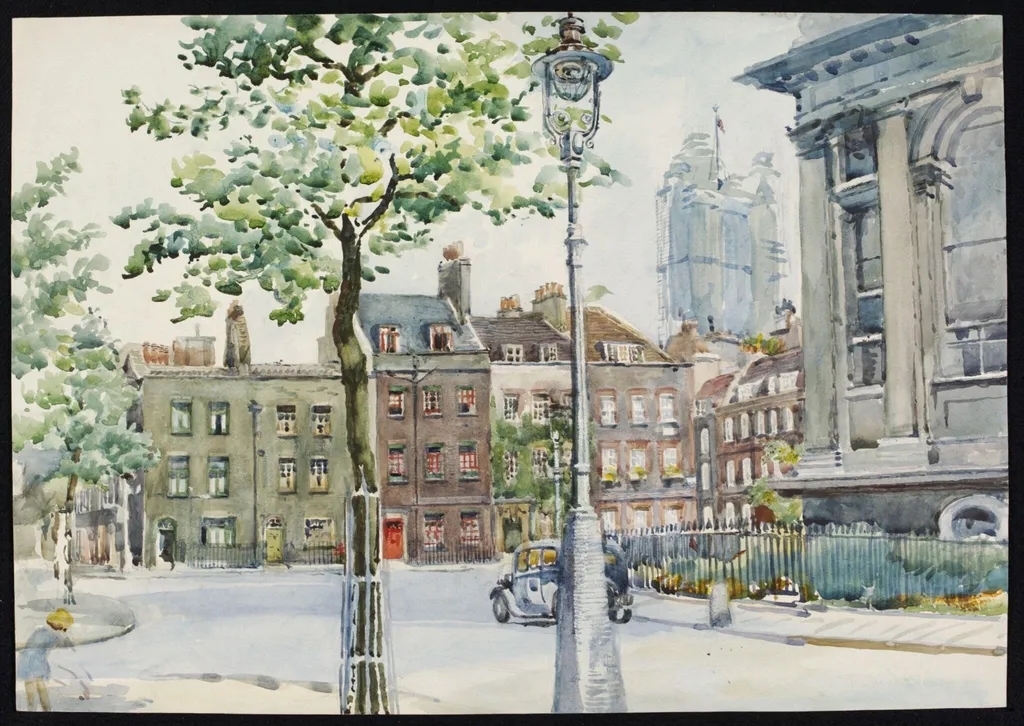
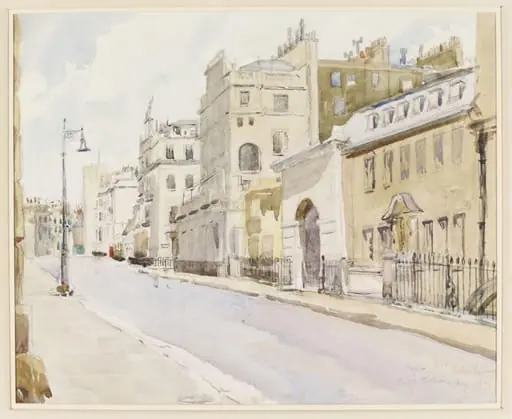
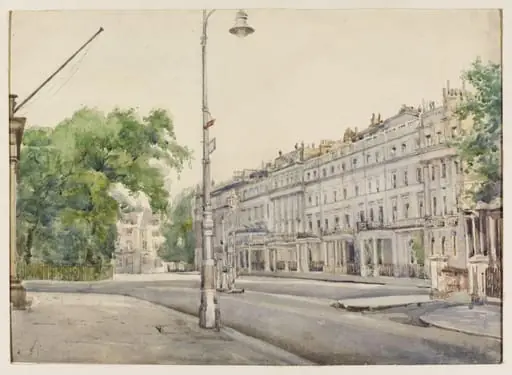
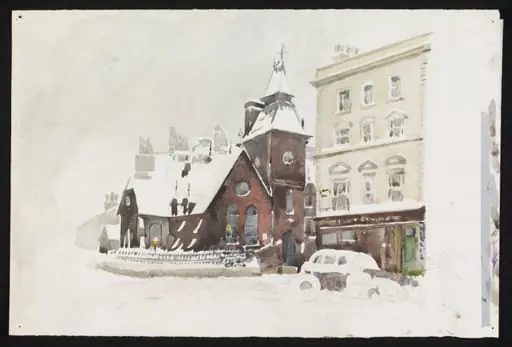
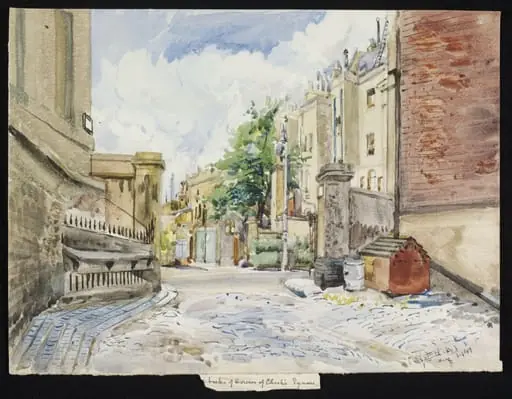
Smith Square, Westminster is a watercolor work on paper by the Social Realist artist Ediss. It dates from 1942 and is held in the collection of the Victoria and Albert Museum. Created in 1942, this watercolour records the urban scene of Smith Square in Westminster.
About this work
Overview
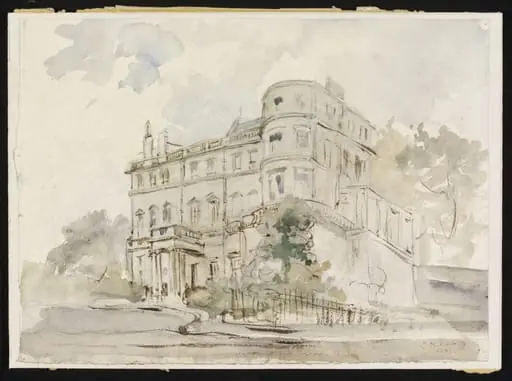
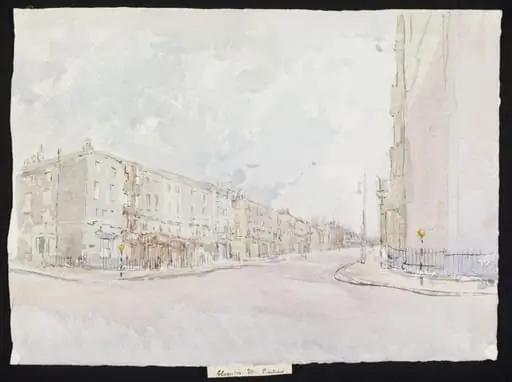
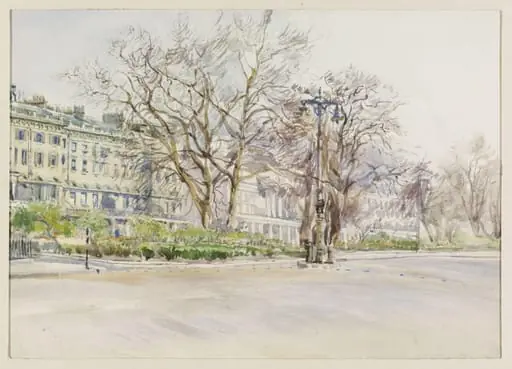
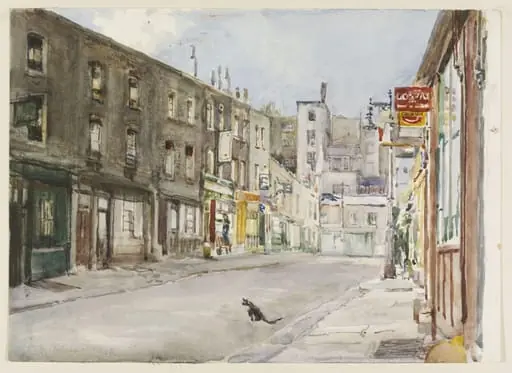
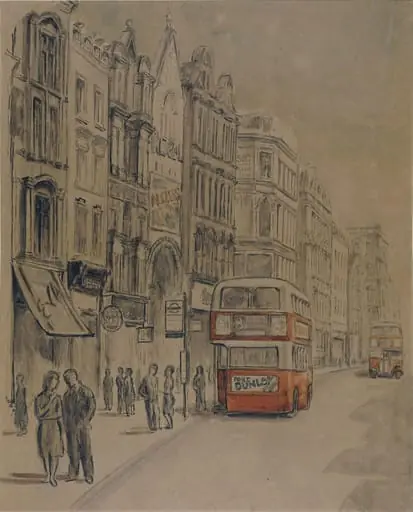
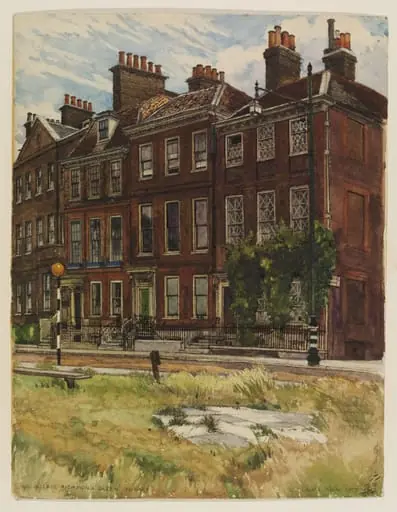
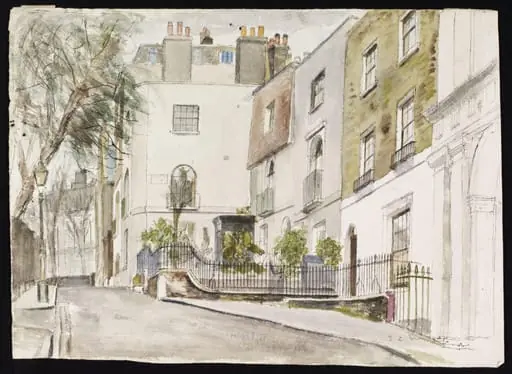
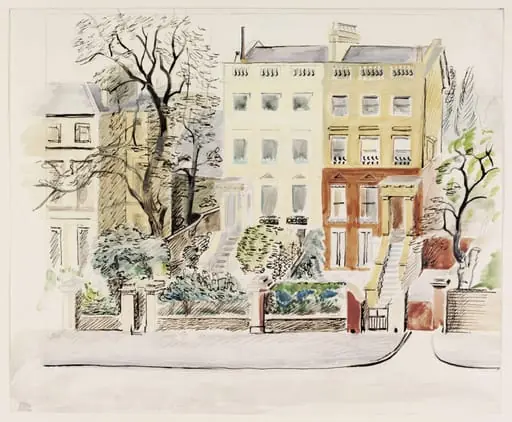
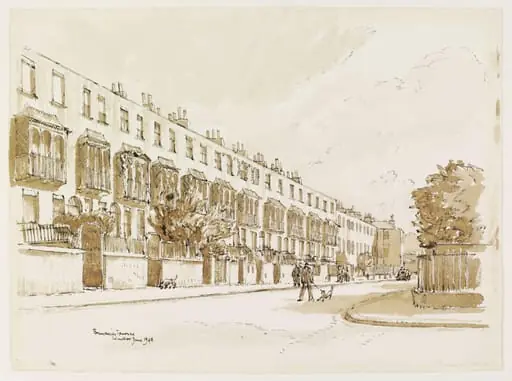
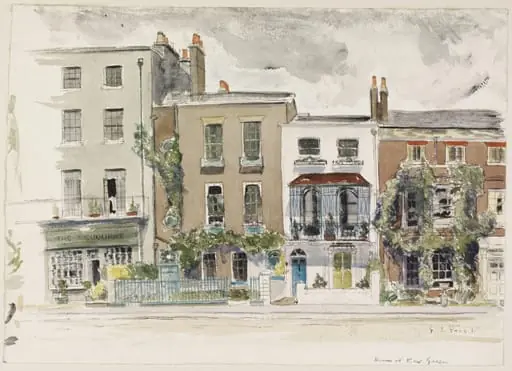
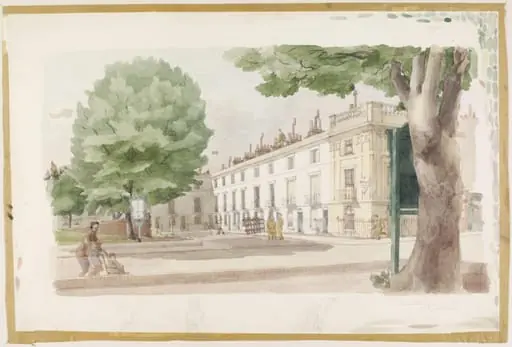
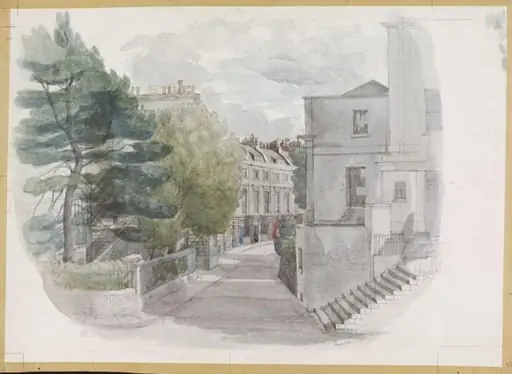
Created in 1942, this watercolour records the urban scene of Smith Square in Westminster. Executed as part of the Recording Britain scheme, the work captures a quiet city corner with modest traffic, a lamppost, and a solitary tree, rendered in muted browns, greys and soft greens. The composition conveys a tranquil moment amid the capital’s architecture.
Subject & Meaning
The painting presents a street intersection framed by tall, modestly detailed buildings. A single car and a few pedestrians traverse the pavement, while a tree in the foreground introduces a touch of nature. The subdued palette and gentle handling suggest a contemplative view of everyday urban life, emphasizing stability and calm during a period of national uncertainty.
Technique & Style
Executed in watercolor, the artist employs delicate washes and restrained brushwork to model architectural forms and foliage. Layered translucent tones create atmospheric depth, while the limited colour range reinforces the scene’s quiet mood. The handling balances precise structural outlines with soft, blended backgrounds, characteristic of the Recording Britain aesthetic.
History & Provenance
The work belongs to the Recording Britain project, a wartime initiative overseen by Sir Kenneth Clark and financed by the Pilgrim Trust. Between 1940 and 1943, ninety‑seven artists produced over fifteen hundred pieces documenting sites deemed at risk from war damage or change. This watercolour reflects that effort to preserve a visual record of England’s built environment.
Artist & collection
Artist
Ediss painted London’s quiet streets and squares in delicate watercolours during the early 1940s.