Artwork
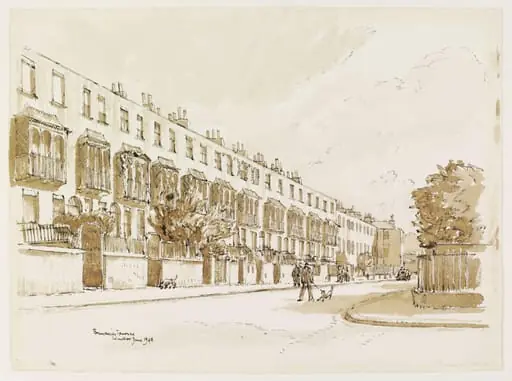
Munster Square, off Euston Road, N.W.1.
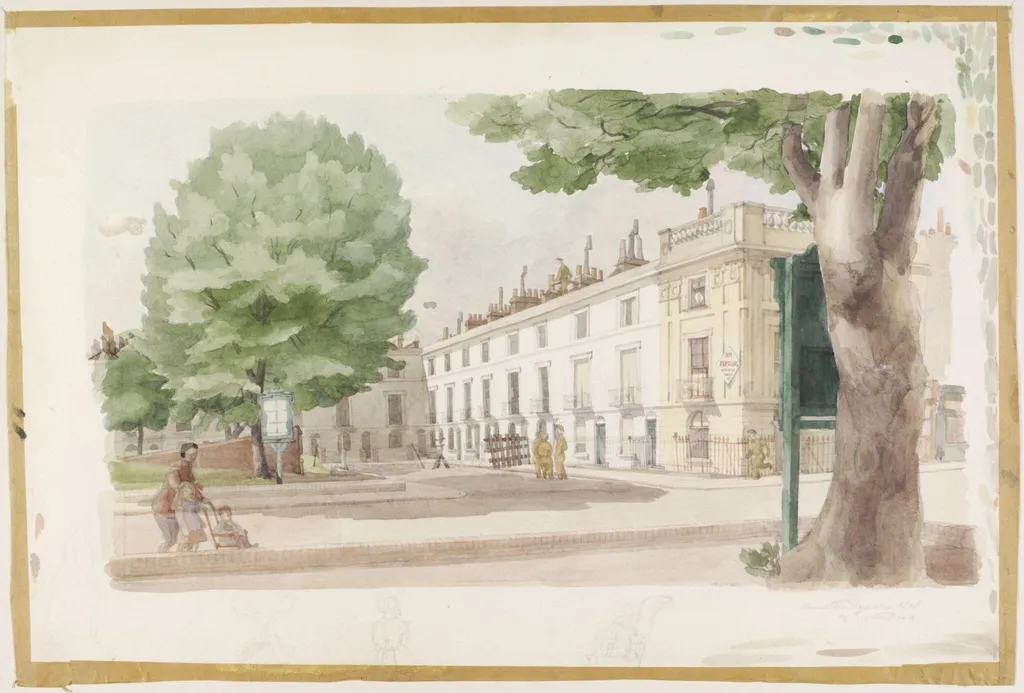
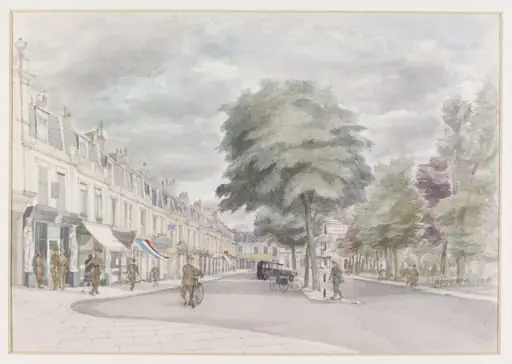
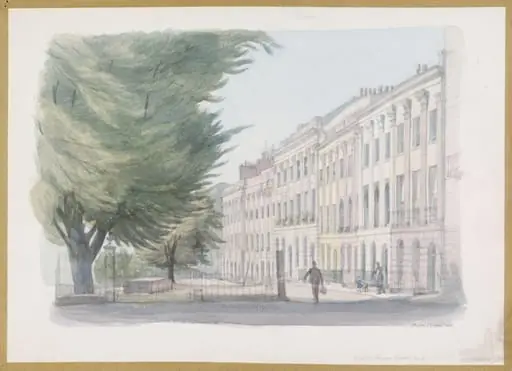
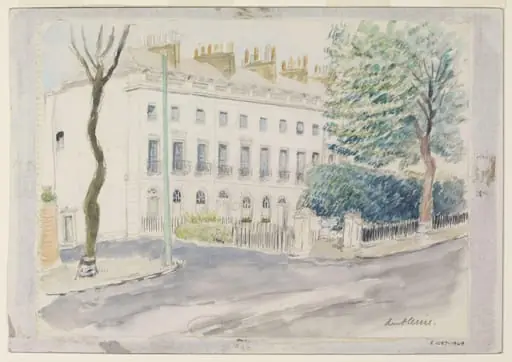
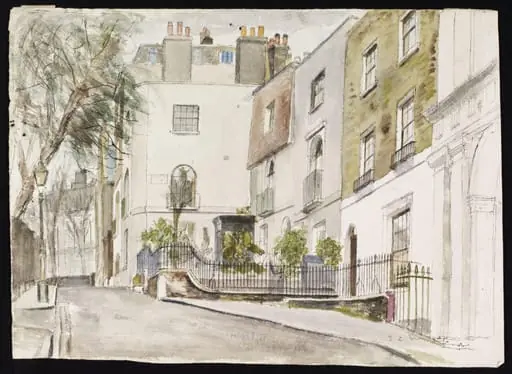
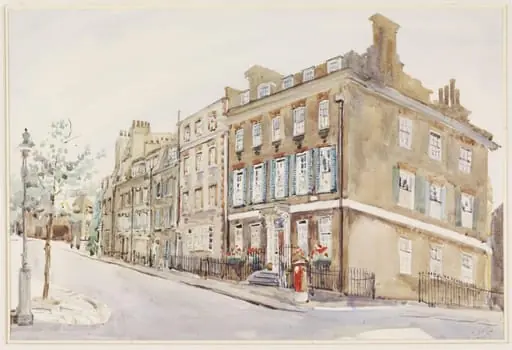
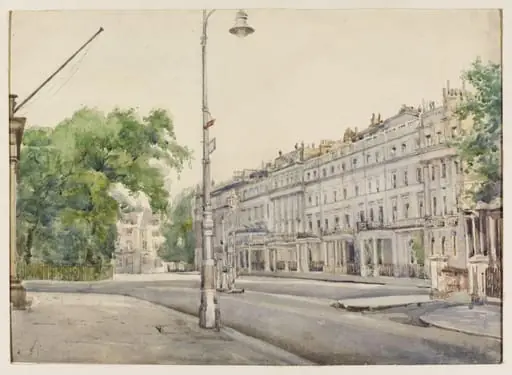
Munster Square, off Euston Road, N.W.1. is a watercolor work on paper by the Social Realist artist Ginger. It dates from 1940 and is held in the collection of the Victoria and Albert Museum. Created in 1940, this watercolour portrays a quiet street scene in Munster Square, off Euston Road in north‑west London.
About this work
Overview
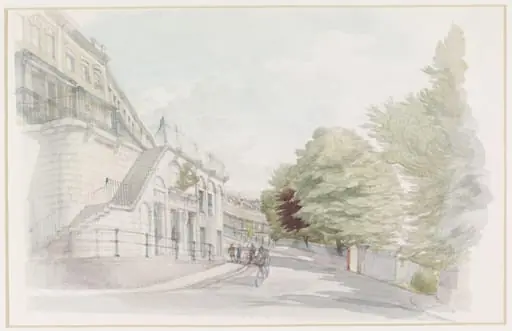
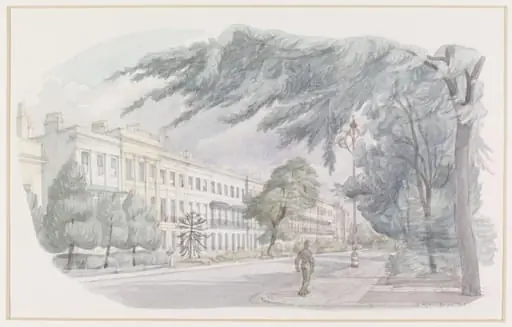
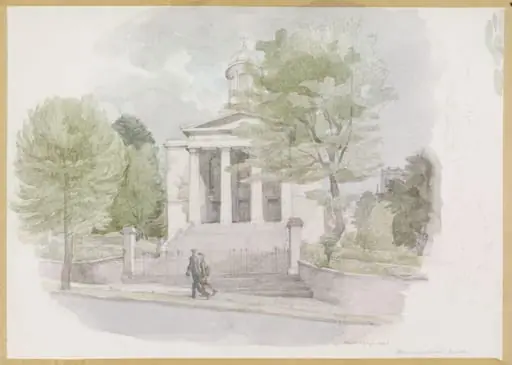
Created in 1940, this watercolour portrays a quiet street scene in Munster Square, off Euston Road in north‑west London. A solitary tree dominates the foreground, its trunk set against the right edge and branches reaching upward. Behind it, a modest row of buildings with chimneys and windows recedes into the distance, establishing a simple urban landscape.
Subject & Meaning
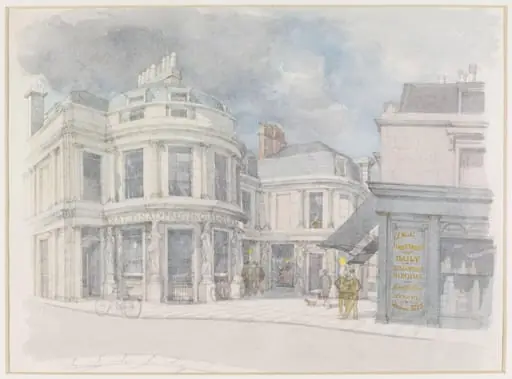
The composition includes a figure pushing a pram on the left and a small group of individuals in yellow uniforms positioned toward the centre, suggesting everyday life during wartime. The calm atmosphere, rendered through muted tones and gentle brushwork, reflects a sense of ordinary continuity amid the broader disruptions of the Second World War.
Technique & Style
The artist employs soft, layered washes and subtle chiaroscuro to model form and create depth, allowing the tree and architecture to appear three‑dimensional. Delicate brushstrokes convey the texture of foliage and the atmospheric quality of the street, while the restrained colour palette reinforces the tranquil mood.
History & Provenance
The work was produced under the Recording Britain initiative, a wartime programme launched by the Committee for the Employment of Artists in Wartime and financed by the Pilgrim Trust. It formed part of a larger effort in which 97 artists generated more than 1,500 pieces to document the British landscape and built environment during the conflict.
Context
Munster Square was selected as a representative English urban setting, aligning with the project's aim to capture scenes that expressed national identity. The inclusion of ordinary figures and everyday architecture illustrates the project's focus on ordinary places rather than grand monuments, providing a snapshot of civilian life in 1940s London.
Artist & collection