Artwork
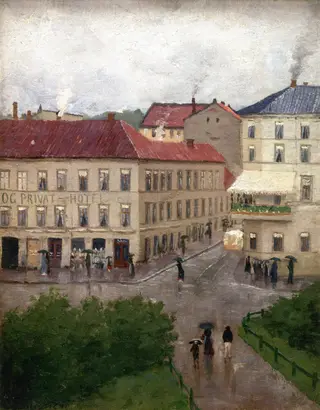
Karl Johan in the Rain
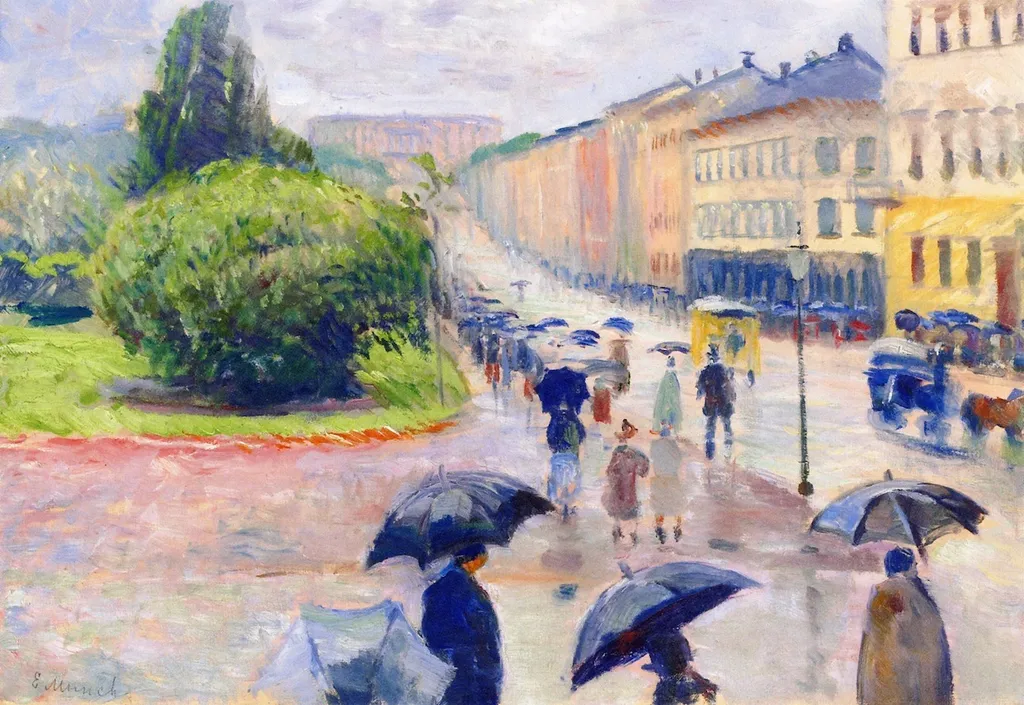
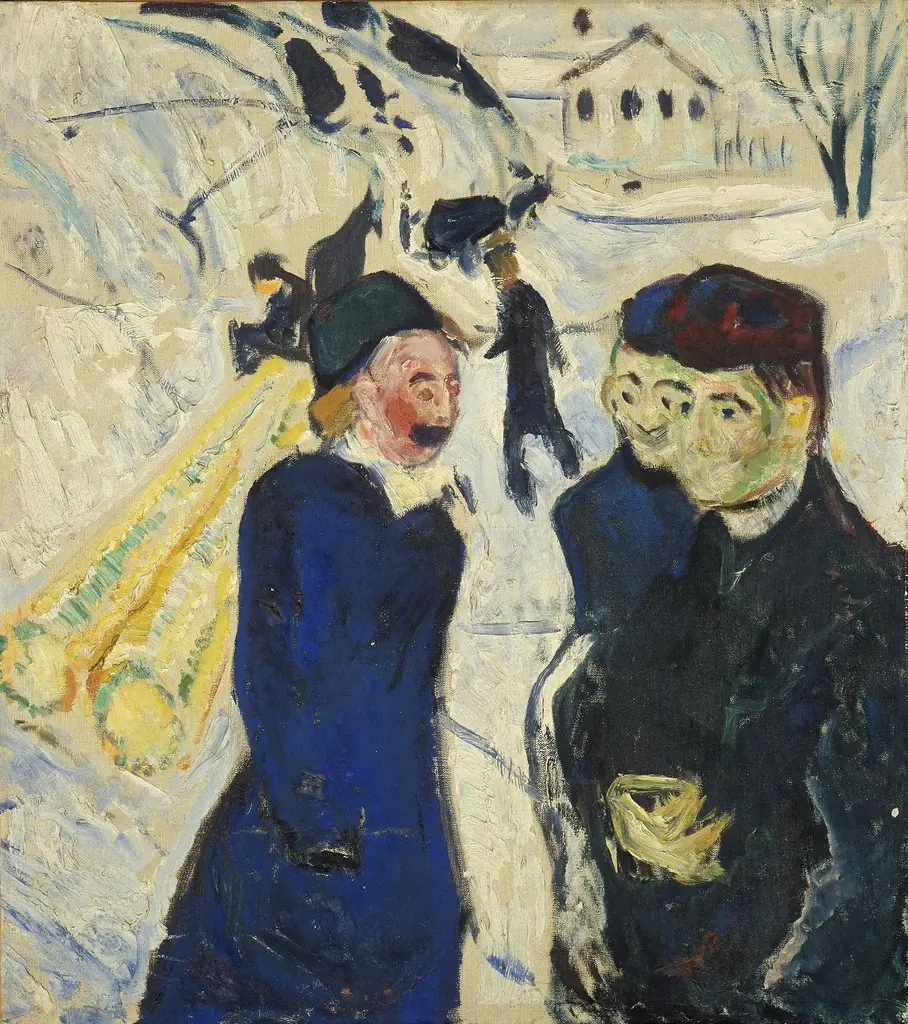
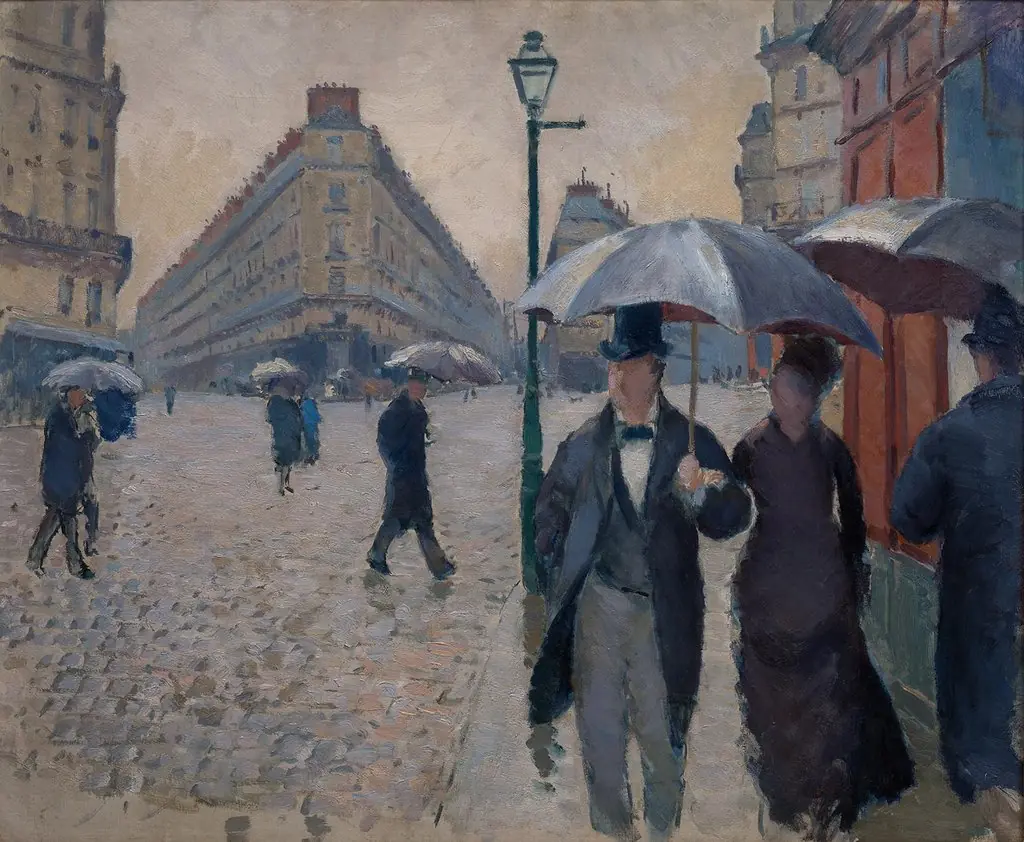
Karl Johan in the Rain is an oil painting by the Post-Impressionist artist Edvard Munch. It dates from 1896 and is held in the collection of the Munch Museum.
About this work
Overview
The scene is neither a documentary record nor a romanticized view, but a psychological rendering of urban isolation under inclement weather.
Painted in 1896 by Norwegian artist Edvard Munch, Karl Johan in the Rain captures a wet, overcast afternoon on Oslo’s central boulevard. Executed in oil, the work belongs to a phase in which Munch moved beyond naturalism to convey inner states through visual rhythm and color. The scene is neither a documentary record nor a romanticized view, but a psychological rendering of urban isolation under inclement weather.
Subject & Meaning
The painting portrays pedestrians moving beneath umbrellas along Karl Johan Street, their faces hidden and bodies blurred by rain and motion. Rather than depicting social interaction, Munch emphasizes anonymity and alienation within the city. The oppressive sky and damp pavement amplify a sense of quiet despair, reflecting his interest in modern life’s emotional undercurrents, loneliness, transience, and the weight of existence.
Technique & Style
Munch employed thick, directional brushwork and a restrained palette of grays, greens, and muted browns to evoke the chill and movement of rain. Impasto accents on the umbrellas and wet pavement create tactile texture, while the blurred figures suggest fleeting presence. The composition’s diagonal lines, umbrellas, buildings, rain, drive the eye through the scene, reinforcing a mood of restless unease rather than calm observation.
History & Provenance
Created during Munch’s time in Oslo, the painting remained in the artist’s possession until his death. It entered the collection of the Munch Museum in Oslo, established to house his personal archive and artworks. The work’s survival within the museum’s holdings reflects its significance as a personal and cultural document of late 19th-century Norwegian urban life.
Context
Munch painted this during a period when European artists were redefining realism through subjective experience. Influenced by Symbolist literature and his own experiences with illness and grief, he rejected idealized depictions of city life. Karl Johan in the Rain aligns with contemporaneous works by artists like Toulouse-Lautrec and Seurat, yet diverges in its emotional rawness and lack of social commentary.
Legacy
The painting stands as a quiet but persistent example of Munch’s ability to translate psychological tension into landscape. While less known than The Scream, it exemplifies his broader project: using everyday scenes to expose the emotional architecture of modern existence. Its presence in the Munch Museum ensures continued study of how personal trauma and urban observation converged in his visual language.
Artist & collection
Artist
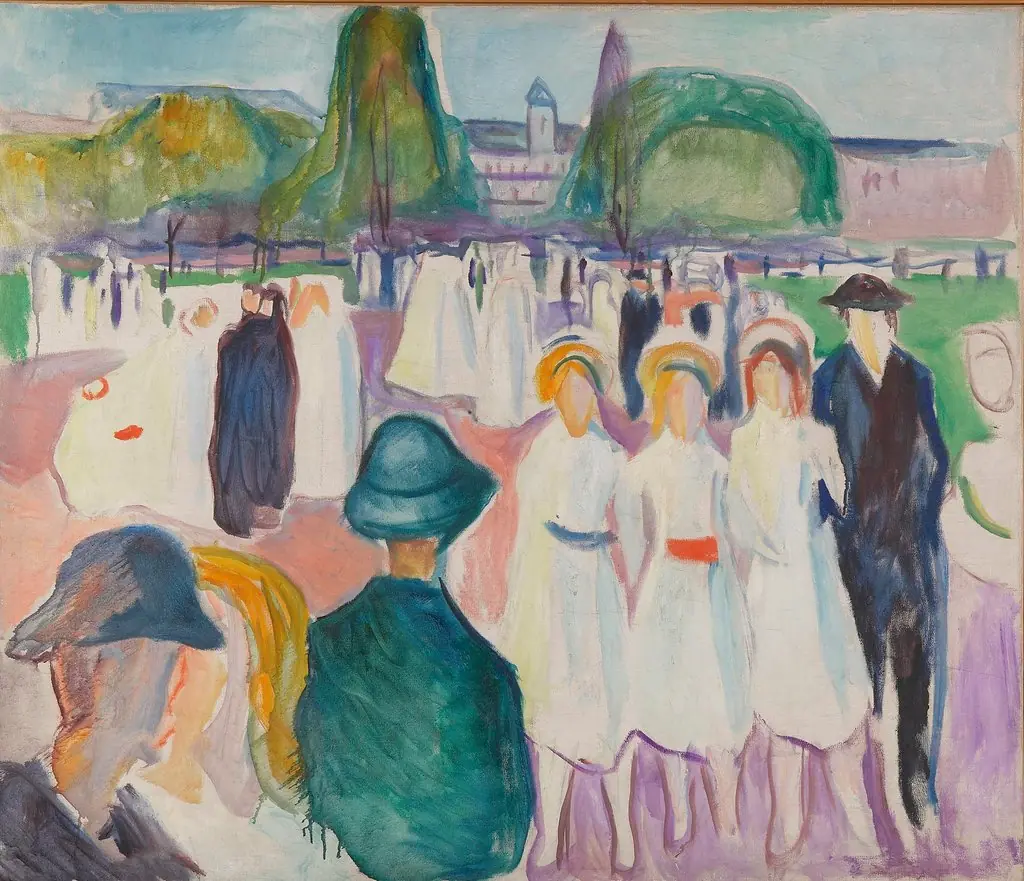
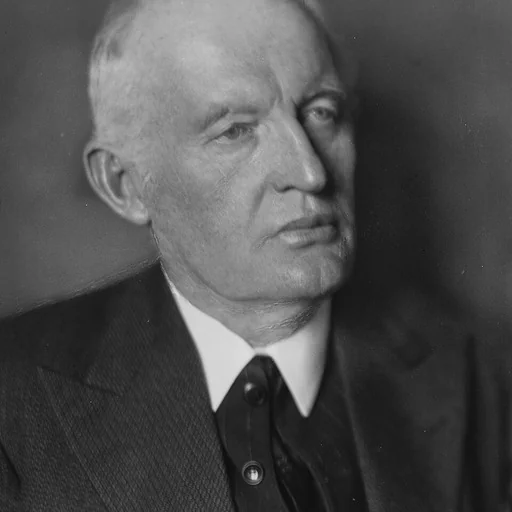
Edvard Munch ( MUUNK; Norwegian:; 12 December 1863 – 23 January 1944) was a Norwegian painter.