Artwork
Jacob (?) Leman
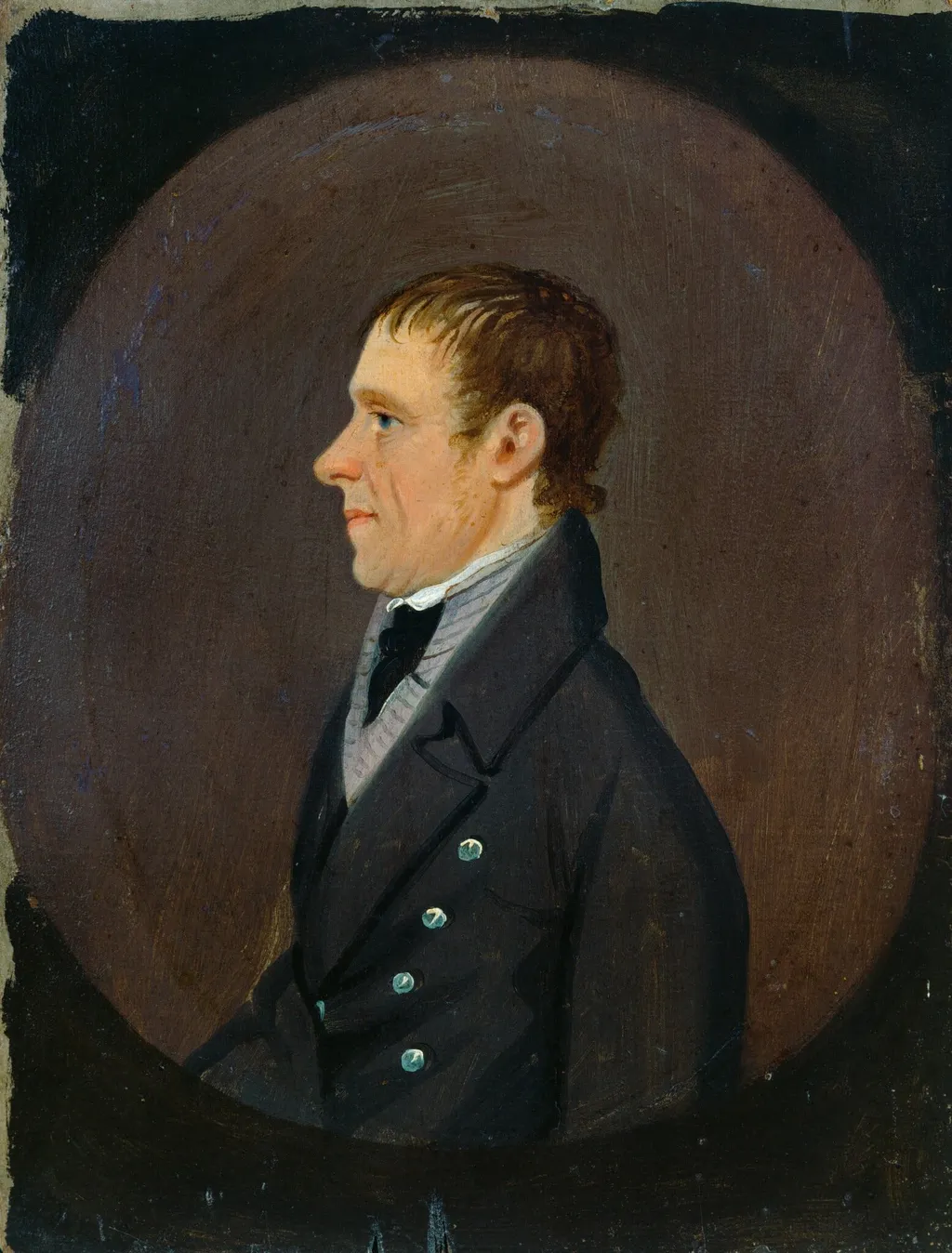
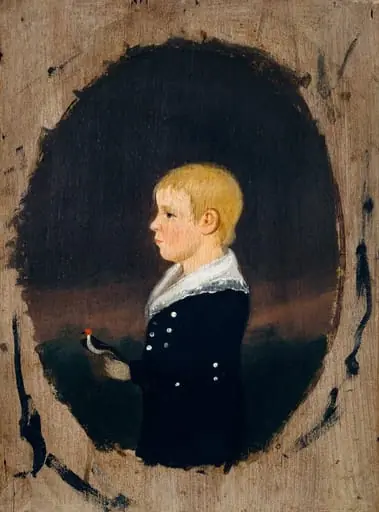
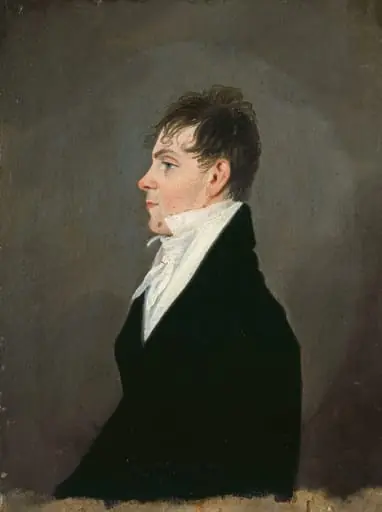
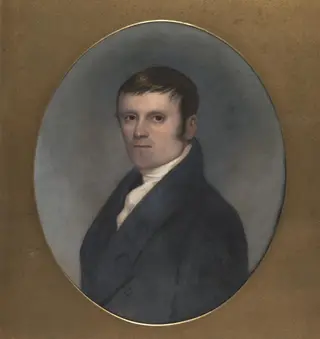
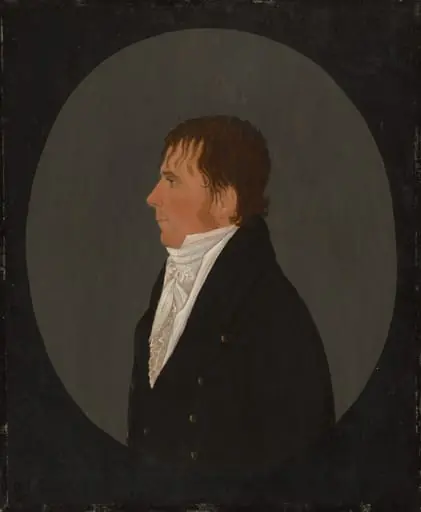
Jacob (?) Leman is an oil painting by the American Folk Art artist Jacob Eichholtz. It dates from 1808 and is held in the collection of the National Gallery of Art.
- Inscription
- Inscribed:on reverse: Adelia Leman / 1808; upper right reverse: (5)
About this work
Technique & Style
) Leman is executed in oil on wood, a support and medium consistent with a series of small oval portraits on wood that Eichholtz produced of family members.
Jacob (?) Leman is executed in oil on wood, a support and medium consistent with a series of small oval portraits on wood that Eichholtz produced of family members. The work is classified as a painting and measures 22.9 by 17.5 centimeters.
Its small, oval format reflects the intimate scale characteristic of these family likenesses, which descended through the Leman family of Lancaster, Pennsylvania before entering the National Gallery of Art.
No specific information is available regarding handling, condition, or stylistic qualities beyond the oval format and wooden support.
History & Provenance
Jacob (?) Leman was painted by Jacob Eichholtz in 1808 in oil on wood. The work descended within the Leman family of Lancaster, Pennsylvania, passing to Adelia Leman (1857–1947), the artist's grandniece.
According to Helen W. Henderson's 1943 account, a visit was made to Adelia Leman's home on the outskirts of Lancaster, where she sat among family souvenirs of the painter, including a series of small oval portraits on wood. Four works were procured from her collection during that visit. The painting was subsequently acquired, likely purchased from Adelia Leman's estate, in 1948 by Edgar William and Bernice Chrysler Garbisch of New York and Cambridge, Maryland, who gifted it in 1953 to the National Gallery of Art.
The painting entered the collection of the National Gallery of Art in Washington, D.C., in 1953 as a gift from Edgar William and Bernice Chrysler Garbisch. The donors had acquired the work in 1948, likely purchasing it from the estate of Adelia Leman, the artist's grandniece who resided in Lancaster, Pennsylvania. Prior to this acquisition, the artwork remained within the Leman family in Lancaster since its creation.
Before joining the national collection, four portraits from Leman's holdings, potentially including this work, were featured in a 1943 exhibition titled Jacob Eichholtz, 1776-1842, American Artist at the Philadelphia Art Alliance.
Legacy
Jacob Eichholtz's later influence and legacy are evident in his posthumous recognition, particularly through exhibitions that highlighted his contributions to early American portraiture. A 1943 exhibition brochure at the Philadelphia Art Alliance noted the discovery of family portraits from his grandniece's collection, emphasizing the charm of his small oval wood panels and securing four works for display.
His reputation was further solidified by institutional acquisition; the painting entered the National Gallery of Art in 1953 as part of the Chrysler Garbisch collection, affirming his standing in American art history. This acquisition, documented in National Gallery records, reflects his enduring legacy within major museum collections.
Scholarly attention to his work continues, with his pieces held in prominent institutions like the National Gallery of Art, ensuring ongoing appreciation of his artistic impact.
Overview
Created around 1808, this oil painting on wood is attributed to American portraitist Jacob Eichholtz. The work presents a single figure rendered in a restrained palette, typical of early nineteenth‑century portraiture. Its modest dimensions and medium suggest it was intended for private display rather than public exhibition.
Subject & Meaning
The sitter is depicted in a dark coat with six light‑colored buttons and a crisp white collar, his brown hair brushed back. He gazes to his left, a pose that conveys a contemplative demeanor. The straightforward representation emphasizes the individual's social standing and personal identity without overt symbolic elements.
Own this work as a print
Artist & collection