Artwork
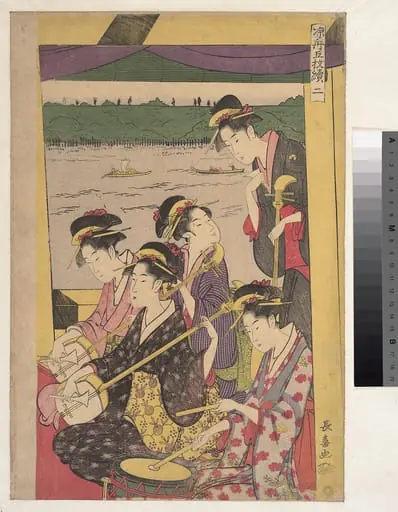
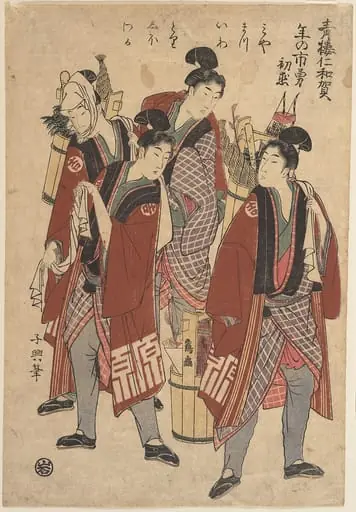
青楼俄全盛遊|The New Year Niwaka Festival in the Pleasure Quarters
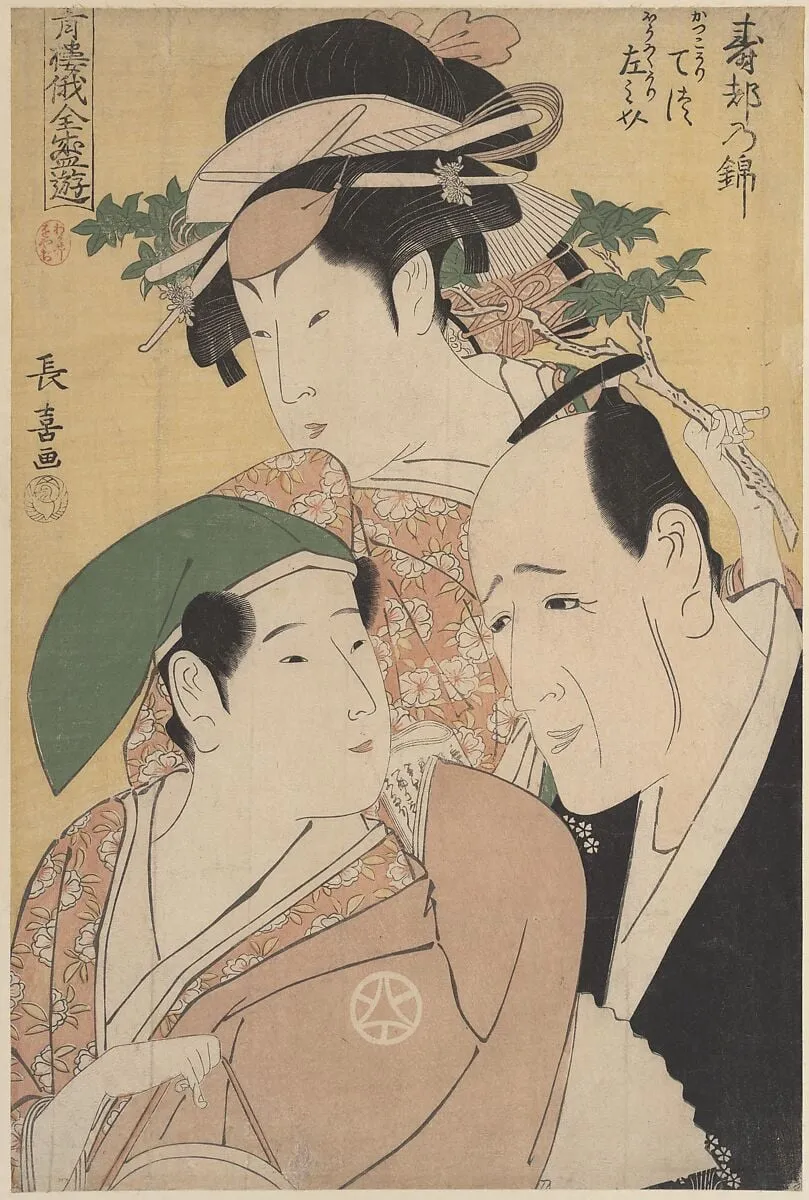
青楼俄全盛遊|The New Year Niwaka Festival in the Pleasure Quarters is an ink print by the Romanticist artist Eishōsai Chōki. It is held in the collection of the Metropolitan Museum of Art.
About this work
Overview
The New Year Niwaka Festival in the Pleasure Quarters is a woodblock print created by Eishōsai Chōki around 1796. Executed in ink and color on paper, it is now held at The Metropolitan Museum of Art.
Subject & Meaning
The print depicts an intimate scene of three figures in a softly lit setting. A woman wearing a green hat adorned with a small bird is accompanied by another woman and a man, suggesting a quiet moment within a pleasure quarter.
Technique & Style
The image is characterized by its use of subtle color and blurred background, creating a warm atmosphere. The figures are rendered in detail, with intricate patterns on the woman's robe and a styled hairdo.
Artist & collection

Artist
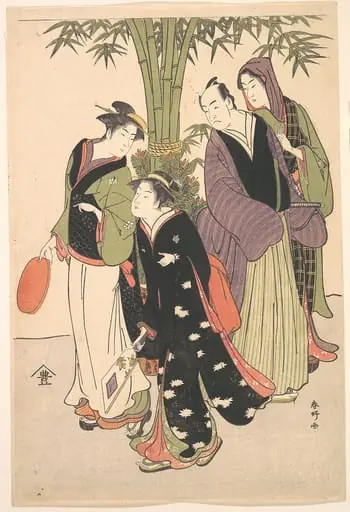
Eishōsai Chōki made delicate woodblock prints of women in the late 1700s Edo period.

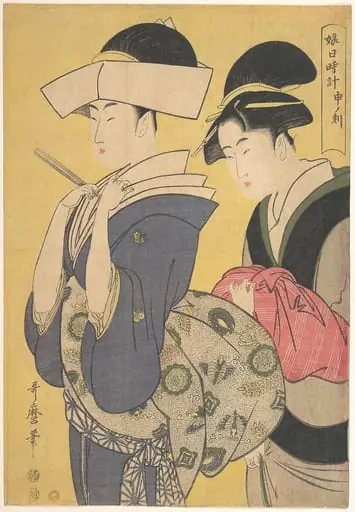 娘日時計 申ノ刻|Seru no Koku
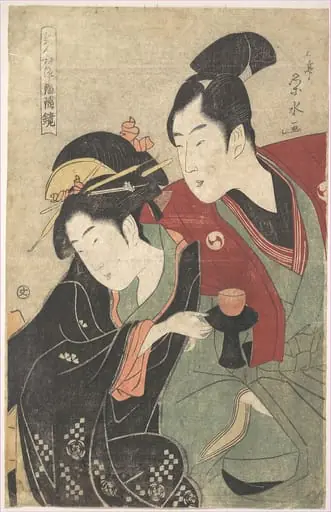 Untitled
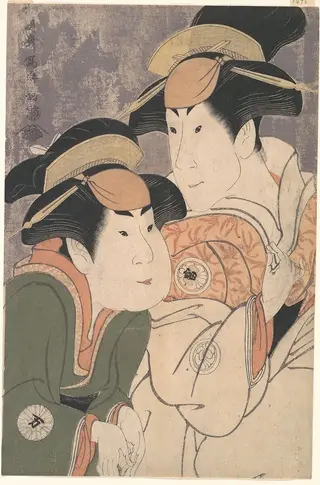 Untitled
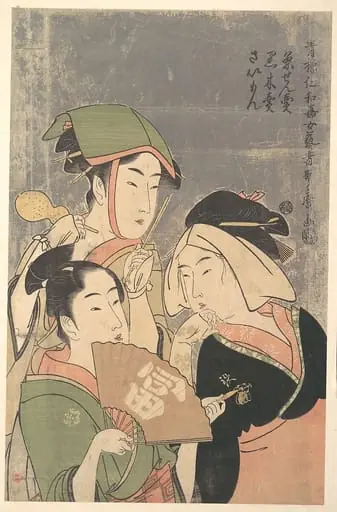 喜多川歌麿画 「青楼仁和嘉女芸者 茶せん売 黒木売 さいもん」|Three Niwaka Performers, Chasenuri, Kurokiri, and Saimon (Tea-whisk Seller, Firewood Seller, Shrine Festival Perfomer), from the “Geisha of the Yoshiwara Niwaka Festival” (Seiro Niwaka Onna Geisha)
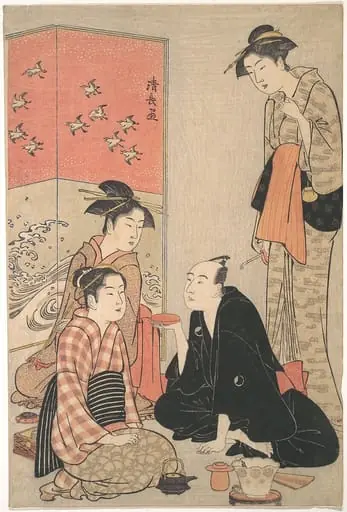 三代目沢村宗十郎と遊女|The Kabuki Actor Sawamura Sōjūrō III and Courtesans
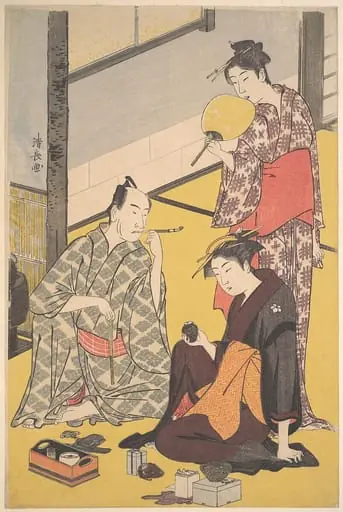 四代目松本幸四郎とその家庭|The Kabuki Actor Matsumoto Kōshirō IV
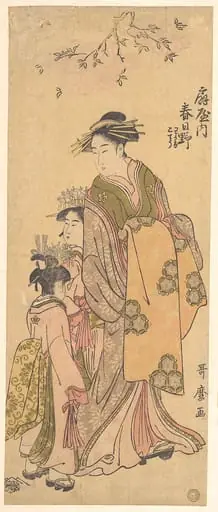 扇屋内春日野わかな こてう|The Oiran Kasugano of Ōgiya on Parade
 Untitled
 Untitled