Artwork
Untitled
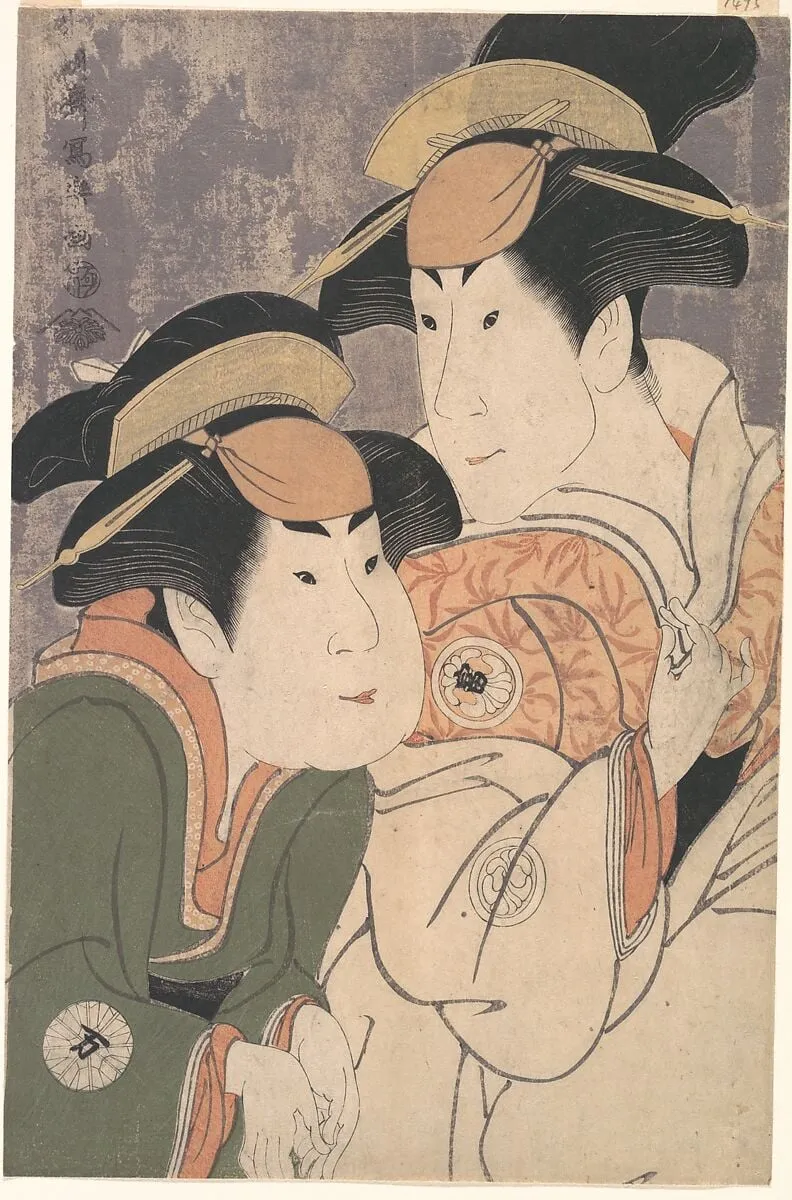
Untitled is an ink print by the Romanticist artist Tōshūsai Sharaku. It dates from 1794 and is held in the collection of the Metropolitan Museum of Art.
About this work
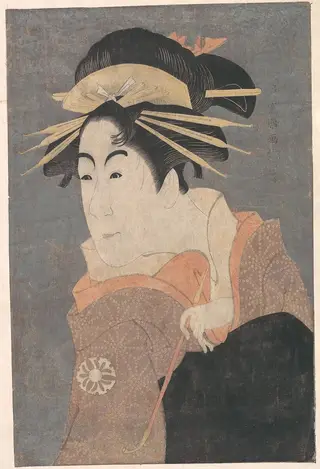
A woman in a dark robe kneels on the floor, holding a tray. Her face is turned slightly, eyes down. The print is bold, black outlines, flat colors, no shadows.
Sharaku made these actor portraits for only ten months in 1794. No one knows why he stopped. The white mica background makes the ink glow like moonlight on skin.
Look up actors next, these prints were like movie posters for Kabuki stars.
Subject & Meaning
The print portrays a domestic worker in a domestic setting, reflecting contemporary Edo-period social roles. Its iconography aligns with yakusha-e and ōkubi-e traditions, emphasizing theatrical performance and intimate domestic scenes. The woman figure embodies everyday labor within the cultural context of ukiyo-e portraiture.
Technique & Style
Stylistically, it falls within the nishiki-e (full-color printing) tradition and is classified as a yakusha-e, a portrait genre devoted to kabuki actors.
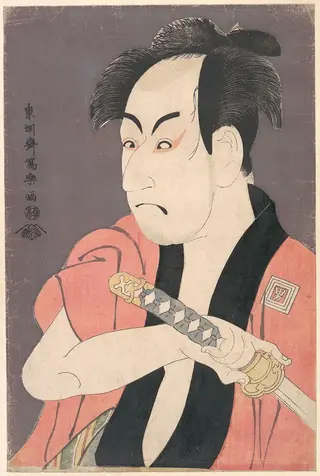
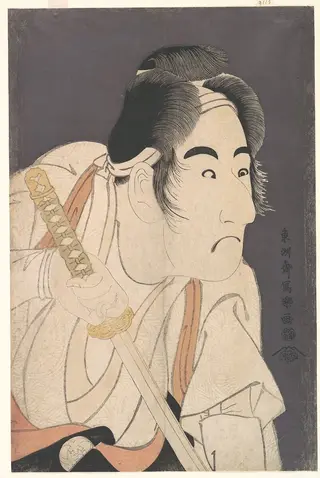
The work is a woodblock print executed in ink and color on paper, with the distinctive addition of white mica that produces a shimmering surface effect characteristic of late eighteenth-century ukiyo-e production. Stylistically, it falls within the nishiki-e (full-color printing) tradition and is classified as a yakusha-e, a portrait genre devoted to kabuki actors. The composition follows the ōkubi-e convention, in which the subject's head and shoulders are enlarged to dominate the pictorial field, an approach closely associated with Tōshūsai Sharaku's brief but intense period of activity in 1794.
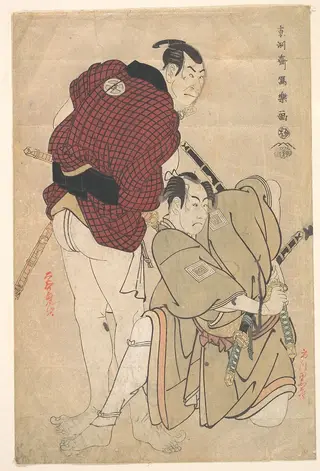
The print depicts an actor alongside a woman and a domestic worker, rendered in the sharply observed, psychologically charged portrait style for which Sharaku became known.
History & Provenance
The woodblock print Untitled by Tōshūsai Sharaku was produced in 1794, executed in ink, color, and white mica on paper as a yakusha-e ōkubi-e portrait. The work entered the collection of the Metropolitan Museum of Art, where it is held as a print in the institution's holdings.
Sharaku's activity is documented only over a brief span in the late eighteenth century, and this sheet belongs to that short-lived output of ukiyo-e actor portraits. The print is catalogued as an ōkubi-e, the close-up bust format for which Sharaku became known, depicting an actor alongside a woman and a domestic worker.
Context
Tōshūsai Sharaku's 1794 woodblock print Untitled portrays a domestic worker alongside an actor, reflecting the yakusha-e genre's focus on theatrical figures and contemporary societal roles. The work is housed in the Metropolitan Museum of Art collection and exemplifies the ukiyo-e tradition of vibrant, large-scale portraits that captured Edo-period celebrity culture. Critical reception of Sharaku's caricatures was polarized; contemporaries admired their bold realism while later scholars noted their departure from earlier ukiyo-e aesthetics, positioning this print as a pivotal moment in the evolution of Japanese printmaking toward modern expressive techniques.
Scholarly analysis emphasizes the artist's innovative use of exaggerated features and dynamic compositions to explore identity and performance, situating Untitled within broader discussions of gender representation and class in late 18th-century Japan. Its placement in major institutions underscores its significance as a transitional work bridging traditional portraiture and the emerging emphasis on individual expression in modern art history.
Overview
Created in 1794, this woodblock print by Tōshūsai Sharaku presents a seated female figure in a dark robe, kneeling with a tray in her hands. The composition is defined by stark black outlines and flat areas of color, lacking any modeling or shading, which gives the image a graphic clarity.
Artist & collection

 Untitled
 Untitled
 Untitled
 Untitled
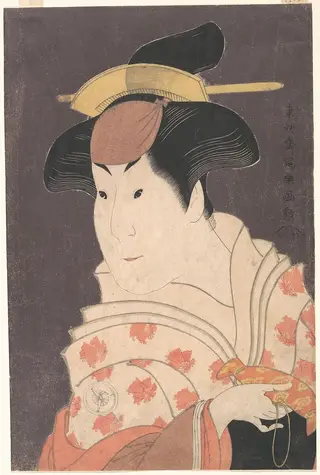 東洲斎写楽画 四代岩井半四郎の重の井 『恋女房染分手綱』|Iwai Hanshirō IV as Shigenoi in the Play "Koinyōbō Somewake Tazuna"
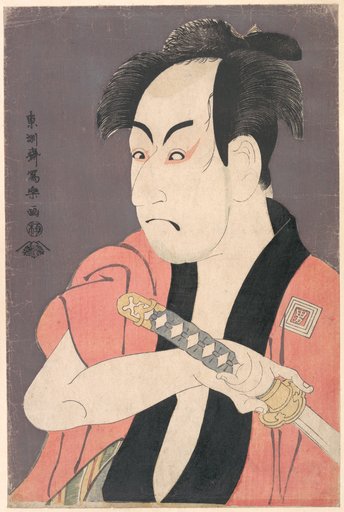
 東洲斎写楽画 初代市川男女蔵の奴一平 『恋女房染分手綱』|Ichikawa Omezō I in the Role of Yakko Ippei from the Play "Koinyōbō somewake tazuna"
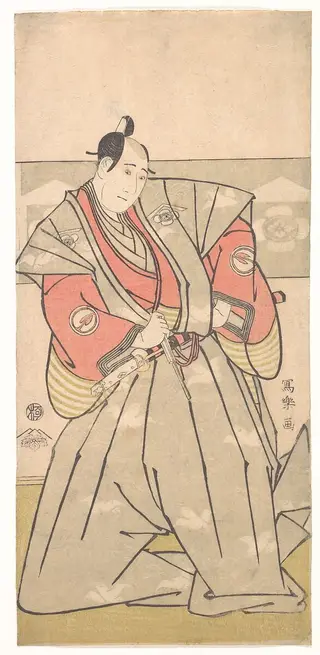
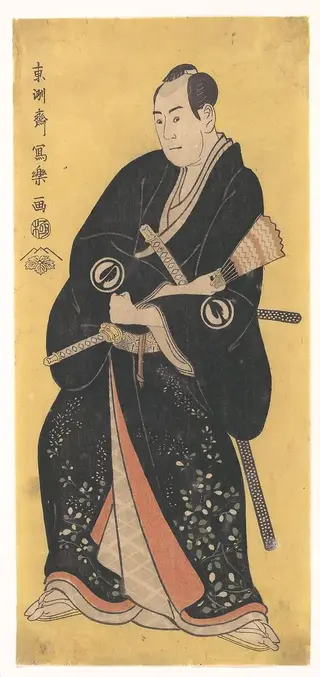
 東洲斎写楽画 二世坂東三津五郎の石井源蔵 『花菖蒲文禄曽我』|Bandō Mitsugorō II as Ishii Genzō in the Play "Hana-ayame Bunroku Soga"
 Untitled
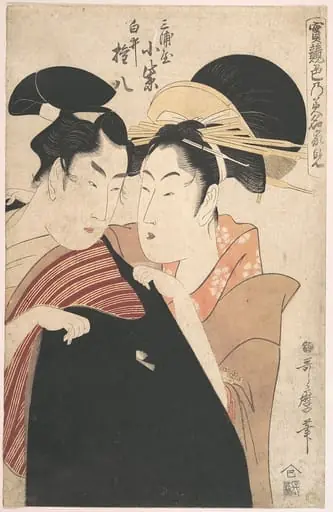
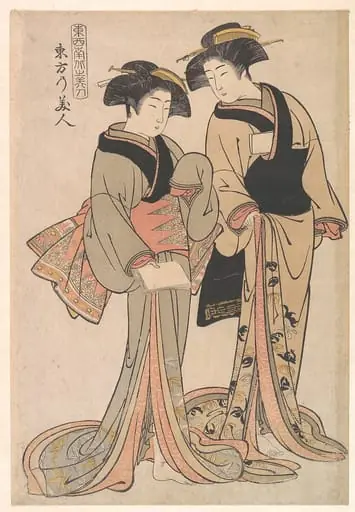
- 実競色乃美名家見 三浦屋小紫 白井権八|The Lovers Miura-ya Komurasaki and Shirai Gonpachi.
 Untitled
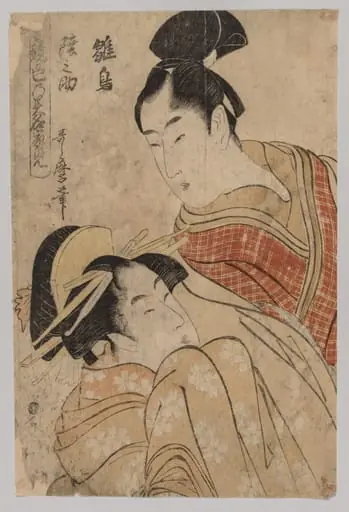 Making Love
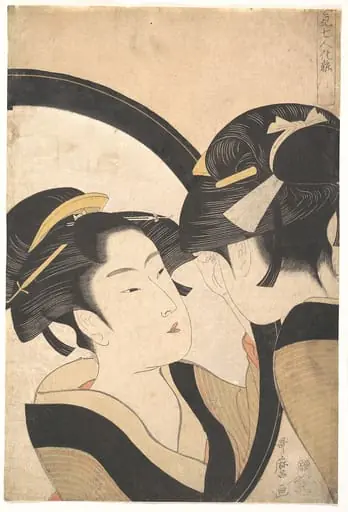 姿見七人化粧|Naniwa Okita Admiring Herself in a Mirror
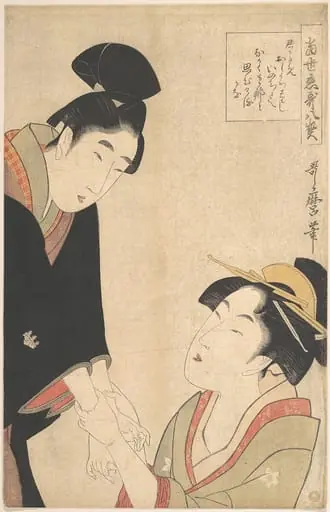 当世恋歌八契 お七と吉三郎|The Lovers Oshichi and Kichisaburo
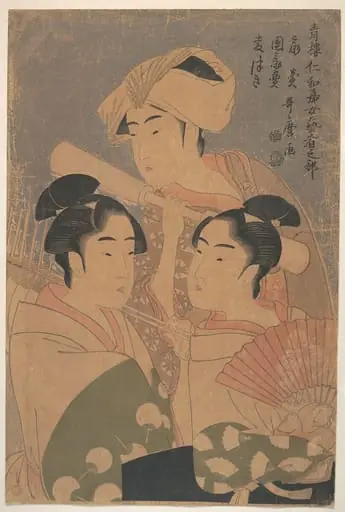 青楼仁和嘉女芸者之部 扇売 団扇売 麦つき|The Niwaka Performers
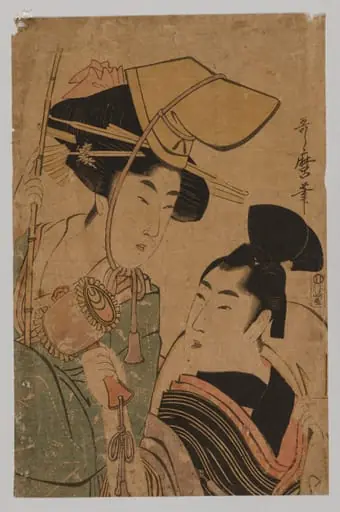 Woman Representing Good Fortune
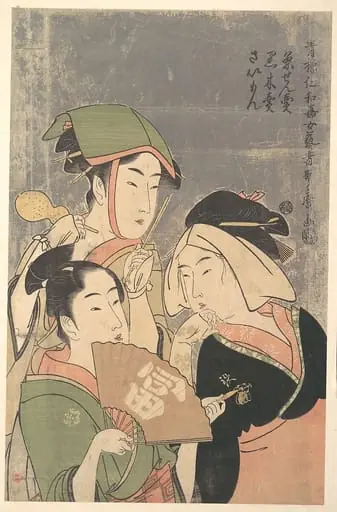 喜多川歌麿画 「青楼仁和嘉女芸者 茶せん売 黒木売 さいもん」|Three Niwaka Performers, Chasenuri, Kurokiri, and Saimon (Tea-whisk Seller, Firewood Seller, Shrine Festival Perfomer), from the “Geisha of the Yoshiwara Niwaka Festival” (Seiro Niwaka Onna Geisha)
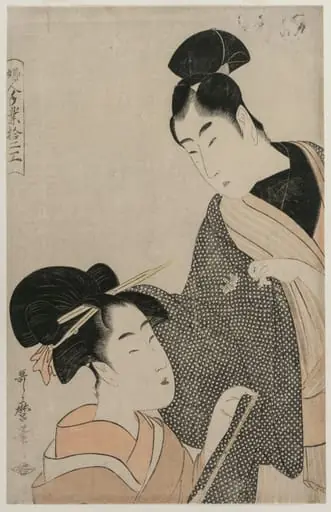 Woman Measuring a Man's Gown (from the series Twelve Occupations of Women)
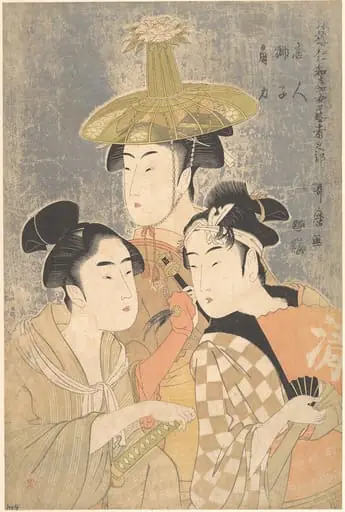 青楼仁和嘉女芸者之部 唐人 獅子 角力|Seiro Niwaka Onna Geisha no Bu Tojin Shishi Sumo
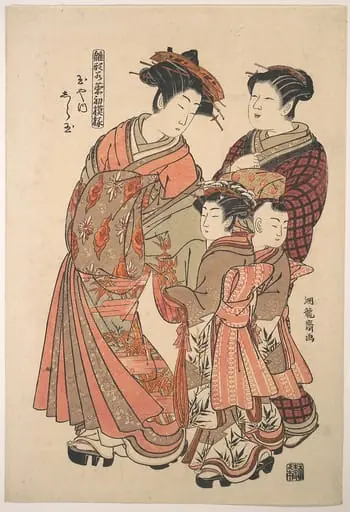 『雛形若菜初模様 玉や内 しら玉』|The Courtesan Shiratama of the Tamaya Brothel, from the series “A Pat-tern Book of the Year’s First Designs, Fresh as Spring Herbs” (“Hinagata wakana hatsu moyō”)
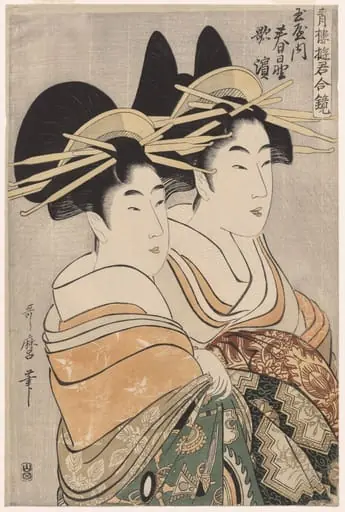 The Courtesans Kasugano and Utahama of Tamaya, from Courtesans of the Pleasure Quarters in Double Mirrors