Artwork
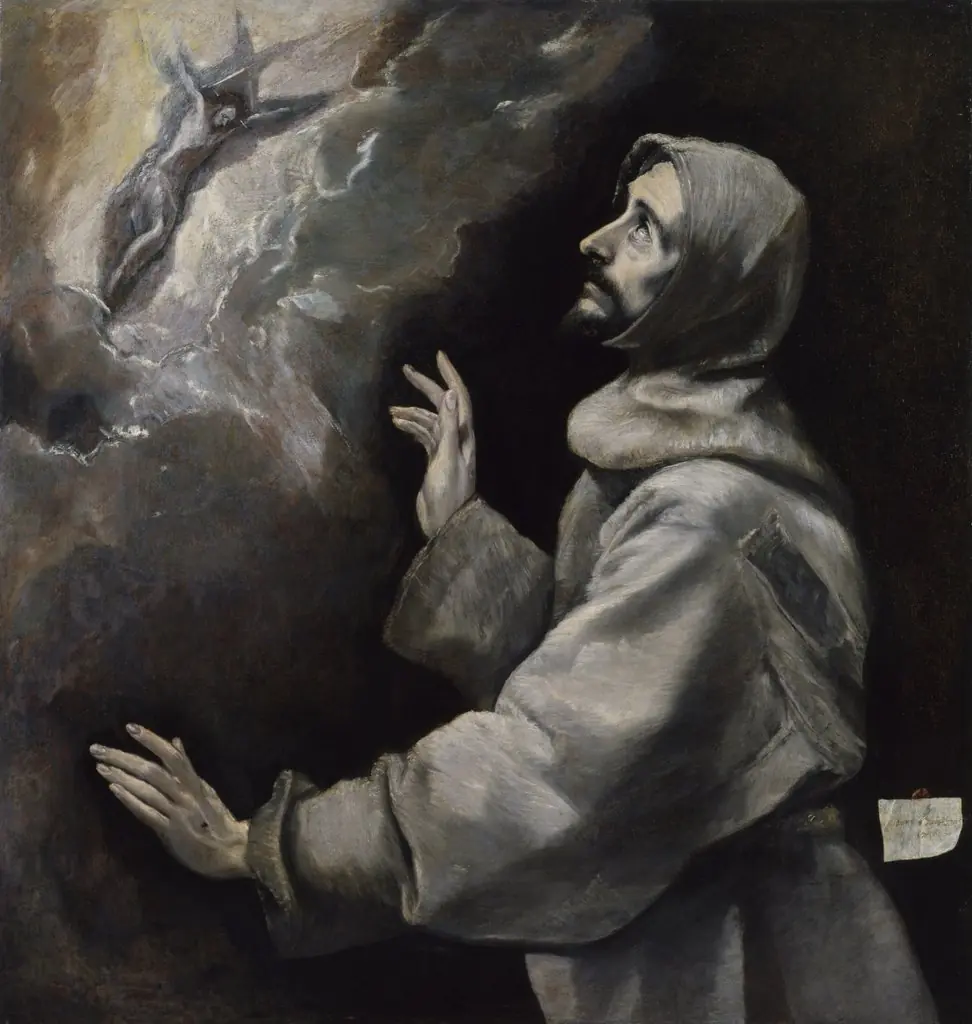
Saint Francis Receiving the Stigmata
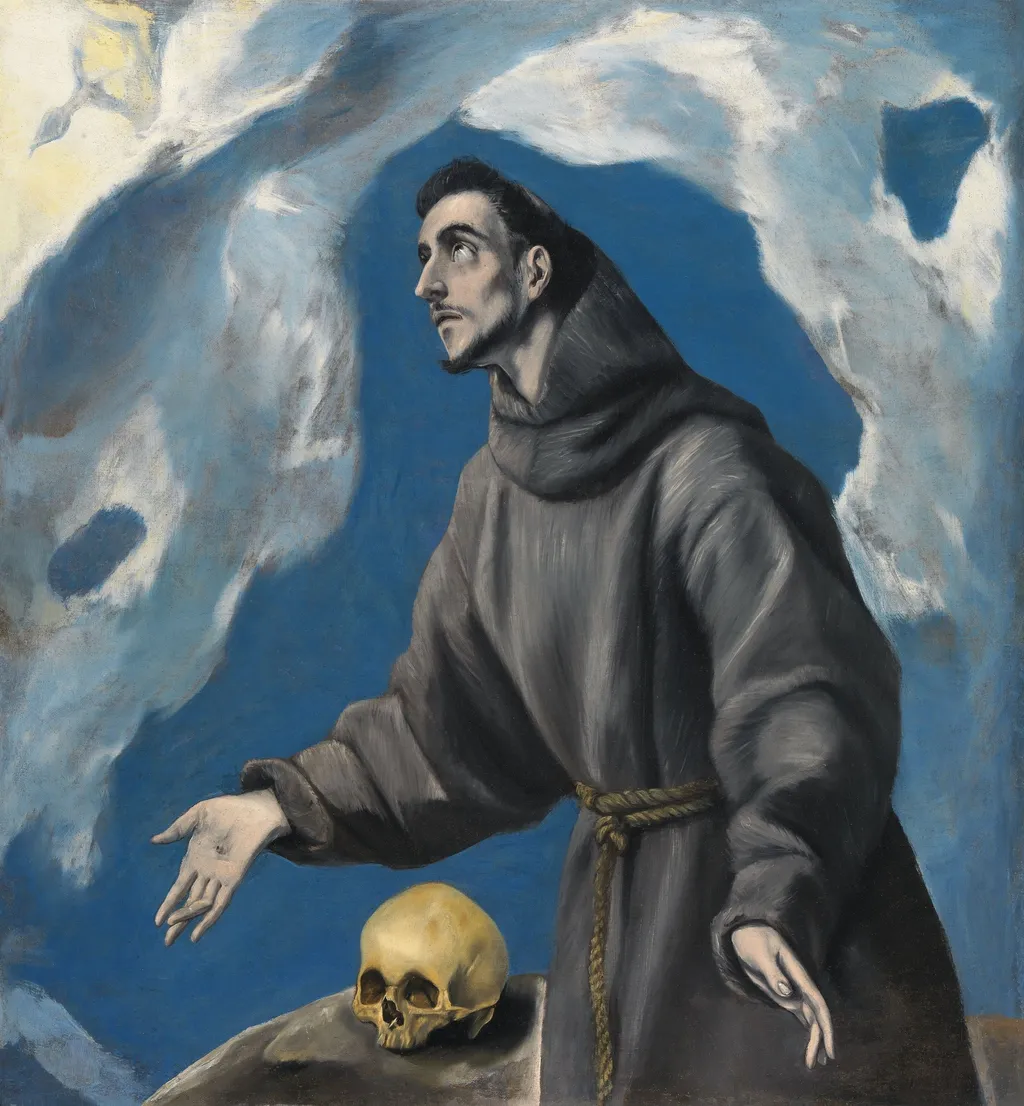
Saint Francis Receiving the Stigmata is an oil painting by the Mannerist artist El Greco. It dates from 1596 and is held in the collection of the National Gallery of Ireland.
About this work
Overview
Saint Francis Receiving the Stigmata is an oil on canvas painting by Domenikos Theotokopoulos, known as El Greco, dated to 1592.
Saint Francis Receiving the Stigmata is an oil on canvas painting by Domenikos Theotokopoulos, known as El Greco, dated to 1592. Measuring 114 by 104 centimeters, the work belongs to the artist's Spanish period and depicts the founder of the Franciscan order experiencing a mystical vision. The painting is part of the collection of the National Gallery of Ireland in Dublin, where it is cataloged as NGI.658. It is one of multiple versions El Greco created on this subject, reflecting both his personal devotion as a lay Franciscan and the high contemporary demand for such imagery in Counter-Reformation Spain.
Subject & Meaning
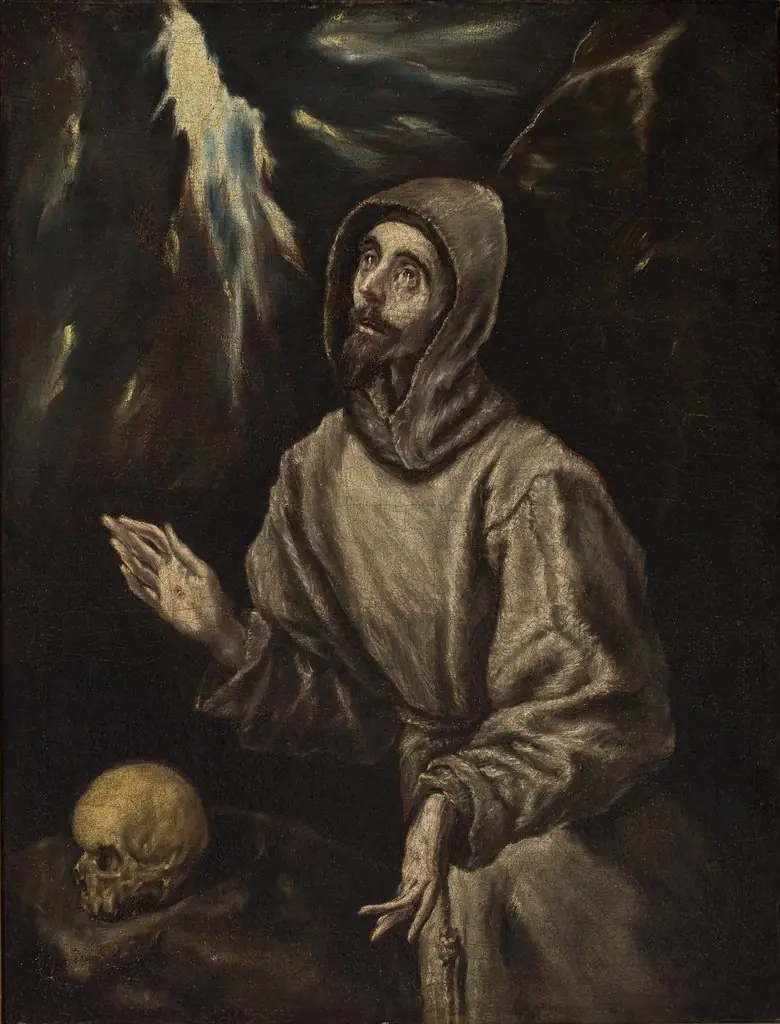
The painting captures the 1224 vision of Saint Francis of Assisi on Mount La Verna, where he received the stigmata, the wounds of the Crucifixion. Francis is shown gazing heavenward, his inner turmoil and spiritual ecstasy mirrored by the turbulent, swirling clouds that part to reveal a deep blue sky behind him. The marks of the stigmata are visible on his right palm, while his left hand hangs at his side. In the lower left foreground, his right hand hovers over a human skull resting on a dark surface, serving as a memento mori that emphasizes human mortality and the contemplation of death central to Franciscan spirituality.
Technique & Style
El Greco executed the work using fluid and visible brushwork, employing long, directional strokes to define the folds of the saint's dark gray-brown hooded garment and softer, blended handling for the sky and clouds. The palette is dominated by cool blues and grays, contrasted by warm yellow tones in the skull and isolated cloud passages. Light falls from the upper left, illuminating the face and hands while casting shadows into the drapery. The surface exhibits a matte, slightly thin finish in certain areas. The elongation of the figure and the tempestuous atmosphere contribute to an otherworldly effect, blending the Byzantine traditions of his early training with Western painterly techniques he developed in Italy.
History & Provenance
Created in 1592, the canvas was in the collection of Ricardo Pascual Conde de Quinto in Madrid during the nineteenth century. It was subsequently purchased in Paris, possibly from the dealer Durand-Ruel, by Sir Hugh Lane. By 1913, the painting was in Lane's collection, and he presented it to the National Gallery of Ireland in 1914. Its exhibition history includes the Exhibition of Old Spanish Masters in Dublin in 1913, the After Restoration exhibition at the Prado in Madrid in 1951, and later shows in Japan and Australia in the 1990s. More recently, it was featured in Lines of Vision in Dublin from 2014 to 2015 and in a Saint Francis of Assisi exhibition at the National Gallery in London in 2023.
Context
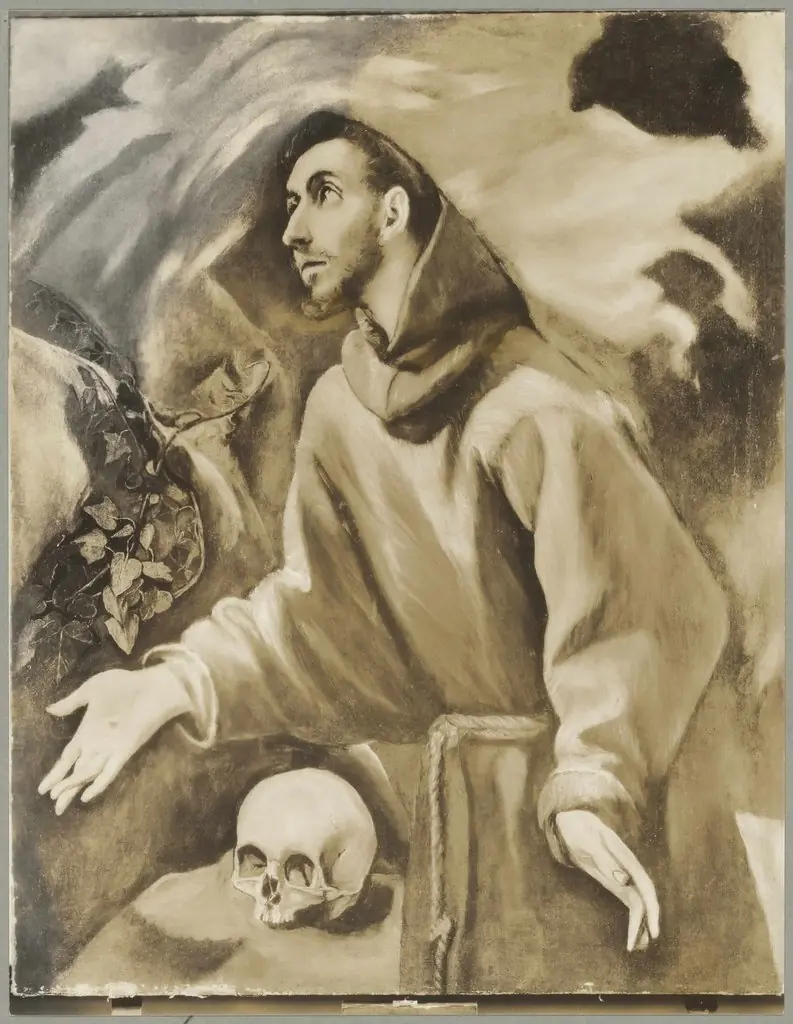
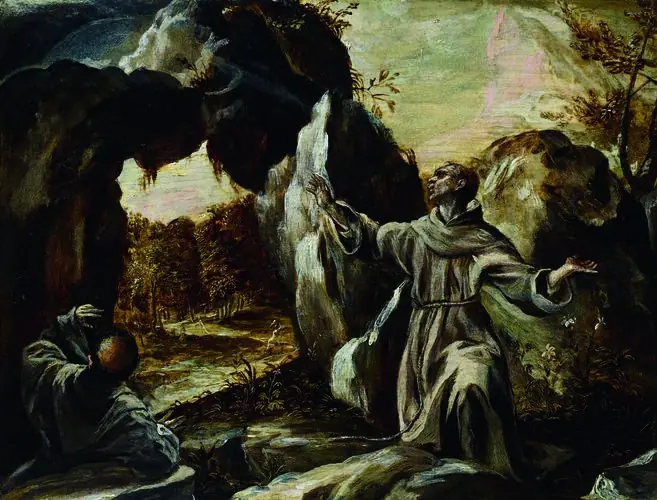
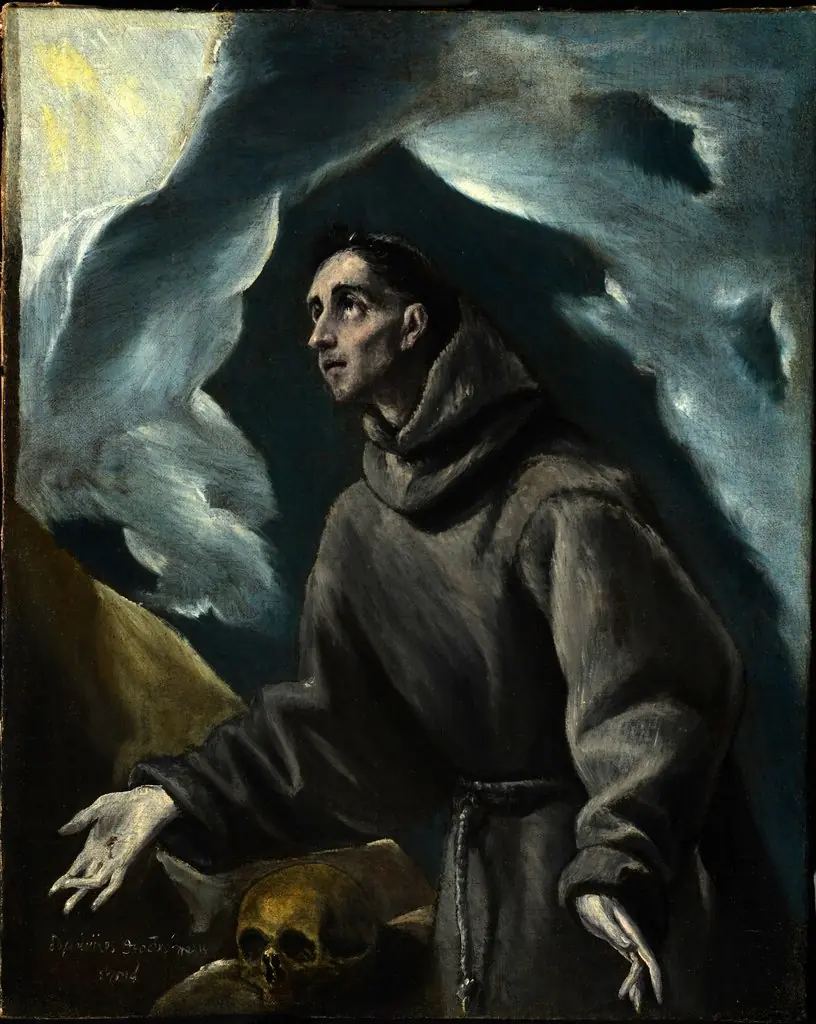
Devotion to Saint Francis was highly developed in Spain during El Greco's time, with ten Franciscan religious institutions in Toledo alone. Many ordinary Toledans were members of the Third Order of Saint Francis, including El Greco himself, which explains the commercial and spiritual success of his images of the saint. The subject of the stigmatization was a favorite for the artist, allowing him to create a quintessential expression of the mystical and emotional spirituality championed by the Counter-Reformation movement. Other versions of this composition exist, including one produced before 1595 now in the musee des Beaux-Arts de Pau in France, and another in the Sao Paulo Art Museum in Brazil.
Own this work as a print
Artist & collection
Artist
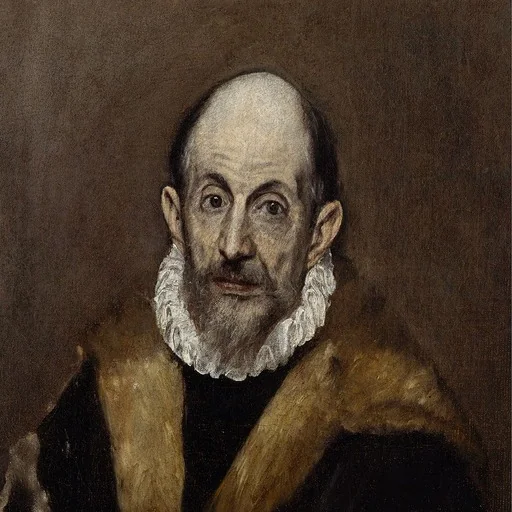
Doménikos Theotokópoulos was born in 1541 in Candia (modern Heraklion), the capital of Venetian-ruled Crete, where he was trained in the post-Byzantine tradition of icon painting.