Artwork
The Adoration of the Shepherds
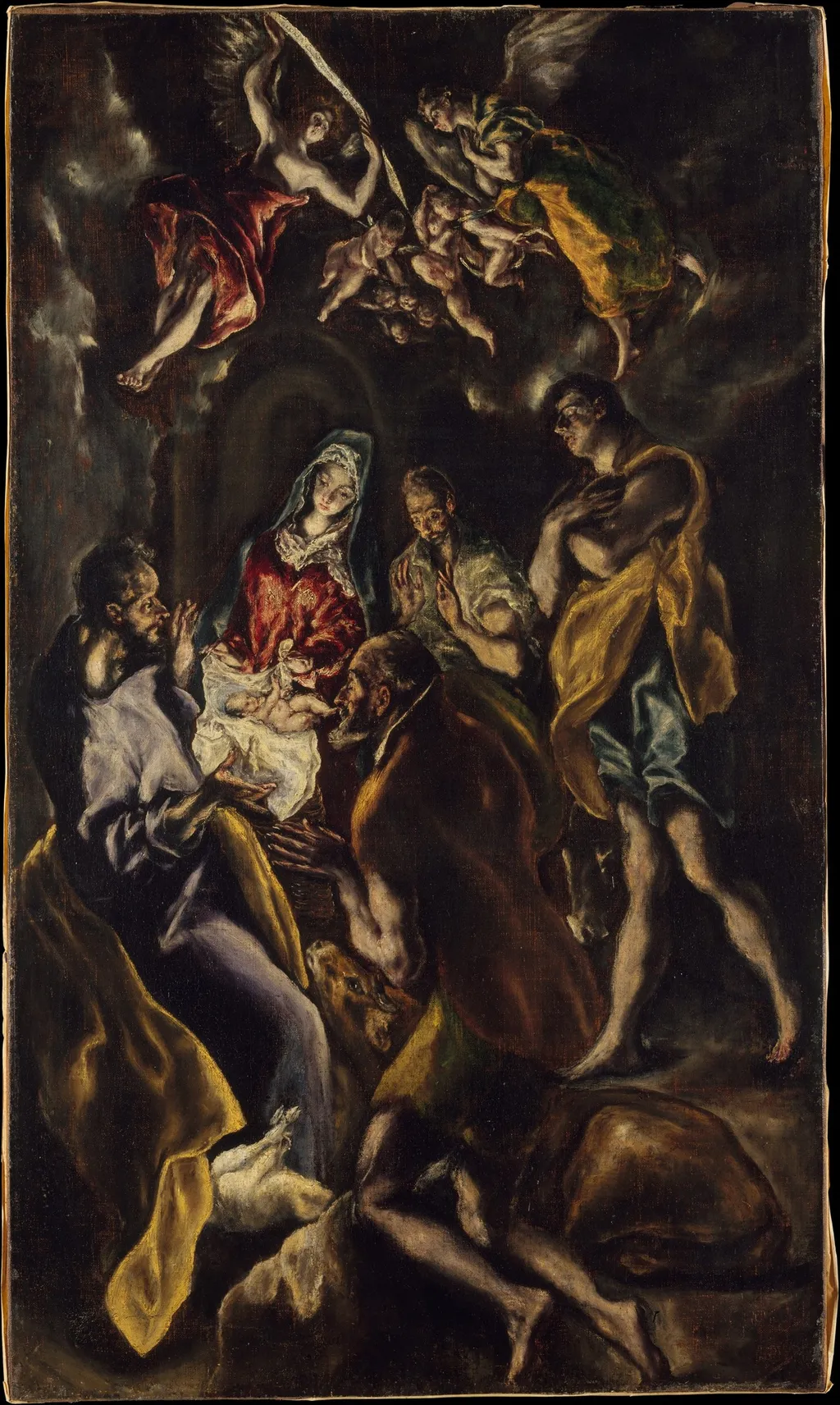
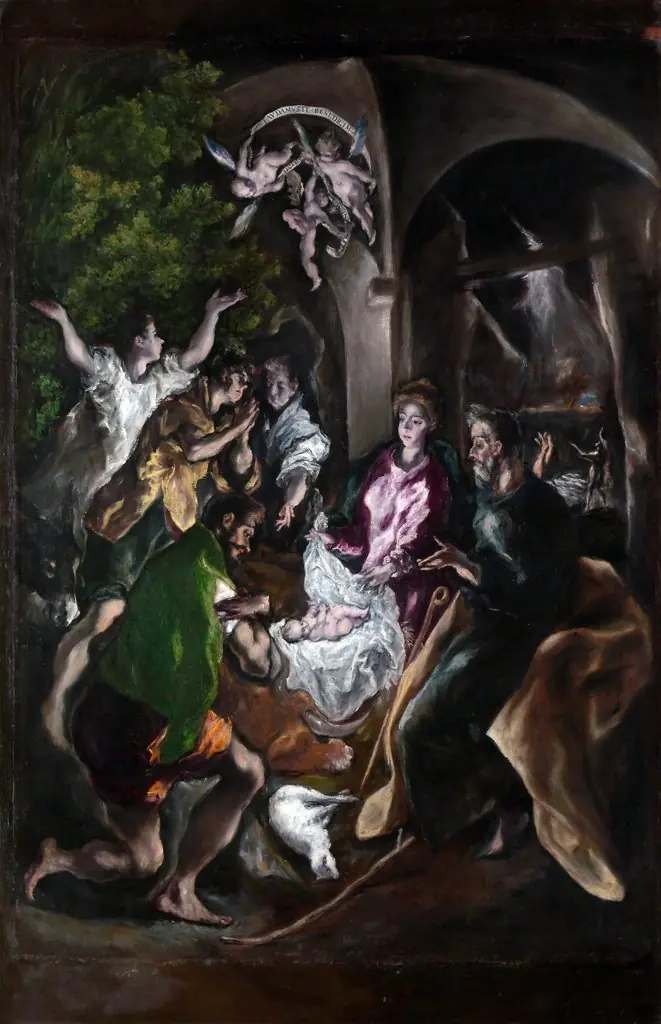
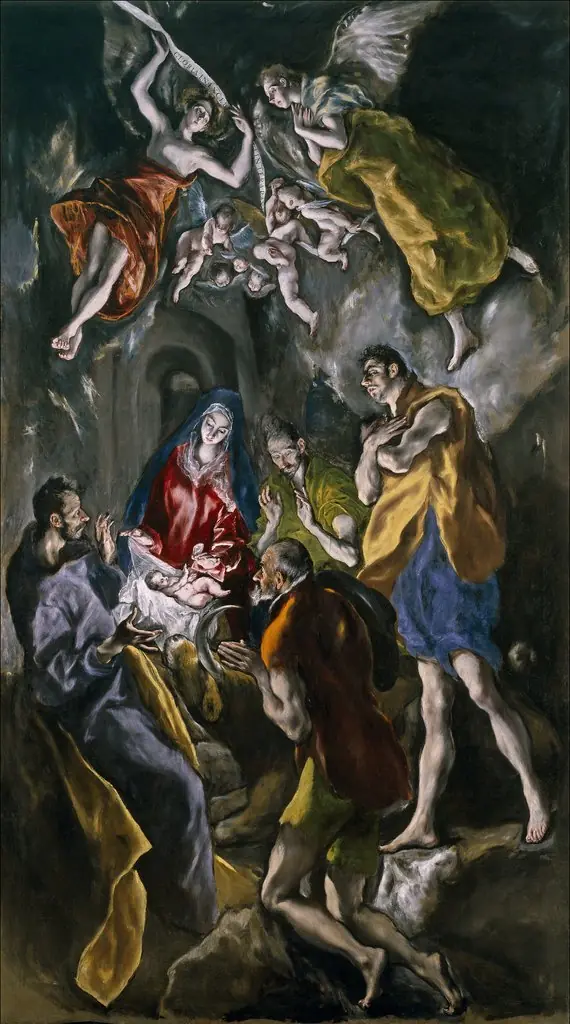
The Adoration of the Shepherds is an oil painting by the Mannerist artist El Greco. It dates from 1613 and is held in the collection of the Metropolitan Museum of Art.
About this work
In a cramped night-time stable, shepherds bend over the Christ Child while Mary and Joseph look on, the whole scene squeezed into a canvas barely three feet high. El Greco and his workshop painted this version around 1613 in his late Mannerist style: stretched bodies, acid color, and flattened space. It entered the Met in 1941 through George Blumenthal's bequest.
Subject & Meaning
The inclusion of a lamb alludes to Christ's role as the sacrificial Lamb of God, while an angel signifies the divine announcement of his birth.
El Greco's The Adoration of the Shepherds depicts the biblical narrative of shepherds paying homage to the newborn Christ Child, with the Virgin Mary prominently present. The inclusion of a lamb alludes to Christ's role as the sacrificial Lamb of God, while an angel signifies the divine announcement of his birth. As a work of religious art, the subject emphasizes themes of humility, revelation, and salvation, central to Christian theology.
History & Provenance
The painting was created in 1613 by El Greco (Domenikos Theotokopoulos) with workshop assistance. Its early history is undocumented, but by the modern era it was owned by Mary Ann Wrangell and subsequently by George Blumenthal. The work later entered the collection of the Metropolitan Museum of Art, where it remains. No commission or detailed provenance prior to these owners has been established.
Overview
El Greco's "The Adoration of the Shepherds," painted around 1612–14, is an oil on canvas housed at The Metropolitan Museum of Art. Measuring 110.5 × 65.1 cm, this work is a smaller iteration of an altarpiece created for the artist's own burial chapel. Executed by El Greco and his workshop, it exemplifies his late period's distinctive Mannerist style, characterized by dramatic light and attenuated figures.
Technique & Style
This canvas showcases El Greco's mature stylistic traits, including the pronounced elongation of figures, particularly visible in the lower bodies, which appear almost flattened against the picture plane. The artist's distinctive "acid palette" employs vibrant, often contrasting colors. The work's execution, involving El Greco's workshop, contributes to the confident handling of these stylistic elements, while the close-up composition enhances its dramatic impact.
Own this work as a print
Artist & collection
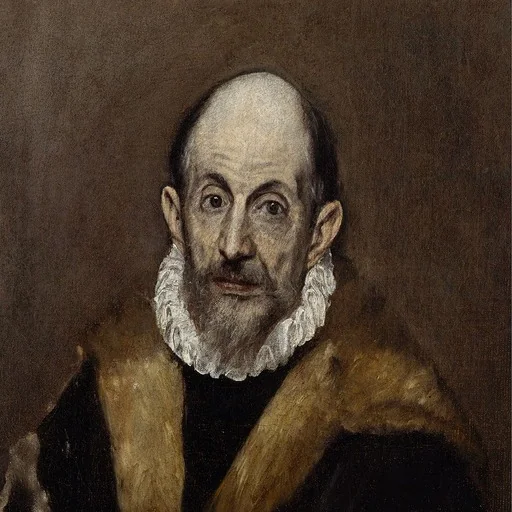
Artist
Doménikos Theotokópoulos was born in 1541 in Candia (modern Heraklion), the capital of Venetian-ruled Crete, where he was trained in the post-Byzantine tradition of icon painting.