Artwork
Saint John the Evangelist and Saint Francis of Assisi
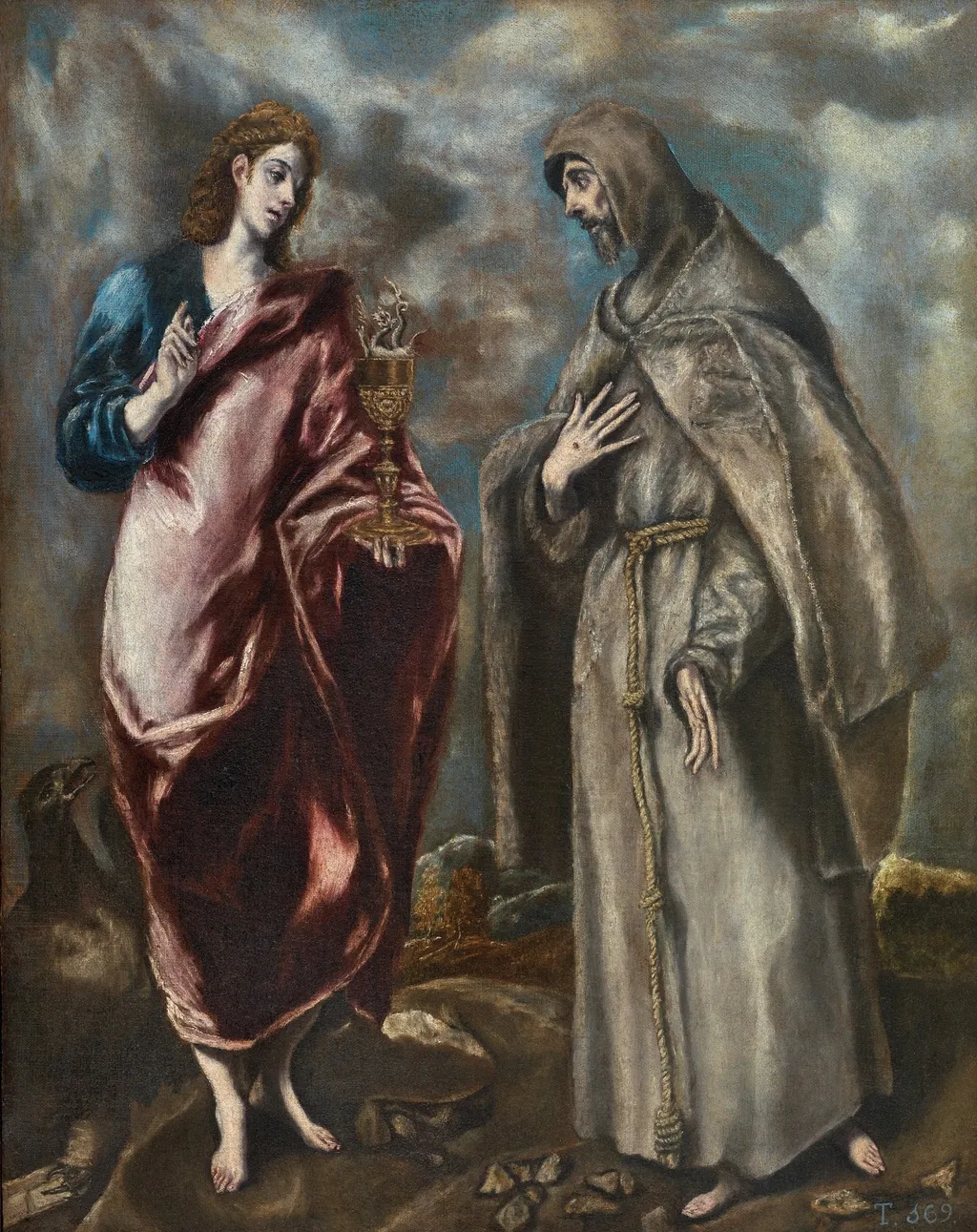
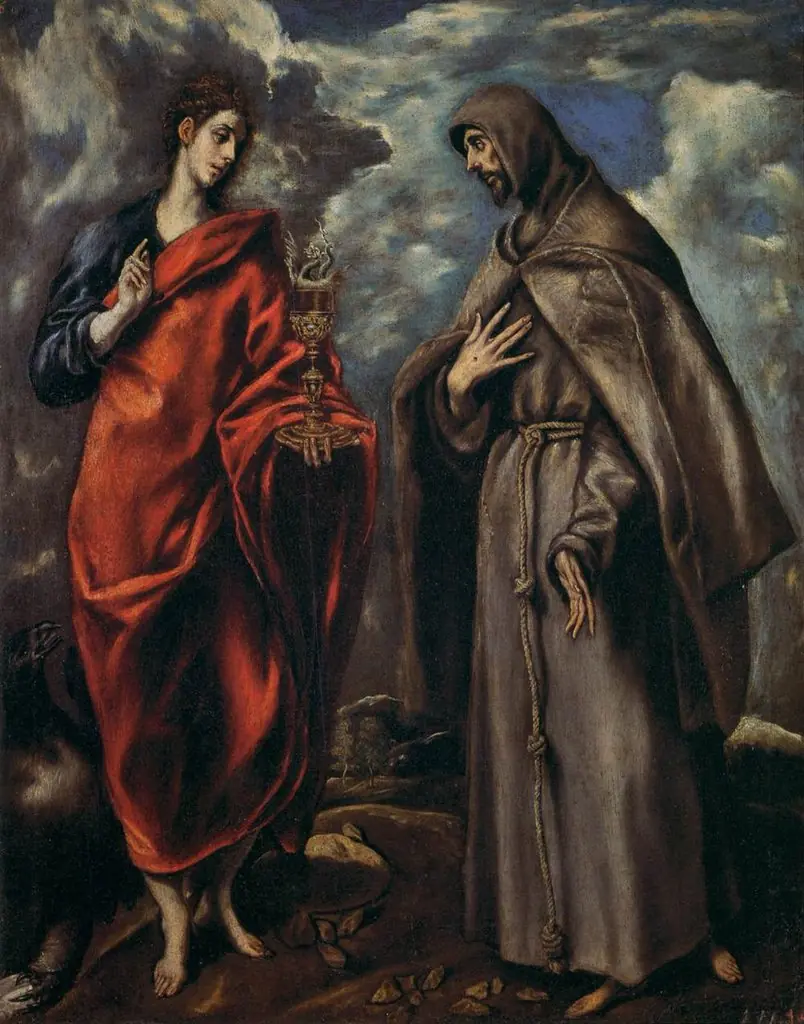
Saint John the Evangelist and Saint Francis of Assisi is an oil painting by the Mannerist artist El Greco. It dates from 1599 and is held in the collection of the Museo del Prado.
About this work
Subject & Meaning
The work reflects Counter-Reformation tolerance for personal devotional imagery, as noted in archival commentary on the patron's arbitrary pairing of saints.
The painting depicts two saints engaged in dialogue: John the Evangelist and Francis of Assisi. John is shown front-facing with a turned head, wearing a red mantle over a dark blue tunic, holding a chalice from which a winged dragon emerges, symbolizing alchemical and apocalyptic themes linked to the Legend of St. James. An eagle, his traditional attribute as author of the Gospel of John and the Apocalypse, appears in the lower left.
Francis, dressed in a grey Franciscan habit with a three-knotted cord and capuchon, displays the stigmata on his chest, his hand open toward John. The figures stand on rocky terrain with sparse trees, hills, and a snow-capped mountain under a cloudy sky, creating a contemplative spiritual landscape. The work reflects Counter-Reformation tolerance for personal devotional imagery, as noted in archival commentary on the patron's arbitrary pairing of saints.
The Uffizi version, painted around 1600, measures 110 x 86.5 cm and is signed with the artist’s monogram in Greek. It entered the collection of the Uffizi in 1976 after being owned by the Ruspoli family in Florence. The Madrid version, housed in the Museo del Prado and cataloged as P000820, measures 64 x 50 cm and dates to approximately 1600.
Though considered a lesser work by El Greco’s school, it was originally part of the Monastery of the Holy Trinity.
Iconographically, the pairing of John and Francis is not standard; their union is likely driven by private patronage rather than doctrinal or narrative coherence, reflecting personal devotion rather than official liturgical or Counter-Reformation mandates.
Technique & Style
Two distinct versions of this subject exist, both executed in oil paint on canvas. The Florentine version, dated to 1600, measures 110 by 86.5 cm and features a signature on a central rock. In contrast, the Madrid version, also dated circa 1600, is smaller at 64 by 50 cm. Stylistically, the Madrid canvas has been characterized by scholar Wethey as a mediocre work attributed to the artist's school rather than El Greco's own hand.
Formally, the composition depicts the two saints standing barefoot on rocky terrain against a backdrop of wooded hills and a distant snow-capped mountain under a grey-blue sky. The figures are distinguished by their specific attributes and attire: Saint John wears a dark blue tunic with a red mantle, the sole warm tone, while Saint Francis appears in a grey habit with a three-knot cord. The handling of the figures shows them engaged in dialogue, with Saint John pointing upward and Saint Francis displaying his stigmata.
History & Provenance
El Greco produced two distinct versions of Saints John the Evangelist and Francis of Assisi, likely created to satisfy specific patron desires rather than doctrinal requirements. The larger composition, housed in the Uffizi Gallery, measures 110 by 86.5 cm and is dated to 1600. This Florentine version, signed by the artist on a central rock, was acquired by the museum in 1976 from the collection of Princess Ruspoli di Cerveteri di Boadilla.
A smaller variant, measuring 64 by 50 cm, is held by the Museo del Prado in Madrid. While some sources date this work to 1597, others assign it to circa 1600. Its provenance traces back to the Museo de la Trinidad before entering the Prado's holdings.
Scholar Harold Wethey characterized the Madrid painting as a mediocre work produced by El Greco's school rather than the master himself.
Two versions of this composition exist. The primary version, dated around 1600, is held at the Uffizi Gallery in Florence under inventory number 1890 no. 9493. This oil on canvas, measuring 110 by 86.5 cm, was acquired by the museum in 1976 from the collection of Princess Ruspoli di Cerveter di Boadilla.
A second version, considered by some scholars to be a work of El Greco's school, is housed in the Museo del Prado in Madrid with catalog number P000820. Measuring 64 by 50 cm and dated circa 1600, this painting previously belonged to the Museo de la Trinidad before entering the Prado's collection.
Context
The pair of saints John the Evangelist and Francis of Assisi represents a recurring motif in El Greco's oeuvre, categorized as works featuring "paired saints." Scholarly analysis notes that while some such pairings reflect specific New Testament episodes or doctrinal points, the combination of these two figures is arbitrary, likely driven by a specific patron's desire rather than strict iconographic necessity. This freedom of association did not provoke objections from Counter-Reformation authorities.
Art historical cataloging distinguishes between two primary versions of this subject: a larger canvas in the Uffizi Gallery in Florence, dated to 1600 and signed by the artist, and a smaller variant in the Museo del Prado in Madrid. Critical reception regarding the Prado version is mixed; while it is listed in standard catalogs, scholar Harold Wethey classified it as a mediocre work produced by the artist's school rather than an autograph piece by El Greco himself. Both works are situated within the Mannerist movement.
Overview
El Greco’s oil on canvas from 1599 presents a compact outdoor scene in which two saints stand upon a rugged terrain. The composition is anchored by a darkened sky that frames the figures, while a modest landscape of rocks and clouds provides a muted backdrop. The work is part of the Prado Museum’s collection and exemplifies the artist’s late‑career approach to religious subjects.
Own this work as a print
Artist & collection
Artist
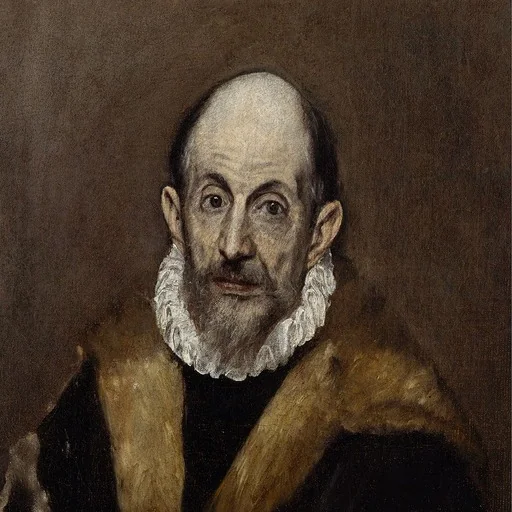
Doménikos Theotokópoulos was born in 1541 in Candia (modern Heraklion), the capital of Venetian-ruled Crete, where he was trained in the post-Byzantine tradition of icon painting.

 Ecstasy of Saint Francis Receiving the Stigmata
 St Francis and Brother Leo Meditating on Death
 San Francisco in ecstasy
 Saint Francis of Assisi and Brother Leo Meditating on Death
 Saint Francis in Ecstasy
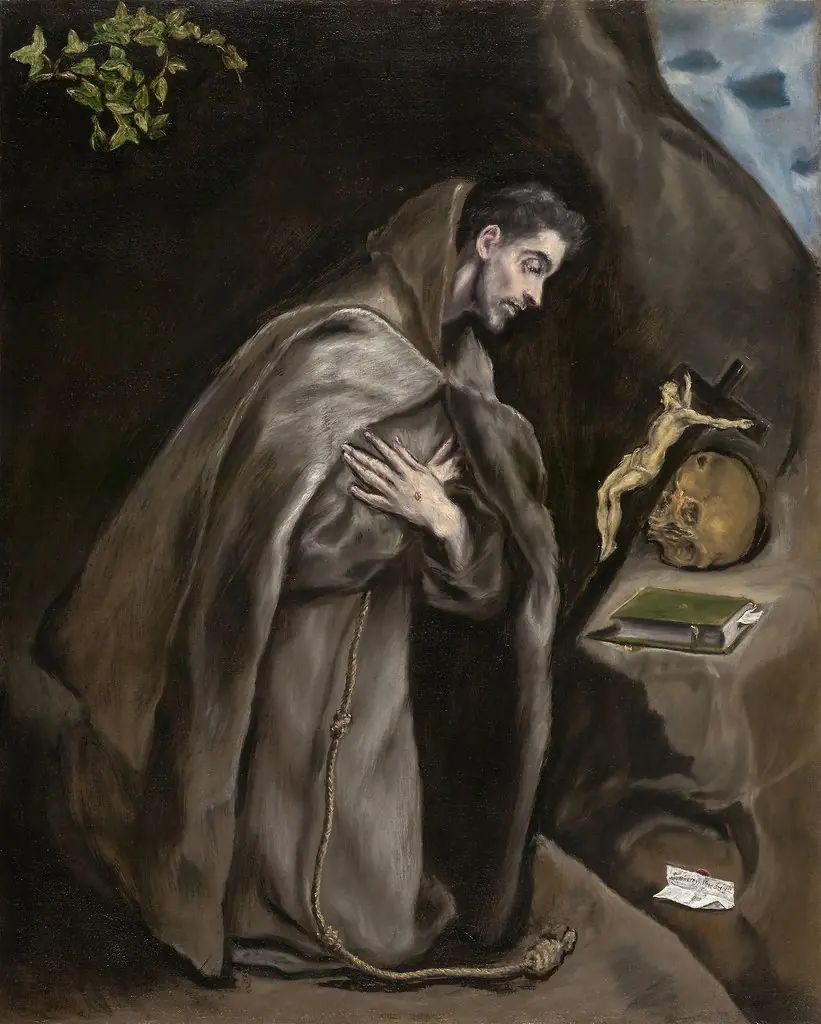 Saint Francis Kneeling in Meditation
 De laatste troost
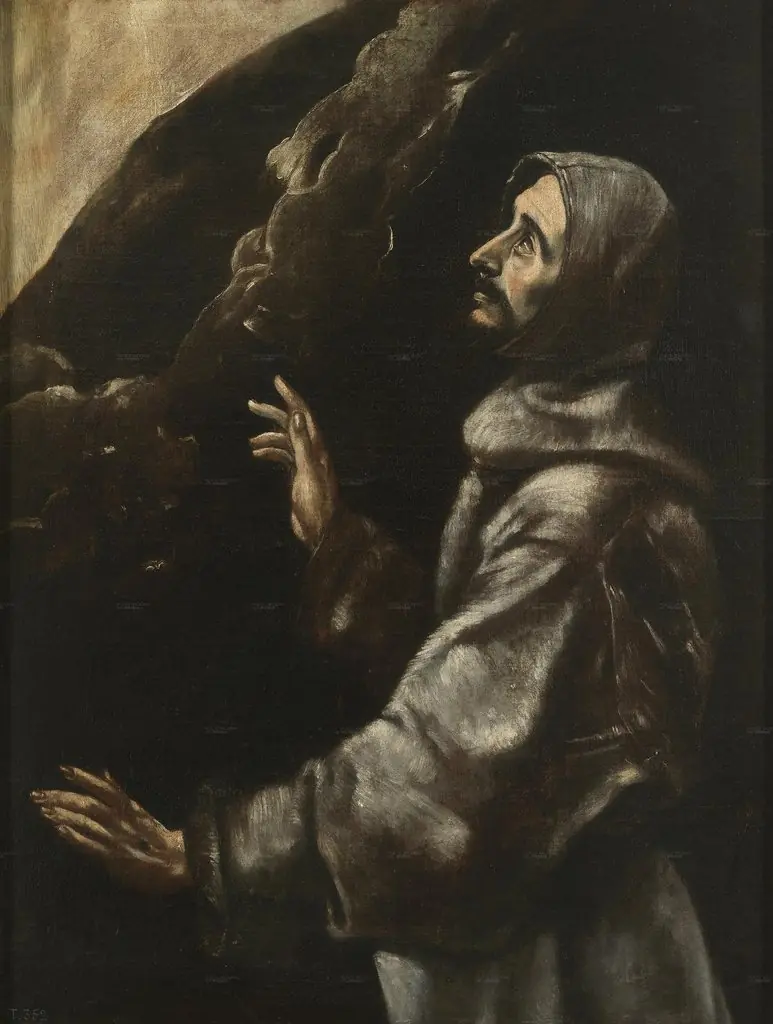 Saint Francis of Assisi in ecstasy
 Saint Francis Kneeling in Meditation