Artwork
The Sculptor Jens Adolf Jerichau, the Artist's Husband
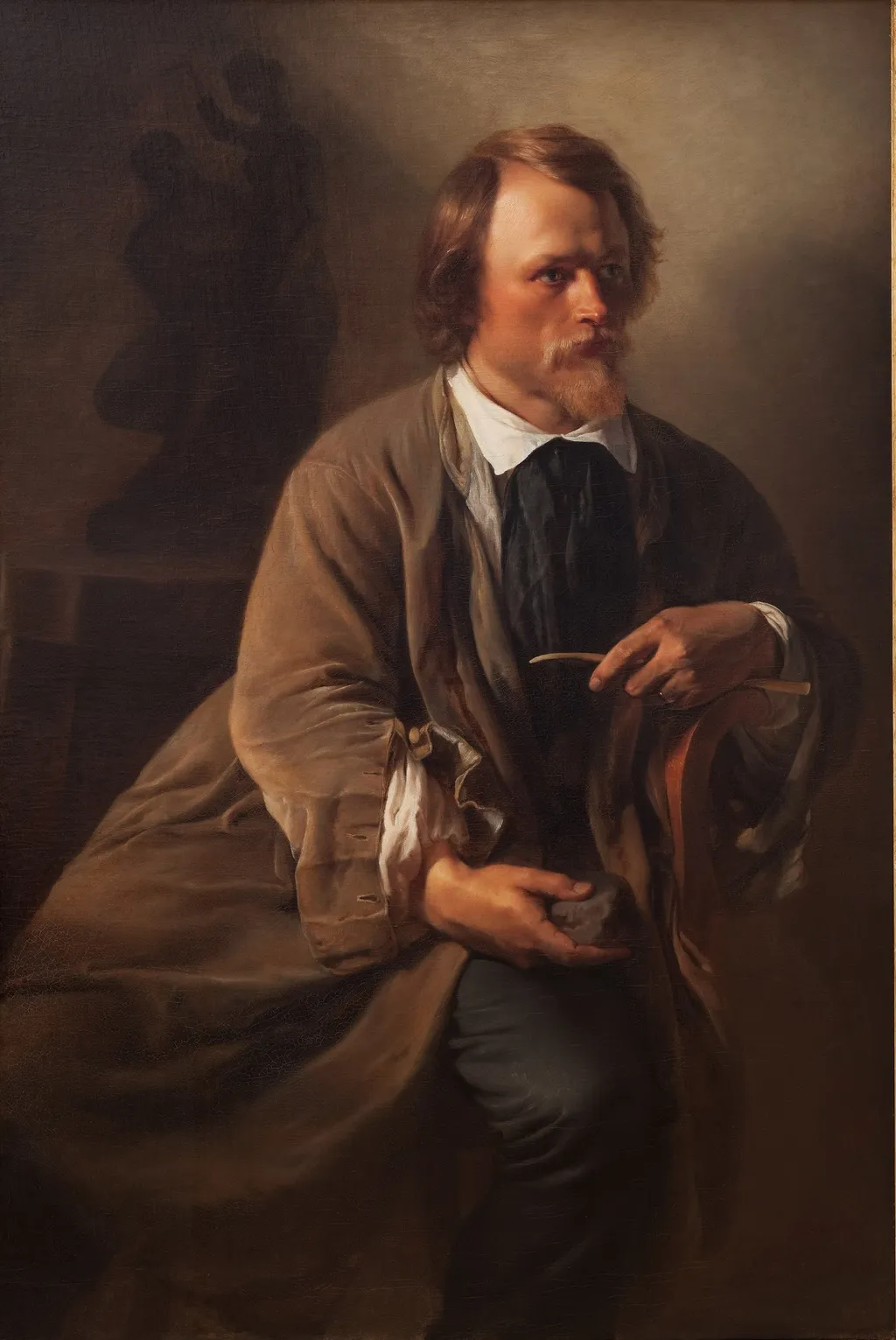
The Sculptor Jens Adolf Jerichau, the Artist's Husband is an oil painting by the Biedermeier artist Elisabeth Baumann. It dates from 1846 and is held in the collection of the Statens Museum for Kunst.
About this work
Subject & Meaning
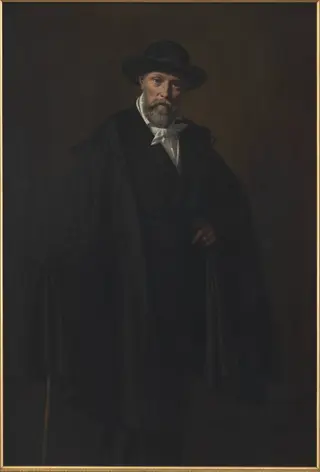
The work depicts the Danish sculptor Jens Adolf Jerichau seated and gazing slightly away from the viewer.
The work depicts the Danish sculptor Jens Adolf Jerichau seated and gazing slightly away from the viewer. The composition centers on his hands to emphasize his identity as a creator. In his left hand, he holds an engagement ring, while his right hand grasps a piece of sculpting material, likely clay, referencing a background sketch for his 1845 work Hercules and Hebe.
Painted in 1846, the same year Elisabeth Jerichau-Baumann and her subject married, the portrait serves as a celebration of their union and a demonstration of Jerichau's mastery of the sculptural tradition.
Technique & Style
Executed in 1846, the work is an oil painting on canvas measuring 142 cm in height and 95 cm in width. The composition centers on the seated figure of Jens Adolf Jerichau, who gazes slightly to his left. Formal emphasis is placed on the subject's hands: his left hand displays an engagement ring while his right hand holds sculptural material.
This gesture connects the sitter to a clay sculpture visible in the background, identified as a sketch for the 1845 work Hercules and Hebe. The portrait serves to illustrate the sculptor's mastery of his craft through these specific formal details.
History & Provenance
Elisabeth Jerichau-Baumann painted the portrait in 1846, the same year she married the Danish sculptor Jens Adolf Jerichau. The work was donated to the National Gallery of Denmark (Statens Museum for Kunst) in Copenhagen by brewer J. C. Jacobsen in 1876; the museum received it formally following the artist's death in 1881.
The portrait is executed in oil on canvas and measures 142 cm in height by 95 cm in width. It is held in the collection of the Statens Museum for Kunst in Copenhagen.
In April 2016, the painting was selected as one of Denmark's ten most important artworks by the Europeana 280 project.
Context
Painted in 1846, the same year Elisabeth Jerichau-Baumann married her subject, this portrait captures the Danish sculptor Jens Adolf Jerichau at a pivotal moment in his career. The work emphasizes his creative mastery by focusing on his hands, one holding an engagement ring and the other material from a sketch for his 1845 sculpture of Hercules and Hebe. Although Baumann faced initial resistance as a German-educated outsider within the Danish Golden Age culture dominated by figures like C. W. Eckersberg, this portrait remains a key document of her early period in Copenhagen.
Its selection in 2016 as one of the ten most important artworks in Danish history by the Europeana 280 project underscores its enduring significance.
Legacy
The painting entered the National Gallery of Denmark in 1876 through a donation from brewer J. C. Jacobsen, ensuring its visibility to later audiences. Its significance was highlighted when it was chosen as one of ten emblematic Danish artworks in the Europeana 280 initiative in 2016. The work continues to be featured in museum highlights and scholarly narratives, reinforcing the legacy of both the artist and her husband as key figures in 19th‑century Danish art.
Overview
Elisabeth Jerichau‑Baumann painted this oil portrait of her husband, the Danish sculptor Jens Adolf Jerichau, in 1846, the same year they were wed. The work presents the artist‑sculptor seated, his hands clasping a lump of clay, set against a dimly lit backdrop that includes the faint silhouette of a sculpture on the wall.
Own this work as a print
Artist & collection
Artist
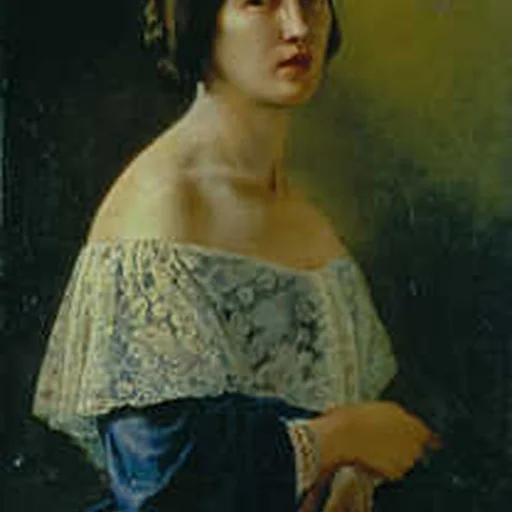
Anna Maria Elisabeth Lisinska Jerichau-Baumann (21 November 1819 – 11 July 1881) was a Polish-Danish painter. She was married to the sculptor Jens Adolf Jerichau.